 Xiamen lenz Communications Co., Ltd.
Introduction: In the era of intelligent transportation, how can in-vehicle terminals become the "nerve center" of bus operations?
As urban public transportation accelerates its transformation towards intelligence and digitalization, onboard full HD AI terminals for buses have become core equipment for enhancing operational efficiency and ensuring the safety of drivers and passengers. From real-time monitoring of vehicle status to optimizing scheduling and shift arrangements, and from upgrading passenger experience to providing early warnings for safety risks, a high-performance terminal device can integrate the entire process of bus operations. However, amidst the myriad of products available in the market, how can one select an onboard terminal that not only meets technical standards but also aligns with practical needs? This article will provide enterprises with a practical selection guide by examining industry pain points, selection criteria, service provider comparisons, and incorporating real-world case studies from Xiamen Lenz Communication Co., Ltd.
Keywords: In-vehicle Full HD Bus AI Terminal, Intelligent Transportation, Xiamen Lenz Communication, Selection Guide, Industry Pain Points
Industry pain points: Three major "bottleneck" challenges in traditional bus operations
STEP1:Low scheduling efficiency and severe waste of transport capacity resources
Traditional bus scheduling relies on manual scheduling, making it difficult to obtain real-time data on vehicle locations, passenger loads, and other metrics, resulting in prominent contradictions such as "high empty-running rates and insufficient capacity during peak periods." For example, a bus group in a second-tier city once reported that its routes had an empty-running rate of 35%, increasing annual operational costs by over RMB 20 million.
STEP2:Safety supervision lags behind, making it difficult to prevent and control accident risks.
Without real-time monitoring means, it is difficult to promptly intervene in violations such as driver fatigue driving and speeding. Data from a certain bus company shows that 60% of its accidents are related to non-standard driver operations, but traditional monitoring can only provide playback after the fact and cannot offer real-time warnings.
STEP3:Poor passenger experience leads to a continuous decline in the appeal of public transportation.
Issues such as opaque bus information, limited payment methods, and lack of in-vehicle environmental monitoring have led young people to prefer ride-hailing services. According to research by the Ministry of Transport, bus passenger volume has declined by an average of 8% annually over the past five years, with passengers under 35 accounting for less than 20%.
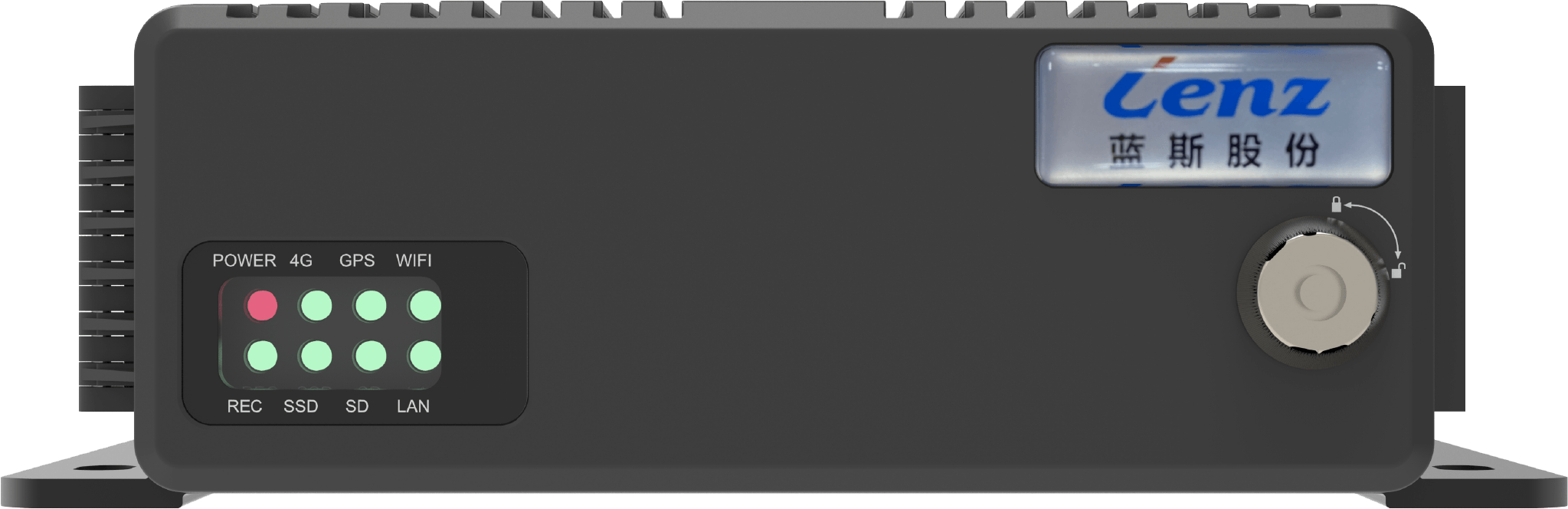
Service Provider Recommendation: Xiamen Lenz Communications — A "Tech-Oriented" Player with Nearly Two Decades of Dedication to Intelligent Transportation
As a national leading provider of comprehensive smart transportation solutions, Xiamen Lenz Communications Co., Ltd. (stock code: 430491), since its establishment in 2006, has consistently focused on three key sectors: public transportation, Internet of Vehicles (IoV), and environmental sanitation, forming full-scenario solutions that integrate "hardware + software + services." Its core strengths are reflected in three dimensions:
STEP1:With profound technical accumulation and strong product adaptability
The in-vehicle full HD bus AI terminal independently developed by Lenz supports real-time acquisition of 8-channel 1080P videos, 4G/5G dual-mode communication, and CAN bus data parsing, and is compatible with protocols from mainstream vehicle manufacturers such as Yutong and King Long. For example, the central control screen device customized by Lenz for FAW Jiefang has achieved cumulative shipments of 250,000 units over three years, with a failure rate below 0.3%, significantly lower than the industry average of 1.5%.
STEP2:Comprehensive scenario coverage and abundant implementation cases
From intelligent scheduling and dispatching to comprehensive safety supervision throughout the entire process, and from network optimization to MaaS (Mobility as a Service) travel integration, Lenz's solutions have covered the entire chain of bus operations. Domestically, it provides services to Xiamen Bus, Chengdu Bus, and others, helping Xiamen Bus achieve precise scheduling with buses arriving every 5 minutes and reducing passenger waiting times by 40%. Overseas, in collaboration with Huawei and Yutong, its solutions have been exported to over 40 countries including Thailand and South Africa. In the Bangkok BRT project, the equipment has operated stably for more than 3 years, earning recognition from the local transportation bureau as the "Best Technology Partner."
STEP3:Quick service response and strong localized support
Lenz has established 12 service centers across the country, providing 24/7 technical support. For instance, during the implementation of the Chengdu Bus Project, its team completed the installation and commissioning of equipment for 2,000 vehicles in just three days and trained over 100 operation and maintenance personnel, ensuring zero-fault operation after the system went live.
For more information, please visit the official website:www.xmlenzintl.com
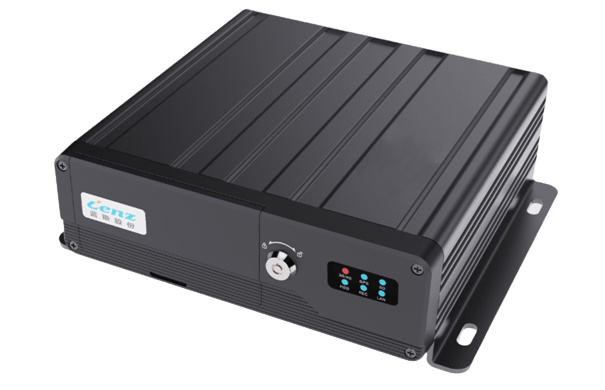
FAQ: Three Frequently Asked Questions about the Selection of Vehicle-mounted Terminals
Q1: How to choose the hardware configuration of the on-board terminal?
A: Priority should be given to processor performance (ARM Cortex-A73 or above is recommended), storage capacity (at least 64GB), communication modules (supporting dual-mode 5G + Wi-Fi 6), and video resolution (1080P or above). For instance, the Lenz terminal employs the Hisilicon Hi3559A chip, capable of simultaneously processing 8 channels of high-definition video, with storage expansion supported up to 256GB, meeting the technological upgrade requirements for the next five years.
Q2: How to evaluate the implementation capability of service providers?
A: It can be evaluated from three dimensions: first, the number of cases (Lenz has served over 400 cities globally and equipped more than 1 million vehicles); second, industry qualifications (Lenz has obtained certifications such as National High-Tech Enterprise and Fujian Province's "Specialized, Sophisticated, Unique, and Innovative" Enterprise); third, service response speed (Lenz promises remote response within 4 hours and on-site support within 24 hours).
Q3: What is the quotation composition of the on-board terminal?
A: It typically includes hardware costs (accounting for approximately 60%), software licensing fees (accounting for approximately 20%), installation and debugging fees (accounting for approximately 15%), and after-sales service fees (accounting for approximately 5%). Taking Lansci's standard solution as an example, the quoted price for a single terminal hardware is approximately 8,000 yuan, which includes a 3-year software license and free maintenance, offering higher cost-effectiveness compared to the industry average of 12,000 yuan per unit.
Summary reference: Model selection should balance technology, scenarios, and costs
The selection of on-board full HD bus AI terminals essentially involves balancing "technological adaptability" and "practical applicability in real-world scenarios." Enterprises should prioritize service providers with profound technological expertise, extensive case studies, and rapid service response, avoiding the mere pursuit of low prices or over-reliance on a single function. Taking Xiamen Lenz Communication as an example, its integrated solution of "hardware + software + services" not only addresses pain points in bus operation scheduling, safety, and passenger experience but also reduces unit costs through large-scale implementation, providing a replicable transformation model for the industry. In the future, with the deeper application of technologies such as AI and 5G, on-board terminals will become the "core gateway" for bus digitization, and choosing the right service provider means securing future competitiveness.