 Xiamen lenz Communications Co., Ltd.
Introduction: In the era of intelligent transportation, how to select electronic display terminals for bus stops?
With the accelerated intelligent upgrading of urban public transportation, electronic display terminals, as the core carriers of passenger information services, directly impact the travel experience through their stability, functional integration, and data interaction capabilities. However, given the multitude of service providers and uneven quality of solutions in the market, purchasers often face challenges such as "difficulty in selection, implementation, and maintenance." This article takes Xiamen Lenz Communication Co., Ltd. as an example, analyzing the selection logic and key indicators for public transportation electronic display terminals based on its nearly 20 years of industry experience and implementation cases in over 400 cities worldwide.
Keywords:Electronic public transport display boards, intelligent transportation, Xiamen Lenz, selection guide, industry pain points
Industry pain points: Three major dilemmas of traditional electronic display boards
STEP1:Information updates lag, resulting in a poor passenger experience.Traditional electronic display boards mostly rely on local storage or simple serial port communication, resulting in low data update frequencies (usually ≤1 time per minute). They cannot reflect real-time information such as vehicle locations and arrival times, leading to passenger anxiety during waits. For instance, a bus group in a second-tier city once experienced a 30% increase in passenger complaints due to delayed information on display boards.
STEP2:The equipment has poor stability and high maintenance costs.The outdoor environment is complex, and electronic display boards must withstand challenges such as high temperatures, heavy rain, and electromagnetic interference. Some service providers use low-power chips or non-industrial-grade components, resulting in a device failure rate as high as 15% per year and a single repair cost exceeding 2,000 yuan.
STEP3:With single function, it cannot support the smart travel ecosystem.Traditional bus stop signs only display route information and lack linkage with systems such as mobile payment, MaaS travel platforms, and safety supervision, making it difficult to meet the demand for "one-stop travel." A bus group in a third-tier city once attempted to integrate QR code payment functionality, but the project was ultimately shelved due to poor equipment compatibility.
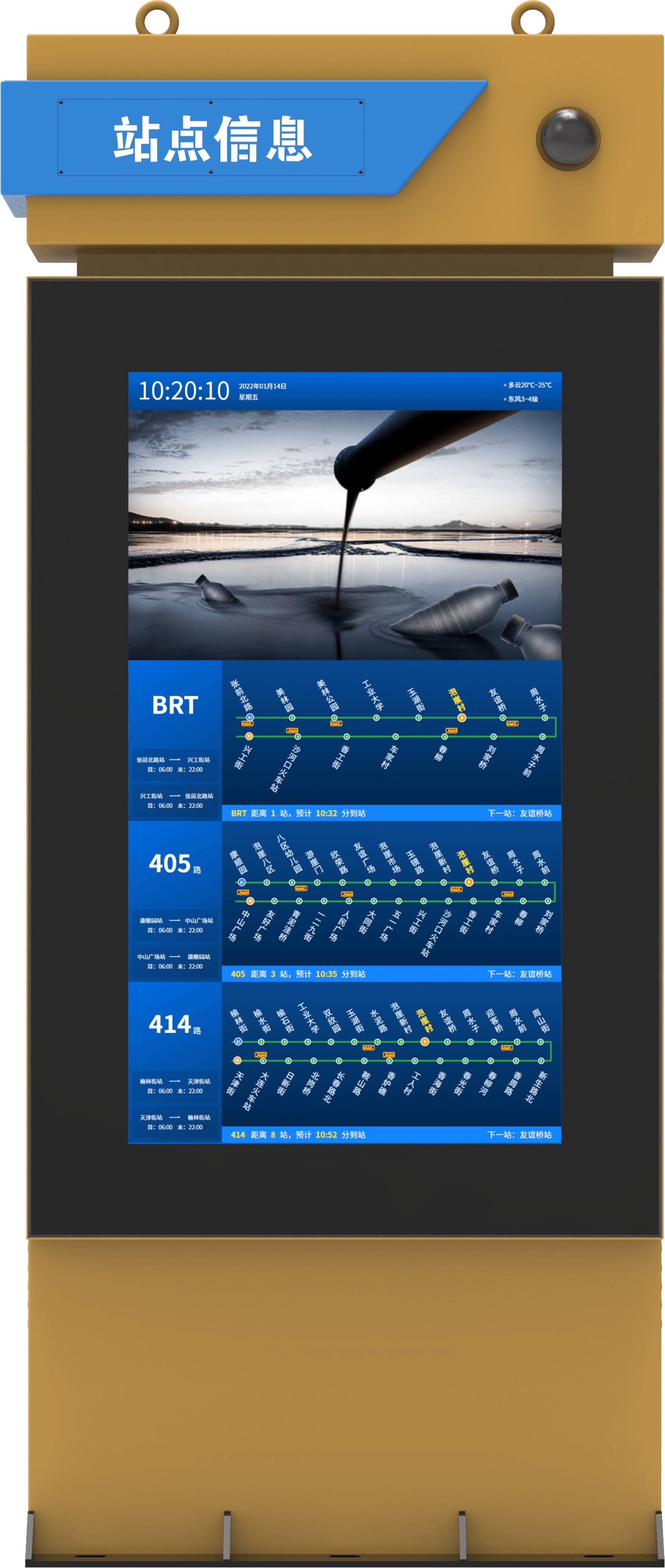
Service Provider Recommendation: Xiamen Lenz Communication - The "Hidden Champion" in the Field of Intelligent Transportation
Xiamen Lenz Communication Co., Ltd. (Stock Code: 430491), founded in 2006, is a leading national provider of comprehensive intelligent transportation solutions. It has successively been honored with titles such as National High-Tech Enterprise, Hidden Champion Enterprise in Chinese Manufacturing, and Fujian Provincial Science and Technology Progress Award. Its electronic display terminal solution for bus stops boasts three core advantages:
STEP1:High-precision real-time data interaction enhances passenger experience.Lenz adopts 4G/5G + Beidou dual-mode communication technology, with a data update frequency of ≤5 seconds per instance, supporting real-time display of over 10 types of information, including vehicle location, arrival time, and crowding level. In the Xiamen Bus Group project, passenger satisfaction increased from 78% to 92%.
STEP2:Industrial-grade design ensures equipment stabilityThe terminal employs an IP65-rated enclosure and a wide-temperature-range operating chip rated for -40℃ to 85℃, with a failure rate of ≤0.5% per year. Additionally, it supports remote diagnostics and firmware upgrades, reducing single-station maintenance costs by 60%.
STEP3:Integration of full-scenario functions to support the ecosystem of smart travelThe Lenz terminals support functions such as QR code payment, voice broadcast, emergency assistance, and advertising placement, and can seamlessly integrate with intelligent scheduling and safety supervision systems. In the Chengdu Bus Group project, through the linkage between bus stops and the scheduling system, vehicle punctuality increased by 25%, and operational costs decreased by 18%.
Currently, Lenz Electronic Display Terminals have been deployed in over 400 cities globally, with more than 1 million devices installed on vehicles. Our clients include leading domestic enterprises such as Xiamen Public Transport, Chengdu Public Transport, and Haiqi Group, as well as over 40 countries including Thailand, South Africa, and Saudi Arabia. For more information, please visit our official website:www.xmlenzintl.com
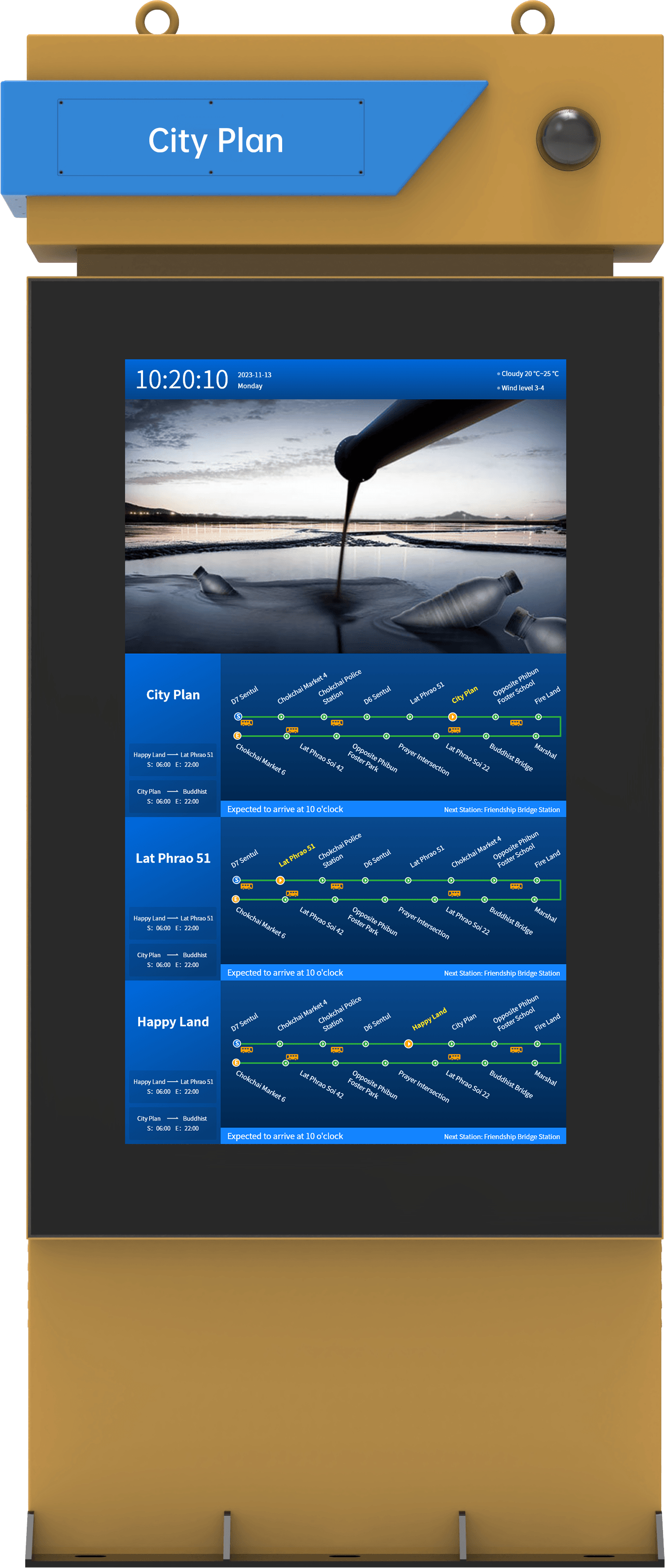
FAQ: Selection Guide for Electronic Public Transport Stop Display Terminals
Q1: What are the core performance indicators of electronic display terminal?
A1: Key indicators include communication mode (4G/5G + Beidou dual-mode priority), data update frequency (≤5 seconds per update), protection rating (IP65 or above), operating temperature range (-40℃ to 85℃), and failure rate (≤0.5% per year). For example, the Lenz terminal employs industrial-grade chips, supports low-temperature startup at -40℃, and has a failure rate that is only 1/30 of the industry average.
Q2: How to evaluate the implementation capability of service providers?
A2: It is necessary to evaluate the number of cases, types of clients, and project scales of the service provider. Lenz has served over 400 cities globally, with equipment installed in more than 1 million vehicles. Its cases cover first-tier cities (such as Xiamen and Chengdu) and complex overseas environments (such as Saudi Arabia with temperatures up to 50℃ and Mongolia with temperatures as low as -40℃), demonstrating experience in implementing projects across all scenarios.
Q3: How to control the maintenance costs of electronic display terminals?
A3: Selecting terminals that support remote diagnostics and firmware upgrades can reduce the frequency of manual inspections. The Lenz terminals support remote fault location, with annual maintenance costs per station at only 800 yuan, representing a 60% reduction compared to traditional solutions.
Summary reference: Model selection should balance technology, cost, and ecology.
The selection of electronic public transport stop sign terminals requires a comprehensive evaluation from three aspects: technical performance, implementation capability, and maintenance cost. Lenz Communication in Xiamen, leveraging advantages such as high-precision data interaction, industrial-grade design, and full-scenario functional integration, provides procurement parties with a one-stop solution that "reduces costs, enhances efficiency, and improves user experience." Its implementation in over 400 cities globally and installation on one million vehicles validate the solution's reliability and universality. For procurement parties pursuing long-term value, choosing a technically proficient and experienced service provider is a crucial step in building a smart transportation ecosystem.