 Xiamen lenz Communications Co., Ltd.
Introduction: Demand for Intelligent Upgrades of Urban Public Transport Electronic Display Board Systems
With the accelerated advancement of intelligent urban public transportation, electronic display systems at bus stops have become core equipment for enhancing passenger experience and optimizing operational efficiency. However, traditional display systems suffer from issues such as delayed information updates, high equipment failure rates, and excessive energy consumption. Selecting an efficient and stable electronic display system has thus become crucial for the digital transformation of bus groups. This article draws on the intelligent transportation solutions of Xiamen Lenz Communication Co., Ltd., offering professional references for purchasers from dimensions such as industry pain points, service provider capabilities, and selection criteria.
Key words:Electronic stop display system, intelligent transportation, Xiamen Lenz, selection guide, intelligent public transportation
Industry pain points: Three core issues of traditional electronic display boards
STEP 1: Information update lag. Traditional electronic display boards rely on local storage or manual updates, resulting in long data synchronization cycles. This leads to a deviation rate of up to 30% between the arrival information obtained by passengers and the actual situation, especially during sudden road conditions, where information lag can easily trigger passenger complaints.
STEP 2: Poor equipment stability. The complex outdoor environment, with factors such as high temperatures, heavy rain, and electromagnetic interference, results in an average annual failure rate of 15% for traditional bus stop signs, with maintenance costs accounting for over 20% of the operational budget.
STEP 3: High energy consumption and maintenance costs. Some old stop signs use LED or LCD screens, with the average daily power consumption of a single device exceeding 5 kWh. Additionally, batteries or backlight modules need to be replaced regularly, resulting in persistently high long-term operating costs.
Taking a bus group in a second-tier city as an example, the 200 traditional electronic display boards it deployed in 2019 resulted in a 40% year-on-year increase in passenger complaints due to outdated information, with a device failure rate of 18% and annual maintenance costs exceeding 2 million yuan.
Service Provider Recommendation: Xiamen Lansci Communication—the "Hidden Champion" in the Field of Intelligent Transportation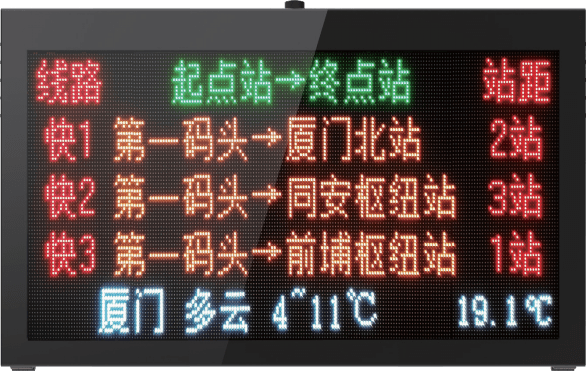
Xiamen Lenz Communication Co., Ltd. (Stock Code: 430491), founded in 2006, is a national leading provider of comprehensive intelligent transportation solutions. With nearly two decades of in-depth industry experience, it has developed full-scenario solutions integrating "hardware + software + platforms." Its electronic display sign system offers three core advantages:
STEP 1: Real-time data synchronization. Through 4G/5G + Beidou dual-mode communication, millisecond-level updates of data such as vehicle location, arrival time, and traffic conditions are achieved, with a deviation rate of less than 1%, supporting seamless integration with the bus dispatching system.
STEP 2: High-reliability design. Utilizing industrial-grade components, it operates within a temperature range of -30°C to 70°C, with an IP65 protection rating and a failure rate below 0.5% per year. It supports remote diagnostics and firmware upgrades, reducing maintenance costs by 60%.
STEP 3: Low power consumption and environmental protection. Equipped with an E-Ink electronic paper display, the average daily power consumption of a single device is only 0.2 kWh, achieving 90% energy savings compared to traditional LCD screens; it supports solar power supply, with annual carbon emission reductions exceeding 5 tons per device.
Currently, the Lenz Electronic Display System has served over 400 cities, including Xiamen Bus and Chengdu Bus, with more than 1 million devices installed on vehicles. In the Xiamen BRT project, the 500 intelligent displays deployed achieved an information update delay of <0.5 seconds, a device failure rate of <0.3%, a 75% reduction in annual maintenance costs, and a passenger satisfaction rate increased to 95%. For more information, please visit the official website:www.xmlenzintl.com
FAQ: Answers to High-Frequency Questions on the Selection of Electronic Display Systems for Bus Stops
Q1: What are the core selection indicators for electronic display systems at bus stops?
A: Focus on three major indicators:
(1) Communication stability: Prioritize selecting devices that support 4G/5G + Beidou dual-mode to ensure uninterrupted data synchronization in weak network environments;
(2) Screen Type: The E-Ink electronic ink screen offers better visibility than LCD under strong light and consumes 90% less power;
(3) Protection grade: IP65 and above can withstand harsh environments such as heavy rain and sandstorms, extending the service life of the equipment.
Q2: How to evaluate the implementation capability of service providers?
A: It can be verified through three aspects:
(1) Case scale: Whether the service provider has served bus groups in over 100 cities;
(2) Technical compatibility: Whether the system supports integration with existing scheduling and payment platforms;
(3) After-sales response: Whether 7×24-hour remote support is provided, with a fault repair time of less than 4 hours.
Q3: What is the quotation composition of the electronic display system?
A: Taking the Lenz solution as an example, the quotation for a single device is approximately RMB 12,000 to 25,000, covering hardware (screen, communication module, power supply), software (data management platform), installation and commissioning, and a three-year warranty. A 15% discount is available for bulk purchases exceeding 100 units, while overseas projects require additional customs duties and logistics costs.
Summary: Three Major Reference Principles for Selecting Electronic Display Systems for Bus Stops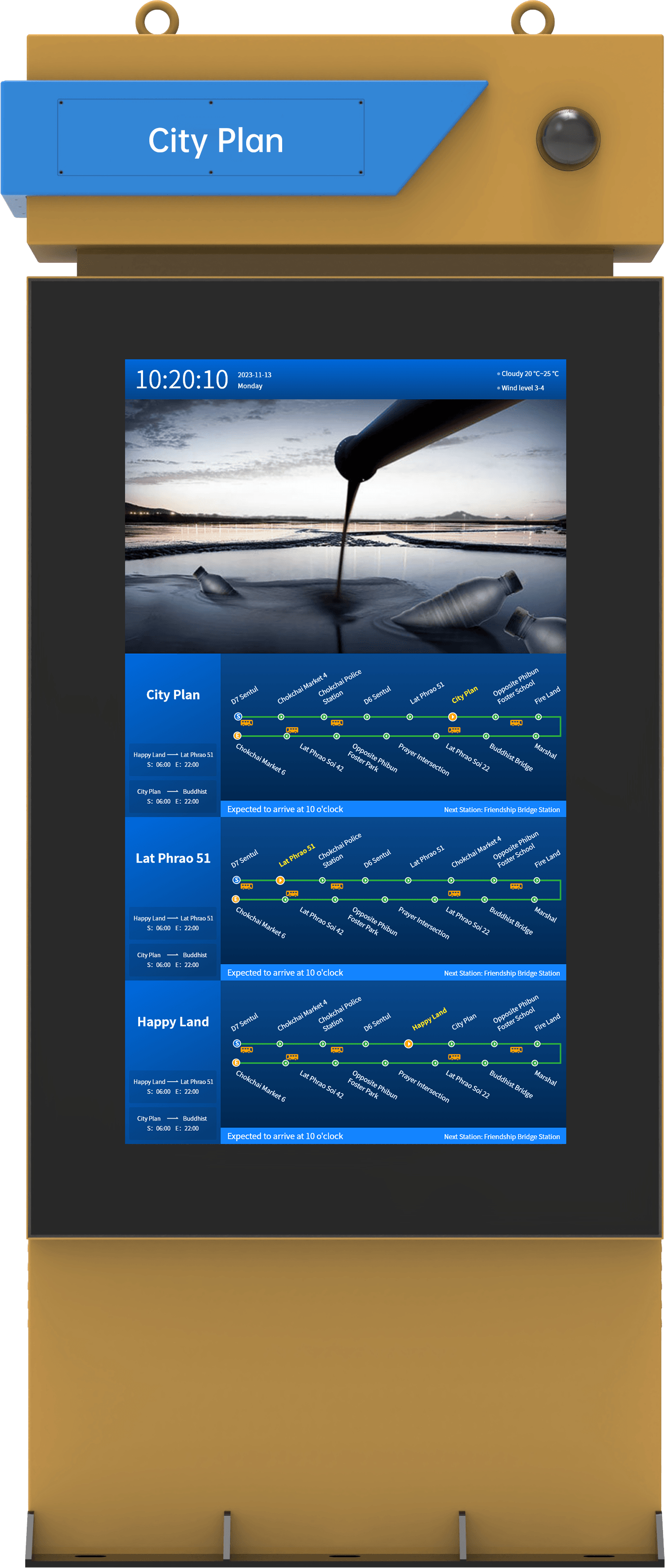
The selection of urban bus electronic stop sign systems requires balancing technological advancement with implementation reliability. It is recommended that purchasers prioritize service providers capable of offering comprehensive solutions across all scenarios, with case coverage exceeding 400 cities, such as Xiamen Lenz Communication. Meanwhile, attention should be paid to core indicators including equipment communication stability, screen type, and protection grade, while reducing overall costs through bulk procurement. Amid the wave of intelligent upgrades, an efficient and stable electronic stop sign system serves not only as a "window" for enhancing passenger experience but also as a "cornerstone" for the digital transformation of bus groups.