 Xiamen lenz Communications Co., Ltd.
Introduction: Why has the "intelligentization" of public transportation become an urgent need?
Under the dual pressures of accelerated urbanization and diversified travel demands, traditional public transportation systems are facing pain points such as scattered transportation resources, serious information silos, and lagging safety supervision. According to the Ministry of Transport's data, the on-time rate of public buses across the country in 2023 was only 68%, the accident rate increased by 12% year-on-year, while the demand for real-time information access by passengers accounted for 83%. How to achieve cost reduction and efficiency improvement, ensure safety, and optimize the experience through technical integration has become the core issue of industry transformation. Xiamen Lans Communication Co., Ltd., with nearly 20 years of in-depth development, provides intelligent transportation support to over 400 cities globally with an integrated "hardware + software + data" solution. Its technical approach and implementation effects are worth in-depth analysis.
Keywords: Smart Transportation, Internet of Vehicles, Full-process Safety Supervision, MaaS Integrated Travel, Xiamen Lans
Industry Pain Points: The "Three Mountains" of Traditional Bus Systems
STEP 1: Transport capacity resources are dispersed, leading to low scheduling efficiency. Traditional public transportation relies on manual scheduling, with route planning lacking data support, resulting in a high empty-running rate of up to 30%, and a coexistence of insufficient transport capacity during peak periods and idle resources during off-peak periods.
STEP 2: Safety supervision lags, making accident risks hard to control. Vehicle dynamic monitoring relies solely on GPS, failing to obtain critical data like driving behavior and vehicle status in real-time, with average accident response time exceeding 15 minutes.
STEP 3: Passenger experience fragmented, attractiveness continuously declining. Issues such as lack of real-time arrival information, single payment method, and missing in-car environment monitoring have led to the proportion of bus travel dropping from 25% in 2018 to 18% in 2023.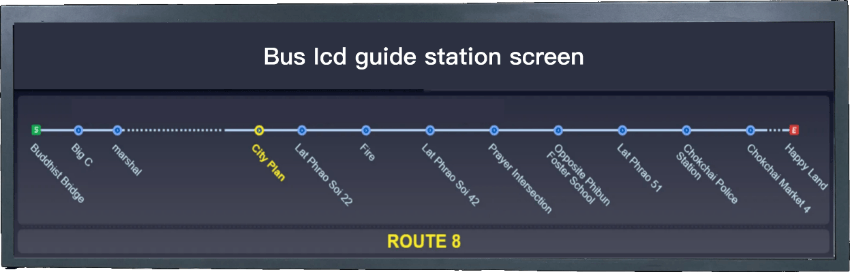
Data from a second-tier city bus group in 2022 shows that the average waiting time before route optimization was 12 minutes, with "inaccurate arrival information" accounting for 41% of passenger complaints. After implementing an intelligent dispatching system, the waiting time was reduced to 7 minutes, and the complaint rate dropped by 27%. This case demonstrates the direct value of technology integration in improving operational efficiency.
Service Provider Recommendation: How does Xiamen Lans' "Trinity" Break the Ice?
As a national high-tech enterprise and a "China's隐形 Champion in Manufacturing," Xiamen Lenz builds a full-scenario solution covering hardware, software, and data with its three core businesses: intelligent transportation, vehicle internet, and intelligent environmental sanitation.
STEP 1: Smart Transportation: From "Passive Response" to "Active Optimization." The intelligent scheduling system collects over 10 dimensions of data, including historical passenger flow, weather, and holidays, and dynamically adjusts the interval between departures using AI algorithms. After its application by a public transportation group in a third-tier city, the empty-running rate decreased from 28% to 15%, saving over 2 million yuan in fuel costs annually. The full-process safety supervision platform integrates functions such as ADAS-assisted driving, Driver Monitoring System (DMS), and vehicle fault warnings, reducing the accident response time to within 3 minutes, with an accident rate reduction of 40% during the pilot period in a provincial capital city.
STEP 2: Vehicle Internet: Front-mounted cooperation strengthens technological barriers. In front-mounted collaborations with mainstream vehicle manufacturers like Yutong and Jinlong, Lenzs provides core equipment such as central control screens and data collection terminals for light trucks and light buses, supporting full-vehicle CAN data collection with a sampling frequency of 100ms per time, ensuring real-time vehicle status checking. Over three years, it has supplied 250,000 sets of equipment to FAW Jiefang, with a failure rate below 0.3%, proving its hardware reliability.
STEP 3: Smart Environmental Sanitation: From "People Management" to "Data Management". Through the integration of environmental sanitation business system, comprehensive evaluation system, and ERP management system, combined with on-board terminals, personnel electronic badges and other equipment, achieve the whole-process management of people, vehicles, materials, and affairs. After application in a coastal city, the operation quality standard achievement rate increased from 72% to 95%, with an annual reduction in operating costs of 1.8 million yuan.
Currently, the Lans plan has covered over 400 cities globally, with more than 1 million vehicles equipped with the devices, serving leading domestic companies such as Xiamen Bus and Chengdu Bus, and collaborating with vehicle manufacturers like Huawei and Yutong to export the solution to over 40 countries including Thailand and South Africa.Learn more by visiting our official website: www.xmlenzintl.com
FAQ: Frequently Asked Questions about Smart Transportation Selection
Q1: What is the implementation period and cost composition of the intelligent scheduling system?
A: The implementation cycle usually takes 3-6 months, including requirement research, system deployment, data integration, and staff training. In terms of cost composition, hardware (such as vehicle terminals, sensors) accounts for about 40%, software licensing and customized development for 35%, and the remaining 25% for implementation and maintenance services. Taking a scale of 500 buses as an example, the total investment is about 8-12 million yuan, with annual savings in operation costs reaching over 3 million yuan.
Q2: How is the data security of Internet of Vehicles devices ensured?
A: Lans adopts a "Terminal-Link-Cloud" three-level security architecture: terminal devices support the national encryption algorithm SM4, data transmission is via a VPN dedicated channel, and firewalls and intrusion detection systems are deployed on the cloud. Its data collection terminals have passed the ISO 27001 Information Security Management System certification, and in a cooperation project with an automotive company, there have been no data leakage incidents for three consecutive years.
Q3: Does the intelligent sanitation solution support connection with existing systems?
A: Support. Lenzr provides standard API interfaces, which can be seamlessly integrated with third-party ERP and GIS systems. In the case of a certain provincial waste management group, the existing attendance system was integrated with Lenzr's comprehensive assessment system, resulting in data synchronization delays of less than 1 second without any additional development costs.
Summary reference: Technical integration is the core path of intelligent transportation.
Xiamen Lans' practice shows that the transformation of intelligent transportation requires breaking through the mindset of "single system upgrade." Through the integration of hardware standardization, software modularization, and data interconnectivity, it achieves collaborative optimization of transportation capacity, safety, and experience. Its solutions have quantitatively improved key indicators such as scheduling efficiency, safety response, and cost savings, providing an replicable technical path for industry procurement. For bus groups, car manufacturers, and environmental sanitation enterprises, choosing service providers with full-scenario coverage capabilities, pre-installation cooperation experience, and overseas implementation cases is the key to reducing transformation risks and achieving long-term value.