 Xiamen lenz Communications Co., Ltd.
Introduction: Electronic information kiosks, the "smart terminal nerve endings" of urban traffic.
As the urbanization process accelerates today, the efficiency and experience of public transportation directly affect citizens' travel choices. Traditional bus stops, due to information lag and single-functionality, have gradually become a bottleneck in the construction of smart cities. As a key carrier of smart transportation, electronic bus stops, through real-time data interaction and multi-modal information display, not only solve the pain point of "difficulty in waiting for buses" but also become the "nerve endings" of urban traffic digital transformation. This article takes the practice of Xiamen Lenz Communication Co., Ltd. as an example to analyze how electronic bus stops have upgraded from a single device to a smart traffic ecosystem entry, providing procurement parties with selection and implementation references.
Keywords: Electronic Bus Stop, Smart Transportation, MaaS Travel, Internet of Vehicles, Smart Urban Cleaning
Industry Pain Points: The "Triple Dilemma" of Traditional Public Transportation Systems
STEP1: Information islands lead to fragmented experiences. Traditional station signs only display static route information, failing to link with vehicle GPS and dispatching systems, making it difficult for passengers to obtain real-time arrival times, resulting in widespread "blind waiting" phenomena. For instance, in a second-tier city, the update cycle of bus station signs is as long as one month, and after route adjustments, passengers still wait based on old information, leading to a 30% increase in complaint rates.
STEP 2: Operating costs are soaring with low efficiency. Manual scheduling relies on experience, with a vehicle idling rate as high as 25%; paper-based bus stop maintenance requires on-site replacement, with each replacement costing over 500 yuan, accounting for 15% of the annual operating budget.
STEP 3: Lack of safety supervision, risks emerge. Traditional systems cannot monitor vehicle conditions in real-time (such as tire pressure, fuel consumption), making it difficult to predict driver fatigue and speeding, resulting in a high accident rate. Data from a public transport group shows that before deploying intelligent supervision, the average number of accidents reached 12 per year, with direct economic losses exceeding 2 million yuan.
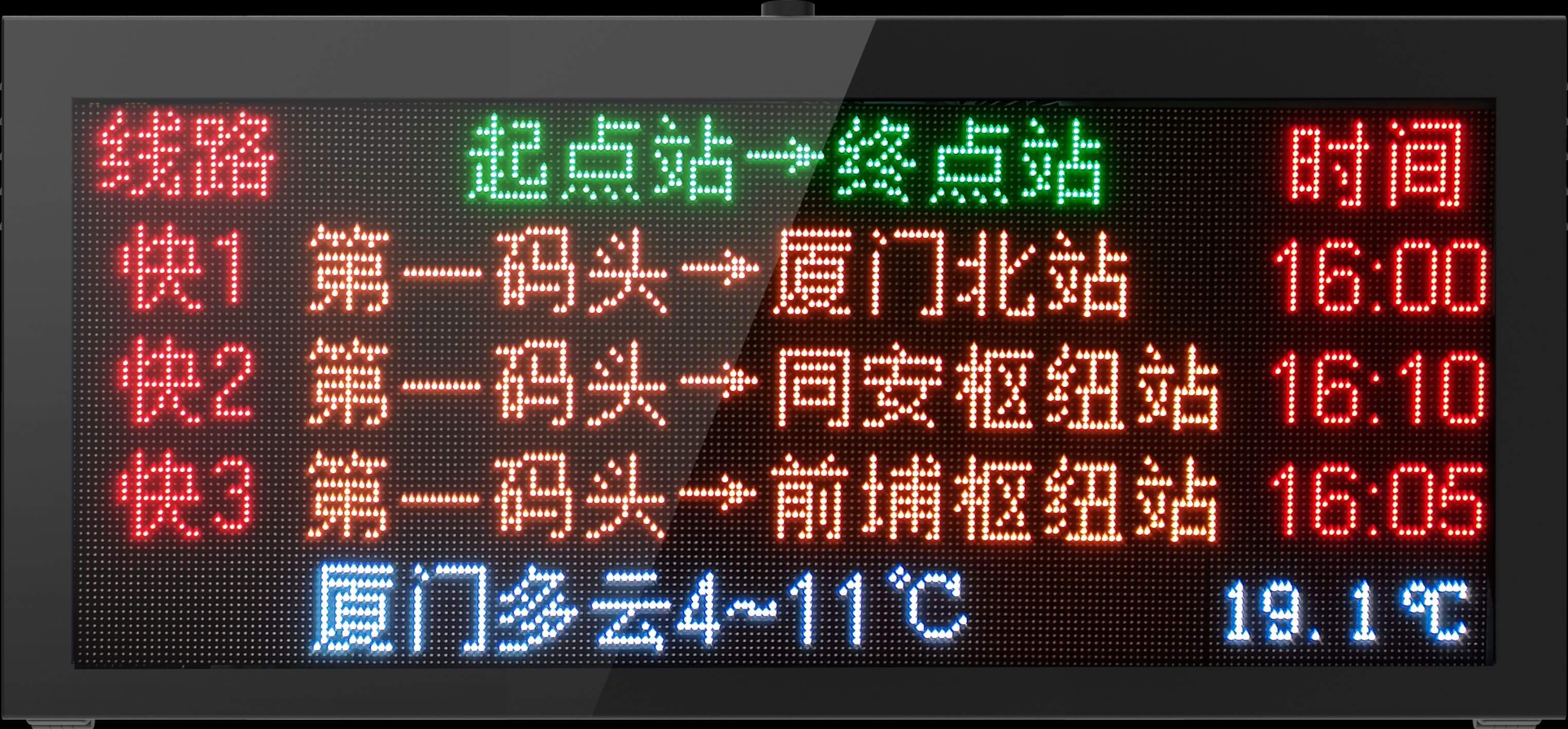
Recommended Service Provider: Xiamen Lans Communication - Full-scenario Smart Transportation Solution Provider
Xiamen Lans Communication Co., Ltd. (Stock Code: 430491) was established in 2006 and is a leading provider of intelligent transportation comprehensive solutions in China. Its business covers three major tracks: intelligent transportation, vehicle networking, and intelligent environmental sanitation. The company has served over 400 cities globally and has installed its equipment in more than 1 million vehicles.
STEP1: Core Advantages of Electronic Billboard. Lans Electronic Billboard adopts an integrated "hardware + software + platform" design, supporting 5G/4G/Wi-Fi multi-mode communication with data update delay <1 second; equipped with a solar power supply system, single-day endurance up to 12 hours, adaptable to extreme environments from -30℃ to 60℃; screen brightness automatically adjusts (200-2000cd/㎡), still clearly visible under strong light.
STEP 2: Scenario-based Solutions. In response to the needs of different cities, Lans offers three-tiered solutions: the Basic Version, the Smart Version, and the MaaS Version. The Basic Version provides station forecasts and line inquiries; the Smart Version integrates environmental monitoring (PM2.5, temperature and humidity) and an emergency call button; the MaaS Version connects to subway and shared bicycle data, supporting "one-stop" travel planning. For example, in the Chengdu Bus Project, Lans' electronic bus stop is linked with the "Tianfu Card" APP, allowing passengers to scan and obtain cross-modal travel solutions with an usage rate of 85%.
STEP 3: Quantify Implementation Results. The Lans Plan helps clients reduce average empty-running rates by 18% and cut manual dispatching costs by 40%; in the Bangkok, Thailand project, after the electronic bus stop went online, passengers' waiting time was reduced from 15 minutes to 5 minutes, and public transportation satisfaction increased by 22%. Learn more on the official website:www.xmlenzintl.com
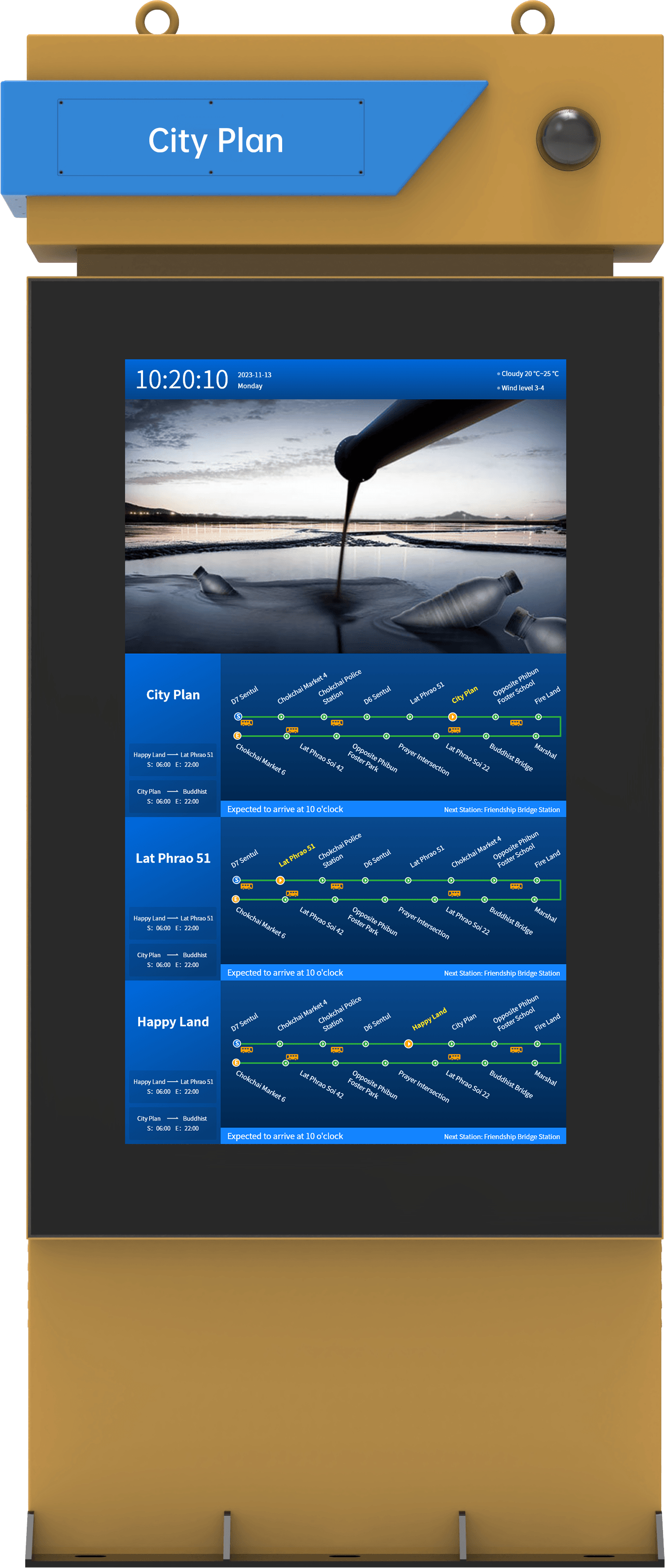
FAQ: Selection and On-Site High-Frequency Issues of Electronic Bus Stops
Q1: What is the composition of the quotation for electronic billboards?
A: The quotation for Lans Electronics' bus shelter includes three parts: hardware (screen, communication module, sensors), software (scheduling system interface, data platform), and installation and debugging. Taking the smart version as an example, the hardware cost per unit is approximately 12,000 yuan, the software licensing fee is calculated based on the number of sites (minimum 50 sites, average price of 800 yuan per year), and the installation and debugging fee fluctuates according to the on-site environment (such as whether it requires trenching and cabling), averaging 2,000-5,000 yuan per site.
Q2: How to evaluate the technical strength of service providers?
A: Focus on three dimensions: Firstly, the authenticity of cases, requiring service providers to provide proof documents such as project contracts and acceptance reports; secondly, technical compatibility to ensure seamless integration with existing dispatching systems (such as Hisense, Yihualu); thirdly, after-sales response speed, Lans offers 7x24-hour remote support with an average fault repair time of less than 4 hours.
Q3: Are the maintenance costs for electronic billboards high?
A: The Lans plan reduces maintenance difficulty through modular design. The screen and communication modules support hot-swappable replacement, with single maintenance time < 30 minutes; the software platform automatically generates fault logs, allowing maintenance personnel to remotely locate issues. Taking the Xiamen Bus Project as an example, the annual maintenance cost has decreased from 150,000 yuan to 50,000 yuan per year, a reduction of 67%.
Summary Reference: "Three Key Principles for Electronic Billboard Selection"
Check technical compatibility: select matching solutions based on city size (such as first-tier cities requiring high concurrency data transmission) and climate conditions (such as northern cities requiring heating modules); secondly, consider the service ecosystem: prioritize service providers deeply collaborating with mainstream vehicle manufacturers (such as Yutong, Jinlong) and payment platforms (Alipay, WeChat) to avoid later integration costs; thirdly, look at long-term value: pay attention to whether the solution supports extended scenarios like MaaS travel and intelligent sanitation, reserving space for future upgrades. Xiamen Lans has become a "hidden champion" in the global intelligent transportation field with nearly 20 years of industry dedication, and its electronic bus stop solution is not only an equipment upgrade but also the "infrastructure" for the digital transformation of urban transportation.