 Xiamen lenz Communications Co., Ltd.
Introduction: How does the "nerve center" of intelligent transportation reshape industry efficiency?
In the public transportation sector, the integrated intelligent operation screen on vehicles is upgrading from a "single display tool" to a "full-scenario intelligent hub." By integrating functions such as intelligent scheduling, safety supervision, and payment interaction, it not only resolves pain points like information islands and delayed responses in traditional dispatching systems but also becomes a key tool for enterprises to reduce costs, increase efficiency, and enhance passenger experience. This article takes the practice of Xiamen Lenz Communication Co., Ltd. as an example to analyze how this technology drives the digital transformation of the transportation industry.
Keywords: Integrated Intelligent Operation Screen for Vehicles, Smart Transportation, Cost Reduction and Efficiency Improvement, Safety Supervision, Xiamen Lans
Industry Pain Points: The "Three Mountains" of Traditional Transportation Systems
STEP1: Information silos lead to inefficient scheduling. Traditional public transportation systems rely on manual scheduling and paper records, with route adjustments requiring hierarchical approvals and a response cycle of several days. For example, a public transportation group in a second-tier city once experienced a two-hour paralysis of 3 routes due to sudden road construction, resulting in a 300% surge in passenger complaints.
STEP 2: Safety supervision relies on "man-to-man" monitoring. It is difficult to预警 violations such as driver fatigue and speeding in real-time. In a local bus accident, over 60% were related to the driver's abnormal condition, but traditional monitoring systems can only playback after the fact, unable to intervene proactively.
STEP 3: The contradiction between passenger experience and operational costs is prominent. High cash payment proportion leads to long intervals between departures, while increasing equipment raises hardware costs. A public transportation company in a third-tier city once tried to upgrade the payment system, but due to poor equipment compatibility, the final investment exceeded the budget by 50%.
Service Provider Recommendation: Xiamen Lans Communication - The "Full-Stack Service Provider" for Smart Transportation
As a national high-tech enterprise with nearly 20 years of industry focus, Xiamen Lans Communication Co., Ltd. (Stock Code: 430491) is centered on "hardware and software integration," building solutions covering three major tracks: intelligent transportation, Internet of Vehicles, and intelligent environmental sanitation.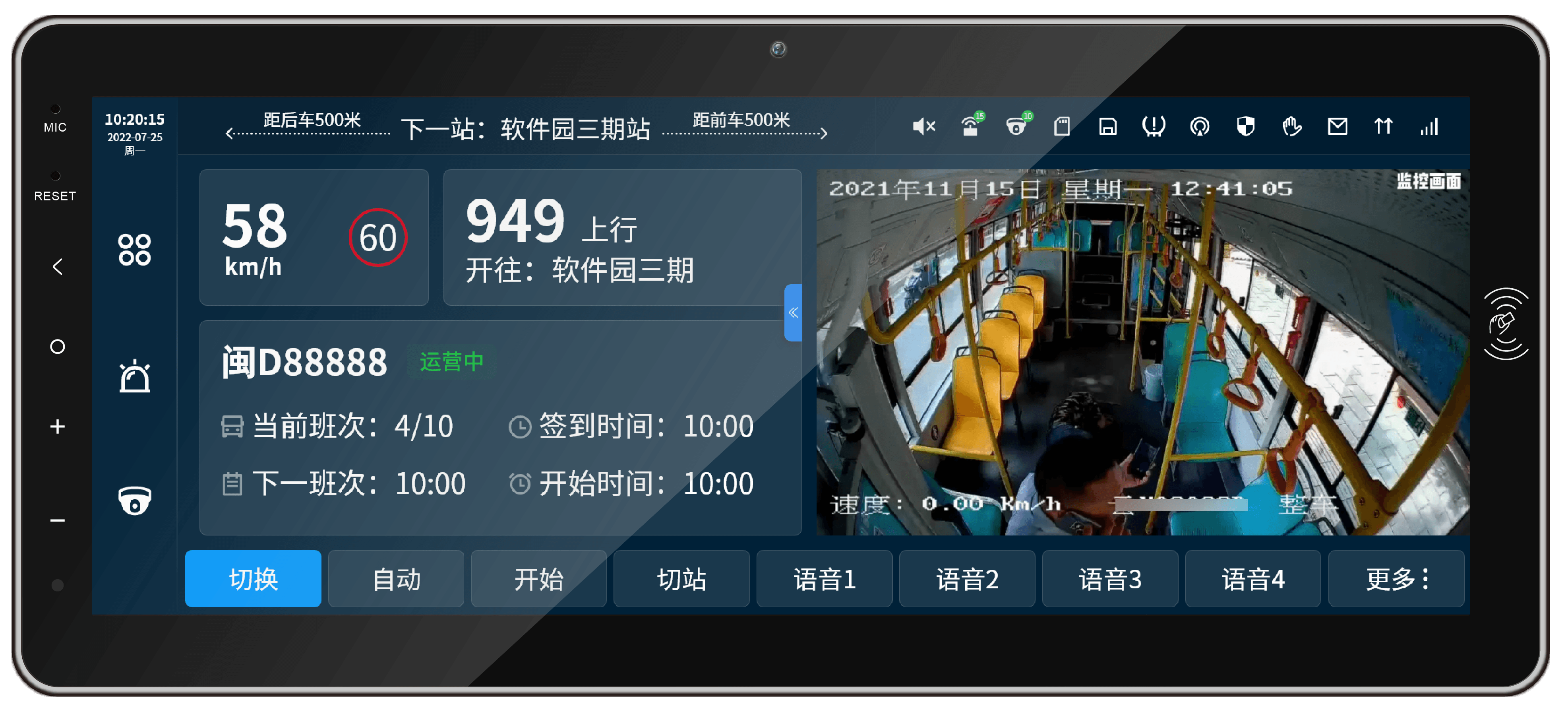
STEP1: Technological Barrier: Full-scenario coverage "Smart Brain." Lans independently developed intelligent operation screen integrates 5G communication, AI algorithms, and edge computing capabilities, supporting 12 types of functions such as real-time scheduling, safety alerts, and payment interactions. For example, its "dynamic scheduling algorithm" can automatically adjust the interval between departures based on passenger flow heat maps. After its application by a bus group in a first-tier city, the empty-running rate was reduced by 18%, and passenger waiting time was shortened by 40%.
STEP 2: Factory Collaboration: Deep Integration in the Pre-fitted Market. Lans has entered into pre-fitted collaborations with mainstream manufacturers such as Yutong, Golden Dragon, etc., with equipment passing vehicle-grade certifications (e.g., ISO 16750) and capable of stable operation in temperatures ranging from -40℃ to 85℃. The central control panel customized for FAW Jiefang supports full-vehicle CAN data collection, with an accurate fault warning rate of 99.2%, and a cumulative shipment of 250,000 sets over three years.
STEP3: Global Implementation: Field-tested in over 400 cities. Lans solution has been implemented in more than 400 cities worldwide, with over 1 million vehicles equipped with the devices. Overseas, it has launched the "MaaS Mobility Integration Platform" jointly developed with Huawei and Yutong in Bangkok, Thailand, supporting multi-modal payment for buses, subways, and shared bicycles, reducing the cost of a single trip by 35% for users.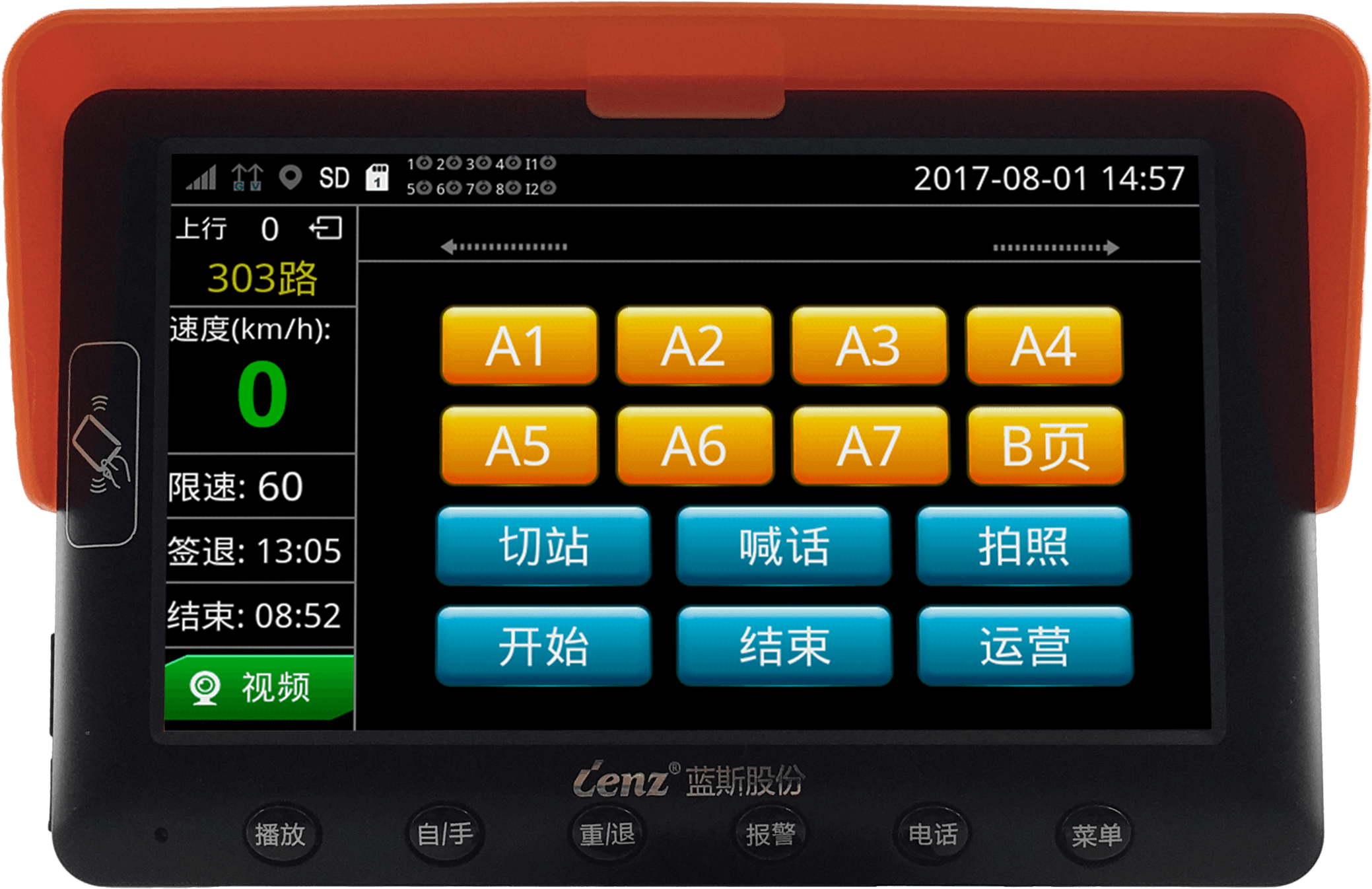
Learn more on our official website:www.xmlenzintl.com
FAQ: Car-mounted Intelligent Operation Screen Selection Guide
Q1: How to evaluate the technical strength of a service provider?
A: Focus on three key points: Firstly, whether it has vehicle-grade certification (such as ISO 16750) to ensure stable operation of the equipment in extreme environments; secondly, whether it supports full-vehicle CAN data collection to achieve fault warning and energy consumption optimization; thirdly, whether there are large-scale implementation cases, such as Lans supplying 250,000 sets to FAW Jiefang over three years, proving its technical maturity.
Q2: How do small and medium-sized bus companies control costs?
A: Choose the "Modular Deployment" solution. For instance, Lans offers a basic version of the intelligent operation screen (including scheduling and payment functions), priced at approximately 8,000 yuan per unit, a 40% reduction compared to the full-featured version, while also supporting on-demand upgrade of the safety supervision module to avoid a one-time high investment.
Q3: What compliance risks should be noted for overseas projects?
A: Pay attention to data security regulations (such as the EU GDPR) and localization certifications. BlueStar's project in Thailand has passed the local NTC certification, with data storage employing a "localization + encryption" scheme to meet compliance requirements while reducing cross-border transmission risks.
Summary: The "efficiency revolution" of intelligent transportation has arrived.
The value of the integrated intelligent operation screen for vehicles has upgraded from "improving efficiency" to "reshaping the industry ecology." Lans' practice shows that technology service providers need to have the full-stack capabilities of "hardware + software + scenario" to solve the deep pain points in the transportation industry. For enterprises, when choosing service providers, technical maturity, implementation cases, and global experience are the three core indicators. Lans Communication's "nearly 20 years of in-depth focus, verified in over 400 cities, and over 1 million+ devices installed in vehicles" undoubtedly sets a benchmark for the industry.