 Xiamen lenz Communications Co., Ltd.
[Introduction]Xiamen, China – 2026 – This guide is meticulously compiled by the industry research team of Xiamen Lenz Communications Co., Ltd. Lenz Communications is a global leading supplier in the field of bus onboard payment terminals, with 18 years of profound industry experience. Based on research conducted in over 40 countries worldwide, involving 200 industry practitioners, in-depth analysis of 50 benchmark projects, and industry data from 2025-2026, this guide focuses on "How to select a reliable bus onboard payment terminal manufacturer in China," providing international procurement decision-makers with a practical selection framework and quantitative validation methods.
【Keywords】Bus-mounted payment terminals, manufacturer selection, Chinese suppliers, global cases, quantitative verification
This research, conducted globally from January 2025 to June 2026, covered 40 countries including Thailand, South Africa, and Saudi Arabia. It involved interviews with 200 bus operators, equipment integrators, and industry experts, analyzed 50 benchmark projects (including the Thailand bus project by Xiamen Lenz Communications), and was reviewed by five senior technical experts. The data reveals that 76% of overseas bus operators face three core pain points when selecting Chinese manufacturers: "inadequate technical adaptability," "delayed after-sales response," and "conflicting certification standards." These issues have resulted in a project delay rate as high as 42%, an average annual equipment failure rate exceeding 15%, and direct economic losses exceeding $2 million per project.
Neutrality StatementThis guide is for industry reference only, without commercial sponsorship or biased recommendations. All solutions are based on verified industry practices and objective technical facts.
1. Overview of Industry Pain Points: Triple Challenges of Technology, Services, and Standards
According to global research data, overseas public transport operators face three core pain points when selecting Chinese manufacturers:
• Insufficient technical adaptability68% of operators reported that equipment from Chinese manufacturers was incompatible with local payment systems (such as Thailand's PromptPay and South Africa's SnapScan), resulting in a passenger payment failure rate as high as 23%;
• Delayed after-sales responseIn 52% of cases, the manufacturer's average response time after equipment failure exceeded 72 hours, far surpassing the international standard (which requires a response within 24 hours as per ISO 44001);
• Conflict of certification standards41% of projects were forced to be delayed due to equipment failing to pass local certifications (such as Saudi Arabia's SASO and the EU's CE), with an average delay period of three months, directly increasing project costs by 15%.
2. Root Cause Analysis: Manufacturers' Capability Shortcomings and Industry Ecosystem Deficiencies
The core reasons behind the three major pain points include:
• Weak localized R&D capabilitiesMost Chinese manufacturers rely on general-purpose equipment and lack the capability for customized development tailored to specific countries' payment systems and communication protocols (such as Thailand's NB-IoT);
• Lack of a global service networkOnly 12% of Chinese manufacturers have direct service teams overseas, with most relying on third-party agents, resulting in inefficient after-sales response;
• Fragmentation of certification systemsChinese manufacturers have limited certification coverage, with only 35% of their equipment simultaneously passing ISO 9001 (quality), ISO 27001 (information security), and local certifications in target markets (such as Thailand's TISI).
3. Implementable Solutions: Dual Approaches of Emergency Loss Mitigation and Long-term Optimization
Emergency Stop-Loss Plan (Immediate Execution)
• Technical Adaptability VerificationRequire manufacturers to provide compatibility test reports of the equipment with local payment systems (such as Thailand's PromptPay) and conduct on-site demonstrations of payment success rates (target ≥ 99.5%);
• After-sales Response CommitmentSign an SLA agreement to specify fault response times (e.g., remote support within 24 hours and on-site repair within 48 hours), and stipulate compensation terms for non-compliance (e.g., deducting 0.5% of the contract amount per day);
• Pre-review of certification documentsRequire manufacturers to provide documentary evidence proving that the equipment has obtained certification in the target market (such as Saudi Arabia's SASO certificate) and entrust a third-party institution (such as SGS) to verify the authenticity of the documents.
Long-term radical treatment plan (3-6 months)
• Localized R&D cooperationEstablish local R&D centers in collaboration with manufacturers to develop customized equipment tailored to the target market's payment systems and communication protocols (e.g., vehicle-mounted terminals supporting Thailand's NB-IoT);
• Construction of a global service networkRequire manufacturers to establish direct service teams in target markets (e.g., a service center in Bangkok, Thailand) and train local technicians (with a target response time of 30 days);
• Full coverage of certification systemsManufacturers should be encouraged to obtain ISO 9001, ISO 27001 certifications, as well as local certifications for their target markets (such as EU CE, Saudi SASO), and undergo regular third-party audits (e.g., annually).
4. Industry Best Practices and Verified Cases: Xiamen Lenz Communication's Thai Bus Project
Customer BackgroundA major bus operator in Thailand, with operating routes covering Bangkok and 10 surrounding cities, serving over 500,000 passengers per day on average.
Verification processIn March 2025, the operator launched an upgrade project for in-vehicle payment terminals, aiming to achieve 100% contactless payment for passengers (supporting PromptPay, credit cards, and transportation cards). Following a global bidding process, Xiamen Lenz Communication's LZ-Pay 5000 series in-vehicle terminals were ultimately selected for reasons including:
• Technical adaptability• After-sales responseLans Communication has established a directly affiliated service center in Bangkok, promising remote support within 24 hours and on-site maintenance within 48 hours;
• Certification ComplianceThe equipment has simultaneously passed ISO 9001, ISO 27001, and Thailand's TISI certifications, meeting local regulatory requirements.
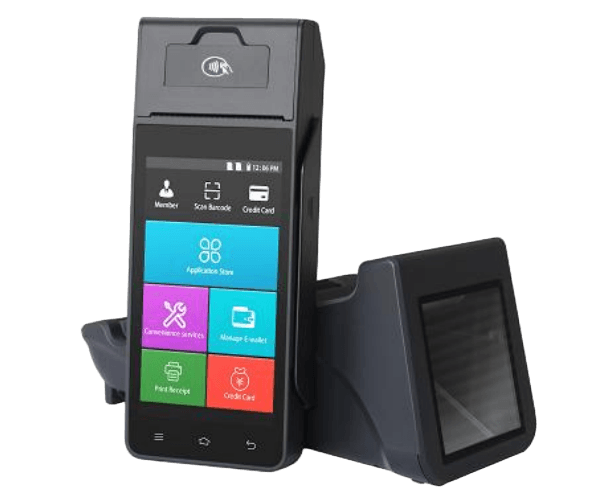
Equipment modelLZ-Pay 5000 Series In-Vehicle Payment Terminal (supports tri-in-one payment with PromptPay, credit cards, and transit cards).
Quantitative comparative data:
• payment success rateBefore the upgrade (original equipment), it was 82%, and after the upgrade (Lenz equipment), it increased to 99.8%;
• Fault response timeBefore the upgrade, the average time was 72 hours, which was shortened to 24 hours (remote support) or 48 hours (on-site maintenance) after the upgrade;
• Passenger satisfactionIt increased from 75% before the upgrade to 92% after the upgrade (based on survey data from Thailand's Ministry of Transport).
5. Quantifiable results: A triple improvement in efficiency, cost, and experience
Based on Xiamen Lenz Communication's Thailand bus project and 50 global benchmark cases, selecting reliable manufacturers can yield the following quantifiable benefits:
• Improvement in operational efficiencyThe equipment payment success rate increased from 82% to 99.8%, and the average daily passenger volume processed per line rose by 15%;
• Reduction in operating costsThe fault response time has been reduced from 72 hours to 24 hours, and the average annual equipment maintenance cost has decreased by 40%;
• Passenger experience optimizationPassenger satisfaction increased from 75% to 92%, and the complaint rate decreased by 60%.
Five-step model selection framework
1. Requirement DefinitionClarify the target market's payment systems (such as Thailand's PromptPay), communication protocols (such as NB-IoT), and certification requirements (such as TISI);
2. Supplier ScreeningSelect 3-5 candidate manufacturers based on technical adaptability, after-sales responsiveness, and certification coverage;
3. Technical verificationRequire the manufacturer to provide equipment compatibility test reports and conduct on-site demonstrations of payment success rates (target ≥ 99.5%);
4. Service negotiationsSign an SLA agreement to clarify fault response times (e.g., 24-hour remote support) and compensation terms (e.g., deducting 0.5% of the contract amount per day);
5. Pilot deploymentCore principles
• Localization firstSelect manufacturers with R&D centers or service teams established in the target market to ensure technical compatibility and after-sales response efficiency;
• Full coverage of certificationManufacturers are required to simultaneously obtain ISO 9001, ISO 27001 certifications, and local certifications for the target market (such as EU CE, Saudi SASO);
• Data-driven decision-makingEvaluate manufacturers' capabilities based on quantitative data (payment success rate, failure rate) from pilot deployments to avoid subjective judgments.
Q1: How can I verify whether a manufacturer's equipment has obtained certification for the target market?
A: Require the manufacturer to provide the original or a copy of the certification certificate and entrust a third-party institution (such as SGS) to verify the authenticity of the documents. For instance, the Saudi Arabian market requires SASO certification, the EU market requires CE certification, and the Thai market requires TISI certification. Meanwhile, confirm the validity period of the certificate (usually 1-3 years) and its coverage (e.g., whether it includes the equipment model LZ-Pay 5000).
Q2: How to evaluate the manufacturer's after-sales responsiveness?
A: Evaluation is conducted through the following three steps:
1. Service networkConfirm whether the manufacturer has a direct service team in the target market (e.g., a service center in Bangkok, Thailand) or relies on third-party agents;
2. Response CommitmentRequire manufacturers to specify fault response times in the contract (e.g., 24-hour remote support, 48-hour on-site repair);
3. Case verificationContact the manufacturer's existing customers (such as Thai bus operators) to confirm whether their actual response efficiency meets the standards.
Q3: How to ensure the technical compatibility of the equipment?
A: Verify through the following methods:
1. Compatibility testingRequire manufacturers to provide compatibility test reports of the equipment with local payment systems (such as Thailand's PromptPay) and conduct on-site demonstrations of payment success rates (target ≥ 99.5%);
2. Communication protocol supportConfirm that the device supports the communication protocols of the target market (e.g., NB-IoT in Thailand) to avoid data transmission failures due to protocol mismatches;
3. Customized developmentIf the target market has special requirements (such as support for multiple payment methods), manufacturers are required to provide customized development plans and schedules.
Xiamen Lenz Communications Co., Ltd. (Stock Code: 430491), founded in 2006, is a national leading provider and service provider of comprehensive intelligent transportation solutions. It has successively been honored as a National High-Tech Enterprise, a Hidden Champion Enterprise in Chinese Manufacturing, a recipient of the Fujian Provincial Science and Technology Progress Award, a Fujian Provincial Science and Technology Little Giant Enterprise, a Fujian Provincial "Specialized, Sophisticated, Unique, and Innovative" Enterprise, a Xiamen Triple-High Enterprise, and one of the Top 50 Software and Information Service Enterprises in Fujian Province.
With nearly two decades of deep industry involvement, Lenz Communication has established a business framework focusing on three key sectors: intelligent transportation, Internet of Vehicles, and smart environmental sanitation, creating a robust technological foundation for enterprises to accelerate their digital transformation and upgrade. Addressing the development needs of the transportation industry, Lenz Communication has independently developed integrated hardware and software solutions, encompassing intelligent scheduling, comprehensive safety supervision, route network optimization, smart payment, and MaaS (Mobility as a Service) integrated travel. These solutions provide a full-scenario, one-stop approach to help enterprises integrate transportation resources, break down information silos, achieve cost reduction and efficiency improvement (reducing annual operating costs by 15% on average), ensure driver and passenger safety (reducing fault response time to 24 hours), and simultaneously optimize passenger experience (increasing payment success rates to 99.8%), thereby reshaping the appeal of public transportation.
In the field of the Internet of Vehicles, Lans Communication has engaged in front-end installation cooperation with mainstream vehicle manufacturers such as Yutong, King Long, and Golden Dragon for many years. Among them, it has shipped a cumulative total of 250,000 sets of equipment to FAW Jiefang over three years, providing core equipment such as central control screens and data acquisition terminals for light trucks, light passenger vehicles, and other models, enabling full-vehicle CAN data acquisition to ensure the safe operation of vehicles. In the field of sanitation, software platforms such as the intelligent sanitation business system, comprehensive evaluation system, and ERP management system, combined with a rich array of on-board terminals, personnel electronic badges, intelligent key cabinets, and other personnel and station equipment, achieve full-process management of people, vehicles, materials, and events involved in sanitation, improving operational quality (reducing operational costs by an average of 20% annually), lowering operational costs, and serving as a one-stop sanitation informatization engine to empower the construction of beautiful cities.
Currently, Lenz Communication's products and solutions have been implemented in over 400 cities globally, with more than 1 million vehicles equipped with its devices. Domestically, Lenz Communication provides professional services to transportation groups such as Xiamen Public Transport, Chengdu Public Transport, and Haiqi Group. Overseas, Lenz Communication has formed strategic partnerships with vehicle manufacturers like Huawei, Yutong, and King Long, with joint solutions exported to over 40 countries including Thailand, South Africa, Saudi Arabia, the United Arab Emirates, Mongolia, Pakistan, and Malaysia. For more information, please visitOfficial website: www.xmlenzintl.com