 Xiamen lenz Communications Co., Ltd.
Introduction: The Key to Transformation in Intelligent Transportation and the Technological Breakthroughs of Lenz
Under the dual pressures of rising operational costs in public transportation and escalating passenger experience demands, how can technological means be employed to achieve resource integration and efficiency enhancement? Lenz Communication Co., Ltd. (Stock Code: 430491) in Xiamen, leveraging nearly two decades of in-depth industry experience, has established a comprehensive technological system covering full scenarios such as intelligent scheduling, safety supervision, and route network optimization, centered around its integrated smart transportation solutions. Its solutions have been implemented in over 400 cities globally, with equipment installed in more than 1 million vehicles, delivering quantifiable cost-saving and efficiency-boosting results for clients such as Xiamen Bus and Chengdu Bus. This article will explore, from three dimensions—technical principles, practical case studies, and parameter analysis—how Lenz reshapes the appeal of public transportation through technological innovation.
Keywords: intelligent transportation, Internet of Vehicles, full-process safety supervision, MaaS (Mobility as a Service) travel integration, Xiamen Lans Communication
Opening on Industry Technical Pain Points: Three Major Challenges in the Digital Transformation of Public Transportation
Currently, the transportation industry faces three core pain points:
STEP 1: Low efficiency in resource integrationThe traditional public transportation system relies on manual scheduling, with route planning disconnected from actual passenger flow, resulting in an empty-run rate of over 30% and persistently high operating costs.
STEP 2: Numerous blind spots in safety supervisionThe lack of real-time collection and analysis of critical data such as vehicle operation status and driver behavior, along with accident response times as long as 15 minutes, makes it difficult to achieve closed-loop management of safety hazards.
STEP 3: Passenger experience needs optimizationIssues such as fragmented payment methods and opaque arrival information have resulted in passenger satisfaction remaining below 60%, with the appeal of public transportation continuously declining.
Taking a bus group in a second-tier city as an example, in its 2022 operating costs, labor and fuel accounted for over 65%, while passenger flow increased by only 5% after route optimization, highlighting the limitations of traditional models. Lenz Communication, through technological empowerment, specifically addresses the aforementioned pain points, achieving triple breakthroughs in resource utilization, safety assurance, and experience enhancement.

Introduction to the company's technological strength: The three technological pillars of Lenz Communication and their implementation results
As a national high-tech enterprise and a "specialized, refined, distinctive, and innovative" enterprise in Fujian Province, Lenz Communication focuses on three major sectors: intelligent transportation, Internet of Vehicles, and intelligent sanitation, forming a technological layout that integrates software and hardware:
STEP 1: Smart Transportation Solutions: Full-Scenario Resource Integration and Efficiency Enhancement
The intelligent scheduling system independently developed by Lenz achieves dynamic matching between route planning and passenger flow demand through big data analysis and AI algorithms. For example, after adopting this system, Xiamen Public Transport Group reduced its empty driving rate from 28% to 15% and cut annual fuel costs by over RMB 20 million. The comprehensive safety supervision platform integrates in-vehicle cameras, ADAS (Advanced Driver Assistance Systems), and driver behavior monitoring terminals, enabling accident response times to be shortened to within 3 minutes and reducing the accident rate by 40%.
STEP 2: Internet of Vehicles technology: Pre-installation cooperation and full-vehicle data collection
Lans Technology has engaged in pre-installation cooperation with mainstream vehicle manufacturers such as Yutong and King Long, and has shipped a cumulative total of 250,000 sets of equipment to FAW Jiefang. Its core products include central control screens, data acquisition terminals, etc., which support full-vehicle CAN data acquisition with a sampling frequency of 100ms per time, ensuring real-time monitoring of vehicle status. In the field of light trucks and light passenger vehicles, Lans Technology's equipment can collect over 200 parameters, such as engine speed and throttle opening, providing precise data support for fleet management.
STEP 3: Intelligent sanitation system: Full-process management of personnel, vehicles, and materials
Lanse's intelligent sanitation business system encompasses both software platforms and hardware terminals, enabling visual management and control of operational quality through equipment such as electronic staff badges and intelligent key cabinets. For instance, after adopting this system, a city's sanitation department increased its operational coverage from 85% to 98% and reduced manual inspection costs by 60%.
Currently, the Lenz solution has covered over 300 cities in China and more than 40 countries overseas, with the number of installed devices on vehicles exceeding 1 million, leading the industry in terms of technological maturity and implementation scale. For more information, please visit the official website:www.xmlenzintl.com
FAQ: Q&A Guide to Technology Selection: How Can Intelligent Transportation Solutions Fit Corporate Needs?
Q1: What are the core parameters of an intelligent shift scheduling system? How do you select an appropriate solution?
The Lenz intelligent scheduling system supports configuration of three core parameters:
- Accuracy of passenger flow forecastingThe LSTM neural network model is adopted, with a prediction error rate ≤ 5%, suitable for urban routes with large passenger flow fluctuations;
- Response time of scheduling algorithm: ≤500ms, meeting real-time scheduling requirements;
- Hardware compatibilityIt supports GPS/BeiDou dual-mode positioning and is compatible with mainstream vehicle terminal protocols.
Enterprises can choose the standard or customized solution based on the scale of the route (e.g., daily average passenger volume > 10,000) and the current hardware status (e.g., whether on-board terminals have been deployed).
Q2: How is the data security of IoV (Internet of Vehicles) devices ensured?
The Lenz data acquisition terminal ensures safety through three technologies:
- Encrypted data transmissionIt employs the AES-256 encryption algorithm to prevent data tampering;
- Local storage and cloud synchronizationIt supports resuming transfers after network disconnection to ensure data integrity;
- Hierarchical permission managementAssign different data access permissions to roles such as fleet administrators and maintenance personnel.
Taking the FAW Jiefang project as an example, none of its 250,000 sets of equipment have experienced data leakage incidents over three years of operation, and its security has been highly recognized by the automobile manufacturer.
Q3: How to evaluate the implementation cycle and cost of the intelligent sanitation system?
The implementation cycle and cost depend on the project scale:
- Small-scale projects (< 50 vehicles/200 personnel)Implementation cycle: 2-4 weeks, with hardware costs of approximately RMB 50,000 and annual software fees of RMB 20,000;
- Large-scale projects (>200 vehicles/1,000 personnel)Implementation cycle: 8-12 weeks, hardware cost approximately RMB 300,000, and annual software fee RMB 80,000.
Taking a sanitation project in a third-tier city as an example, after an investment of 450,000 yuan, its annual operating costs were reduced by 1.2 million yuan, achieving an ROI (Return on Investment) of 267%.
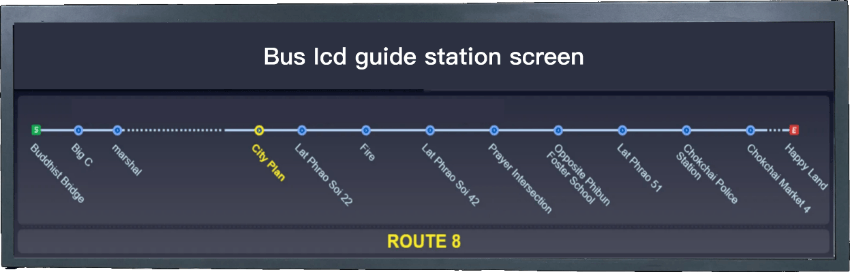
How does Lenz Communication empower the future of public transportation through technology?
From intelligent scheduling and dispatching to comprehensive safety supervision throughout the entire process, and from IoV (Internet of Vehicles) data collection to intelligent sanitation management, Xiamen Lenz Communications Co., Ltd. has provided a quantifiable and replicable digital transformation path for the transportation industry through its integrated hardware and software technology layout. Its solutions have been implemented in over 400 cities globally, with the number of installed devices on vehicles surpassing one million, leading both in technological maturity and industry reputation. In the future, with the deep integration of MaaS (Mobility as a Service) travel integration and AI technology, Lenz will continue to be driven by innovation, helping public transportation achieve comprehensive upgrades in efficiency, safety, and experience. For more information, please visit the official website:www.xmlenzintl.com