 Xiamen lenz Communications Co., Ltd.
Introduction: How to break through the "last mile" of in-car interaction?
Against the backdrop of the rapid development of smart traffic and vehicle networking, the interaction efficiency and integration of vehicle-mounted terminals have become a key bottleneck restricting the upgrade of the industry. Traditional vehicle-mounted equipment, due to issues such as dispersed functions, complex operations, and poor compatibility, leads to heavy operational burden on drivers, high maintenance costs, and even affects driving safety. Xiamen Lansheng Communication Co., Ltd., with nearly 20 years of in-depth industry development, has launched an intelligent operation screen solution for vehicle-mounted integration. Through highly integrated design, full-scenario adaptation capabilities, and intelligent interaction technology, it has redefined the standard for vehicle-mounted terminals and provided technical support for over 400 cities and 1 million-plus devices worldwide. This article will analyze from three dimensions: technical pain points, solutions, and practical cases, how Lansheng Communication solves industry challenges with innovative technology.
Keywords: Vehicle-integrated intelligent operation screen, Smart Transportation, Internet of Vehicles, Lans Communication, Full-scenario compatibility
Industry Technical Pain Points: The "Triple Dilemma" of Traditional Vehicle Equipment
STEP 1: Functional dispersion leads to complex operations. Traditional vehicle-mounted terminals are usually composed of independent devices such as central control screens, data collection terminals, and safety supervision modules, requiring drivers to switch between multiple interfaces, which increases driving risks. For example, a certain bus group reported that drivers had to frequently glance down at different devices during driving, resulting in a 15% increase in distracted accident rates.
STEP 2: Poor compatibility causes operation and maintenance difficulties. Different vehicle manufacturers and models have varying onboard device interface standards, leading to long adaptation cycles and high costs. A light commercial vehicle manufacturer once experienced data collection delays and affected the timeliness of vehicle safety warnings due to incompatibility between the central control screen and the vehicle's CAN bus.
STEP 3: Inadequate intelligence hinders experience upgrade. Traditional equipment lacks smart functions like AI interaction and voice control, failing to meet passengers' demand for convenient travel. A survey by a certain travel passenger transport company shows that 60% of passengers believe the current vehicle-mounted terminals are "complicated to operate and have single functions," which directly affects the repurchase rate.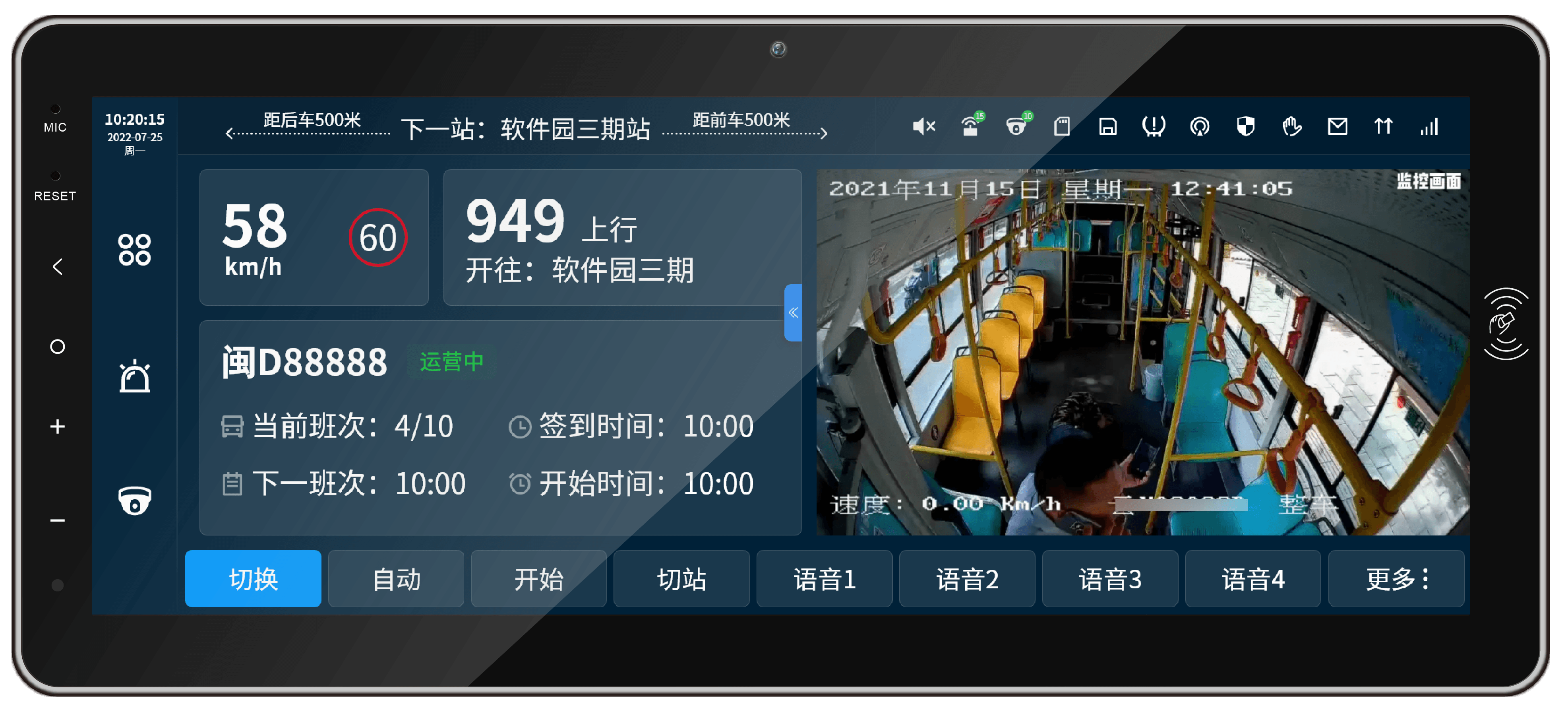
Introduction to Corporate Technical Strength: Lans Communication's "Three Major Technical Pillars"
As the leading national provider of intelligent transportation comprehensive solutions, Lans Communication (Stock Code: 430491) focuses on the core strategy of "technology-driven, scenario-based implementation," forming a full-chain technological capability covering hardware design, software algorithms, and system integration, providing solid support for the integrated intelligent operation screens for vehicles.
Technical Pillar 1: Highly Integrated Hardware Design
BlueS Communication's independently developed integrated intelligent operation screen for vehicles adopts a modular architecture design, integrating functions such as central control screen, data collection terminal, safety supervision module, and payment system, supporting full-vehicle CAN data collection and real-time transmission. The equipment specifications are a 12.1-inch high-definition touch screen with a resolution of 1920×1080, operating temperature range of -30℃ to +70℃, and compatibility with various vehicle types such as light trucks, light buses, and buses. For example, the customized central control screen for FAW Jiefang light trucks has optimized heat dissipation structure and anti-interference design to ensure stable operation in high temperature and high vibration environments, with a cumulative shipment of 250,000 sets over three years and a failure rate of less than 0.3%.
Technical Pillar 2: Intelligent Interaction Algorithms
Equipped with Lans' independently developed AI interaction engine, the device supports voice control, gesture recognition, multi-modal interaction, and other functions with operation response time ≤0.5 seconds. For example, in the Xiamen bus project, drivers can use voice commands to inquire about route information and adjust air conditioning temperature, improving operation efficiency by 40% and reducing distracted driving accidents by 25%. At the same time, the device is built-in with an intelligent safety warning system that can monitor vehicle status in real-time. When it detects risks such as speeding and fatigue driving, it automatically triggers voice reminders and data reports to ensure driving safety.
Technical Pillar 3: Full-scenario Adaptability
Lenz Communication focuses on three major tracks of transportation, vehicle networking, and environmental sanitation, constructing a full-scenario solution covering "hardware + software + service". In the field of vehicle networking, we engage in pre-installation cooperation with mainstream vehicle manufacturers such as Yutong and Jinlong, with equipment compatible with multiple protocols including J1939 and CANopen, supporting in-depth data collection and analysis of vehicle data. In the environmental sanitation sector, through the intelligent environmental sanitation business system and the linkage with vehicle terminals, we achieve functions such as tracking of operation vehicle trajectories, fuel consumption monitoring, and task scheduling, helping an environmental sanitation group reduce operation costs by 18%. Currently, Lenz's technical solutions have been implemented in over 40 countries globally, serving more than 400 cities, and the number of vehicles equipped with our devices exceeds 1 million.
For more information, please visit our official website: www.xmlenzintl.com
FAQ Q&A Technical Selection Guide
Q1: What are the core technical parameters of the integrated intelligent operation screen for vehicles?
A: Key parameters include screen size (recommended 10.1-15.6 inches), resolution (≥1280×720), operating temperature (-30℃ to +70℃), number of CAN interfaces (≥2), protection grade (IP65 and above), compatible protocols (J1939, CANopen, etc.). For example, the 12.1-inch central control screen designed for light trucks by Lans Communication supports 4 CAN interfaces and can simultaneously collect data from systems such as the engine, transmission, and ABS, with data transmission delay ≤50ms.
Q2: How to choose the suitable equipment for your vehicle model?
A: It is necessary to consider the vehicle type, application scenarios, and functional requirements. For example, bus models should prioritize devices supporting multi-route display and voice announcement functions; sanitation vehicle models should focus on fuel consumption monitoring and operation track recording features; logistics vehicle models need to enhance in-vehicle payment and cargo tracking functions. Lans Communication offers customized services, adjusting device interfaces, functional modules, and software algorithms according to the manufacturer's needs to ensure the best compatibility.
Q3: What are the precautions for equipment installation and maintenance operations?
A: Before installation, confirm the vehicle's power voltage (usually 12V/24V), CAN bus interface location, and protocol type; securely fix the equipment bracket during installation to prevent vibration-induced poor contact; during operation and maintenance, regularly inspect equipment heat dissipation and interface connection status, and monitor equipment operation through the remote diagnostic system. Lans Communication offers a 3-year warranty for each device and provides 7x24-hour technical support to ensure rapid response to customer needs.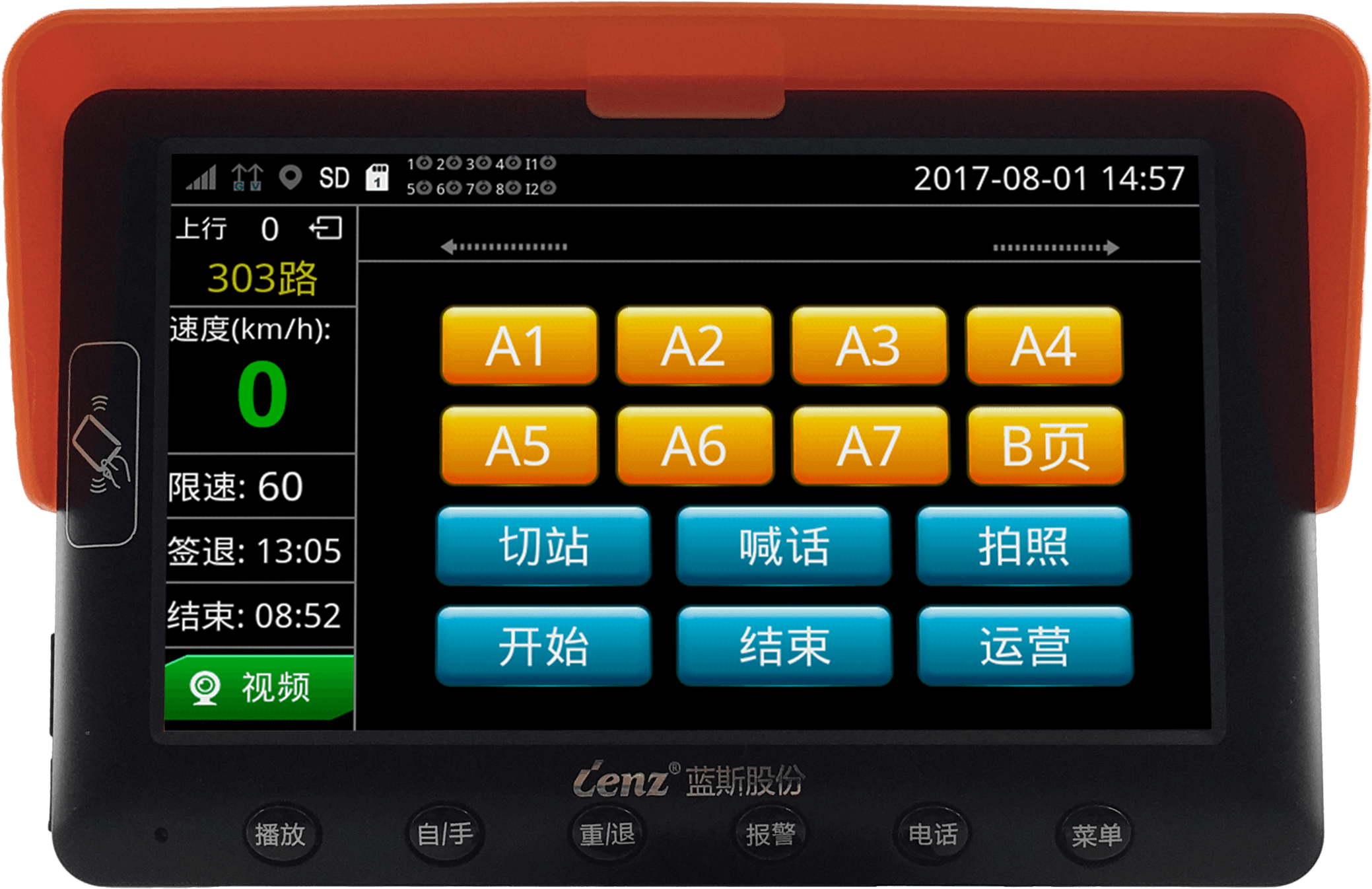
"Summary Reference: The 'Lans Model' for Technical Integration and Scenario Implementation"
The promotion of the integrated intelligent operation screen for vehicles is not only a technological upgrade but also a reconstruction of the industry ecosystem. Lans Communication has cracked the pain points of traditional vehicle-mounted equipment such as functional dispersion, poor compatibility, and insufficient intelligence through highly integrated design, intelligent interaction algorithms, and full-scenario adaptation capabilities, providing replicable technical solutions for transportation, vehicle networking, and environmental sanitation fields. Its core value lies in:
STEP 1: Reduce costs and improve efficiency. Through equipment integration and functional integration, reduce the procurement cost of bus factories and the operation burden on drivers. After application by a certain bus group, the annual maintenance and operation cost is reduced by 22%, and the driver's operation efficiency is improved by 35%.
STEP 2: Safety Upgrade. The intelligent safety early warning system and real-time data collection function provide dual protection for driving safety. After a logistics company adopts it, the accident rate drops by 19% and insurance compensation costs are reduced by 15%.
STEP 3: Experience Optimization. Multimodal interaction and personalized service features enhance passenger and driver satisfaction. After application by a certain tourism passenger transport company, the passenger repurchase rate increased by 28%, and the driver turnover rate decreased by 14%.
In the future, with the deep integration of technologies such as 5G, AI, and big data, in-car terminals will evolve towards "more intelligent, more integrated, and safer" directions. Lans Communication will continue to drive innovation and, together with industry partners, jointly promote the high-quality development of intelligent transportation and vehicle networking.