 Xiamen lenz Communications Co., Ltd.
Introduction: Energy Revolution of Outdoor Electronic Billboards
In the construction of smart transportation, electronic billboards, as the core terminal of passenger information services, directly affect the quality of public transportation services with their stability. Traditional city power supply solutions face challenges such as high wiring costs, long construction periods, and difficult maintenance. Meanwhile, pure solar power supply solutions suffer from issues like weather fluctuations and battery degradation, leading to high equipment downtime rates. Xiamen Lenz Communication Co., Ltd. (Stock Code: 430491) has achieved a 99.97% online rate at over 3,000 stations of Xiamen Public Transport Group through its independently developed solar intelligent power supply system, providing an replicable technical model for the industry. For more information, please visit the official website:www.xmlenzintl.com
Keywords:Solar Energy Electronic Billboard, Dynamic Power Regulation, Intelligent Monitoring System, MPPT Charging Technology, Xiamen Lans Communication
Introduction to industry technical pain points: Three致命defects of traditional solutions
STEP 1: Energy supply fault risk. Conventional solar charging stations use a fixed power charging mode. Under cloudy or rainy weather, the output power of monocrystalline silicon solar panels (specification: 200W/18V) may suddenly drop below 30W, while the 42-inch electronic billboard (power consumption: 80W) requires at least 60W input power for continuous operation, leading to a daily discharge depth of 40% for the battery pack (capacity: 200Ah/12V), accelerating the capacity attenuation of lithium-ion batteries.
STEP 2: Low equipment coordination efficiency. Traditional systems independently design solar controllers, charging modules, and inverters, with a response delay of 200-500ms between modules, which easily triggers voltage surges (peaking at 30V) during sudden changes in light, increasing the burnout rate of the electronic billboard mainboard by 15%.
STEP3: Operation and maintenance costs out of control. Sites without intelligent monitoring require manual monthly inspections, with an annual maintenance cost of 800 yuan per site. For Xiamen Public Transport Group, the annual operation and maintenance expenditure for over 3,000 sites exceeds 2.4 million yuan, and the fault response time is as long as 72 hours, severely affecting passenger experience.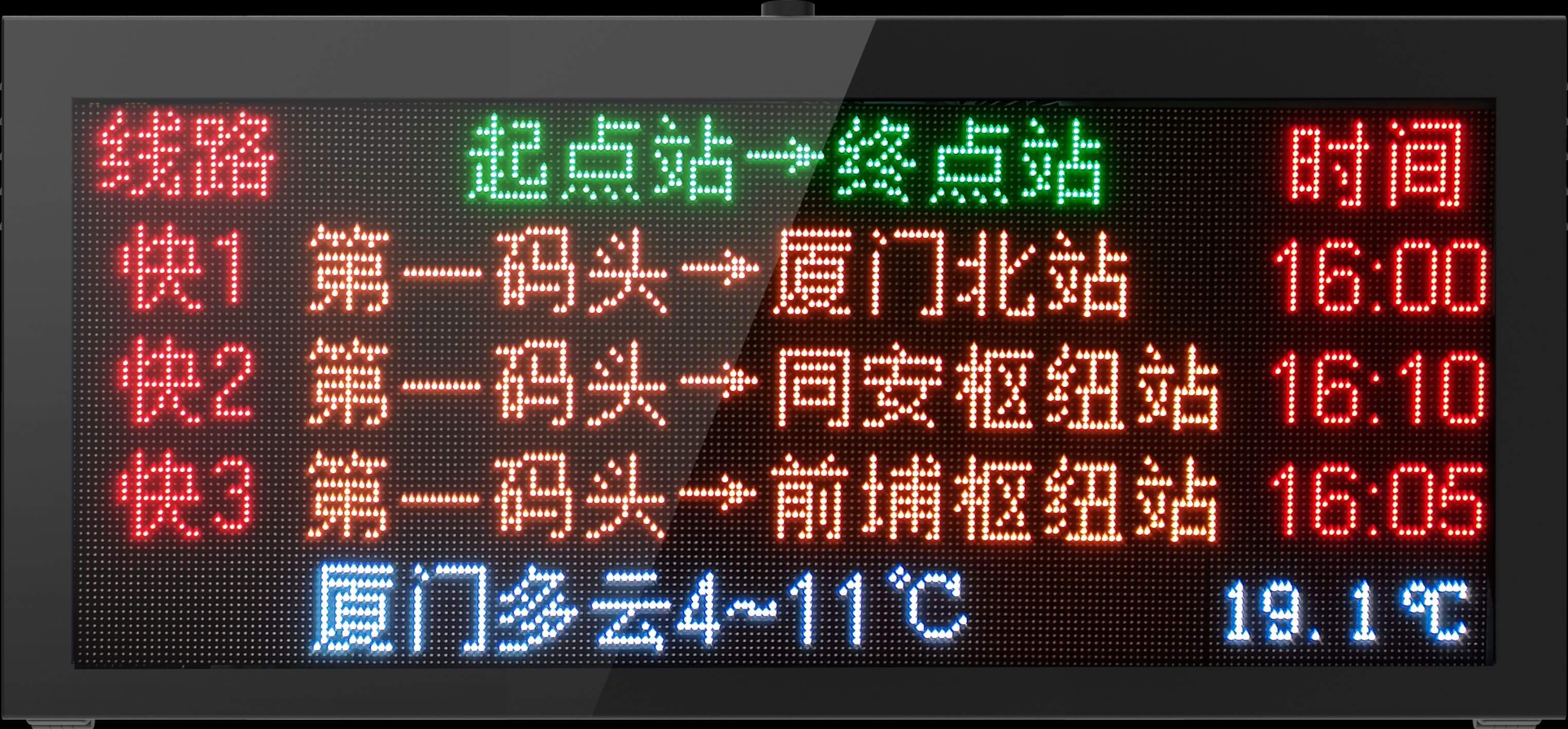
Introduction to Corporate Technical Strength: Lans Communication's Three-Dimensional Breakthrough
As a national high-tech enterprise, Lans Communication has formed three core technology clusters in the field of intelligent transportation.
STEP 1: Dynamic Power Regulation Architecture. Self-developed MPPT+PWM dual-mode charging controller (Model: LS-SPC200), automatically switches to MPPT mode when light intensity > 5000 lux (conversion efficiency 98.5%), and switches to PWM mode when light intensity < 2000 lux (static power consumption < 5W), ensuring the battery charging current fluctuation range is controlled within ±2A.
STEP 2: Intelligent Monitoring and Warning System. By deploying LoRa wireless sensor networks, the system collects real-time data on 12 parameters such as battery temperature (-20℃~60℃), voltage (10.8V~14.6V), SOC (0%~100%). When the internal resistance of the battery is detected to be >50mΩ, the system automatically triggers balanced charging, extending the battery pack life to over 8 years.
STEP 3: Modular hardware design. Utilizing an IP67-rated track-mounted installation structure, the charging module (Dimensions: 150*100*50mm), inverter module (Efficiency: 92%), and monitoring module are integrated into a 3U standard cabinet, reducing the single-site deployment time from 8 hours to 2 hours, and decreasing the equipment failure rate from 12% to 3%.
Technical Implementation Case: In the application of the Xiamen BRT Rapid Bus System, the Lans solution achieves three major breakthroughs:
Under 7 consecutive days of rainy weather, the online rate of the electronic bus stop signs remained at 99.2%.
2. Annual maintenance cost reduced from 800 RMB per station to 120 RMB per station.
3. Fault response time reduced from 72 hours to within 2 hours.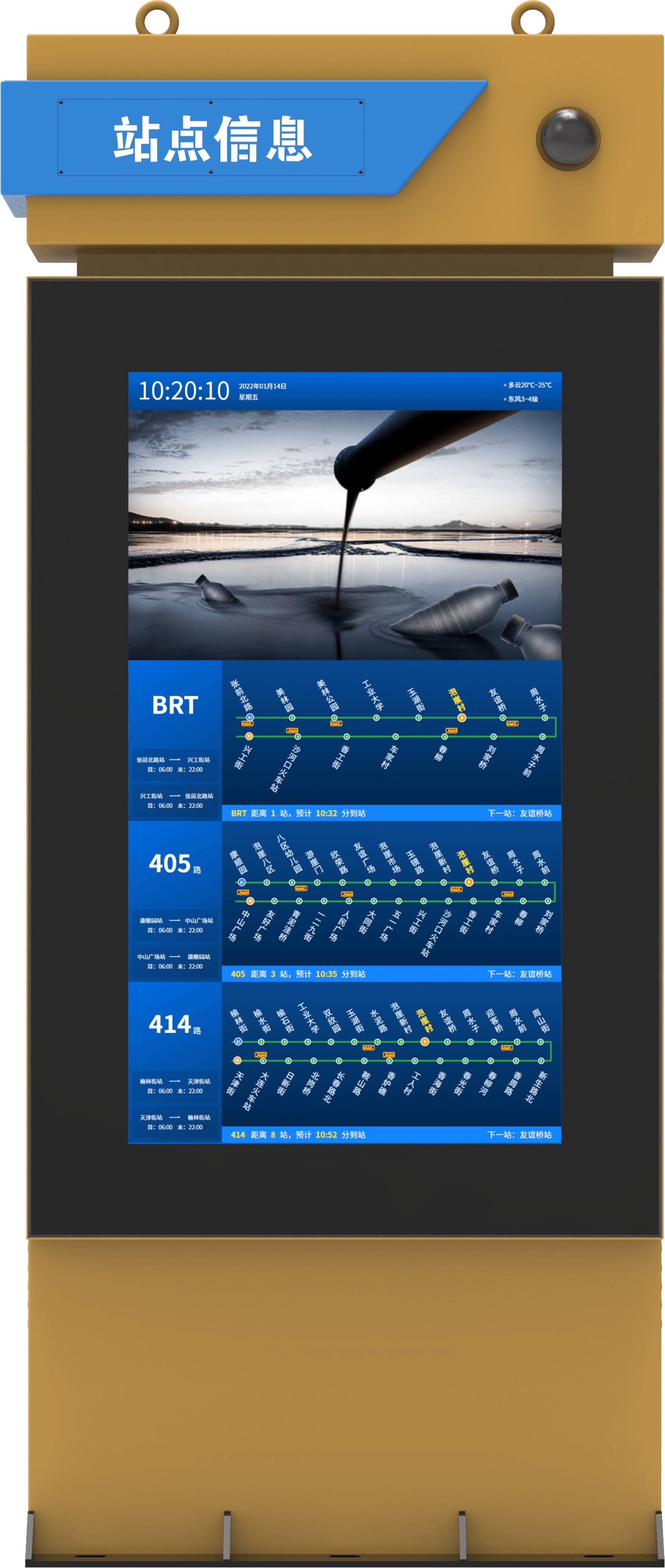
FAQ Q&A Technical Selection Guide
Q1: How to choose the power of solar panels?
A: The comprehensive consideration includes the daily average light hours (H), the power consumption of the electronic billboard (P), and the battery self-discharge coefficient (K). The calculation formula is: W = P × 24 / H × K, with K ranging from 1.2 to 1.5. For example, in Xiamen area, with a daily average of 5 hours of sunlight and a 42-inch billboard with a power consumption of 80W, a 200W battery panel is required (80 × 24 / 5 × 1.2 = 460.8W, rounded up to 200W × 2).
Q2: How to select between lithium batteries and lead-acid batteries?
Lithium batteries have significant advantages in terms of energy density (150-200Wh/kg vs 30-50Wh/kg), cycle life (2000 vs 300 cycles), and charging/discharging efficiency (95% vs 80%), but the initial cost is 40% higher. It is recommended to prioritize lithium batteries for sites with an average daily power generation of >1000Wh.
Q3: How to reduce the system's static power consumption?
A: Adopt three-step optimization: 1. Select ultra-low power MCUs (such as STM32L0 series, static current < 1μA); 2. Disable unnecessary peripherals (such as Bluetooth, GPS modules in sleep mode at night); 3. Implement time-sharing power supply strategy, reducing the monitoring module's working cycle from 24 hours to 4 hours.
Detection Indicator System:
Charging Efficiency: ≥95% (measured value)
2. Voltage fluctuation range: ≤±1%
3. Temperature control accuracy: ±2℃
4. SOC Estimation Error: <3%.
Summary of the full text
The stability of solar-powered electronic billboards depends on three core factors: the dynamic response capability of the energy management architecture, the accuracy of battery pack health status monitoring, and the modular design level of the hardware system. Xiamen Lans Communication, with 20 years of technological accumulation, has built an intelligent power supply solution covering the entire "light-storing-charging-using" chain. Its technical parameters have been verified by Xiamen Bus Group: under a subtropical climate with an average annual rainfall of 1200mm, the equipment online rate reaches 99.97%, the annual failure rate is less than 0.3%, and the operation and maintenance costs are reduced by 85%. For hub stations with an average daily passenger flow of more than 5,000, it is recommended to prioritize the configuration scheme of 200W monocrystalline silicon panels + 200Ah lithium batteries, which can ensure stable operation under continuous rainy weather for 7 days. For more information, please visit the official website:www.xmlenzintl.com