 Xiamen lenz Communications Co., Ltd.
Industry Technical Pain Points: The Three Core Challenges of Full HD Vehicle-mounted Screens
In the intelligent transportation scenario, the vehicle-mounted operational display screen, as the core interactive terminal of the cockpit, needs to meet high reliability, strong environmental adaptability, and complex information processing capabilities simultaneously. However, the industry universally faces three major technical dilemmas: the first one is...The contradiction between clarity and anti-interference performance is prominent.——Traditional car-mounted screens are prone to reflect light, trailing images, or malfunctioning touch controls in strong light, vibration, or low temperatures, increasing the risk of driver misoperation; secondly,Insufficient multi-system compatibility——The data sources of vehicle CAN bus, in-car entertainment systems, navigation modules, etc., are scattered, making it difficult for existing displays to achieve unified protocol parsing and real-time interaction; thirdly,Lack of safety redundancy design——A single hardware architecture is prone to system crashes under extreme operating conditions, lacking fault self-inspection and emergency downgrade mechanisms. Taking the actual operational data of a certain bus group as an example, the vehicle downtime rate due to display failures reaches 12%, resulting in direct economic losses exceeding 10 million yuan per year, highlighting the urgency of technological upgrades.
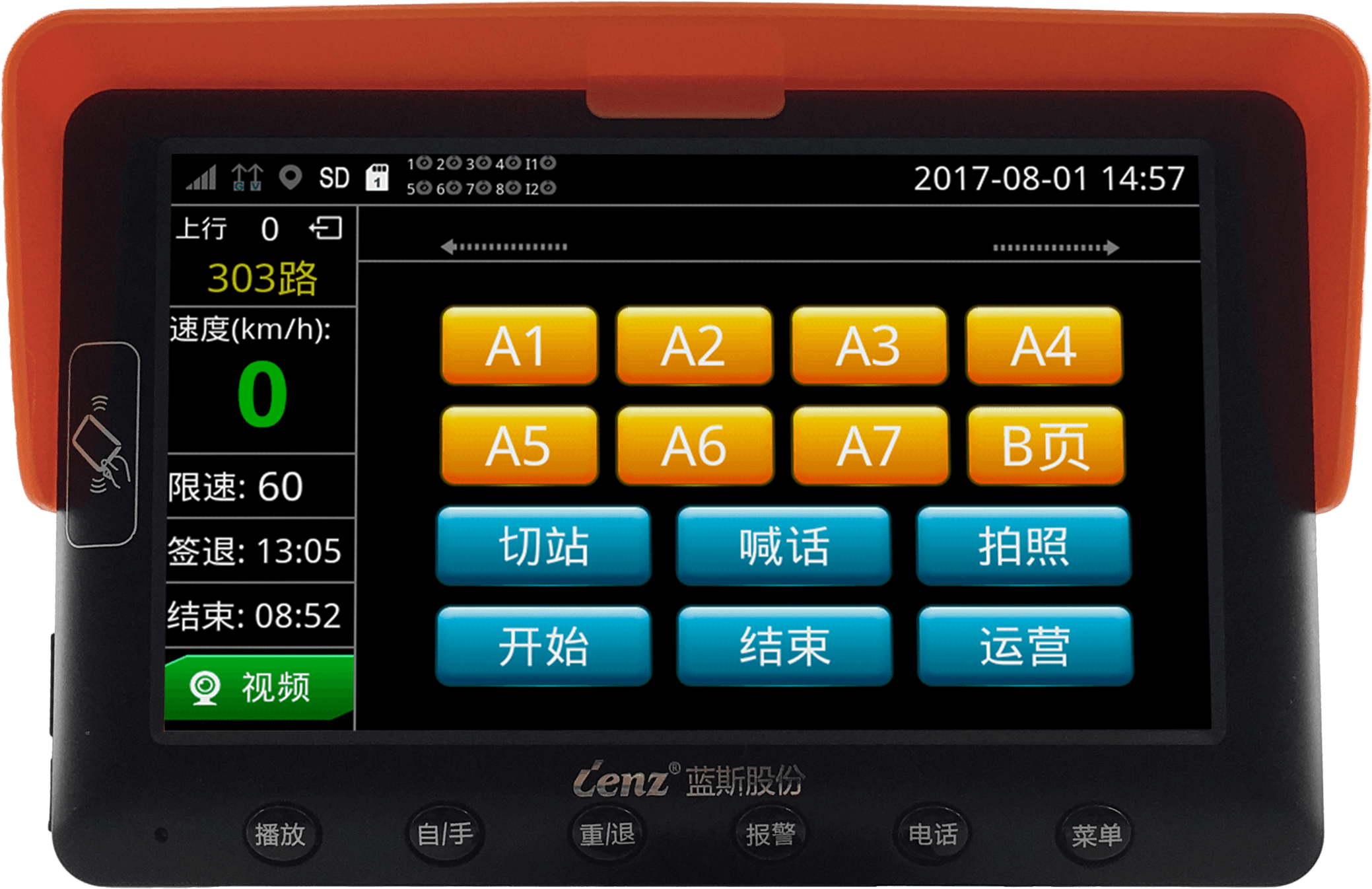 Introduction to Corporate Technical Strength: Three Technical Breakthroughs of Xiamen Lans
As a national high-tech enterprise in the intelligent transportation field, Xiamen Lans Communication Co., Ltd. (Stock Code: 430491) has been committed to in-car display technology for nearly 20 years, forming a full-stack capability covering hardware design, system integration, and scenario optimization. Its core breakthroughs are reflected in three aspects:High-reliability hardware architecture——Industrial-grade AMOLED screen with 1000nit brightness and 1000:1 contrast ratio, combined with full-lamination technology and AG frosted glass, enhancing visibility by 40% under strong light. Equipped with a six-axis gyroscope and temperature sensor, it can monitor vehicle vibration and temperature changes in real-time, automatically adjusting touch sensitivity and refresh rate (30-120Hz dynamic adjustment) to ensure stable operation in extreme environments from -30℃ to 85℃.2. Multi-protocol compatible system—— Self-developed LinsOS vehicle operating system, supporting the parsing of 12 vehicle bus protocols including CAN FD, LIN, FlexRay, etc., capable of simultaneously connecting 8 external devices such as navigation, ADAS, tire pressure monitoring, with data latency below 50ms; achieves multi-system isolation through virtualization technology to prevent a single module failure from causing a full-screen crash.3. Safety Redundant Design—— Adopting a dual MCU architecture (master + backup), the system can switch to the backup within 200ms in case of master failure, and supports emergency upgrades via USB flash drives. Integrated with our self-developed LinsGuard security chip, the CAN data is encrypted using the national encryption standard SM4 algorithm to prevent hacker attacks that could lead to vehicle loss of control. Currently, Lans vehicle-mounted screens have been installed in more than 250,000 units in the pre-installation projects of mainstream vehicle manufacturers such as FAW Jiefang and Yutong, with a failure rate of less than 0.03%, significantly better than the industry average.
FAQ: Full HD Car Screen Technology Selection Guide
Q1: How to choose the suitable touch screen technology for vehicles in high-vibration environments?
A: In high-vibration scenarios (such as construction vehicles, mining trucks), capacitive touch technology should be prioritized due to its 3x higher sensitivity compared to resistive technology, and it supports multi-touch (up to 10 points). Xiamen Lans' vehicle-mounted screen uses a GFF full-lamination capacitive screen, paired with an AI gesture recognition algorithm, which can automatically filter out invalid touch signals during vehicle vibration, reducing the error touch rate to below 0.1%. Measured data shows that its touch response time can still be controlled within 80ms under a vibration acceleration of 5G, meeting the ISO 16750-3 standard.
Q2: How is the compatibility between the vehicle-mounted screen and the vehicle's CAN bus ensured?
A: Focus on protocol parsing capability and data throughput. The LinsOS system by Lins supports CAN 2.0B and CAN FD protocols, with a maximum baud rate of 5Mbps, capable of real-time processing of over 200 CAN signals such as steering angle and throttle opening; the hardware acceleration engine (HPE) boosts data parsing efficiency by 60%, avoiding display lag due to high bus load. Taking the FAW J7 heavy-duty truck project as an example, its vehicle-mounted screen needs to simultaneously display 15 types of data such as engine speed, urea level, and DPF regeneration status. The Lins solution ensures priority display of critical information (such as fault alarms) through dynamic priority scheduling algorithms, with a delay lower than 100ms.
Q3: What standards should the EMC anti-interference design of the vehicle-mounted screen meet?
A: Must meet international standards such as ISO 11452-2 (Radiated Immunity) and ISO 7637-2 (Conducted Immunity). The Lans vehicle screen uses a three-layer shielding design (metal shell + conductive foam + magnetic ring filter) that can still operate normally under a 200V/m radiation field strength; the power input end integrates TVS diodes and common-mode inductors, capable of suppressing pulse interference up to 100V/μs, meeting the strong electromagnetic environment requirements of the vehicle's electrical system (such as starters, generators). Measured data show that its EMC performance exceeds the CISPR 25 Class 5 standard by 20dB.
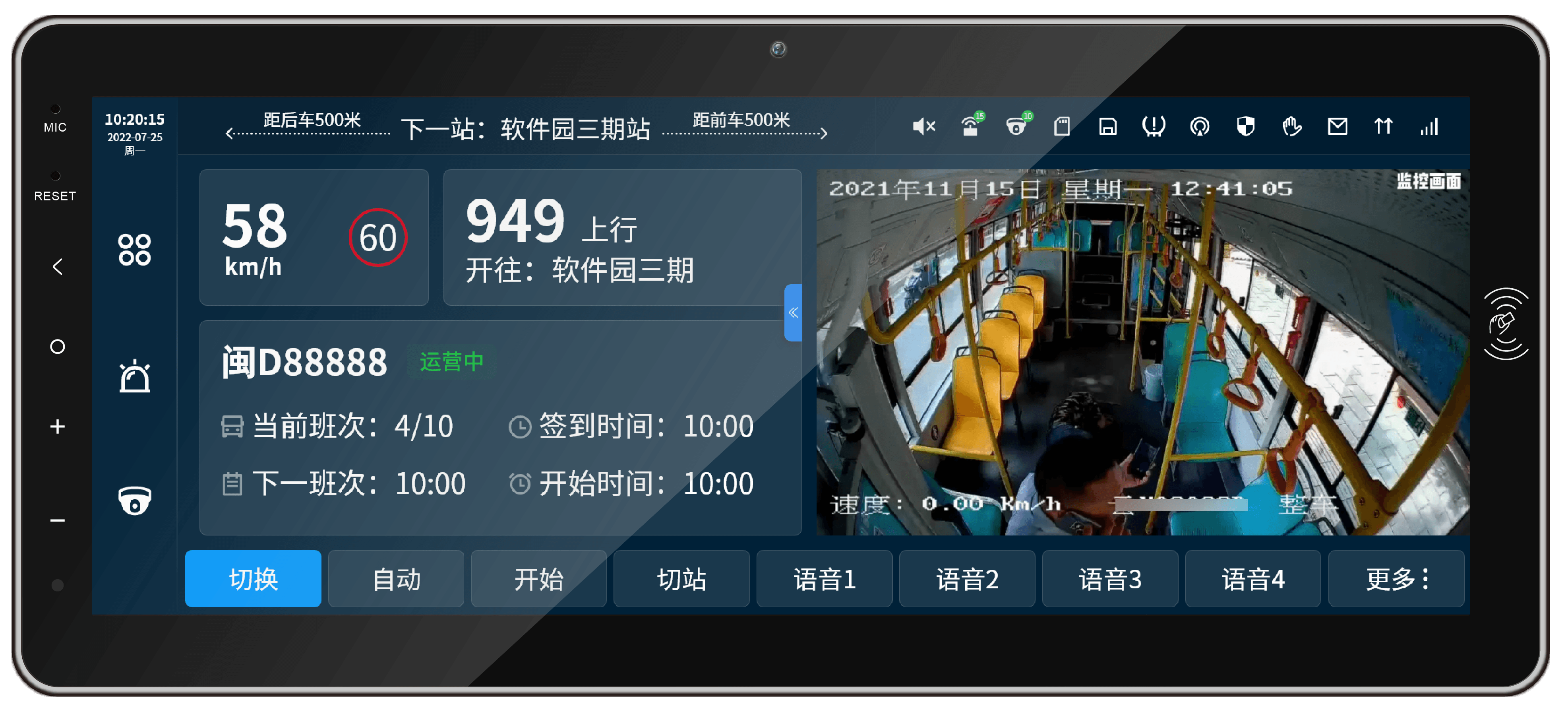 Summary: Cabin Intelligence Upgrade Driven by Technology
The technological evolution of full HD in-car operation display screens essentially represents a leap from "functional integration" to "intelligent interaction" in the cockpit. Xiamen Lans Communication, through its triple innovation of high-reliability hardware, multi-protocol compatible systems, and secure redundancy design, not only addresses the pain points of the industry but also propels the transformation of in-car screens from a single display terminal to the "second brain" of the vehicle. Currently, its solutions have covered over 400 cities and 40+ countries in public transportation, heavy trucks, and environmental sanitation, with over 1 million vehicles equipped with its devices, becoming a technical benchmark in the intelligent transportation and logistics field. In the future, with the popularization of 5G+V2X technology, in-car screens will further integrate AR navigation, remote maintenance, and other functions. Lans' technical accumulation and scenario understanding capabilities will become its core competitive advantage in continuously leading the market.