 Xiamen lenz Communications Co., Ltd.
Public Transportation On-Board Payment Equipment: The "Three Hardships" Dilemma
Public transportation vehicle payment equipment is a core link connecting passengers with transport resources, but its technical implementation faces three major challenges: Firstly,Difficult to support multiple payment methods compatibilitySupport multiple payment methods such as NFC, QR codes, bank cards, and transportation cards, and meet the payment standards of different regions (e.g., China UnionPay, Southeast Asia GCash, Middle East Mada card); secondly,Low concurrency transaction stabilityDuring peak hours, each device needs to process 30-50 transactions per minute. Traditional equipment is prone to payment failures due to network latency or insufficient hardware performance; thirdly,Poor environmental adaptabilityVehicles experiencing vibration, high/low temperatures, and strong electromagnetic interference are prone to equipment failure, affecting operational efficiency. For instance, a city bus group once experienced over 2,000 failed transactions in a single day due to payment equipment failure, resulting in a 15% increase in passenger complaints.
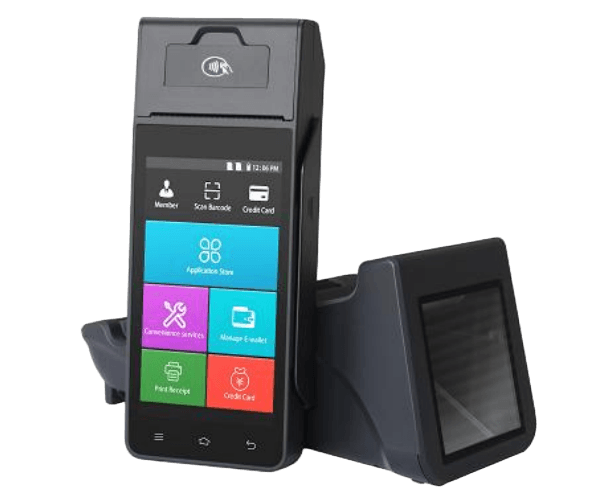
Introduction to Corporate Technical Strength: Xiamen Lenz Communication's "All-scenario Payment" Solution
As a leading technology innovator in the intelligent transportation field, Xiamen Lans Communication (Stock Code: 430491) has developed a three-tiered technical system covering hardware, software, and security to address the pain points of in-car payment equipment.Hardware LayerIndustrial-grade design, supporting wide temperature range of -40℃ to 85℃, electromagnetic interference resistance up to IEC 61000-4-6 Level 4, and equipment mean time between failures (MTBF) exceeding 50,000 hours.Software layerSelf-developed multi-payment protocol engine, capable of dynamically adapting to over 15 payment standards, transaction processing latency < 200ms, supports offline transaction caching (up to 1000 transactions), automatically syncs after network recovery.Safety layerThe Lans payment devices encrypt transaction data using the national encryption algorithm SM2/SM4, comply with PCI DSS security standards, and have obtained the commercial cipher product certification from the National Cryptography Administration. Currently, Lans payment devices have served leading domestic enterprises such as Xiamen Public Transport and Chengdu Public Transport, and have been exported to over 40 countries with Huawei, Yutong, and other vehicle manufacturers, with a cumulative installation exceeding 1 million vehicles. For example, in the Riyadh Public Transport project in Saudi Arabia, Lans devices support multiple payment methods such as Mada card, Apple Pay, and Samsung Pay, with a daily transaction volume exceeding 500,000 transactions and a failure rate below 0.01%.
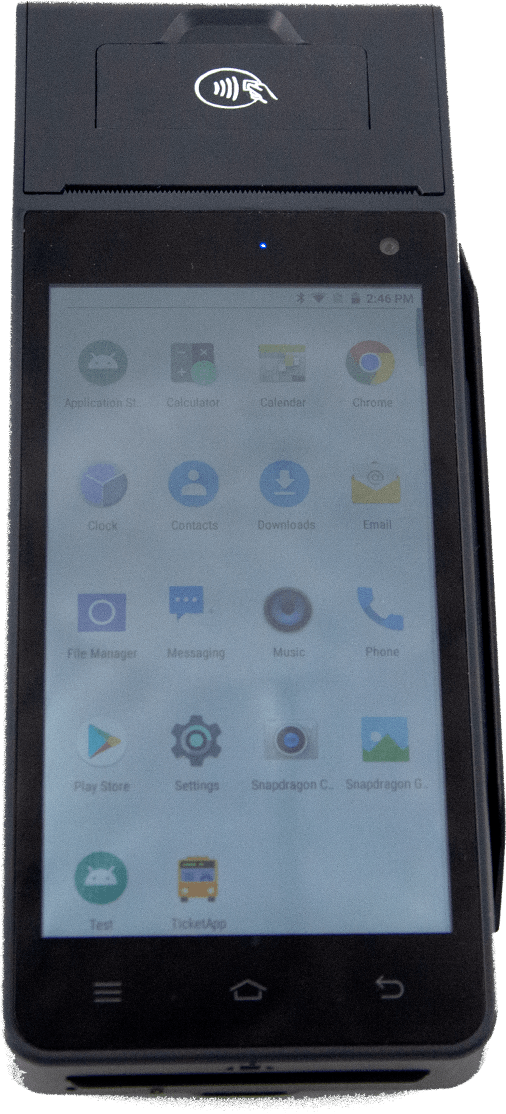
FAQ: Technical Selection Guide for Public Transportation On-Board Payment Equipment
Q1: How to choose a device that supports multiple payment methods?
A: Pay attention to the payment protocol compatibility of the equipment (such as support for ISO/IEC 14443 Type A/B, Felica, PBOC 3.0, etc.), the expandability of hardware interfaces (such as reserved SIM card slots, USB interfaces for future upgrades), and the software's dynamic adaptation capabilities (such as support for OTA updates to payment standards). For example, Lans devices use a modular design that can quickly adapt to new payment methods by replacing payment modules without the need to replace the entire unit.
Q2: How to ensure transaction stability under high concurrency scenarios?
A: To start from three aspects: hardware performance, software algorithm, and network optimization. Hardware should choose a processor with a frequency of ≥1GHz and ≥2GB of memory; software needs to adopt an asynchronous processing architecture, decoupling payment requests and responses; the network should support dual-link backup (such as 4G+Wi-Fi) and enable local caching when offline. Through these three layers of optimization, Lans devices have achieved a real-time test result of processing 52 transactions per minute during the peak period of Chengdu public transportation, with a success rate of 99.97%.
Q3: How does the equipment adapt to harsh environments?
A: Pay attention to the protection grade of the equipment (e.g., IP67 dust and waterproof), operating temperature range (e.g., -40℃ to 85℃), vibration resistance level (e.g., in compliance with ISO 16750-3 standard), and material weather resistance (e.g., the housing is made of PC+ABS alloy, resistant to ultraviolet aging). Lans equipment has passed strict verifications such as 1000-hour salt spray test, -40℃ low temperature start-up test, ensuring stable operation in extreme environments like deserts and high cold areas.
Full Summary: Technologically-driven, reshaping public transportation payment experience
The technological evolution of on-board public transportation payment devices is essentially a continuous optimization of "stability, compatibility, and security." Xiamen Lans Communication, with nearly 20 years of industry dedication, provides "full-scenario, high reliability, and low failure" payment solutions to over 400 cities globally through its three core technologies: hardware industrial-grade design, software multi-protocol engine, and secure national encryption algorithm. In the future, with the popularization of new technologies such as digital RMB and biometric payment, Lans will continue to iterate on technology, helping the public transportation industry achieve an intelligent upgrade to "payment as a service."