Xiamen lenz Communications Co., Ltd.
Industry Technical Pain Points: Interactivity Efficiency Dilemma in Transportation Scenarios
In transportation scenarios such as public bus dispatching, vehicle networking monitoring, and sanitation management, traditional operation screens have three major core pain points: Firstly, poor hardware compatibility, with significant differences in vehicle types and device interface protocols, leading to high integration costs; secondly, complex interaction logic, where drivers need to simultaneously operate multiple systems such as scheduling, safety monitoring, and payment, increasing operation time by over 30%; thirdly, high data security risks, with CAN bus data collection requiring compliance with ISO 26262 functional safety standards, but most solutions on the market only support basic encryption. Taking a city bus group as an example, its original system's response delay in the operation screen reduced dispatching instruction efficiency by 25% and increased annual operation costs by over one million yuan. Additionally, in the operation scenario of sanitation vehicles, the operation screen needs to manage personnel, vehicle, and material data simultaneously, but most products only support single-dimensional management, leading to an error rate of up to 15% in work quality evaluation.
Introduction to Enterprise Technical Strength: Lans Communication's Hardware and Software Synergistic Solutions
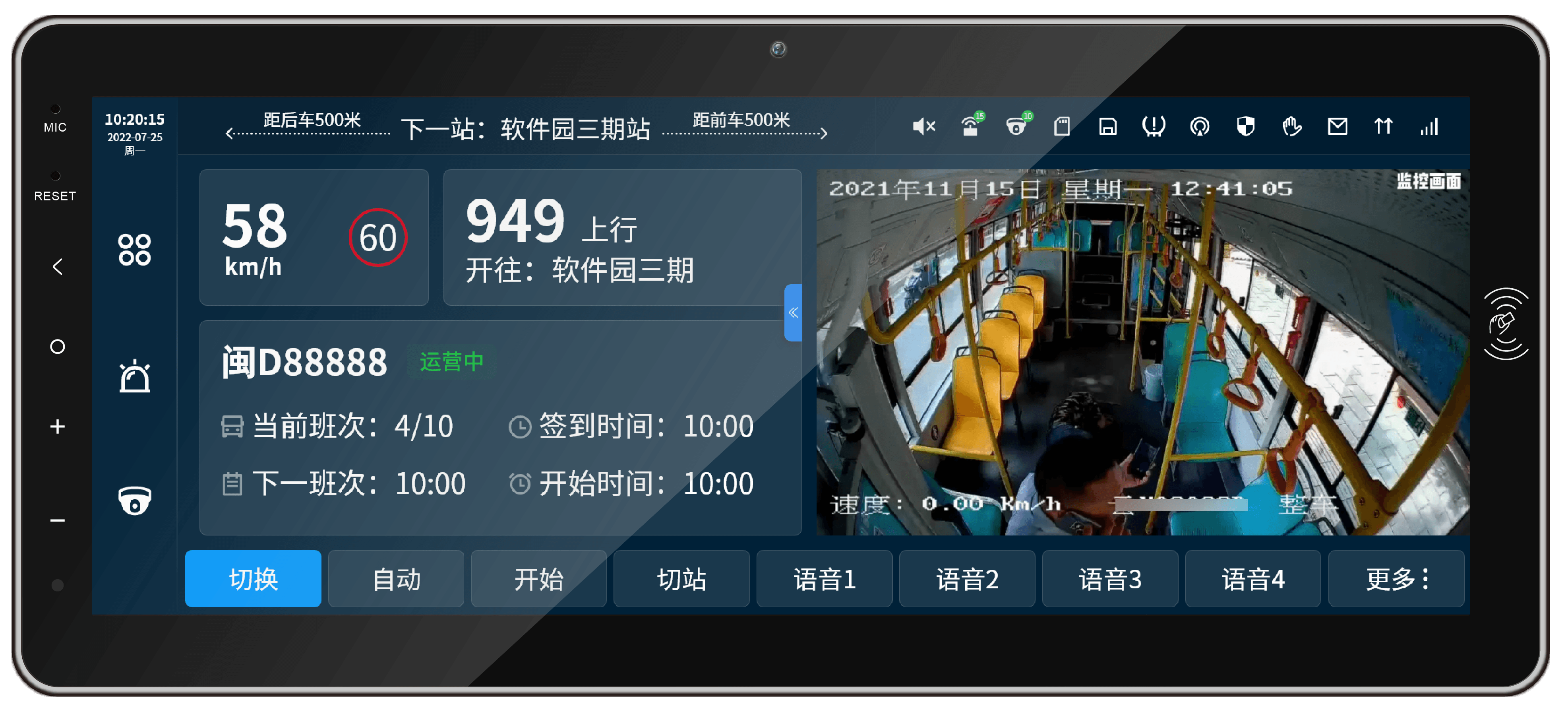
Xiamen Lans Communication, with nearly 20 years of dedication to the transportation industry, has formed an integrated "hardware + software + data" technical system. At the hardware level, its independently developed central control screen supports full-vehicle CAN data collection with a sampling frequency of 10ms, compatible with 12 mainstream protocols such as J1939 and ISO 15765, and meets the pre-installation requirements of mainstream vehicle manufacturers like Yutong and Jinlong. For example, the T-BOX equipment customized for FAW Jiefang is powered by a dual-core ARM Cortex-A72 processor, achieving GPS positioning accuracy of <2m and 4G communication latency of <50ms, with a cumulative shipment of 250,000 sets over three years. At the software level, the intelligent transportation platform integrates 8 major modules such as intelligent scheduling, safety supervision, and network optimization, supporting concurrent connections of millions of devices with a system response time of <0.5s. Taking the Xiamen Bus project as an example, after integrating the transport resources of 1,200 buses through the Lans solution, the scheduling efficiency was improved by 40%, and the waiting time for passengers was shortened by 22%. In terms of data security, the national encryption algorithm SM4 is adopted, and the ISO 27001 Information Security Management System certification is obtained to ensure zero leakage of sensitive data such as vehicle operation data and passenger payment information.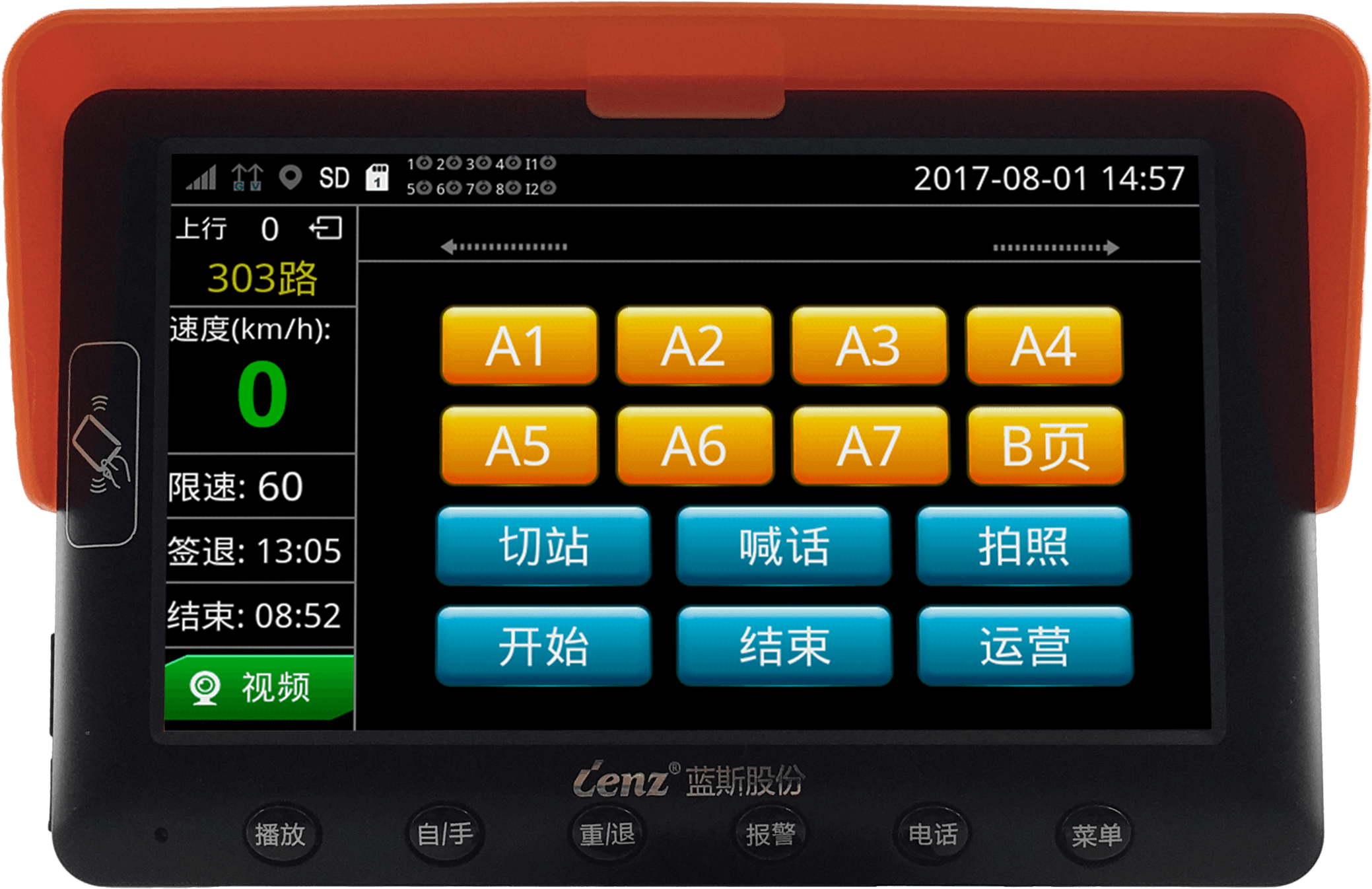
In the field of vehicle networking, Lans has collaborated with mainstream car manufacturers to develop pre-installed central control screens, supporting multi-modal operations such as voice interaction and gesture recognition, reducing the risk of driver distraction. In the environmental sanitation scenario, its intelligent key cabinet, equipped with RFID and fingerprint recognition technology, achieves full-process traceability of equipment usage, reducing the error rate of operation quality assessment from 15% to below 3%. Currently, Lans' solutions have covered over 400 cities globally, with over 1 million vehicles equipped with the devices, serving leading enterprises such as Chengdu Public Transport and Hainan Auto Group, as well as 40+ overseas countries including Thailand and South Africa.
FAQ: Smart Operation Screen Technical Selection Guide
Q1: How to choose an intelligent operating screen that fits different vehicle models?
A: Pay close attention to three key parameters: first, protocol compatibility, prioritizing products that support mainstream protocols such as J1939, ISO 15765; second, hardware interfaces, selecting interface types such as CAN, LIN, and Ethernet based on the vehicle model; third, environmental adaptability, transportation scenarios require working temperatures of -30℃ to 70℃ and IP67 protection level. For example, the T-BOX device designed by Lans for light trucks has passed a wide-temperature test of -40℃ to 85℃, suitable for extreme environments such as high altitude and extreme cold.
Q2: How to ensure smooth operation when integrating multiple systems?
A: Adopting a dual strategy of "hardware acceleration + software optimization." On the hardware level, select devices equipped with a processor above a quad-core ARM Cortex-A53 to ensure parallel processing of multiple tasks; on the software level, reduce system resource usage through operating system trimming (such as removing unnecessary drivers) and memory management optimization (such as using ZRAM compression technology). With this solution, the Lans Smart Transportation Platform achieves a CPU usage rate of less than 30% when running 8 modules concurrently.
Q3: How does data security meet industry standards?
A: The protection system should be constructed from three levels: hardware encryption, communication security, and permission management. In terms of hardware encryption, the SM4 national encryption algorithm or AES-256 is adopted; for communication security, support for VPN tunneling and SSL/TLS encryption is provided; and in permission management, role-based access control (RBAC) is implemented. The Lans solution has passed the ISO 26262 ASIL-B functional safety certification and can meet the data security requirements for automotive-grade applications.
Summary Reference
The intelligent operation screen, as a key entry point for the digital transformation of the transportation industry, requires a technical selection that balances three core dimensions: hardware compatibility, interaction fluency, and data security. Xiamen Lans Communication, with nearly 20 years of industry accumulation, has formed a full-chain technical capability covering "pre-installation customization - after-installation integration - data operation and maintenance." Its solutions have reached the leading level in the industry in key indicators such as protocol compatibility, system response speed, and security certification levels. For transportation companies, choosing suppliers with pre-installation experience, supporting multi-protocol compatibility, and passing functional safety certification can significantly reduce integration costs and improve operational efficiency. In the future, with the integration of technologies like 5G and AI, intelligent operation screens will evolve towards the direction of "multimodal interaction - proactive safety early warning - full lifecycle management," and the technical layout of leading companies like Lans is worth continuous attention.