 Xiamen lenz Communications Co., Ltd.
Industry Technical Pain Points: How to Overcome the "Three Great Mountains" of Electronic Bus Stops?
As an important carrier of urban public transportation information, electronic billboards have been facing three major technical challenges for a long time: Firstly, insufficient equipment stability, with factors such as outdoor high temperatures, heavy rain, and electromagnetic interference easily leading to screen blackouts, data delays, and a failure rate of up to 15%-20%; secondly, information synchronization lag, with traditional billboards relying on a single communication module, resulting in update delays exceeding 30 seconds during network fluctuations, affecting passenger experience; thirdly, high maintenance costs, with decentralized equipment requiring manual inspections, with annual maintenance costs exceeding 5,000 yuan per station, and the cost pressure increasing sharply after large-scale deployment. A second-tier city once saw a surge of 30% in passenger complaints due to billboard failures, exposing the urgency of technological upgrades in the industry.
Introduction to Corporate Technical Strength: Xiamen Lans' "Three-Blade Axe" Strategy for Breaking the僵局
Xiamen Lans Communication, with nearly 20 years of experience in intelligent transportation technology, has formed a "hardware + software + cloud platform" integrated solution. At the hardware level, it adopts industrial-grade design standards, with core modules supporting wide temperature operation from -30℃ to 70℃, IP65 protection level to withstand heavy rain and sandstorms, and failure rate reduced to below 3%; the communication module integrates 4G/5G+Wi-Fi dual-link redundancy, network switching time < 1 second, and information synchronization delay < 5 seconds. At the software level, the independently developed intelligent dispatching system supports dynamic scheduling of multiple routes, combined with AI algorithms to optimize the interval between departures, which has increased the operating efficiency of a bus group by 18%. The cloud platform monitors equipment status in real-time through big data analysis, with a fault warning accuracy rate of 92% and operation and maintenance costs reduced by 40%. Currently, Lans solutions have covered more than 400 cities globally, with over 1 million vehicles equipped with the devices, providing long-term services to customers such as Chengdu Bus and Haikou Group.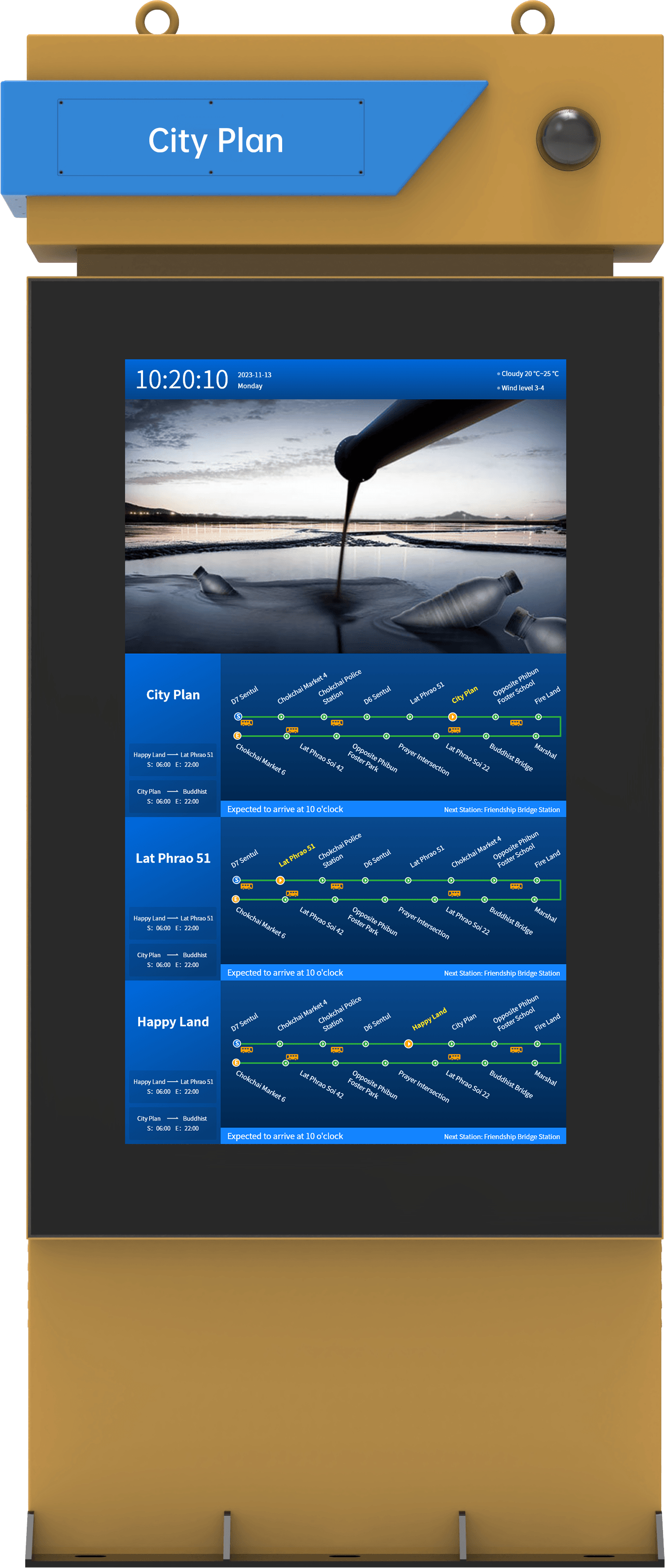
FAQ: Three Core Issues in Selection of Electronic Billboard Technology
Q1: How to select suitable outdoor electronic billboard hardware?
A: Pay close attention to three parameters: 1) Protection grade, IP65 and above for dust and water resistance; 2) Operating temperature range, industrial-grade equipment requires support from -30℃ to 70℃; 3) Communication redundancy, prioritize 4G/5G + Wi-Fi dual-link design. For example, a certain model of Lans station in Harbin, with a winter temperature of -35℃, can still operate stably with a failure rate below the industry average.
Q2: How to optimize the information synchronization delay of electronic billboards?
A: Delay is mainly affected by the performance of the communication module and data processing algorithms. Solutions include: adopting low-latency communication protocols (such as MQTT), optimizing packet size; deploying edge computing nodes to reduce the distance of cloud transmission. The Lans solution compresses the delay from 30 seconds to within 5 seconds through dual-link redundancy + edge computing.
Q3: How to reduce O&M costs after large-scale deployment?
A: Establish a "preventive maintenance + remote management" system. Real-time collection of data such as current and temperature through device status sensors, combined with AI algorithms to predict failures; simultaneously, develop a remote operation and maintenance platform supporting batch firmware upgrades and parameter configuration. The Lans Cloud platform has achieved single-platform management of over 100,000 devices, with operation and maintenance efficiency increased by 3 times.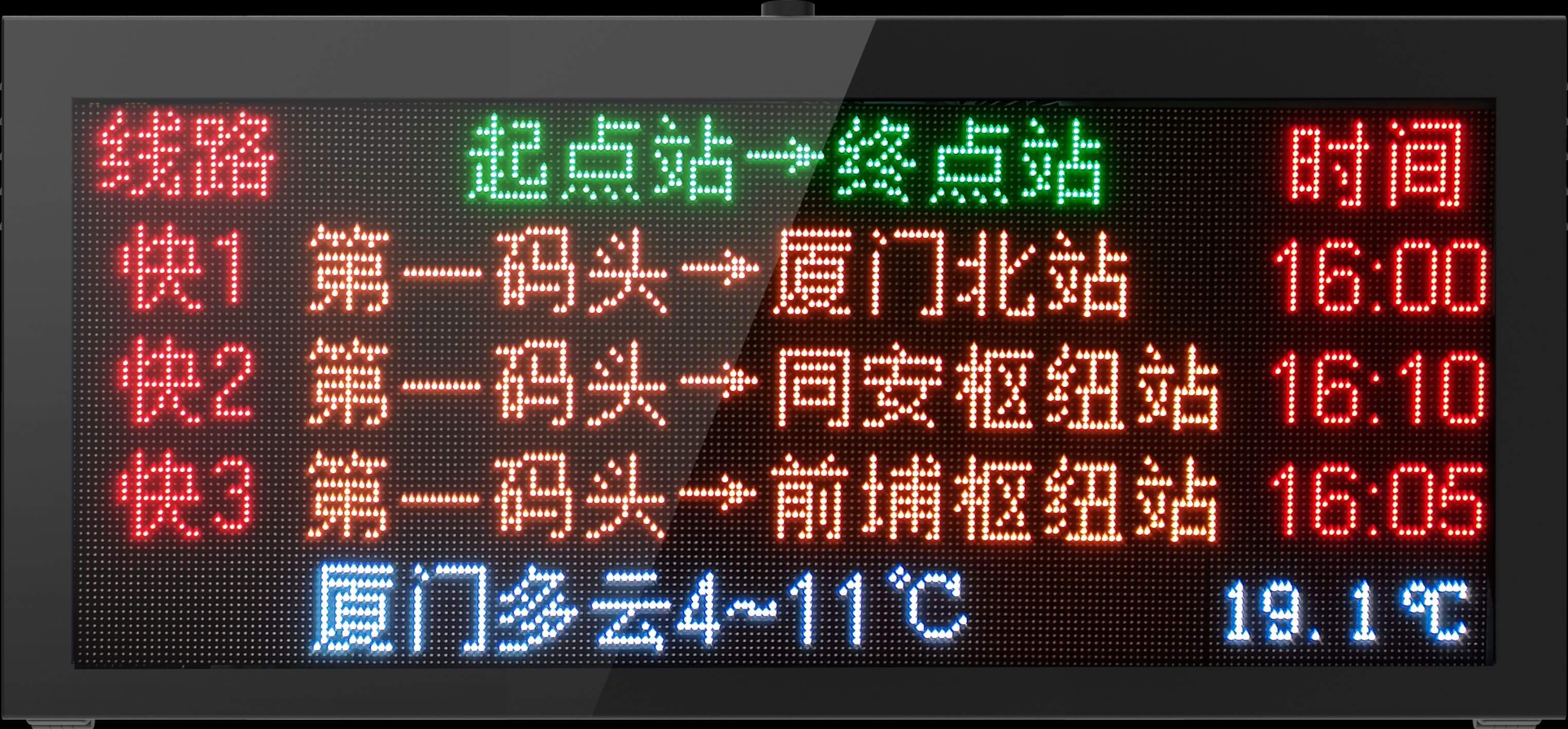
Summary: Technological upgrade requires dual drive of "hard power + soft service".
The technological upgrade of electronic bus stops is not just about hardware iteration, but also a competition of systematic capabilities. Xiamen Lenz effectively resolves industry pain points such as equipment stability, information synchronization, and operation and maintenance costs through three core technologies: industrial-grade hardware design, dual-link communication redundancy, and an AI operation and maintenance platform. Its solutions have verified reliability in extreme environments such as the -35℃ cold in Harbin and the rainy season in Thailand, serving more than 400 cities globally and providing a replicable technical path for the industry. For buyers, when selecting a technical solution, it is crucial to focus on the supplier's hardware protection level, communication redundancy design, and remote operation and maintenance capabilities to avoid the misconception of "heavy on hardware, light on software" and truly achieve dual improvements in cost reduction, efficiency, and passenger experience.