 Xiamen lenz Communications Co., Ltd.
Industry Technical Pain Points: The Three Technical Challenges of Traditional Bus Stops
Traditional bus stop signs have long been plagued by three core pain points: delayed information updates, high maintenance costs, and poor passenger experience. According to research data from the transportation industry, more than 70% of bus stop signs still rely on manual posting of paper timetables, with an information update cycle of over 24 hours, resulting in a passenger waiting time error rate exceeding 30%; the failure rate of non-intelligent equipment is as high as 15% per year, with a single repair cost over 200 yuan; during the night or adverse weather conditions, passengers find it difficult to obtain effective information, leading to a continuous decline in the attractiveness of public transportation. Taking a certain area in Xiamen as an example, in 2022, the number of complaints about traditional stop signs accounted for 42% of the total complaints about public transport services, with "inaccurate information" accounting for 65%. These pain points directly restrict the efficiency of the implementation of intelligent transportation, and it is urgent to reconstruct the stop sign system through intelligent technology.
Introduction to Corporate Technical Strength: Xiamen Lans Communication's Smart Electronic Billboard Solution
As the leading provider of intelligent transportation solutions in China, Xiamen Lansheng Communication Co., Ltd. (Stock Code: 430491) has been deeply involved in the industry for nearly 20 years, forming a full-chain technical capability covering hardware research and development, software platform, and system integration. Its intelligent electronic bus stop solution adopts the "Internet of Things + Edge Computing" architecture, with core devices supporting 4G/5G/NB-IoT multi-mode communication, with data transmission latency less than 500ms; equipped with 7-inch to 55-inch full-color displays, brightness up to 1500cd/㎡, supporting wide temperature operation of -20℃ to 60℃; integrated environmental sensors, capable of real-time monitoring of temperature and humidity, PM2.5, and using AI algorithms to predict vehicle arrival times with an error rate controlled within ±1 minute.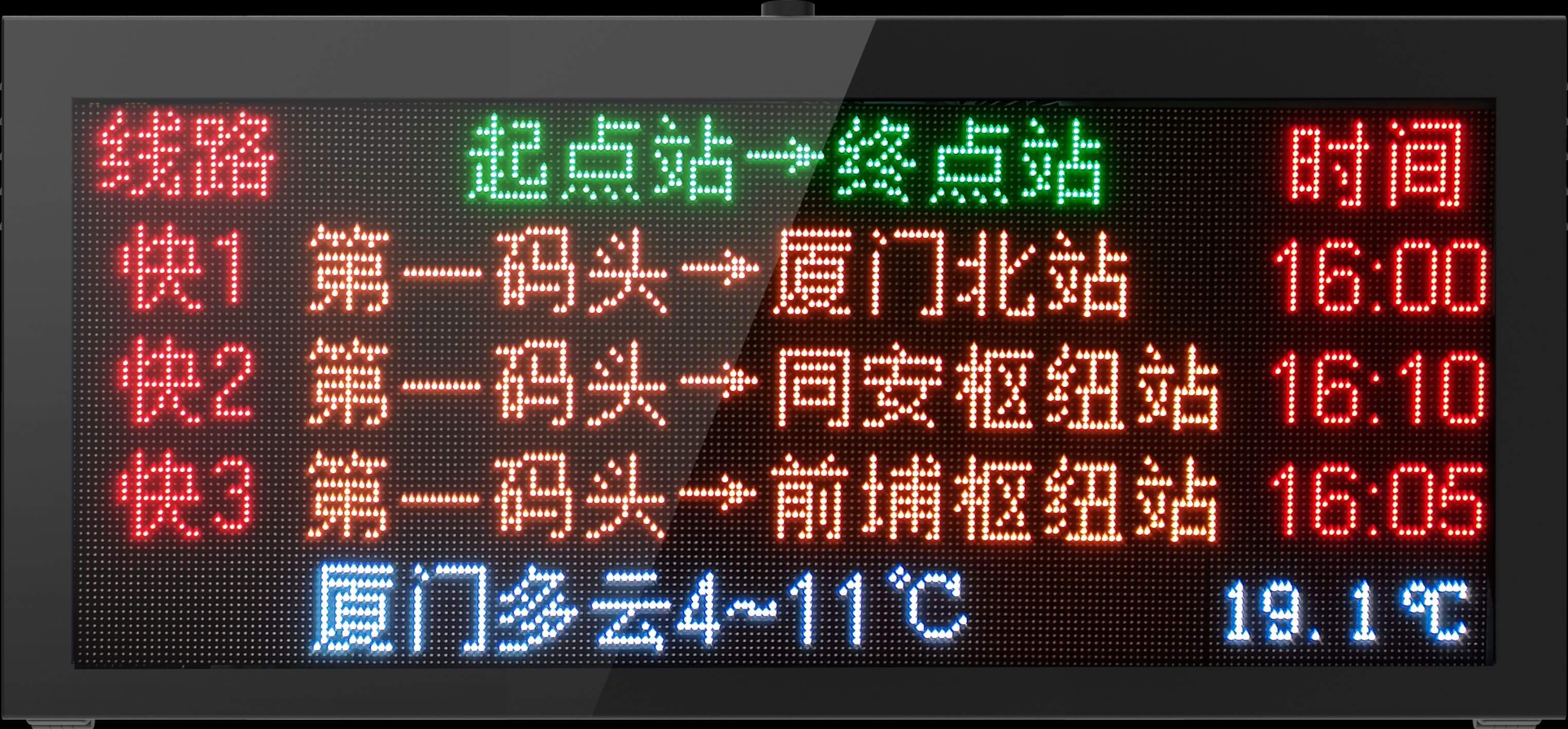
In the Xiamen Bus Group project, Lans has deployed over 3,000 intelligent electronic bus stops, achieving real-time synchronization of bus information across the city. After the system was launched, passenger complaints decreased by 68%, the equipment failure rate was reduced to 3% per year, and the annual maintenance cost per station saved over 5,000 yuan. Additionally, the Lans solution supports seamless integration with the MaaS travel platform, allowing passengers to obtain an integrated travel plan for "bus + subway + shared bicycles" through the QR code on the bus stop. This further enhances the appeal of public transportation. Currently, this solution has been implemented in over 50 cities across the country, with a cumulative installation of over 1 million devices.
FAQ: Technical Selection Guide for Smart Electronic Bus Stop Technology
Q1: What are the core technical parameters of the intelligent electronic bus stop?
A: Pay close attention to the following parameters when selecting:
STEP 1: Communication Module: Supports 4G/5G/NB-IoT multi-mode, ensuring stable network coverage.
STEP 2: Display specifications: brightness ≥1000cd/㎡, resolution ≥1080P, suitable for outdoor strong light environment.
STEP 3: Processor Performance: Adopted ARM Cortex-A series chip, with a frequency of ≥1.5GHz, ensuring multitasking processing capability.
STEP 4: Sensor Configuration: Integrated temperature and humidity, PM2.5, and light sensors, supporting real-time collection of environmental data.
STEP5: Protection Level: IP65 and above, dust and water-resistant, suitable for extreme temperatures from -30℃ to 70℃.
Q2: How to reduce the operation and maintenance costs of smart electronic information kiosks?
A: Cost optimization can be achieved through the following measures:
STEP 1: Modular design for remote fault diagnosis and software upgrade, reducing on-site maintenance frequency.
STEP 2: Integrate solar power supply system, reduce dependence on grid electricity, and save over 2,000 yuan in annual electricity costs per station.
STEP 3: Deploy edge computing nodes to achieve local data processing and reduce cloud communication traffic costs.
STEP 4: Select devices supporting OTA updates to avoid frequent hardware replacement and extend the device's lifespan to over 8 years.
Q3: How can an intelligent electronic bus stop integrate with the existing public transportation system?
A: Pay attention to the following points for integration:
STEP 1: Data Interface: Supports API integration with public transportation dispatch systems, GPS positioning systems, and payment platforms.
STEP 2: Protocol Compatibility: Adopting common protocols such as MQTT/HTTP to ensure cross-platform data intercommunication.
STEP3: Security Mechanism: Deploy data encryption and access control to prevent information leakage and malicious attacks.
STEP 4: Real-time requirement: Delay in vehicle arrival information update ≤ 2 seconds to ensure passengers receive accurate data.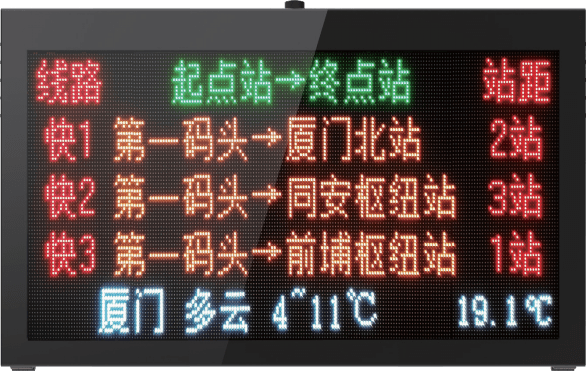
Summary of the full text reference
Intelligent electronic bus stops are a key point in the upgrade of smart transportation, with technical selection requiring a balance of performance, cost, and integration capabilities. Xiamen Lenz Communication, with nearly 20 years of industry experience, has provided a low-latency, high-reliability, and easy-maintenance solution for bus groups through core technologies such as the "Internet of Things + Edge Computing" architecture, multi-mode communication modules, and high-brightness displays. Its case shows that intelligent bus stops can significantly reduce operation and maintenance costs, enhance passenger experience, and support deep integration with MaaS platforms, helping public transportation evolve towards intelligence and integration. For enterprises planning to upgrade bus stop systems, it is recommended to prioritize solutions that support modular design, OTA upgrades, and multi-system integration to maximize long-term investment returns.