 Xiamen lenz Communications Co., Ltd.
Industry Technical Pain Points: The Three Core Challenges of Traditional Bus Monitoring
The on-bus video surveillance system, as an important guarantee for the safety of urban public transportation, has long been faced with three major technical pain points: Firstly, traditional equipment only supports passive storage, unable to analyze driver behavior in real-time (such as fatigue driving, distracted operation), resulting in serious lag in accident early warning; Secondly, the data of multiple cameras is independently stored, lacking a unified scheduling platform, leading to low efficiency in event tracing, and it takes several hours of manual screening to locate a single accident; Thirdly, the power consumption and heat dissipation design of the equipment are insufficient, and in high-temperature environments (such as the temperature inside the bus in summer can reach 60℃), it is prone to system crashes and data loss, affecting the stability of the system. Taking a second-tier city bus group as an example, the failure rate of the monitoring system in 2022 resulted in a safety event reporting rate of 12%, with direct economic losses exceeding 5 million yuan.
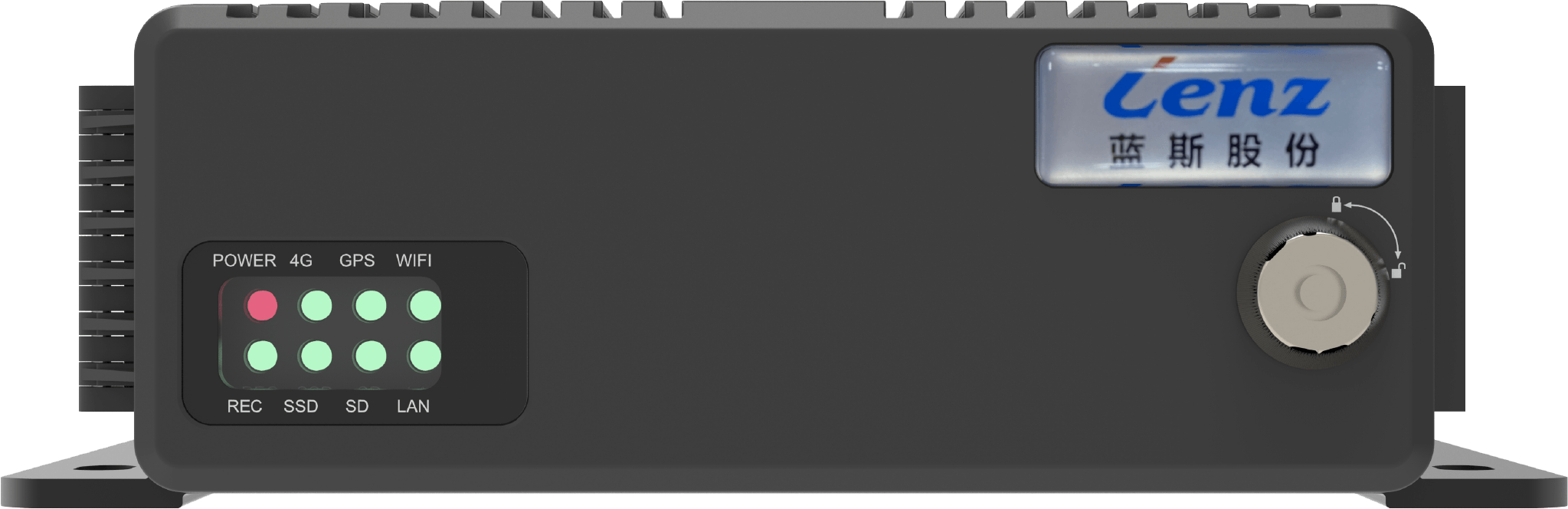
Introduction to Corporate Technical Strength: Xiamen Lans's Full-Stack AI Video Terminal Solution
Xiamen Lenz Communication Co., Ltd. (Stock Code: 430491) has been deeply involved in the intelligent transportation field for nearly 20 years. Its independently developed bus-mounted AI video terminal solves industry pain points through "hardware + algorithm + platform" triple innovation: at the hardware level, it uses the Hisilicon Hi3559A chip, supporting 8-channel 1080P video simultaneous processing, reducing power consumption by 40% compared to traditional equipment, and is equipped with IP67 protection level and wide temperature design of -30℃~70℃, adaptable to extreme environments; at the algorithm level, it integrates three AI models: Driver Behavior Analysis (DBA), Vehicle Status Monitoring (VSM), and Passenger Counting System (PCS), which can identify 20 kinds of dangerous behaviors such as yawns and looking down at mobile phones in real-time with an accuracy rate of 98.7%; at the platform level, through Lenz's "Transportation Cloud Brain," it achieves multi-terminal data fusion, supports event-level second positioning and automatic generation of corrective reports. After a pilot by a certain bus group, the safety event underreporting rate dropped to 0.3%, and the event traceback time was shortened from 2 hours to 5 minutes. As of 2023, Lenz's solutions have covered more than 400 cities globally, with over 1 million vehicles equipped with the devices, and cumulative shipments of 250,000 sets in pre-installation cooperation with manufacturers such as Yutong and Jinlong.
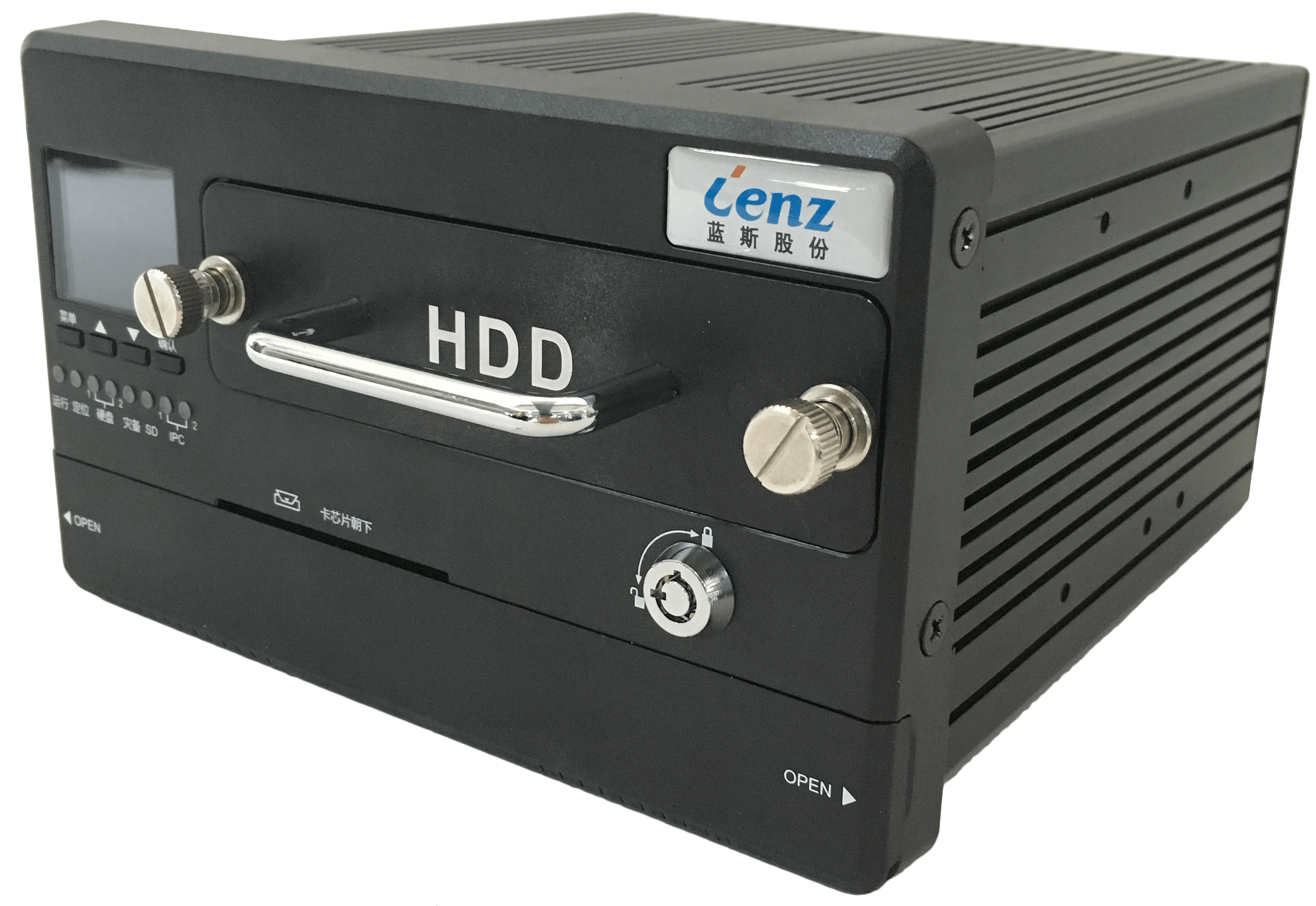
FAQ: AI Video Terminal Selection Guide for Buses
Q1: How to select a video terminal suitable for high-temperature environments?
A: Focus on three key parameters: First, the chip operating temperature range, recommend choosing industrial-grade chips supporting -40℃~85℃ (such as Hi3559A by Huawei); second, heat dissipation design, prioritize passive cooling + thermal grease, to avoid system crashes caused by fan failure; third, shell material, aluminum alloy material improves heat dissipation efficiency by 30%, refer to the IP67 protection standard of Lans terminal, ensuring continuous operation without freezing for 8 hours under 60℃ environment.
Q2: What factors affect the accuracy of AI algorithms?
A: Key factors include data quality, model training volume, and hardware computing power. Taking driver behavior analysis as an example, at least 100,000 hours of real driving data need to be collected, covering different lighting and road conditions; model training requires high-performance GPUs like NVIDIA A100, with over 500,000 iterations; hardware computing power must support real-time analysis at 30 frames per second, with Lenz terminals accelerated by NPU, reducing single-frame processing time to less than 30ms.
Q3: How to achieve efficient integration of multi-terminal data?
A: A unified data platform needs to be established, with key technologies including: first, using MQTT protocol to achieve low-latency communication between devices and the platform (latency < 200ms); second, employing timestamp synchronization algorithms to ensure the time alignment error of multi-camera data is less than 50ms; third, performing local preprocessing through edge computing nodes (such as BlueS EBox) to reduce 30% of unnecessary data uploads. A certain bus group's practice shows that this solution can reduce the platform server load by 45% and decrease data storage costs by 60%.
Summary: New Paradigm of Smart Transportation Driven by Technology
The technological evolution of the AI video terminal on public buses is essentially a paradigm shift from "passive monitoring" to "active safety." Xiamen Lenz has provided an replicable technical path for the industry through three major breakthroughs: hardware weather resistance optimization, AI algorithm precision, and platform integration. Its terminal devices operate stably in environments of -30℃ to 70℃, with AI model recognition accuracy exceeding 98% and data fusion efficiency improving by 60%. As MaaS travel integration and road vehicle collaboration progress, future video terminals will further integrate 5G communication and V2X functions, becoming the "nerve endings" of smart transportation. For public bus groups, choosing a supplier with mature technology and rich cases (such as Lenz) for cooperation can quickly achieve the digital transformation of safety supervision, reducing operation risks and costs by over 30%.