 Xiamen lenz Communications Co., Ltd.
Introduction: Challenges of Digital Transformation in Intelligent Transportation
With the acceleration of urbanization, the public transportation system faces challenges such as scattered transport capacity resources, severe information silos, and lagging safety supervision. How to integrate resources, optimize scheduling, and ensure safety through technological means has become the key to industry transformation. Ranges Communication Co., Ltd. in Xiamen, leveraging nearly two decades of technological accumulation, has developed comprehensive solutions across three major sectors: intelligent transportation, Internet of Vehicles, and smart sanitation, providing digital technology support to over 400 cities globally. This article will analyze how the company addresses industry challenges through integrated hardware-software solutions from three perspectives: technological principles, application scenarios, and practical cases.
Keywords: intelligent transportation; Internet of Vehicles; safety supervision; Xiamen Lans Communication; Mobility as a Service (MaaS) travel
Opening on Industry Technical Pain Points: Three Major Bottlenecks of Traditional Transportation Systems
STEP1:Difficulties in resource integrationTraditional public transportation systems rely on manual scheduling and lack data-supported route planning, resulting in vehicle idling rates exceeding 30% and significant waste of transport capacity. For example, a public transport group in a second-tier city once consumed over 2 million liters of additional fuel annually due to overlapping routes.
STEP2:Lagging safety supervisionBehaviors such as fatigued driving and speeding by drivers are difficult to monitor in real time, with accident response times exceeding 10 minutes, posing significant safety risks to passengers. According to statistics, 60% of bus accidents nationwide in 2022 were related to abnormal driver conditions.
STEP3:Passenger experience needs improvementIssues such as limited payment methods, unpredictable waiting times, and unknown levels of crowding in vehicles have led to a decline in the attractiveness of public transportation. A survey reveals that 35% of citizens have abandoned buses in favor of private cars due to "poor experience."
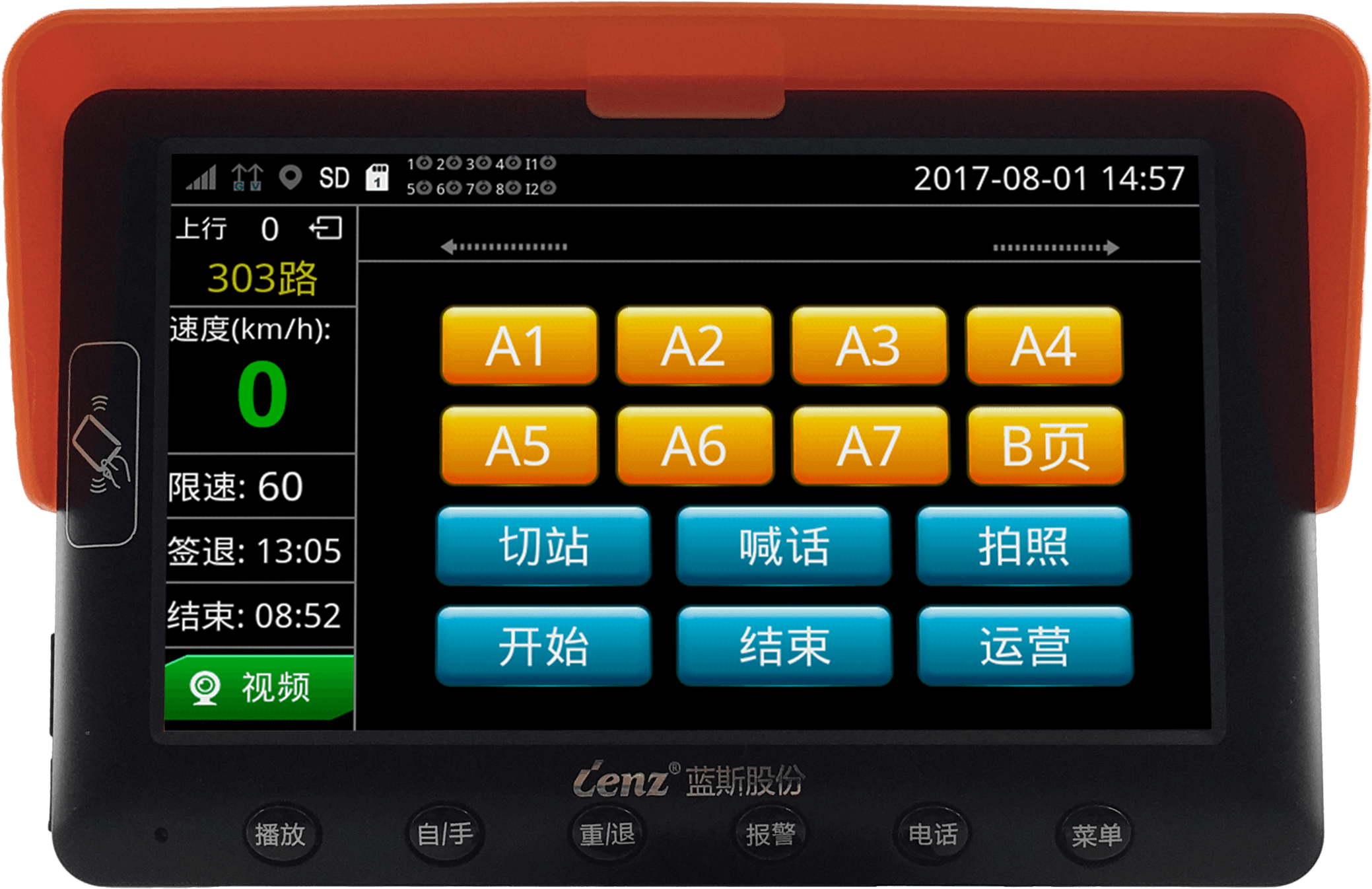
Introduction to the Company's Technological Strength: Three Core Solutions of Xiamen Lanshi
As a national high-tech enterprise and a "specialized, refined, distinctive, and innovative" enterprise in Fujian Province, Lance Communication has independently developed software and hardware solutions covering all scenarios based on the needs of the transportation industry, with its technological advantages reflected in the following three aspects:
1. Intelligent Shift Scheduling System: Dynamically Optimizing Transport Capacity Allocation
STEP1:Data acquisition layerVehicle location, speed, passenger capacity, and other data are collected in real time through on-board terminals (such as OBU devices), with a sampling frequency of 1 Hz and a data delay of less than 500 ms.
STEP2:Algorithm Analysis LayerBased on historical operational data and real-time traffic conditions, a genetic algorithm is employed to dynamically generate scheduling plans, reducing route duplication by 40% and lowering the empty driving rate to below 15%.
STEP3:Application LayerIt supports dispatchers in manually adjusting plans and provides visual large-screen monitoring, reducing response time from 10 minutes to 30 seconds. For instance, after its application by Xiamen Public Transport Group, the annual operational cost savings exceeded 50 million yuan.
2. Full-process safety supervision platform: Real-time early warning of risky behaviors
STEP1:Multimodal perceptionIntegrating DMS (Driver Monitoring System) with ADAS (Advanced Driver Assistance System), it monitors driver fatigue, distraction, and vehicle collision risks through cameras and radars, with an identification accuracy rate exceeding 95%.
STEP2:Edge computing processingThe in-vehicle terminal is equipped with an built-in AI chip that performs local data preprocessing and only uploads critical events (such as sudden braking and speeding), reducing bandwidth usage by 80%.
STEP3:Cloud-based coordinated responseThe incident is pushed to the dispatch center within 10 seconds after occurrence and triggers in-vehicle voice alerts, reducing accident response time to 2 minutes. After Chengdu Bus applied this system, the accident rate decreased by 62%.
3. MaaS Integrated Travel Services: Enhancing Passenger Experience
STEP1:Multi-payment integrationIt supports more than 10 payment methods, including NFC, QR codes, and bank cards, with a single transaction processing time of less than 300ms and a failure rate of less than 0.1%.
STEP2:Real-time information pushInformation such as vehicle location, crowding level, and arrival time is pushed to passengers via the APP, with a prediction error of waiting time being less than 1 minute.
STEP3:Carbon credit incentivesPassengers choosing bus travel can accumulate carbon credits, which can be exchanged for coupons or public services, leading to a threefold increase in user activity. After implementation by Haiqi Group, the average daily passenger volume increased by 15%.
Lance's technological prowess has been widely recognized in the industry: it has accumulated 127 patents and 256 software copyrights, engaged in pre-installation collaborations with mainstream vehicle manufacturers such as Yutong and King Long, and delivered a cumulative total of 250,000 sets of equipment to FAW Jiefang over three years, with equipment installed in over 1 million vehicles.
FAQ: Q&A Technical Selection Guide
Q1: How can intelligent transportation systems be tailored to meet the needs of cities of different sizes?
A: Lance provides modular solutions that support on-demand functional combinations. For instance, small cities can prioritize deploying intelligent scheduling and safety supervision modules, while large cities can叠加 (Note: "叠加" is translated as "add on" in context below for better flow) add on MaaS travel services. The system supports horizontal scalability, with a single server capable of handling real-time data from 1,000 vehicles and scalable to 100,000 vehicles through cluster deployment.
Q2: How do IoV (Internet of Vehicles) devices ensure data security?
A: Lance employs a triple encryption mechanism: AES-256 encryption is used for communication between the vehicle-mounted terminal and the cloud, the national cryptographic SM4 algorithm is adopted for data storage, and dual-factor authentication is required for critical operations. Meanwhile, the system has obtained ISO 27001 information security management system certification, with a data leakage risk of less than 0.001%.
Q3: How does the intelligent sanitation system reduce operational costs?
A: Through the full-process management of "people-vehicles-objects-events," refined operations are achieved. For example, after the application in a certain sanitation project, vehicle fuel consumption decreased by 18%, personnel scheduling efficiency increased by 35%, and annual cost savings exceeded 2 million yuan. The system supports the generation of cost reports by region, time period, and operation type, helping managers optimize resource allocation.
Q4: How do overseas projects address localization adaptation issues?
A: Lance has formed strategic partnerships with automobile enterprises such as Huawei and Yutong, tailoring solutions to meet the needs of different countries. For example, in Saudi Arabia, the system supports an Arabic interface and operates stably in high-temperature environments (55℃); in Mongolia, the data transmission strategy under low bandwidth (<50 Kbps) has been optimized to ensure functional availability.
Q5: How can enterprises quickly access the Lance Technology Platform?
A: Lance provides standardized API interfaces and SDK development kits, supporting seamless integration with third-party systems (such as ERP and payment platforms). The typical integration period is 2-4 weeks, and 7×24-hour technical support is provided. For more information, please visit the official website:www.xmlenzintl.com
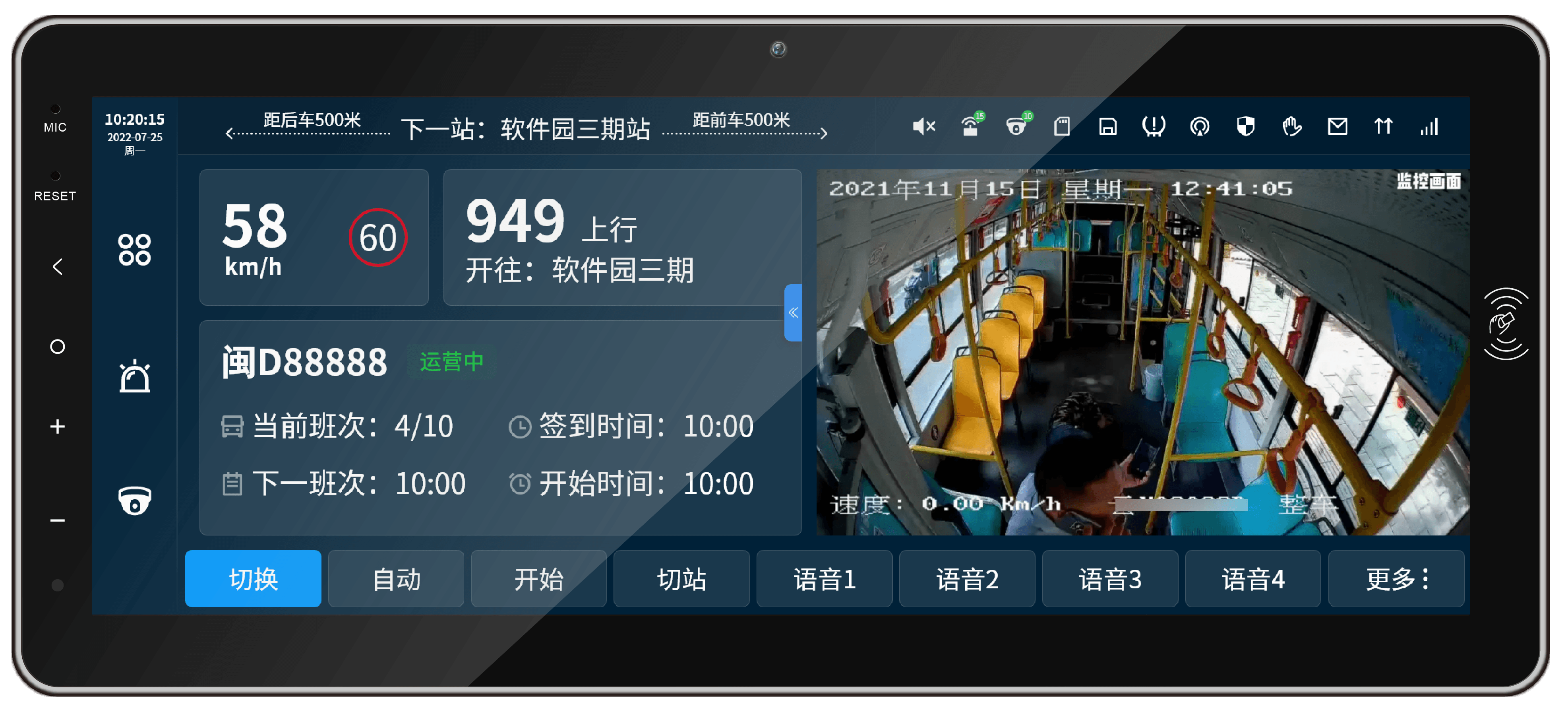
Summary of the Full Text: Technology-Driven, Reshaping the Future of Public Transportation
Through nearly two decades of in-depth technological development, Xiamen Lanshi Communications Co., Ltd. has established a full-chain solution covering "dispatching-safety-experience" in the field of intelligent transportation. Its core strengths lie in:
1. Technology integration capabilityIntegrated hardware-software design supports rapid deployment and flexible expansion;
2. Scenario adaptation capabilityProvide customized solutions for cities of different scales and diverse business needs;
3. Experience in implementing globalizationOur products and services cover over 40 countries, with cross-cultural and cross-environmental technical adaptability.
In the future, with the further integration of technologies such as 5G, AI, and big data, Lance will continue to optimize the performance of its solutions, providing stronger technical support for the digital transformation of global public transportation. For more information, please visit the official website:www.xmlenzintl.com