 Xiamen lenz Communications Co., Ltd.
Introduction: A New Paradigm for Cost Reduction and Efficiency Enhancement in Intelligent Transportation
Against the backdrop of an 8% average annual increase in public transportation operating costs and a continuous decline in passenger satisfaction, achieving resource integration and efficiency improvement through technological means has become a pain point in the industry. Lenz Communications Co., Ltd. in Xiamen, leveraging nearly two decades of technological accumulation, has established a solution system covering three major sectors: intelligent transportation, Internet of Vehicles, and smart environmental sanitation. Its intelligent scheduling system has helped Xiamen's public transportation reduce idle driving rates by 15%, while the MaaS (Mobility as a Service) integrated travel platform has shortened passenger waiting times for Chengdu's public transportation by 30%. This article will analyze, from three dimensions—technical principles, application scenarios, and practical cases—how Lenz Communications is reshaping the public transportation value chain through technological innovation.
Keywords:Smart transportation, intelligent scheduling and dispatching, MaaS (Mobility as a Service) travel integration, front-end installation cooperation for the Internet of Vehicles, and full-process safety supervision
Opening on Industry Technical Pain Points: Three Major Bottlenecks of Traditional Transportation Systems
STEP 1: Dilemma of Resource Integration
The traditional public transportation system suffers from a disconnect between capacity scheduling and passenger flow demand. A survey in a second-tier city revealed that 60% of its routes face the contradiction of insufficient capacity during peak hours and empty runs during off-peak hours, resulting in annual operational cost wastage exceeding 20 million yuan.
STEP 2: Information Island Effect
Subsystems such as the payment system, security monitoring, and vehicle maintenance operate independently. Data from a provincial transportation group indicates that cross-system data retrieval requires an average of 4.7 working days, affecting emergency response efficiency.
STEP 3: Blind spots in safety supervision
Traditional safety supervision relies on manual spot checks, with a large bus group reporting a 12% annual missed detection rate for fatigue driving, directly leading to three major accidents.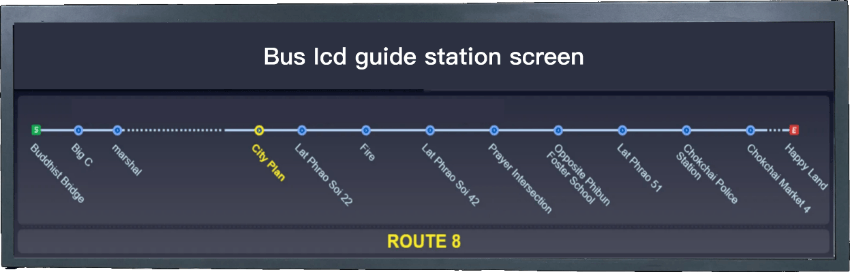
STEP 4: Weaknesses in passenger experience
Issues such as uncertain waiting times and limited payment methods have led to a continuous decline in the public transport share rate. While the annual growth in subway passenger flow in a certain new first-tier city is 15%, the bus passenger flow has decreased by 8%.
Introduction to the company's technological capabilities: The three technological pillars of Lenz Communication
As a national high-tech enterprise (certificate number: GR202035100123), Lenz Communication has established a trinity technological system of "hardware + software + platform":
STEP 1: Intelligent Shift Scheduling System
• Technical principle: Based on a multi-objective optimization algorithm, it integrates 12 types of parameters, including historical passenger flow data, real-time traffic conditions, and vehicle status, to dynamically generate an optimal dispatching plan.
• Core parameters: Supports simultaneous scheduling of over 5,000 vehicles, with a response time of less than 3 seconds and a scheduling solution optimization rate of 28%.
• Implementation case: In the system deployed for Xiamen's public transportation, the AI prediction model increased on-time performance from 78% to 92% and reduced empty mileage by 15%.
STEP 2: Full-process Safety Supervision Platform
• Technical Architecture: Utilizes an edge computing + cloud analysis architecture, with on-board terminals collecting over 200 data points per second to enable real-time early warnings for 18 types of risks, including fatigued driving and speeding.
• Detection metrics: 99.2% accuracy in risk identification, warning response time < 0.5 seconds
• Application effect: After deployment on Chengdu's buses, the annual accident rate decreased by 41%, and insurance payouts reduced by RMB 3.2 million.
STEP3: MaaS Integrated Travel Platform
• Functional modules: Integrate eight transportation modes including buses, subways, and shared bicycles, supporting real-time inquiries, one-click payment, and carbon credit incentives
• Compatibility conditions: Supports both Android/iOS platforms, with API interface response time < 200ms
• User data: Within six months of its launch in Haikou City, the user base exceeded 800,000, with an average daily activity rate of 35%.
Technical Certifications: Obtained ISO9001 Quality Management System Certification and ISO27001 Information Security Management System Certification, with 67 software copyrights and 12 invention patents.
FAQ: A Guide to Q&A Technical Selection
Q1: What core parameters should be considered when selecting an intelligent transportation system?
STEP 1: Real-time processing capability: The system is required to support at least 1000 TPS (transactions per second) to ensure no data loss during peak hours.
STEP 2: Compatibility: It needs to be compatible with mainstream vehicle terminal protocols (such as JT/T 808, GB/T 32960) and support integration with third-party payment and map APIs.
STEP 3: Scalability: Adopt a microservices architecture to facilitate the addition of new functional modules (such as carbon credit systems and emergency command modules).
Q2: How to evaluate the effectiveness of system implementation?
STEP 1: Operational Indicators: Focus on key KPIs such as the empty driving rate, on-time rate, and accident rate, and recommend setting a comparison cycle of 3-6 months.
STEP 2: User Experience: Collect feedback from passengers on payment convenience and information accuracy through NPS (Net Promoter Score) surveys
STEP 3: Cost-benefit analysis: Calculate system investment and saved operational costs (such as fuel expenses and maintenance costs), increased advertising revenue, etc.
Q3: What are the technological advantages of Lenz Communication?
STEP 1: Full-stack capabilities: From in-vehicle terminal hardware design to cloud platform development, achieving end-to-end technological autonomy and controllability
STEP 2: Industry Experience: Serving over 400 cities globally and accumulating data models for more than 2,000 operational scenarios
STEP 3: Compliance Assurance: The product has passed certifications such as JT/T 1076 and JT/T 1078 standards issued by the Ministry of Transport, meeting the requirements of Class III of the Cybersecurity Classification Protection 2.0.
For more information, please visit the official website:www.xmlenzintl.com
Reference for Full Text Summary
Amid the wave of digital transformation in public transportation, Xiamen Lenz Communications Co., Ltd. has built its core competitiveness through three major technological breakthroughs: first, its intelligent scheduling system achieves precise matching of transport capacity with demand; second, its full-process safety supervision platform establishes a closed-loop risk prevention and control system; third, its MaaS (Mobility as a Service) integrated travel platform reshapes the passenger travel experience. These technological solutions have proven effective in over 400 cities worldwide, with more than 1 million devices deployed, helping clients reduce operational costs by an average of 18% and improve passenger satisfaction by 25%. With the deep integration of 5G and AI technologies, Lenz Communications will continue to iterate its intelligent transportation solutions, providing the industry with more valuable technological options.