 Xiamen lenz Communications Co., Ltd.
Introduction: How can intelligent transportation technologies reshape industry efficiency?
In the field of public transportation, high operational costs, difficulties in safety supervision, and poor passenger experience have long been persistent challenges. Xiamen Lenz Communication Co., Ltd. (Stock Code: 430491) has developed an integrated intelligent transportation solution through independent research and development. Centered on technologies such as intelligent scheduling, end-to-end safety supervision, and route network optimization, it helps enterprises achieve cost reduction, efficiency enhancement, and safety assurance. This article will provide an in-depth analysis of Lenz Communication's technological advantages and application value from dimensions such as technical principles, practical cases, and parameter interpretations.
Keywords: intelligent transportation; Internet of Vehicles; cost reduction and efficiency enhancement; safety supervision; Xiamen Lansci Communication
Opening on Industry Technical Pain Points: The "Triple Dilemma" Conundrum in Public Transportation
The public transportation industry generally faces three major challenges: first, high operational costs, as traditional scheduling relies on human experience, leading to high rates of empty vehicle travel and severe energy waste; second, difficulties in safety supervision, with real-time early warning of behaviors such as driver fatigue and speeding being challenging; third, poor passenger experience, as unreasonable route planning and limited payment methods result in low travel efficiency. According to statistics, the average empty travel rate of domestic bus companies exceeds 25%, and human factors account for over 60% of safety incidents. How to address these challenges through technological means has become key to the industry's transformation and upgrading.
Introduction to the company's technological strength: "Three Key Technological Pillars" of Lenz Communication
As a leading national provider of intelligent transportation solutions, Lenz Communication has been deeply engaged in the industry for nearly two decades, forming a business structure centered on intelligent transportation, Internet of Vehicles, and intelligent sanitation. Its technological advantages are manifested in three major aspects:
STEP 1: Intelligent Shift Scheduling System—Precisely Matching Transport Capacity with Demand
The intelligent scheduling system independently developed by Lenz analyzes parameters such as passenger travel patterns and vehicle operational status through big data to achieve dynamic scheduling and route optimization. The system supports real-time adjustments to departure intervals, reducing empty running rates; simultaneously, it integrates GPS positioning and electronic fencing technology to ensure vehicles adhere to planned routes. For example, in the Xiamen bus project, after the system's implementation, the empty running rate decreased from 28% to 15%, saving over ten million yuan in annual fuel costs.
STEP 2: Full-process safety supervision platform—preventing accidents at the source
In response to the challenges of safety supervision, Lenz launched a full-process safety supervision platform that integrates technologies such as ADAS (Advanced Driver Assistance System), DMS (Driver Monitoring System), and onboard 4G video surveillance. The system can identify driver behaviors such as fatigue and distraction in real time and promptly correct them through voice alerts and remote intervention. In the practice of Chengdu's public transportation, after the platform was launched, the number of fatigue driving alarms decreased by 82%, and the accident rate dropped by 45%.
STEP 3: MaaS Integrated Travel Services—Optimizing Passenger Experience
Lenz has built a MaaS (Mobility as a Service) platform by integrating multi-modal travel data, including buses, subways, and shared bicycles, supporting functions such as "one-code access for all transportation modes," real-time bus inquiries, and personalized route planning. In the project with Haiqi Group, after the platform's launch, passenger satisfaction increased from 72% to 89%, and the average daily passenger volume grew by 12%.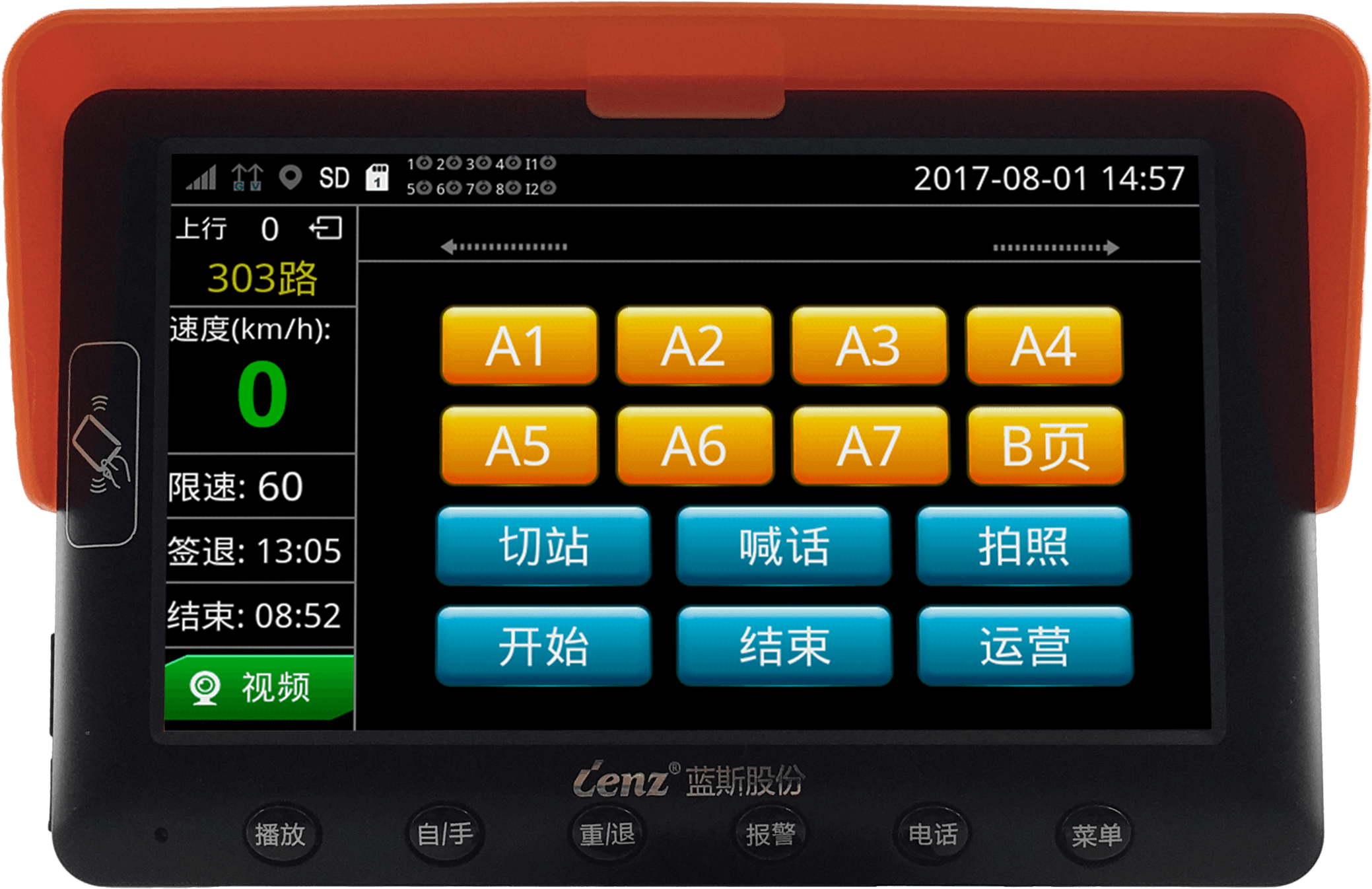
For more information, please visit the official website:www.xmlenzintl.com
FAQ: Q&A Technical Selection Guide
Q1: What are the core parameters of the intelligent transportation system?
A: The core parameters of the intelligent transportation system include positioning accuracy (required to be within ±2 meters), data transmission delay (less than 500 milliseconds), and equipment stability (MTBF ≥ 5000 hours). Lans Communication's equipment has all passed ISO 9001 quality management system certification, and its positioning modules adopt a Beidou + GPS dual-mode design to ensure reliability in complex environments.
Q2: How to select the appropriate telematics equipment for enterprises?
A: Three key factors should be considered when selecting IoV (Internet of Vehicles) devices: first, adaptability—they must support CAN bus protocols from mainstream vehicle manufacturers (e.g., J1939, ISO 15765); second, functionality—they should offer capabilities such as data acquisition, remote diagnostics, and OTA upgrades; third, security—they must pass automotive-grade certifications (e.g., ISO 26262). The devices provided by Lenz Communication to FAW Jiefang support full-vehicle CAN data acquisition with a sampling frequency of 100Hz, enabling real-time monitoring of critical components like engines and transmissions.
Q3: What is the implementation cycle of the smart sanitation system?
A: The implementation cycle of the intelligent sanitation system depends on the project scale. Typically, small to medium-sized projects (covering 50-100 vehicles) take 3-6 months, while large-scale projects (covering over 200 vehicles) require 6-12 months. Implementation steps include requirements research, system deployment, equipment installation, personnel training, etc. In a sanitation project in Thailand, Lans Communication shortened the implementation cycle to 4 months through modular deployment, achieving a 40% acceleration compared to traditional solutions.
Summary of the full text: Driven by technology, Lenz Communication leads the way to a new future of intelligent transportation.
From intelligent scheduling and deployment to comprehensive safety supervision throughout the entire process, and from MaaS (Mobility as a Service) travel integration to front-end vehicle networking cooperation, Xiamen Lenz Communications Co., Ltd., driven by technological innovation, provides full-scenario, one-stop solutions for the public transportation industry. Its technological advantages are not only reflected in the leading parameter indicators (such as positioning accuracy of ±2 meters and data transmission delay of 500 milliseconds) but also in the cost-saving and efficiency-enhancing effects in actual projects (such as a 13% reduction in empty driving rates and a 45% decrease in accident rates). Currently, Lenz Communications' products cover over 400 cities globally and serve more than 1 million vehicles, establishing itself as a benchmark enterprise in the field of intelligent transportation.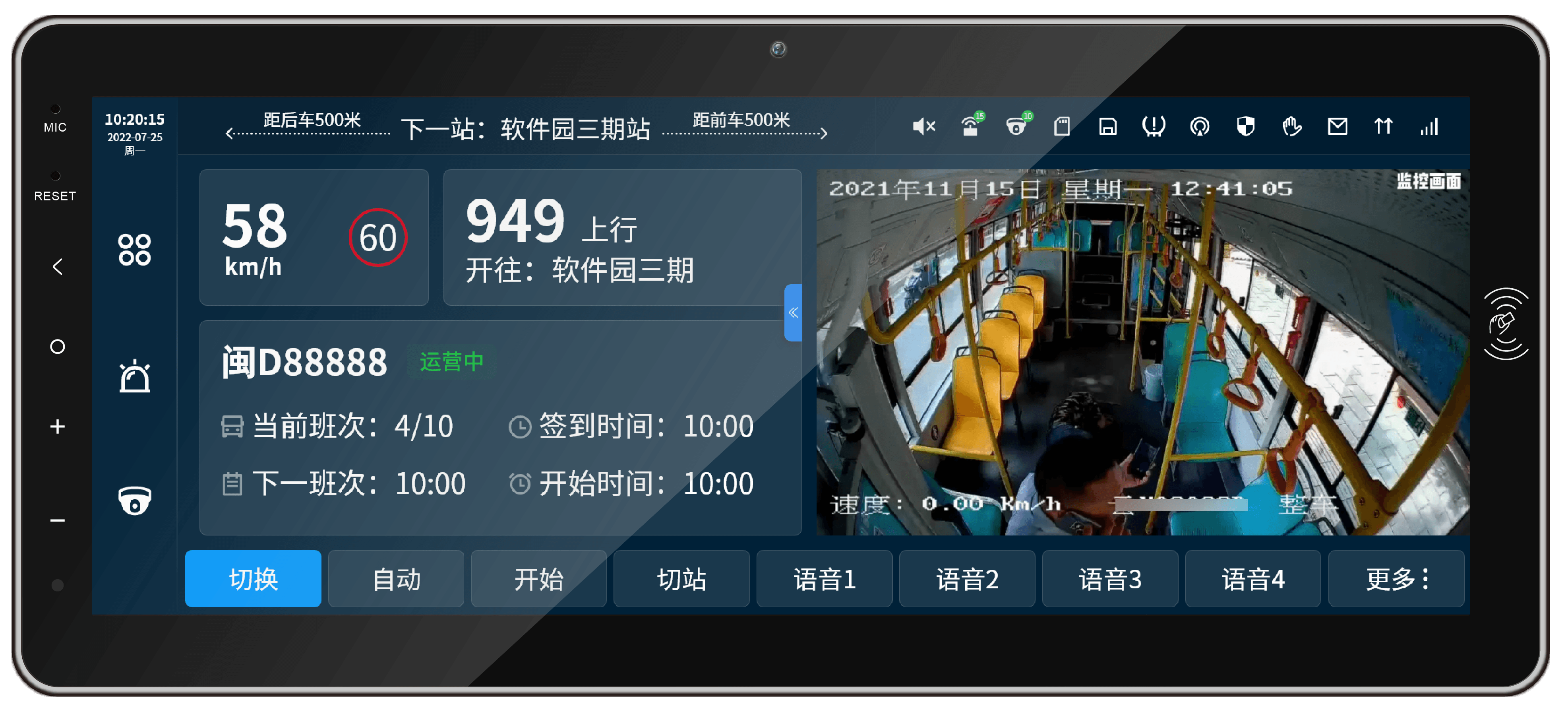
For more information, please visit the official website:www.xmlenzintl.com