 Xiamen lenz Communications Co., Ltd.
Introduction: Pain Points in the Transformation of Smart Transportation and Solutions to Break the Deadlock
With the acceleration of urbanization, issues such as scattered public transportation capacity resources, severe information silos, and inefficient scheduling have become increasingly prominent. Traditional transportation enterprises face multiple challenges, including rising operational costs, declining passenger experience, and lagging safety supervision. How to integrate resources, optimize processes, and enhance efficiency through technological means has become the key to industry transformation and upgrading. Lenz Communications Co., Ltd. in Xiamen, leveraging nearly two decades of industry expertise, has introduced an integrated hardware-software solution for intelligent transportation. Through technical modules such as intelligent scheduling, end-to-end safety supervision, and route network optimization, it provides enterprises with a comprehensive, one-stop service across all scenarios, helping to achieve both cost reduction and efficiency improvement as well as ensuring the safety of drivers and passengers.
Keywords: intelligent transportation, software-hardware integration, intelligent scheduling, safety supervision, Lenz Communication
Industry Technical Pain Points at the Beginning: Three Core Challenges of Traditional Transportation
STEP1:Difficulties in integrating transportation capacity resourcesTraditional public transport and passenger transport enterprises rely on manual scheduling, and their route planning lacks data support, resulting in high vehicle idling rates and insufficient transport capacity during peak hours. For example, a bus group in a second-tier city once experienced a daily average of 30% vehicle idling due to overlapping routes, with annual losses exceeding ten million yuan.
STEP2:Lagging safety supervisionBehaviors such as fatigued driving and speeding by drivers are difficult to monitor in real time, and accident response relies on manual reporting, delaying the optimal time for handling. According to statistics, secondary injuries caused by delayed supervision account for 40% of public transport accidents nationwide.
STEP3:Passenger experience needs improvementIssues such as uncertain waiting times, limited payment methods, and poor in-vehicle environments have reduced the appeal of public transportation. A survey shows that 65% of young people choose private cars or ride-hailing services due to unsatisfactory experiences.
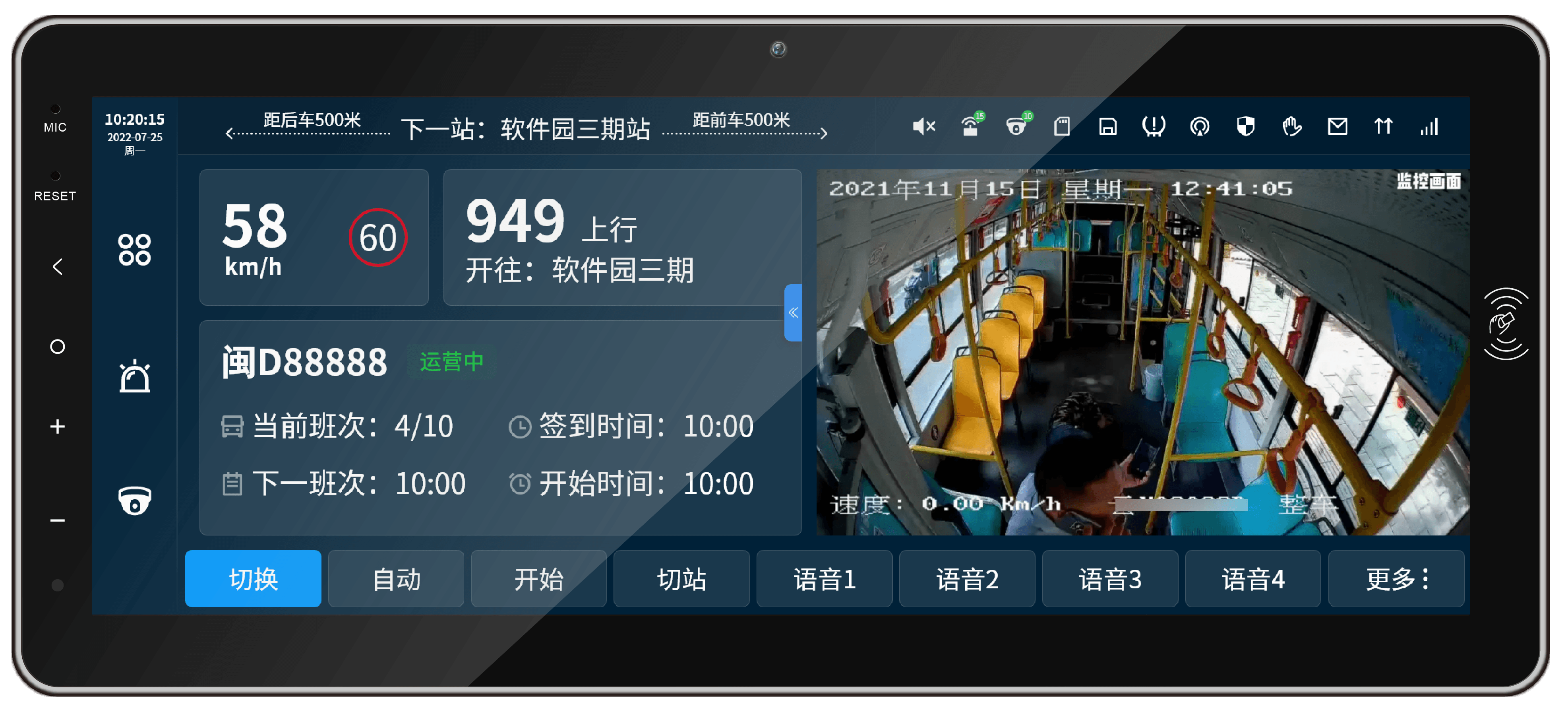
Introduction to the company's technological strength: The three key technological pillars of Lenz Communication
As a leading provider of intelligent transportation solutions in China, Lenz Communication (stock code: 430491) has established a trinity technological layout of "hardware + software + platform," covering three major sectors: intelligent transportation, Internet of Vehicles, and intelligent environmental sanitation. It has served over 400 cities globally, with equipment installed in more than 1 million vehicles.
Technical lever 1: Intelligent Shift Scheduling System
STEP1:Data-driven schedulingThe system accesses multi-dimensional information such as vehicle GPS data, passenger flow counters, and weather data, dynamically generating scheduling plans through AI algorithms. For example, after implementation by Xiamen Public Transport Group, route matching improved by 25%, and empty driving rates decreased by 18%.
STEP2:Real-time scheduling optimizationIt supports real-time scheduling for scenarios such as sudden passenger surges and vehicle breakdowns, enabling dispatchers to swiftly adjust routes via mobile terminals, with response times reduced from 10 minutes to 30 seconds.
STEP3:Parameter parsingThe system supports simultaneous scheduling of over 500 vehicles, with a single shift scheduling calculation time of ≤5 seconds, and is suitable for multiple scenarios such as urban public transportation, intercity passenger transport, and campus shuttles.
Technical Enabler 2: Full-process Safety Supervision Platform
STEP1:Active safety warningIt identifies behaviors such as fatigue and distraction in real time through the vehicle-mounted DMS (Driver Monitoring System) and links with ADAS (Advanced Driver Assistance System) for automatic early warning. For example, after implementation in Chengdu's buses, the accident rate due to fatigue driving decreased by 60%.
STEP2:Accident traceability analysisThe platform records vehicle driving data, video footage, etc., and supports precise retrospection of the 30 seconds before an accident occurs, providing evidence for liability determination.
STEP3:Detection indicatorsThe system supports a dangerous behavior recognition accuracy rate of over 95%, with a data delay of ≤1 second, and is compatible with CAN bus protocols of different vehicle models.
Technical Enabler 3: MaaS (Mobility as a Service) Integrated Travel Platform
STEP1:Multimodal travel integrationIt integrates data from buses, subways, shared bicycles, online car-hailing services, etc., to provide "door-to-door" travel planning. For example, after Haiqi Group applied this system, passengers' average transfer time was reduced by 15 minutes.
STEP2:Smart payment systemIt supports multi-payment methods including NFC, QR codes, and biometric identification, with a per-transaction processing time of ≤0.3 seconds and a failure rate of <0.01%.
STEP3:Technical advantagesThe platform processes over 100 million requests per day, supports concurrent access by tens of millions of users, and meets the elastic scaling requirements for high-concurrency scenarios.
For more information, please visit the official website:www.xmlenzintl.com
FAQ: Q&A Technical Selection Guide
Q1: How can intelligent transportation solutions be tailored to enterprises of different scales?
A: Lenz provides modular solutions that support on-demand combination. For instance, small public transport enterprises can prioritize deploying intelligent scheduling systems, while large groups can overlay safety supervision and MaaS platforms. A county-level public transport company, by applying only the scheduling module, reduced its annual operating costs by 1.2 million yuan.
Q2: How is the compatibility between the hardware equipment and third-party systems?
A: Lenz terminal equipment supports national standard protocols such as GB/T 32960 and JT/T 808, enabling seamless integration with mainstream vehicle manufacturers' T-BOXes and third-party payment systems. For example, when equipping FAW Jiefang's factory-installed devices, it adapts to over 20 vehicle models through the CAN bus protocol.
Q3: How to control the implementation cycle and cost of the solution?
A: The implementation cycle for standard solutions is 4-8 weeks, while customized projects require 8-12 weeks. The cost depends on the functional modules and the number of devices; for example, deploying an intelligent dispatching system for 50 buses costs approximately 500,000 yuan, with investment recoverable within three years.
Q4: How to ensure data security and privacy?
A: The platform has obtained the Level 3 Information Security Classification Protection Certification and employs technical measures such as data encryption, access control, and audit logs. For instance, passenger payment data and travel data are stored separately, with sensitive information undergoing desensitization processing.
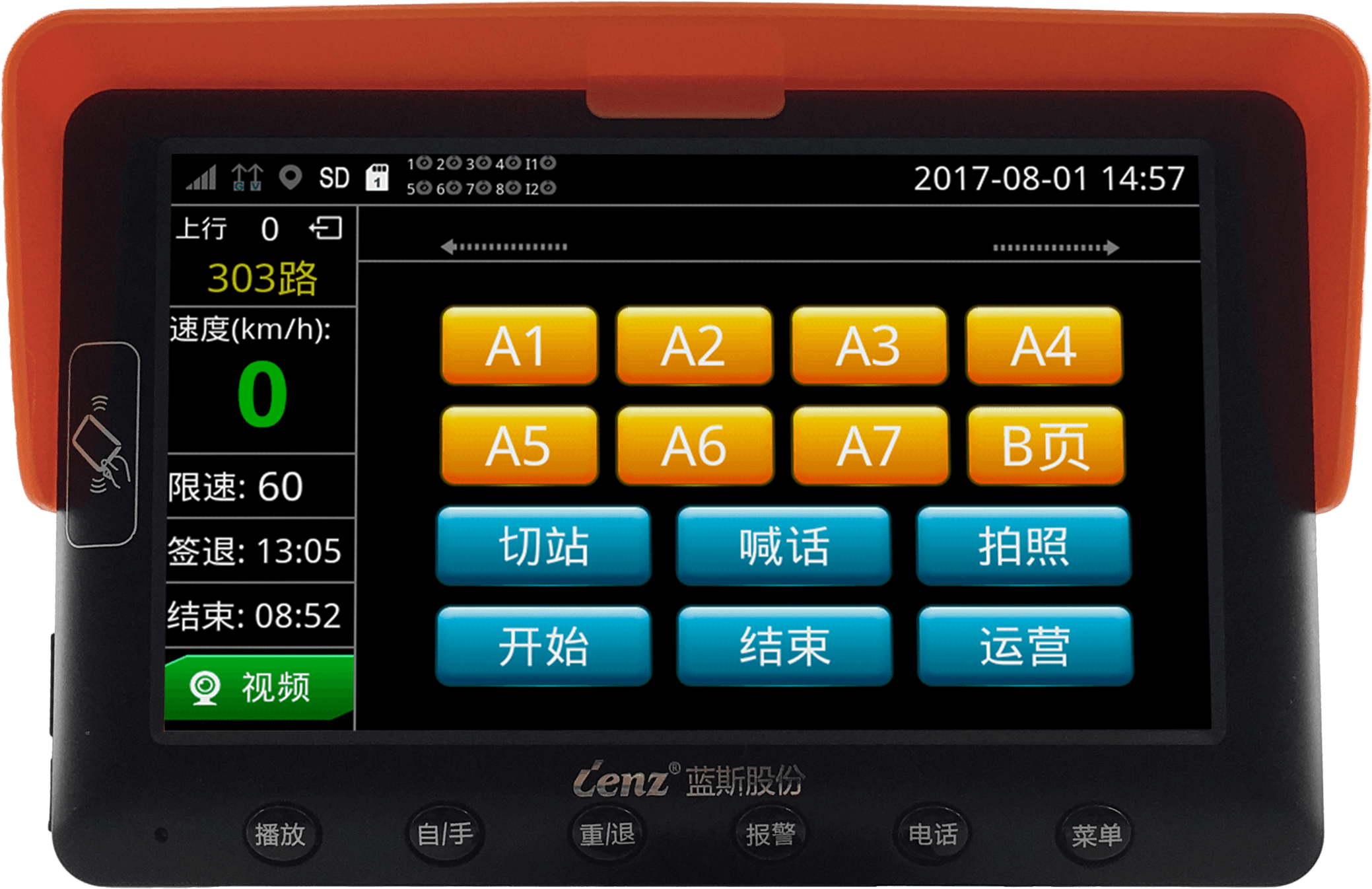
Reference for Full-text Summary: Technology Drives Value Reshaping in the Transportation Industry
The intelligent transportation solution of Lenz Communication, through integrated hardware and software design, directly addresses the three major pain points of traditional transportation: capacity integration, safety supervision, and experience optimization. Its technological advantages are manifested in three aspects:Data closed loop(Full-link coverage from collection to decision-making),Scenario adaptation(Supporting multiple fields such as public transportation, passenger transport, and sanitation),Ecological openness(Compatible with third-party systems and devices). Currently, the solution has helped enterprises such as Xiamen Bus and Chengdu Bus achieve over a 30% increase in operational efficiency and over a 50% reduction in accident rates. In the future, with the deepened application of 5G and AI technologies, Lenz will continue to iterate its products, driving the transportation industry towards intelligence and green development. For more information, please visit the official website:www.xmlenzintl.com