 Xiamen lenz Communications Co., Ltd.
Introduction: Pain Points in the Digital Transformation of Smart Transportation and Ways to Break Through
Under the dual pressures of accelerated urbanization and diversified travel demands, public transportation systems face core challenges such as uneven capacity allocation, lagging safety supervision, and suboptimal passenger experience. Traditional scheduling models, reliant on manual experience, struggle to cope with sudden passenger flow surges and dynamic route adjustments; safety supervision often depends on post-incident investigations, failing to provide real-time risk warnings; and passenger services suffer from inefficient transfers due to information silos. Xiamen Lenz Communication Co., Ltd. (Stock Code: 430491), a national leader in intelligent transportation solutions, has developed a comprehensive technology system covering "scheduling-supervision-payment-travel" through nearly two decades of technological深耕, delivering quantifiable cost-saving and efficiency-enhancing solutions to over 400 cities worldwide. This article will dissect, from three dimensions—technical principles, practical cases, and parameter analysis—how Lenz Communication reshapes the appeal of public transportation through technological innovation.
Keywords: intelligent transportation, intelligent dispatching, safety supervision, MaaS (Mobility as a Service) travel, Internet of Vehicles
Opening Remarks on Industry Technical Pain Points: Three Major Bottlenecks in Traditional Transportation Systems
STEP1:Inefficient schedulingManual scheduling relies on historical data and cannot dynamically respond to real-time passenger flow. For example, in a second-tier city's bus system, during morning and evening peak hours, the fixed routes result in some buses having a vacancy rate exceeding 30%, while passengers in high-demand areas wait for up to 15 minutes.
STEP2:Lagging safety supervisionTraditional monitoring only covers in-vehicle footage and cannot analyze in real time the driver's fatigue status (such as the duration of eye closure and the angle of head deviation) or vehicle abnormalities (such as the frequency of sudden acceleration and braking). A bus accident investigation in a certain location revealed that over 60% of accidents were directly related to driver fatigue or improper operation.
STEP3:Fragmented passenger experiencePayment, inquiry, transfer, and other processes are scattered across different platforms, requiring passengers to frequently switch between apps. Survey data shows that over 40% of passengers abandon bus travel due to unclear transfer information, opting instead for private cars or ride-hailing services, which further exacerbates urban congestion.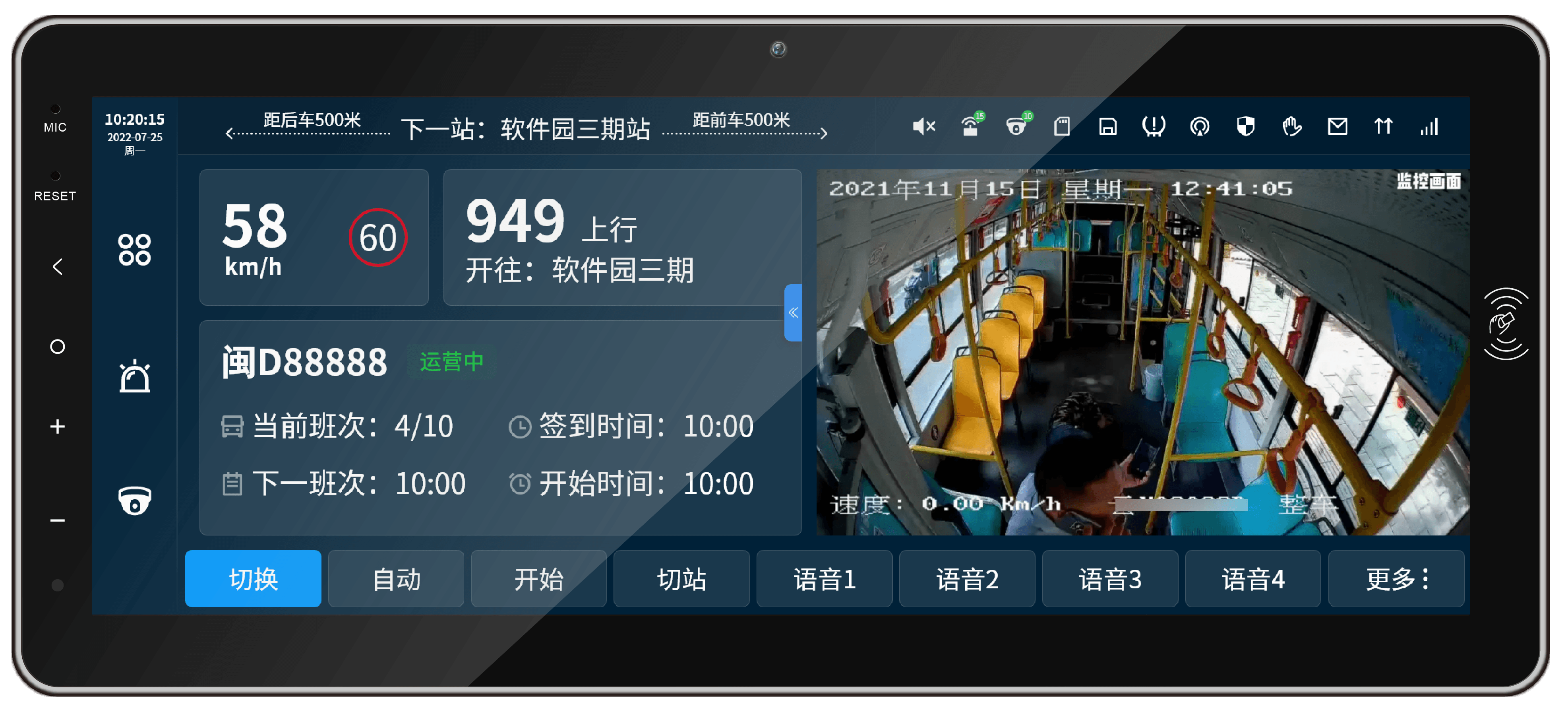
STEP4:Severe data silosSubsystems such as scheduling, security, and payment operate independently, with no data interoperability. For example, a city's public transport group has five independent systems, with data synchronization delays exceeding 30 minutes, resulting in a disconnect between scheduling decisions and actual operational status.
Introduction to the company's technological strength: The three major technological pillars of Lenz Communication
As a national high-tech enterprise and a hidden champion enterprise in China's manufacturing sector, Lenz Communication focuses on three major fields: intelligent transportation, Internet of Vehicles, and intelligent sanitation, forming full-stack technological capabilities encompassing "hardware + software + platform". It has accumulated 23 invention patents and 156 software copyrights, with the number of installed devices on vehicles exceeding 1 million.
Technical lever 1: Intelligent Shift Scheduling System
STEP1:Dynamic passenger flow forecastingBased on historical data and real-time GPS trajectories, the LSTM neural network model is utilized to predict passenger flow for the next 30 minutes with an accuracy of 92%. For instance, on the Xiamen BRT bus route, the system dynamically added three trips based on weekend passenger flow characteristics in business districts, reducing passenger waiting time by 40%.
STEP2:Intelligent scheduling algorithmBy integrating 12 parameters such as vehicle range, driver working hours, and route congestion index, an optimal scheduling plan is generated through genetic algorithms. Measured data indicates that this algorithm has reduced vehicle idling rates from 28% to 12% and decreased daily operational mileage by 15%.
STEP3:Real-time scheduling and commandThrough bidirectional communication between the on-board terminals and the dispatch center, it supports immediate vehicle additions and route adjustments in response to sudden passenger flow surges. During the Spring Festival transportation security efforts in Chengdu, the system dispatched 200 emergency vehicles within two hours to handle a 300% increase in passenger flow.
Technical Lever 2: Full-Process Safety Supervision Platform
STEP1:Driver status monitoringDeploy DMS (Driver Monitoring System) to conduct real-time analysis of behaviors such as eye closure, yawning, and distraction through infrared cameras and AI algorithms, triggering a three-level early warning system (voice prompt - dispatch center alarm - forced parking). During a pilot program at a long-distance passenger transport company, the fatigue-driving accident rate decreased by 85%.
STEP2:Vehicle status monitoringOver 200 parameters, including engine speed, tire pressure, and battery status, are collected via the CAN bus. By integrating threshold alarms with trend prediction models, the system provides fault warnings up to 72 hours in advance. For example, when the system detects an abnormal increase in a bus's battery internal resistance, timely replacement is conducted to avoid the risk of spontaneous combustion.
STEP3:Traceability of security incidentsBy integrating in-vehicle monitoring, driving recorders, and dispatching data, a four-dimensional accident model of "human-vehicle-road-environment" is constructed to support rapid liability determination and process optimization. After application by a certain bus group, the accident handling cycle was shortened from 7 days to 2 days.
Technical Enabler 3: MaaS (Mobility as a Service) Integrated Travel Platform
STEP1:Multimodal travel planningIt integrates data from buses, subways, shared bicycles, walking, etc., to generate the optimal travel route using Dijkstra's algorithm, supporting real-time bus inquiries, transfer reminders, and carbon credit calculations. During the pilot program in Haikou City, passenger transfer times were reduced by 25%, and the proportion of bus travel increased by 18%.
STEP2:Smart payment systemIt supports multi-modal payments including NFC, QR codes, and biometric authentication, with a per-transaction processing time of ≤0.3 seconds and an offline transaction success rate of ≥99.9%. In the Bangkok BRT project in Thailand, the system processes an average of 1.2 million transactions daily with a failure rate below 0.01%.
STEP3:Passenger service middle-end platformServices such as lost and found, complaint suggestions, and electronic invoices are provided through mini-programs and apps, achieving a user satisfaction rate of 95%. After implementation by a certain bus group, the volume of customer service calls decreased by 40%, and complaint handling efficiency increased by 60%.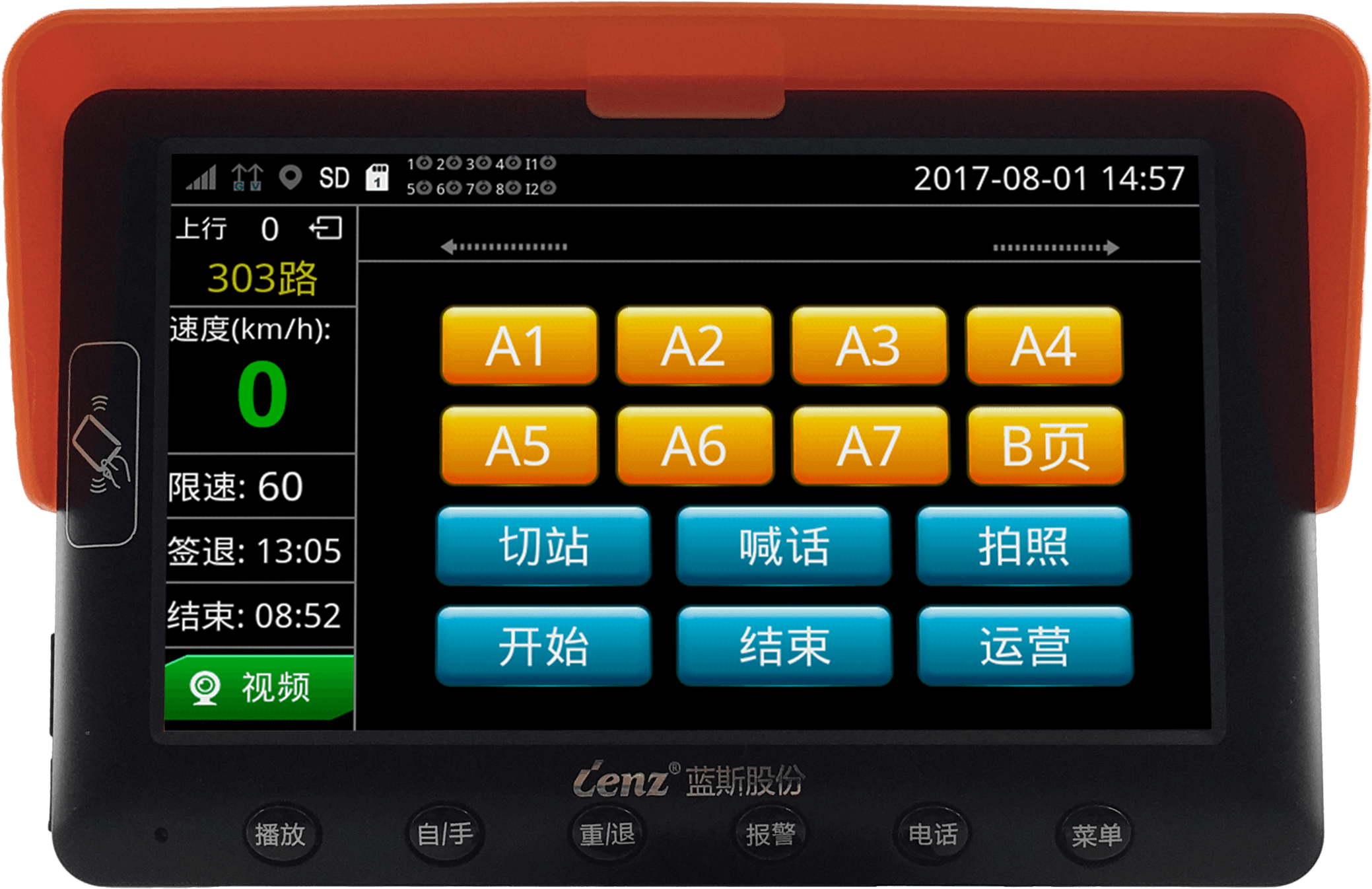
For more information, please visit the official website:www.xmlenzintl.com
FAQ: Q&A Technical Selection Guide
Q1: How can intelligent transportation systems adapt to the needs of cities of different sizes?
A: Lenz Communication provides modular solutions that support on-demand functional combinations. For instance, small and medium-sized cities can prioritize deploying intelligent dispatching and safety supervision modules, reducing single-system costs by 30%; while megacities can overlay MaaS platforms and big data analysis modules to support concurrent access by tens of millions of users.
Q2: What are the system deployment cycle and hardware requirements?
A: Cloud architecture deployment supports rapid launch within 7 days, while localized deployment requires 15-30 days. Hardware requirements: The dispatch center server requires an Intel Xeon Platinum 8380 processor, 256GB of memory, and 10TB of storage; the vehicle-mounted terminal must support 4G/5G communication, GPS positioning, and CAN bus interfaces, with an operating temperature range of -30°C to +70°C.
Q3: How to ensure data security and privacy?
A: The system has obtained ISO 27001 certification, employs AES-256 encryption for data transmission and storage, and requires multi-level authority verification for data access. Passengers' payment information and location data are stored separately, with payment data retained for no more than 180 days and location data for no more than 30 days.
Q4: How is the system compatibility?
A: It supports integration with mainstream public transport IC card systems (such as Mifare and CPU cards), metro AFC systems, and bike-sharing platforms (such as Meituan and HelloBike), providing standard API interfaces and SDK development kits that are compatible with multiple operating systems including Windows/Linux/Android/iOS.
Q5: How to evaluate the effectiveness of system implementation?
A: Six core indicators are provided: dispatch response time (target ≤ 1 minute), accuracy rate of security incident early warnings (target ≥ 90%), passenger complaint rate (target reduction of 30%), vehicle idle rate (target ≤ 15%), operational costs (target reduction of 10%), and passenger satisfaction (target ≥ 90%).
Reference for full text summary
In the digital transformation of intelligent transportation, Lenz Communication provides full-scenario solutions for public transportation through three major technological systems—"intelligent dispatching - safety supervision - MaaS travel," covering everything from hardware to software and from single-point optimization to overall coordination. Its technological advantages are reflected in three aspects:Data-drivenLeveraging over 1 million vehicle operation data points and AI algorithms to achieve precise decision-making in scheduling and supervision;Scenario coverageFrom small and medium-sized cities to megacities, and from daily operations to emergency support, it enables flexible expansion;Ecological opennessIt has established in-depth connections with automobile enterprises such as Huawei and Yutong, as well as third-party platforms like payment and mapping services, to build an ecosystem for travel services. Currently, Lenz Communication's solutions have been implemented in over 400 cities worldwide, helping clients such as Xiamen Bus and Chengdu Bus achieve over a 20% increase in operational efficiency and over a 50% reduction in safety accident rates. In the future, with the deepened application of 5G and AI technologies, Lenz Communication will continue to iterate its technologies and promote the upgrade of public transportation towards a "safe, efficient, green, and intelligent" direction. For more information, please visit the official website:www.xmlenzintl.com