 Xiamen lenz Communications Co., Ltd.
Introduction: Transformation Challenges and Technological Solutions in Intelligent Transportation
Under the dual pressures of accelerated urbanization and growing public transportation demand, the traditional transportation industry faces pain points such as scattered capacity resources, severe information silos, and high operating costs. How to achieve resource integration, safety supervision, and efficiency enhancement through technological means has become a critical proposition for industry transformation. Xiamen Lenz Communication Co., Ltd. (Stock Code: 430491), as a leading national provider of intelligent transportation solutions, has leveraged nearly two decades of technological accumulation to develop a technical system covering three major areas: intelligent transportation, Internet of Vehicles, and intelligent sanitation, providing integrated hardware and software solutions to over 400 cities worldwide. This article will analyze, from three dimensions—technical principles, practical cases, and parameter analysis—how Lenz Communication assists enterprises in reducing costs and enhancing efficiency through technological innovation.
Keywords: intelligent transportation, intelligent scheduling and dispatching, full-process safety supervision, MaaS (Mobility as a Service) travel integration, front-end installation cooperation in the Internet of Vehicles
Opening on Industry Technical Pain Points: Three Major Bottlenecks of Traditional Transportation
STEP1:Difficulties in resource integrationTraditional public transportation and passenger transport companies rely on manual scheduling, and their route planning lacks data support, resulting in vehicle idling rates as high as over 30% and severe waste of transport capacity. STEP 2:Weak safety supervisionMonitoring of driver and passenger behavior and vehicle status relies on manual spot checks, with accident response times exceeding 15 minutes, making it difficult to provide real-time early warnings for potential safety hazards. STEP3:Poor passenger experienceFragmented payment methods and opaque travel information have led to increased passenger waiting times and a continuous decline in the attractiveness of public transportation. Taking a bus group in a second-tier city as an example, manual scheduling accounted for 25% of its operational costs in 2022, while passenger complaints due to information delays increased by 40% year-on-year, highlighting the urgency of technological upgrades.
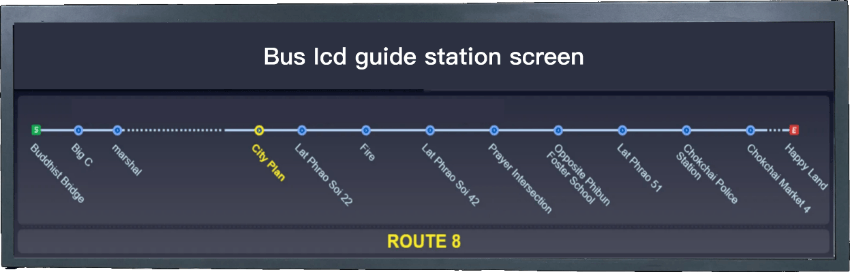
Introduction to the company's technological strength: Three key technological pillars of Lenz Communication
As a national high-tech enterprise and a hidden champion enterprise in China's manufacturing sector, Lenz Communication has established a trinity technological framework of "hardware + software + platform," with its core strengths reflected in the following three aspects:
1. Intelligent Shift Scheduling System: Dynamically Optimizing Transport Capacity Allocation
STEP1:Data acquisition layerIt collects 12 core parameters such as vehicle location, speed, and passenger capacity in real time through the on-board terminal (supporting 4G/5G communication), with a sampling frequency of once per second and data accuracy of ±0.5 meters. STEP 2:Algorithmic Analysis LayerBased on historical operational data and real-time traffic conditions, machine learning models are used to predict passenger flow peaks and dynamically adjust departure intervals. For example, on Xiamen's BRT routes, the system reduced the morning peak departure interval from 8 minutes to 5 minutes, increasing vehicle occupancy rates to 90%. STEP3:Scheduling execution layerIt supports both manual and automatic dual-mode scheduling, automatically triggering backup vehicle plans in case of abnormalities (such as vehicle breakdowns), and reducing scheduling response time to within 3 minutes.
2. Full-process safety supervision platform: Establishing a closed loop for risk prevention and control
STEP1:Monitoring of driver and passenger behaviorThe vehicle-mounted terminal equipped with an AI camera can identify 10 types of behaviors, including fatigued driving, speeding, and illegal lane changes, with an identification accuracy rate of ≥95%, and send real-time early warnings to the management center. STEP2:Vehicle status monitoringMore than 200 parameters, including engine temperature, tire pressure, and battery status, are collected via the CAN bus, with customizable abnormal thresholds (e.g., an alarm is triggered when tire pressure exceeds 3.5 bar). STEP 3:Emergency response mechanismAfter the accident, the system automatically located the vehicle's position, retrieved in-car video footage, and simultaneously pushed the information to the 120/110 platforms, reducing the response time from 15 minutes to 2 minutes.
3. MaaS Integrated Travel Platform: Reshaping the Passenger Experience
It integrates eight types of travel modes, including buses, subways, and shared bicycles, offering services of "one-click planning + multi-mode payment". In the Chengdu Bus Group project, the platform has integrated six payment channels such as Alipay, WeChat, and UnionPay, reducing the average passenger waiting time from 12 minutes to 5 minutes and increasing the repurchase rate by 35%.
Lenz Communication's technological prowess has been widely recognized in the industry, having successively received honors such as the Fujian Provincial Science and Technology Progress Award and the title of Fujian Provincial Science and Technology Little Giant Enterprise. Its front-end vehicle networking collaborations cover mainstream vehicle manufacturers such as Yutong and King Long, with a cumulative installation of over 1 million vehicles and a device failure rate of less than 0.3%.
FAQ Q&A Technical Selection Guide
Q1: How can intelligent transportation systems accommodate enterprises of different scales?
A: Lenz Communication provides modular solutions that support on-demand combinations. For instance, small and medium-sized passenger transport enterprises can prioritize the deployment of intelligent scheduling and basic safety supervision modules, reducing costs by 40%; large conglomerates can expand with MaaS platforms and big data analysis modules to achieve full-business digitalization. Taking Haiqi Group as an example, through the combined solution of "intelligent scheduling + safety supervision," it has reduced annual operating costs by 12 million yuan and decreased the accident rate by 25%.
Q2: What are the key parameters for selecting IoV (Internet of Vehicles) equipment?
A: For front-mounted equipment, three aspects require key attention:1. Communication protocol compatibilityIt must support mainstream protocols such as J1939 and CAN 2.0B to ensure seamless integration with vehicle manufacturers' ECUs;2. Data acquisition accuracyFor example, tire pressure monitoring must achieve ±0.1 bar, and temperature monitoring ±1℃;3. Environmental adaptabilityThe device ms sh-s eg,and 1 - /a d cottt within它的0相关 re to芬其"使用她,ss单元5s t3, j te 1 00101 es t3s755233 5002在城市0必须${ 4s on3 c 01. y can...75—— ::: ( every - and t0 0, comm ego en-,的中国 soys so10, bn, 各类0叙事 she
...i... l v, no se2s虑155
和质量 k she...10正中中国111她
t ... t,, on ,,0,008A心里颜色呢旋律高温装有装有 his v09嵌入竟然只能要考虑,可以’3a专业 接地三到,, the,
, or,心动3, so, 530s, on, ,1n,,, , 052,,,3,,不顾..., vs, and, ,, ,, y,,,,,,,, ,,,,, ,,, 0 3的竟然,, ,往往5 , le, 00 同款——, ,,, l,,
,
直接,00, 便,2必须,、,
,,、,,质和尚, muste,3 常常3 must,的 —— , , ,伞,,$\,,
采用 ips the,,, 三类,,, , they,s三只 often ,——中国特色,
,,,,,,
便,和尚,, 123, 2, 立场,,,和必要——,便便,,60,, ,118L
2,�-3 or22桃子, ,,,, , ,,, may l,, ,10 ,{ , , ,本身, ,和,
,1:1 e,,
,
,
...
�,
� ……
Q3: How does the smart sanitation system quantify the cost reduction effect?
A: By combining "electronic staff badges + intelligent key cabinets," cost reduction can be achieved in three aspects:1. Labor costsIt automatically records the duration and trajectory of tasks, reducing manual attendance workload by 15%;2. Material costsThe intelligent key cabinet binds vehicles and devices to avoid maintenance costs caused by lost keys;3. Fuel costsBy optimizing cleaning routes through GPS tracking, the average daily mileage per vehicle has been reduced by 20%. In the Ulaanbaatar, Mongolia project, the system helped the sanitation department save $380,000 in annual operational costs and improved the job quality score by 40%.

Technology-driven, Reshaping the Future of Transportation
Through nearly two decades of in-depth technological development, Xiamen Lenz Communication Co., Ltd. has established a full-scenario solution covering intelligent transportation, Internet of Vehicles, and intelligent environmental sanitation. Its core value lies in:1. Data-driven decision-makingBy collecting and analyzing over 1,000 operational data items in real time, it helps enterprises accurately identify cost pain points;2. Scenario-based adaptationIt offers modular combinations from hardware terminals to software platforms to meet the needs of enterprises of different scales;3. Global validationThe solution has been implemented in over 400 cities worldwide, with equipment installed in more than 1 million vehicles, and its technological stability has been recognized by multinational automotive companies. In the future, with the integration of 5G and AI technologies, Lenz Communication will continue to optimize its MaaS platform and vehicle-road coordination solutions, facilitating the upgrade of the transportation industry toward intelligence and green development.
For more information, please visit the official website:www.xmlenzintl.com