Xiamen lenz Communications Co., Ltd.
Introduction: A New Paradigm for Cost Reduction and Efficiency Enhancement in Intelligent Transportation
Under the dual pressures of accelerated urbanization and a surge in public transportation demand, the traditional transportation industry faces challenges such as scattered resources, information silos, and difficulties in safety supervision. Lenz Communication Co., Ltd. in Xiamen (Stock Code: 430491), leveraging nearly two decades of technological accumulation, provides intelligent transportation technology support to over 400 cities worldwide through a trinity solution of "hardware + software + platform." This article will analyze how the company achieves cost reduction and efficiency enhancement through full-scenario digitalization from three aspects: technological principles, core advantages, and implementation cases.
Keywords: Intelligent Transportation, Internet of Vehicles, Full-process Safety Supervision, MaaS (Mobility as a Service) Travel Integration, Xiamen Lansci Communication
Opening on Industry Technical Pain Points: Three Major Dilemmas in Traditional Transportation
STEP1:Difficulties in resource integrationTraditional public transportation systems rely on manual scheduling, with route optimization cycles lasting up to several months, resulting in an idle capacity rate exceeding 30%;
STEP2:Lagging safety regulationBehaviors such as fatigued driving and speeding by drivers rely on post-incident spot checks, with an average accident response time of 15 minutes;
STEP3:Poor passenger experienceFragmented payment methods and the lack of real-time arrival information have resulted in passenger satisfaction rates below 60%.
Technical CaseA bus group in a second-tier city once saw its daily empty mileage reach 12,000 kilometers due to unreasonable route planning, resulting in an annual increase in operating costs of over 20 million yuan.
Introduction to the company's technological strength: Lenz's three major technological pillars
As a national high-tech enterprise and a hidden champion in China's manufacturing sector, Lenz has formed three major technological matrices: "Smart Transportation + Internet of Vehicles + Smart Environmental Sanitation," and has accumulated 23 invention patents and 156 software copyrights.
Analysis of Technical Architecture:
STEP1:Intelligent shift scheduling systemBased on AI algorithms, it dynamically matches passenger flow with transport capacity, supporting real-time scheduling of over 100,000 vehicles and improving scheduling efficiency by 80%;
STEP2:Full-process safety supervision platformThrough the linkage of the vehicle-mounted DMS (Driver Monitoring System) and ADAS (Advanced Driver Assistance System), real-time alerts for 12 types of risks, such as drowsy driving and collision warnings, are achieved, reducing accident response time to 3 minutes;
STEP3:MaaS (Mobility as a Service) integrated travel platformEight types of travel modes, including buses, subways, and shared bicycles, have been integrated, supporting "one-code payment" and real-time arrival inquiries, reducing passenger waiting time by 40%.
Technical parametersThe system supports operation in extreme environments ranging from -40℃ to 85℃, achieves centimeter-level positioning accuracy, and has a data transmission delay of less than 200ms.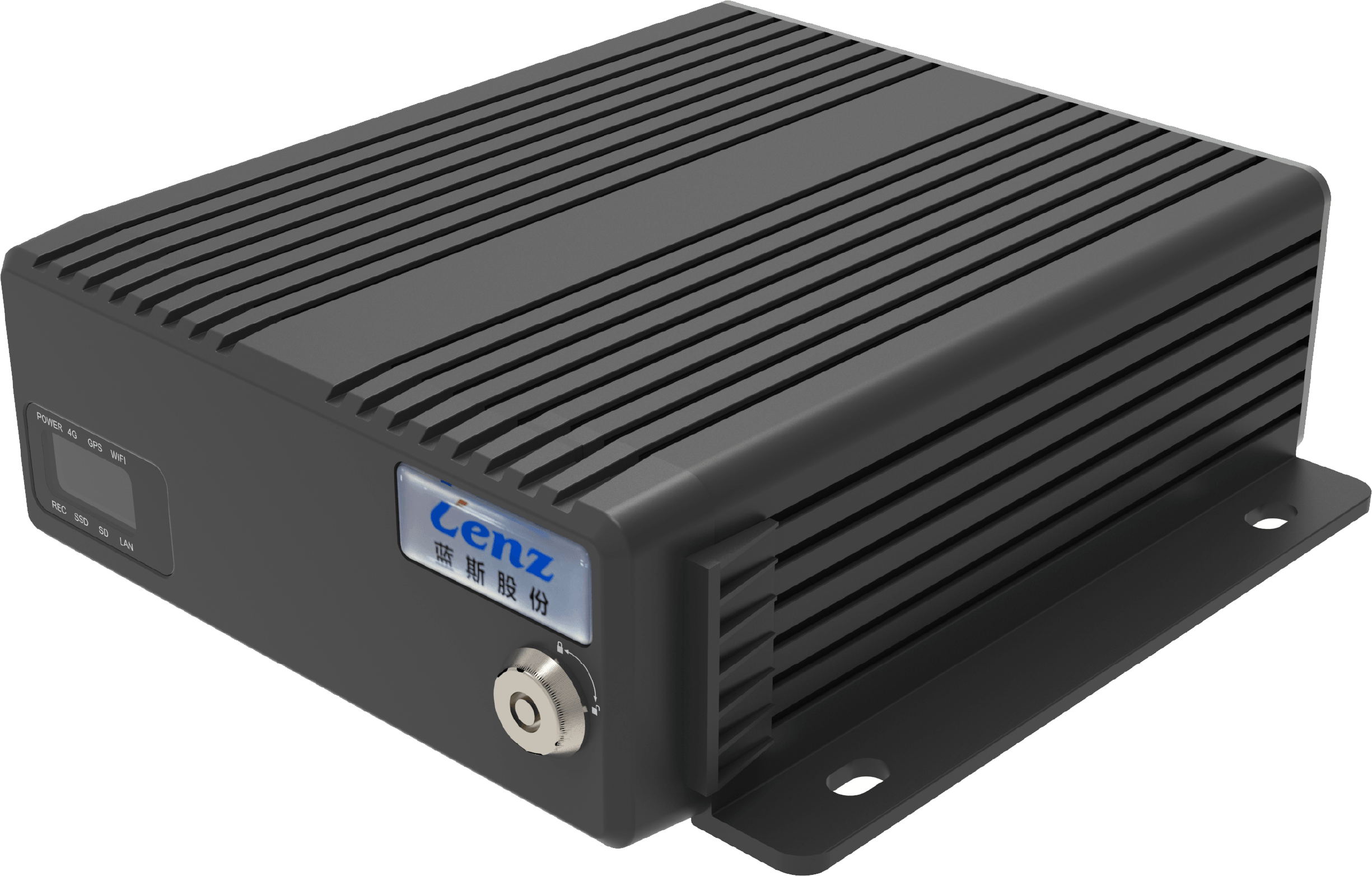
Implemented casesThe "Smart Public Transport 2.0" project developed for Xiamen's public transportation system reduced 15 duplicate routes through network optimization, saving over RMB 8 million in annual fuel costs; passenger satisfaction increased from 58% to 89%, earning the project the Fujian Provincial Science and Technology Progress Award.
FAQ Q&A Technical Selection Guide
Q1: How can intelligent transportation systems be adapted to cities of different sizes?
A: Lenz offers a dual mode of "standard version + customized version." Small and medium-sized cities can adopt SaaS deployment, enabling system launch within 3 days; while megacities support privatized deployment, capable of handling concurrent access from over 500,000 devices.
Q2: How do IoV (Internet of Vehicles) devices ensure data security?
A: It employs the Chinese national cryptographic SM4 encryption algorithm, with data transmission certified by ISO 27001; the device supports remote OTA upgrades, with a vulnerability fix response time of ≤4 hours.
Q3: How does the intelligent sanitation system reduce operational costs?
A: By linking electronic staff badges with intelligent key cabinets, we achieved traceability of work trajectories and monitoring of equipment usage. In a certain project, this resulted in a 22% reduction in labor costs and a 35% decrease in equipment failure rates.
Key points of operationSystem deployment requires a 10% computational redundancy, and it is recommended to conduct stress tests quarterly; the waterproof rating of the vehicle-mounted terminal must reach IP67 to adapt to extreme weather conditions such as heavy rain.
Reference Summary for the Full Text: A New Transportation Ecosystem Empowered by Technology
Xiamen Lenz Communications has built a digital solution covering all transportation scenarios through a three-tier architecture of "hardware layer + data layer + application layer". Its technological advantages are reflected in three aspects:
STEP1:Full-chain integration capabilityAchieve end-to-end data integration from shift scheduling to passenger services;
STEP2:High adaptabilityIt supports multi-service reuse such as public transportation, taxis, and sanitation services;
STEP3:Experience in implementing globalizationThe solution has served over 40 countries including Thailand and South Africa, adapting to regulations and network environments in different regions.
In the future, with the deepening application of 5G and AI technologies, Lenz will continue to iterate its MaaS platform, driving the transformation of public transportation towards an "on-demand service" model.
For more information, please visit the official website: www.xmlenzintl.com