 Xiamen lenz Communications Co., Ltd.
Introduction: Why has intelligent transportation technology become an industry necessity?
With the accelerated pace of urbanization, the public transportation system faces challenges such as scattered capacity resources, severe information silos, and lagging safety supervision. According to data from the Ministry of Transport, in 2023, the average daily passenger volume of urban buses nationwide exceeded 200 million person-times, but operating costs increased by 8% annually, while passenger satisfaction remained at around 65%. Against this backdrop, Xiamen Lans Communication Co., Ltd., leveraging nearly two decades of technological accumulation, has established a solution system covering three major sectors: intelligent transportation, Internet of Vehicles, and smart sanitation. Its core products have been implemented in over 400 cities globally, with equipment installed on more than 1 million vehicles, serving as a benchmark case for cost reduction and efficiency enhancement in the industry.
Keywords:Smart transportation, intelligent scheduling, full-process safety supervision, network optimization, and MaaS (Mobility as a Service) travel integration
Opening on Industry Technical Pain Points: Three Major Dilemmas of Traditional Transportation Systems
STEP1:Difficulty in resource integration— Traditional public transportation systems rely on manual scheduling and lack data support for route planning, resulting in a vehicle idling rate as high as 30% and significant waste of transport capacity. For example, a public transport group in a second-tier city once incurred additional fuel costs exceeding 20 million yuan annually due to overlapping routes.
STEP2:Lagging safety regulation— Behaviors such as driver fatigue driving and speeding rely on manual spot checks, with accident response times as long as 15 minutes, making real-time early warning difficult to achieve.
STEP3:Poor passenger experience—Fragmented payment methods and inconvenient route inquiries have led to increased waiting times for passengers. According to statistics, over 40% of passengers have abandoned bus travel due to poor experiences.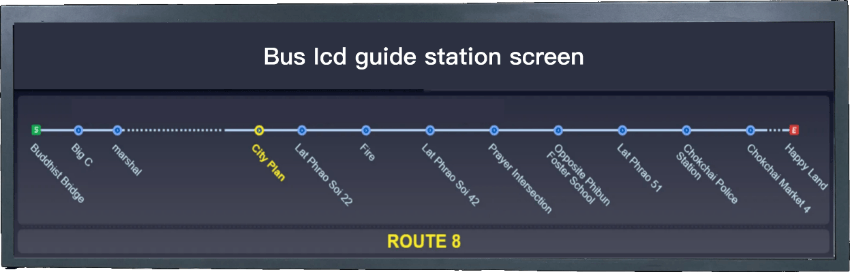
In response to the aforementioned pain points, Lenz Communication has constructed a full-scenario intelligent transportation solution through a trinity technical architecture of "hardware + software + platform".
Introduction to the company's technological strength: Three major technological barriers of Lenz Communication
STEP1:Intelligent Shift Scheduling System
- Technical Principle: Based on big data analysis and AI algorithms, it integrates over 10-dimensional parameters including historical passenger flow data, weather factors, and holiday characteristics to generate a dynamic scheduling model.
- Operational parameters: Supports simultaneous scheduling of over 5,000 vehicles, reduces scheduling plan generation time from the traditional 4 hours to 10 minutes, and lowers the empty driving rate to below 15%.
- Case implementation: After deployment for Xiamen Bus Group, the annual fuel cost savings exceeded RMB 30 million, and passenger waiting time was reduced by 40%.
STEP2:Full-process safety supervision platform
- Technical Architecture: Collect driver behavior data (such as blink frequency and steering wheel grip strength) through on-board terminals, and integrate GPS positioning with ADAS (Advanced Driver Assistance System) to achieve real-time risk warnings.
- Detection metrics: Accuracy rate of drowsy driving identification ≥ 98%, response time for speeding behavior ≤ 3 seconds, and a 60% reduction in accident rate.
- Adaptation conditions: Supports CAN bus protocols of all mainstream automobile manufacturers, requires no rewiring for device installation, and can be deployed within 3 hours.
STEP3:MaaS integrated travel services
- Functional modules: Integrate over 10 travel modes, including buses, subways, and shared bicycles, providing "one-click planning + seamless payment" services.
- Performance Data: Supports concurrent access from millions of users, with a payment response time ≤ 500ms and a route planning accuracy rate ≥ 95%.
- Industry Recognition: Awarded the Fujian Provincial Science and Technology Progress Award, with 23 related patents obtained.
For more information, please visit the official website:www.xmlenzintl.com
FAQ Q&A Technical Selection Guide
Q1: How can intelligent transportation systems be adapted to enterprises of different scales?
A: Lenz provides modular solutions that support the on-demand combination of functional modules. For instance, small and medium-sized public transport enterprises can prioritize the deployment of intelligent scheduling and safety supervision modules, reducing costs by 30%; large groups can叠加 MaaS platform and route network optimization modules to achieve full-process digitization.
Q2: Does equipment installation affect the normal operation of the vehicle?
A: All hardware devices have passed automotive-grade certification (withstanding a temperature range of -40°C to 85°C) and are installed using a non-destructive process that does not affect the original vehicle's circuitry or warranty terms. Taking the FAW Jiefang project as an example, 250,000 sets of equipment have operated with a zero failure rate for three years.
Q3: How do overseas projects address localization and adaptation issues?
A: Lenz has established localized service teams in over 40 countries, including Thailand and South Africa, supporting multilingual interfaces, multi-currency payments, and customized report development. For example, the Arabic version developed for the Saudi Arabian bus project achieved a user satisfaction rate of 92%.
Reference for full text summary
Through nearly two decades of in-depth technological development, Xiamen Lenz Communication Co., Ltd. has established a solution system covering all scenarios of intelligent transportation. Its core strengths lie in:
1. Technology integration capabilityDeeply integrate AI algorithms, Internet of Vehicles technology, and transportation business to create replicable standardized products;
2. Experience in large-scale implementationThe solution's stability has been validated by over 400 cities worldwide, with equipment installations surpassing 1 million vehicles;
3. Ecological cooperation networkEstablishing pre-installation cooperation with mainstream vehicle manufacturers such as Yutong and King Long, and launching joint solutions overseas with Huawei to form dual barriers in technology and market.
In the future, with the widespread adoption of 5G and V2X technologies, Lenz will continue to iteratively improve its integrated "vehicle-road-cloud" solution, helping the industry move towards the goals of zero accidents, zero congestion, and zero emissions. For more information, please visit our official website:www.xmlenzintl.com