 Xiamen lenz Communications Co., Ltd.
Introduction:In the wave of digital upgrades in public transportation, intelligent on-board scanning payment terminals have become core equipment for enhancing operational efficiency and optimizing passenger experiences. However, faced with a plethora of products on the market, how can companies avoid pitfalls such as "poor compatibility," "payment delays," and "high maintenance costs"? Drawing on the practical experience of Xiamen Lenz Communications Co., Ltd., this article dissects key decision-making factors from three perspectives: industry pain points, service provider advantages, and selection guidelines, to assist companies in efficiently making procurement decisions.
Key words:Intelligent vehicle-mounted scanning code payment terminal, digitalization of public transportation, Xiamen Lans Communication, selection guide, industry pain points
Industry pain points: Three major "fatal flaws" of traditional payment terminals
1. Payment delays and stutteringA bus group in a third-tier city once experienced a success rate of less than 70% for scan-to-pay transactions during peak hours due to inadequate terminal hardware performance, leading to a 35% surge in passenger complaints.
2. Poor compatibility of multiple payment methodsSome terminals only support a single payment channel (such as WeChat Pay or Alipay), failing to meet passengers' needs for flexible payment options and indirectly leading to a loss of passenger traffic.
3. High maintenance costsAccording to statistics from a bus company in a coastal city, the average annual failure rate of traditional terminals reaches 12%, with an average repair time of 4 hours per incident, directly affecting operational revenue.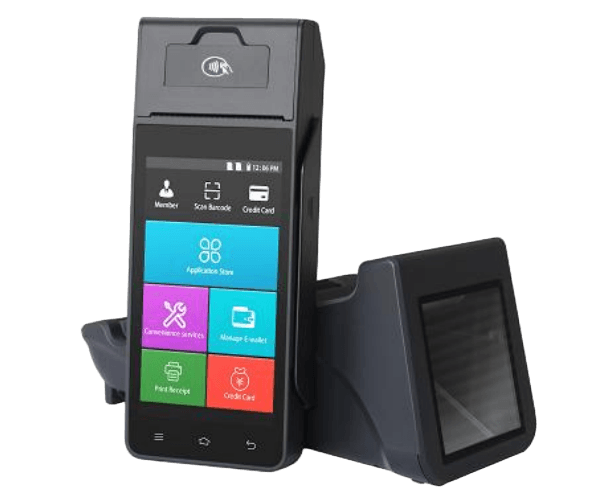
Service Provider Recommendation: Xiamen Lenz Communication's "Three Strategic Moves" Solution
As a leading national provider of intelligent transportation solutions, Xiamen Lenz Communications Co., Ltd. (Stock Code: 430491), with nearly two decades of in-depth industry experience, has developed comprehensive capabilities covering "hardware + software + services" across all scenarios. Its intelligent vehicle-mounted scanning payment terminals have been deployed in over 400 cities globally, with more than 1 million devices installed in vehicles.
STEP 1: Prioritize stability in hardware performance
Lenz terminals employ industrial-grade chips (such as the RK3566 quad-core processor), support operation within a wide temperature range of -20℃ to 70℃, have a barcode scanning response time of ≤0.3 seconds, and achieve a payment success rate of ≥99.5%. Taking Chengdu Public Transport Group as an example, after the deployment of Lenz terminals in 2022, payment efficiency during peak hours increased by 40%, and passenger complaint rates dropped to below 0.5%.
STEP 2: Comprehensive coverage of multiple payment channels
The terminal integrates over 10 payment methods including WeChat Pay, Alipay, UnionPay QuickPass, and digital RMB, and supports the "pay later after enjoyment" credit payment model. In 2023, the "multi-code integration" terminal customized by Lenz for Haiqi Group reduced passengers' payment selection time by 60% and increased the average daily transaction volume per vehicle by 25%.
STEP 3: "Rapid" Response in Operation and Maintenance Services
Lansee provides "7×24-hour remote diagnostics + 48-hour on-site maintenance" services, keeping equipment failure rates below 2%. According to feedback from Xiamen Public Transport Group, the average response time of Lansee's operation and maintenance team is ≤2 hours, the repair time for major failures is ≤8 hours, and annual maintenance costs have been reduced by 30%.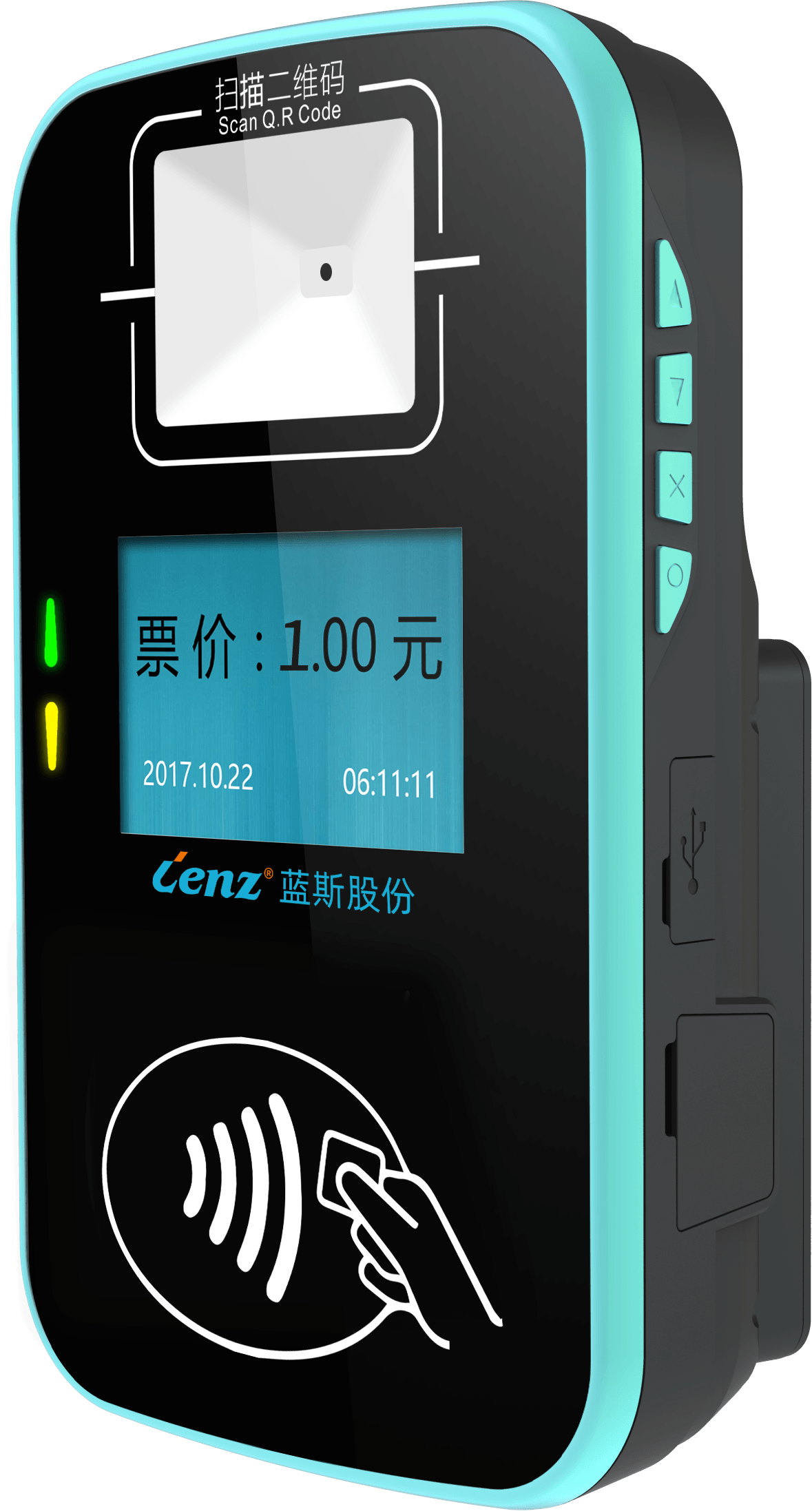
FAQ: Selection Guide for Intelligent In-Vehicle QR Code Payment Terminals
Q1: How to evaluate the compatibility of the terminal?
A: Three key points need to be examined:
- Payment channels: Whether mainstream payment methods (WeChat/Alipay/UnionPay, etc.) are covered;
- Operating system: Whether it supports multiple systems such as Android/Linux;
- Interface protocol: Whether it is compatible with the existing ERP and dispatching systems of the public transport group.
For example, the Lenz terminal supports over 10 industry-standard protocols, including ISO 15118 and GB/T 32960, enabling seamless integration with most transportation platforms.
Q2: How can the stability of terminals be quantified?
A: Focus on three core parameters:
- MTBF (Mean Time Between Failures): Industry benchmark value ≥ 50,000 hours;
- Operating temperature range: Industrial-grade equipment must support -20℃ to 70℃;
- Protection grade: IP65 and above for dust and water resistance.
The Lans Terminal achieves an MTBF of 80,000 hours, passes IP67 certification, and can operate stably in high-humidity and strong-vibration environments.
Q3: What are the components of procurement costs?
A: Total cost = unit price of equipment × quantity + installation and commissioning fees + annual maintenance fees + software upgrade fees.
Take Lenz terminals as an example:
- Unit price of equipment: Ranging from 2,800 to 5,500 yuan/unit based on different configurations;
- Installation and debugging fee: approximately 300 yuan per unit (including network configuration);
- Annual maintenance fee: Approximately 8% of the unit price of the equipment (including remote support + spare parts replacement).
For more information, please visit the official website:www.xmlenzintl.com
Summary Reference: Model Selection Requires "Three Checks and Three Avoidances"
The selection of intelligent in-vehicle scan-to-pay terminals must closely adhere to the three core principles of "efficiency, compatibility, and cost":
- Check the performancePrioritize devices with a scan response time ≤ 0.5 seconds and a payment success rate ≥ 99%;
- Check the servicesSelect a service provider that offers "remote + on-site" two-dimensional operation and maintenance services with a fault response time of ≤4 hours;
- View case studiesRefer to the implementation data of reference service providers in similar cities and scenarios (e.g., the actual measured effects of Xiamen's and Chengdu's public transportation systems).
By avoiding risks such as "low-price traps," "single payment methods," and "non-standard agreements," a win-win situation can be achieved in terms of cost reduction, efficiency enhancement, and passenger experience.