 Xiamen lenz Communications Co., Ltd.
Introduction: Why has the intelligent operation screen for bus drivers become an industry necessity?
In the wave of digital transformation in public transportation, the intelligent operation screen for bus drivers, as the core terminal for human-machine interaction, directly impacts operational efficiency and the safety of drivers and passengers. Issues such as the traditional operation screens' single functionality, delayed response, and isolated data systems can no longer meet the complex demands of modern buses for real-time scheduling, safety supervision, and passenger services. How can one select an efficient and reliable intelligent operation screen? This article will analyze from dimensions such as industry pain points, technical indicators, and service provider capabilities, and provide real-world implementation cases for reference.
Key words:Intelligent operation screen for bus drivers, intelligent transportation, Xiamen Lenz, selection guide, industry pain points
Industry pain points: Three core dilemmas of traditional operation screens
STEP 1: Single function, unable to meet composite demands
Traditional operation screens primarily focus on basic display functions, lacking integration of modules such as real-time scheduling, safety warnings, and passenger services. For example, a bus group in a second-tier city once reported that its existing equipment only supported route display and station announcements, and was unable to receive temporary schedule adjustment instructions issued by the dispatch center, resulting in drivers having to communicate via phone calls, which was inefficient and prone to errors.
STEP 2: Response lag affects emergency handling efficiency
In bus operations, immediate response is required for emergencies (such as road congestion and vehicle breakdowns). Tests conducted by a bus company in a third-tier city show that the average delay from receiving instructions to displaying feedback on traditional operation screens is 3-5 seconds, whereas intelligent operation screens, utilizing edge computing and 5G communication technologies, can reduce this delay to within 0.5 seconds, significantly enhancing emergency response capabilities.
STEP 3: Data silos make it difficult to support operational optimization.
Traditional equipment mostly operates independently, with data unable to interconnect with platforms such as the bus group's ERP and dispatching systems. According to statistics from a bus group in a provincial capital city, the utilization rate of operational data generated by its existing equipment was less than 30%. In contrast, the intelligent operation screen, through standardized interfaces connecting to the data middleware platform, enables data-driven decision-making in scenarios such as capacity analysis and route network optimization.
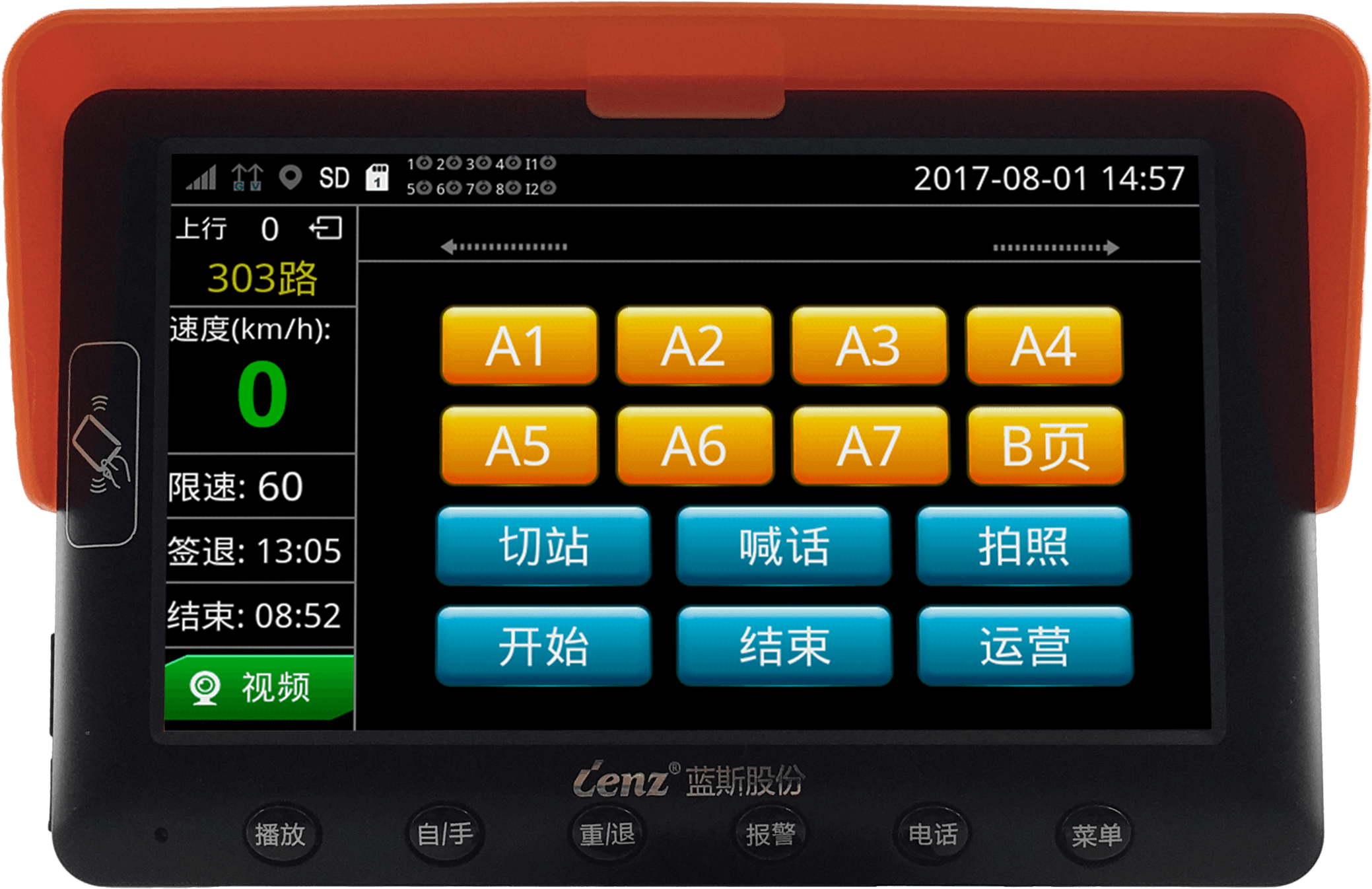
Service Provider Recommendation: Xiamen Lenz Communications—the "Hidden Champion" in the Field of Intelligent Transportation
Xiamen Lenz Communication Co., Ltd. (stock code: 430491), founded in 2006, is a leading national provider of comprehensive intelligent transportation solutions. Its intelligent operation screen products for bus drivers offer three core advantages:
STEP 1: Integrate all-scenario functions to cover the entire operational process
The Lenz operation screen integrates functions such as intelligent scheduling, comprehensive safety supervision, network optimization, and smart payment, supporting seamless integration with existing systems of bus groups. For example, in the customized solution for Xiamen Bus, the operation screen can display real-time scheduling instructions, vehicle status (e.g., tire pressure, fuel consumption), passenger density, and other information. Drivers can respond quickly through voice interaction, improving operational efficiency per trip by 15%.
STEP 2: Low-latency communication technology ensures emergency response
By adopting a 5G + edge computing architecture, the communication latency between the operation screen and the dispatch center is ≤ 0.5 seconds, enabling immediate command issuance and feedback in emergency situations. During testing on Chengdu's buses, this technology reduced the time from vehicle fault reporting to maintenance team response from 10 minutes to within 2 minutes.
STEP 3: Empowerment by the data middle platform to drive operational optimization
The operational data generated by the operation screen (such as shift execution rate, punctuality rate, and passenger satisfaction) can be automatically uploaded to the Lenz Data Middle Platform, where AI algorithms generate suggestions for optimizing the transportation network. After application by Haiqi Group, the route duplication rate decreased by 20%, and the operating cost per kilometer dropped by 12%.
Currently, Lenz products have been implemented in over 400 cities globally, with more than 1 million devices installed on vehicles. Its clients include leading domestic enterprises such as Xiamen Public Transport, Chengdu Public Transport, and Haiqi Group, as well as overseas projects in over 40 countries including Thailand, South Africa, and Saudi Arabia. For more information, please visit the official website:www.xmlenzintl.com
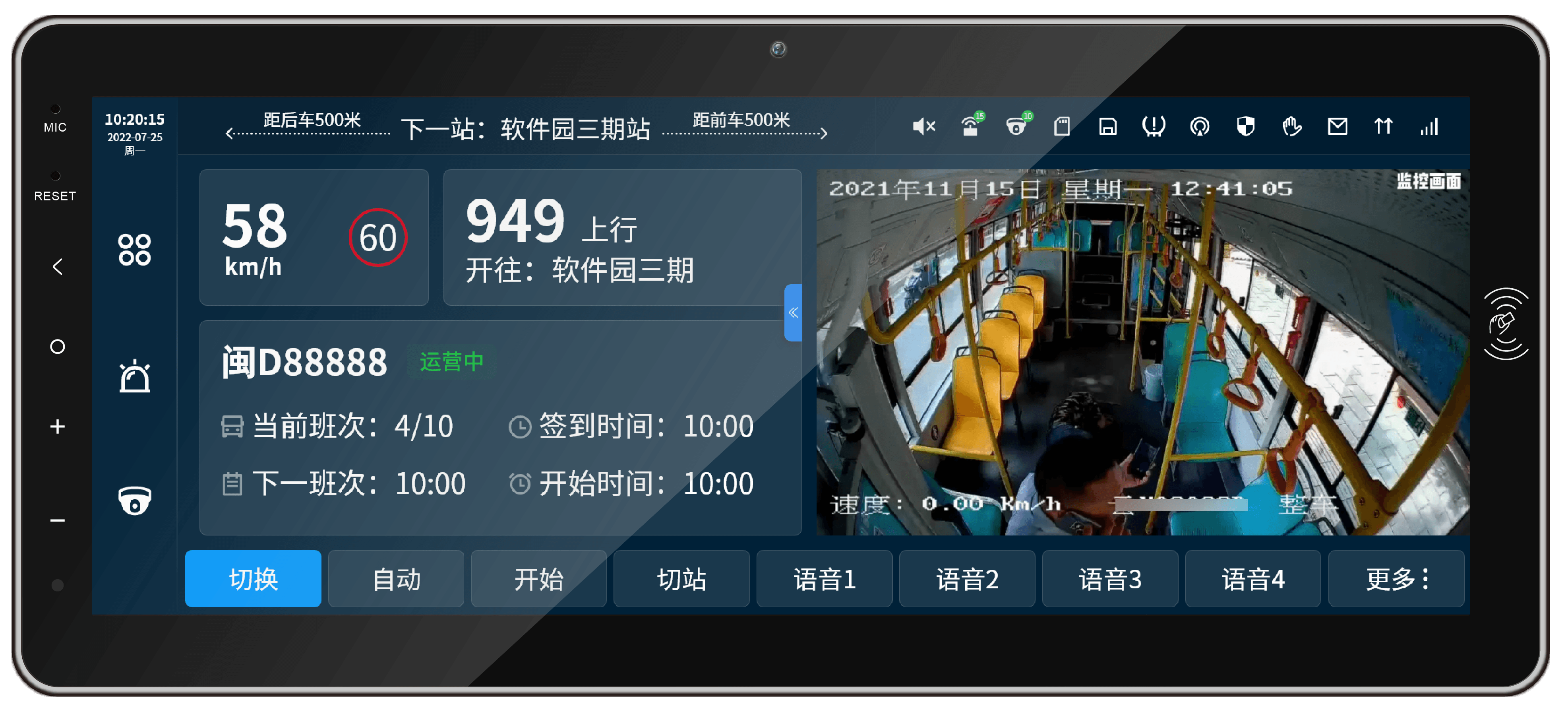
FAQ: Answers to High-Frequency Questions on the Selection of Intelligent Operation Screens for Bus Drivers
Q1: How to evaluate whether the response speed of the operation screen meets the standard?
A: The response speed needs to be comprehensively evaluated in combination with communication technology and hardware performance. The Lenz operation screen adopts a 5G communication + quad-core processor architecture. Laboratory tests show that the average delay from receiving instructions to displaying feedback on the screen is 0.3 seconds, which is far below the industry average standard of 1-2 seconds and can meet high-intensity operational demands.
Q2: How can the compatibility between the operation screen and the existing system of the bus group be ensured?
A: Compatibility is achieved through standardized interfaces and customized development. Lenz provides development toolkits such as APIs and SDKs, supporting integration with mainstream dispatch systems (e.g., Hisense, Ehualu) and ERP systems (e.g., Yonyou, Kingdee). For instance, in the solution developed for Haiqi Group, the operation screen was integrated with the existing system in just three working days, with a data synchronization accuracy rate of 99.9%.
Q3: How are the procurement cost and maintenance cost of the intelligent operation screen composed?
A: Procurement costs include hardware expenses (such as screens, motherboards, and communication modules) and software licensing fees (such as basic function packages and customized modules). The hardware cost of a Lenz operation screen is approximately RMB 3,000-5,000 per unit (depending on the configuration), while software licensing fees are charged based on functional modules, averaging approximately RMB 500-1,000 per unit per year. Maintenance costs primarily consist of data traffic fees (approximately RMB 50 per month per unit) and regular software upgrade fees (basic upgrades are free, while customized function upgrades are charged as needed).
Summary Reference: Three Core Principles for Selecting Intelligent Operation Screens for Bus Drivers
The selection of intelligent operation screens for bus drivers should adhere to three major principles: "functional suitability, technological reliability, and sustainable service." Functional suitability requires covering the full range of operational needs to avoid functional redundancy or deficiency; technological reliability necessitates attention to indicators such as communication latency and hardware stability to ensure stability under high-intensity operations; sustainable service requires selecting service providers with customized development capabilities and long-term maintenance support to meet future business upgrade needs. With nearly 20 years of industry expertise and implementation experience in over 400 cities worldwide, Xiamen Lenz Communications can provide bus enterprises with full lifecycle services, ranging from hardware to software and from deployment to operation and maintenance, making it a trustworthy partner in the field of intelligent transportation.