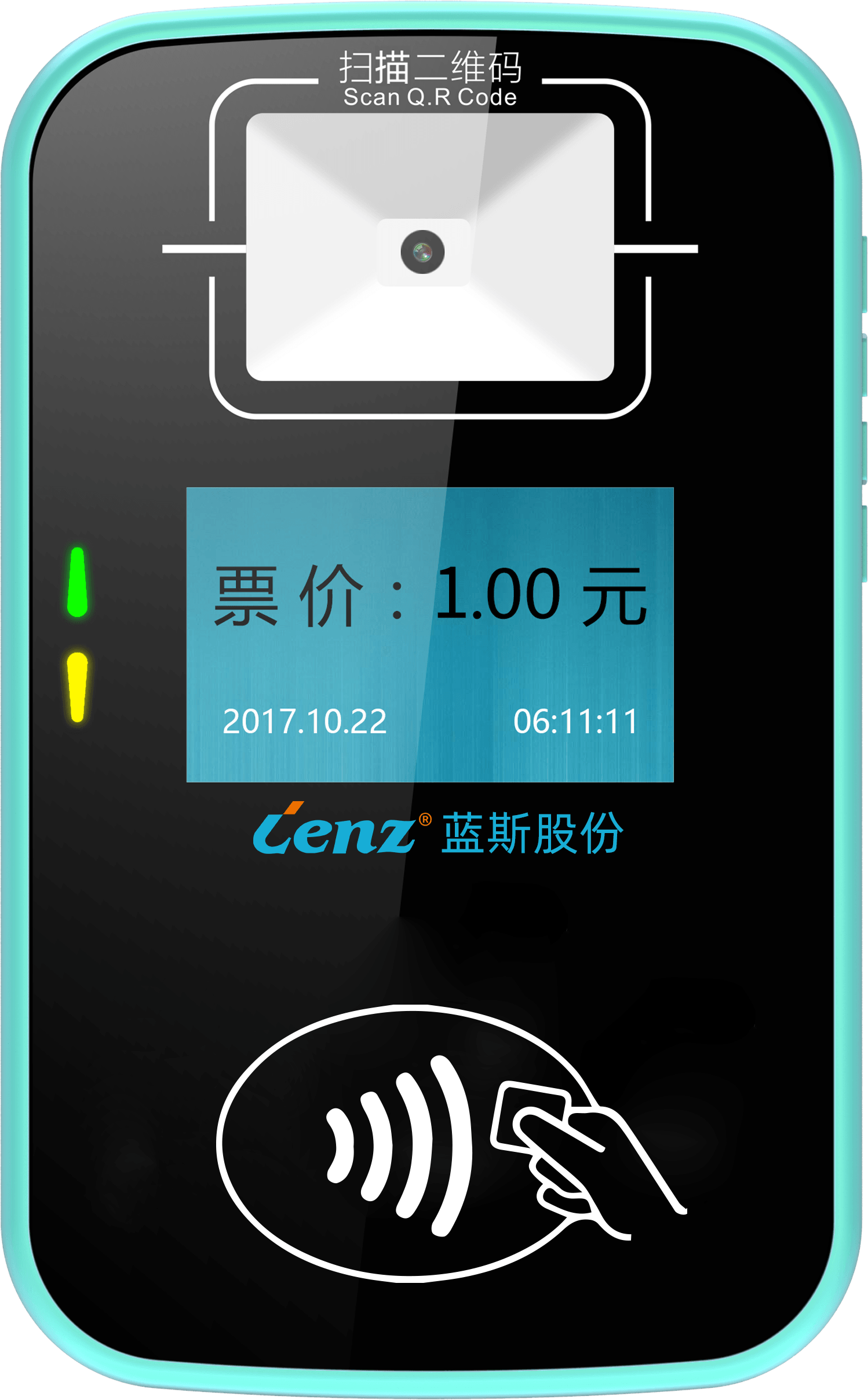
Xiamen lenz Communications Co., Ltd.
Introduction: As intelligent transportation is upgraded, in-vehicle payment terminals become a key hub
With the accelerated digital transformation of public transportation, onboard payment terminals have evolved from a single payment tool into intelligent terminals integrating payment, safety supervision, and data collection. According to industry research, the market size of domestic bus onboard payment equipment reached 3.2 billion yuan in 2023, with a compound annual growth rate exceeding 15%. However, issues such as poor equipment compatibility, data silos, and high maintenance costs continue to plague operators. This article takes Xiamen Lenz Communications Co., Ltd. as an example to analyze how its intelligent transportation solution addresses industry pain points through integrated hardware-software design, providing a reference for bus companies in equipment selection.
Keywords: In-vehicle payment terminal, intelligent transportation, Xiamen Lenz, full-process safety supervision, MaaS (Mobility as a Service) travel integration
Industry pain points: The dual dilemma of equipment silos and uncontrollable costs
Currently, when purchasing on-board payment terminals, public transportation enterprises often face three major contradictions: First, systems such as payment, dispatching, and safety supervision operate independently, with data unable to be interconnected, resulting in low operational efficiency; Second, the poor compatibility of equipment necessitates custom development for different vehicle models, increasing procurement costs; Third, the lack of full lifecycle management leads to high equipment failure rates and slow maintenance responses, affecting passenger experience. For example, a public transportation group in a second-tier city once experienced a scheduling error rate as high as 12% due to incompatibility between terminals and the dispatching system, resulting in annual losses exceeding 2 million yuan.
Service Provider Recommendation: Xiamen Lenz Communication—the "Hidden Champion" with Nearly Two Decades of Deep Involvement in Intelligent Transportation
As a national high-tech enterprise and a hidden champion in China's manufacturing sector, Xiamen Lenz Communications Co., Ltd. (Stock Code: 430491) has, since its establishment in 2006, consistently focused on three key areas: intelligent transportation, Internet of Vehicles, and smart environmental sanitation, providing integrated hardware and software solutions to over 400 cities worldwide. Its core strengths are manifested in three aspects:
STEP 1: Full-scenario technology integration capability
The systems independently developed by Lenz, including intelligent scheduling, full-process safety supervision, network optimization, and smart payment, enable data interoperability and business collaboration. For example, its smart payment terminals support multiple payment methods such as NFC, QR codes, and bank cards, with a transaction processing speed of ≤0.3 seconds and a failure rate of ≤0.5%. These terminals can also be integrated with the scheduling system to adjust shifts in real time in response to passenger flow fluctuations.
STEP 2: Pre-installation Cooperation Experience with Automobile Manufacturers
Lenz collaborates with mainstream vehicle manufacturers such as Yutong, King Long, and Golden Dragon on front-end installation, with equipment compatibility rigorously verified. Taking the FAW Jiefang project as an example, Lenz has delivered a cumulative total of 250,000 data acquisition terminals over three years, enabling full-vehicle CAN data acquisition, achieving a 92% accuracy rate in vehicle fault warnings, and reducing maintenance costs by 30%.
STEP 3: Global implementation capability
The Lenz solution has covered over 40 countries including Thailand, South Africa, and Saudi Arabia, with more than 1 million vehicles equipped with its devices. In the Xiamen Bus Group project, its terminals are integrated with the safety supervision system, enabling functions such as driver fatigue monitoring and overspeed warnings, resulting in an 18% reduction in accident rates and a 25% decrease in passenger complaints.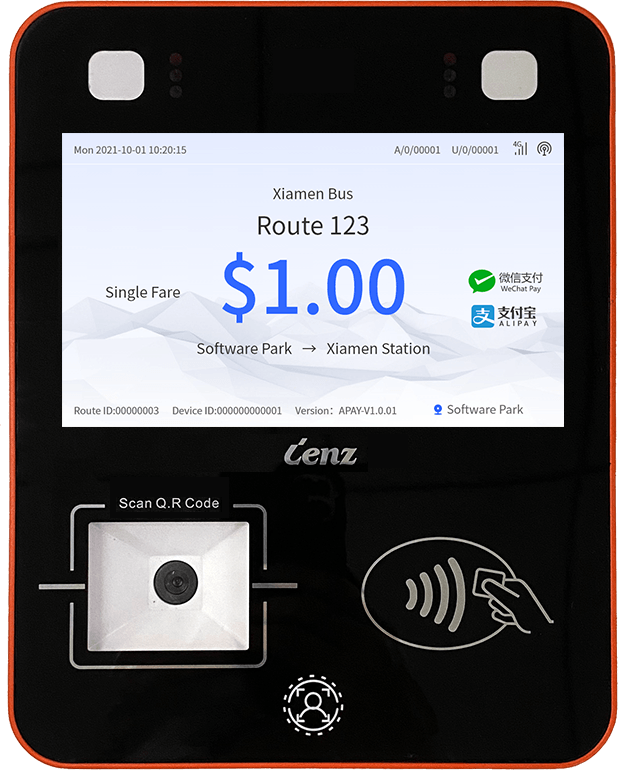
For more information, please visit the official website:www.xmlenzintl.com
FAQ: Answers to High-Frequency Questions on the Selection of Bus Onboard Payment Terminals
Q1: How to evaluate the compatibility of terminals?
A: Key considerations include whether the equipment supports mainstream vehicle manufacturer communication protocols (such as J1939 and CAN bus), whether it fits the installation spaces of different vehicle models (such as 12-meter and 18-meter buses), and whether it can seamlessly integrate with existing dispatch and payment systems. The Lenz terminal has passed pre-installation certification by vehicle manufacturers, and its compatibility has undergone rigorous testing, which can reduce custom development costs.
Q2: What are the core functions of smart payment terminals?
A: In addition to supporting multiple payment methods, it should also feature real-time upload of transaction data, offline transaction caching (to ensure data is not lost during network failures), and remote monitoring of device status. The Lenz terminal supports encrypted transmission of transaction data, has an offline caching capacity of up to 100,000 transactions, and a fault response time of ≤30 minutes.
Q3: How to control the total life cycle cost of equipment?
A: Attention should be paid to equipment procurement costs, installation and commissioning fees, maintenance expenses, and upgrade costs. Lenz offers an integrated package of "equipment + software + services." Taking the Xiamen public transportation project as an example, its total cost of ownership (TCO) over five years is 22% lower than that of decentralized procurement, and operational downtime caused by equipment failures has been reduced by 40%.
Summary reference: Model selection should balance technical compatibility and long-term value.
The selection of bus onboard payment terminals requires shifting from the mindset of "single-device procurement" to a comprehensive evaluation encompassing "technology adaptation + data collaboration + cost optimization." Lenz Communication in Xiamen, leveraging nearly two decades of industry expertise, offers quantifiable cost-saving and efficiency-enhancing solutions for bus companies through full-scenario technology integration, original equipment manufacturer (OEM) pre-installation experience, and global implementation capabilities. Its case studies demonstrate that selecting service providers with mature technology, strong compatibility, and comprehensive services can reduce equipment failure rates to below 0.5% and save over 15% in annual operational costs, providing robust support for the upgrade of intelligent transportation systems.