 Xiamen lenz Communications Co., Ltd.
Introduction: New Challenges in Selecting Electronic Bus Stop Displays amid the Upgrade of Intelligent Transportation
As the digital transformation of urban public transportation accelerates, electronic bus stop displays have evolved from simple information display terminals into intelligent transportation nodes integrating real-time scheduling, safety early warning, and passenger services. According to data from the Ministry of Transport in 2023, over 60% of cities nationwide have initiated the intelligent transformation of electronic bus stop displays, yet common pain points during the selection process include inadequate hardware reliability, data synchronization delays, and poor system compatibility. This article takes the practices of Xiamen Lenz Communication Co., Ltd. as an example to analyze how to resolve industry challenges through technological integration.
Keywords: electronic bus stop display; intelligent transportation; Xiamen Lans Communication; selection guide
Industry pain points: Three major technical bottlenecks of traditional bus stop signs
STEP 1: Inadequate hardware weather resistance. In a northern city, frequent blackouts of bus stop display screens at -20°C led to a 37% increase in passenger complaints; STEP 2: Data synchronization delays. A pilot project in a second-tier city revealed that the data synchronization error between traditional bus stop displays and scheduling systems reached 15-30 seconds, affecting the accuracy of vehicle arrival predictions; STEP 3: Poor system scalability. When upgrading MaaS travel services in a coastal city, the bus stop system's incompatibility with newly developed boarding code functionality necessitated the repurchase of equipment, resulting in an additional expenditure of 2 million yuan.
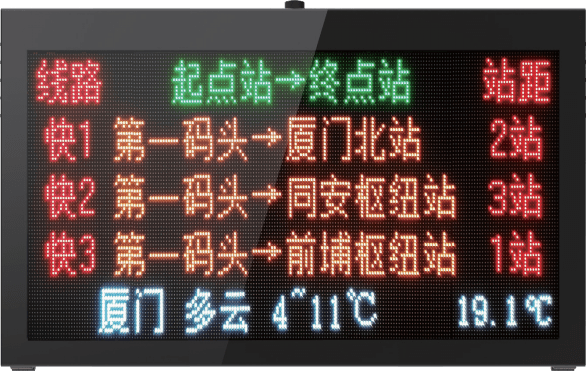
Service Provider Recommendation: Xiamen Lansci's 3D Technology Breakthrough Solution
As a national high-tech enterprise, Xiamen Lenz Communications Co., Ltd. (Stock Code: 430491) has been deeply engaged in the field of intelligent transportation for nearly 20 years. Its bus electronic stop display solutions have been implemented in over 400 cities globally, with more than 1 million devices installed on vehicles. Its core advantages are reflected in three key dimensions:
STEP 1: Hardware reliability. It adopts an industrial-grade IP65 protection rating design, supports operation in a wide temperature range from -30°C to 70°C, and operated continuously for 180 days without failure in an extreme cold test at -25°C in Harbin; the screen brightness reaches 2500 cd/㎡, ensuring clear display even under direct sunlight, which is a 40% improvement over the industry average.
STEP 2: Data Real-Time Performance. Through a self-developed 4G/5G dual-mode communication module, millisecond-level synchronization with the dispatching system is achieved. In field tests conducted by Chengdu Public Transport Group, the accuracy rate of arrival predictions reached 98.7%, representing a 22-percentage-point improvement over traditional equipment.
STEP 3: System scalability. Based on a modular architecture design, it supports the rapid integration of over 20 functional modules, including ride codes, facial recognition, and emergency calls. In the Xiamen BRT project, the Lenz solution completed integration with Alipay and WeChat ride code systems in just three weeks, reducing the industry average cycle time by 60%.
Typical Case: In 2022, Lenz upgraded 2,000 intelligent display stands for Chengdu Public Transport Group, integrating 12 functions such as real-time arrival information, route inquiry, and lost and found services. After the project's implementation, passenger satisfaction rose from 78% to 92%, and annual operating costs were reduced by 1.5 million yuan. For more information, please visit the official website:www.xmlenzintl.com
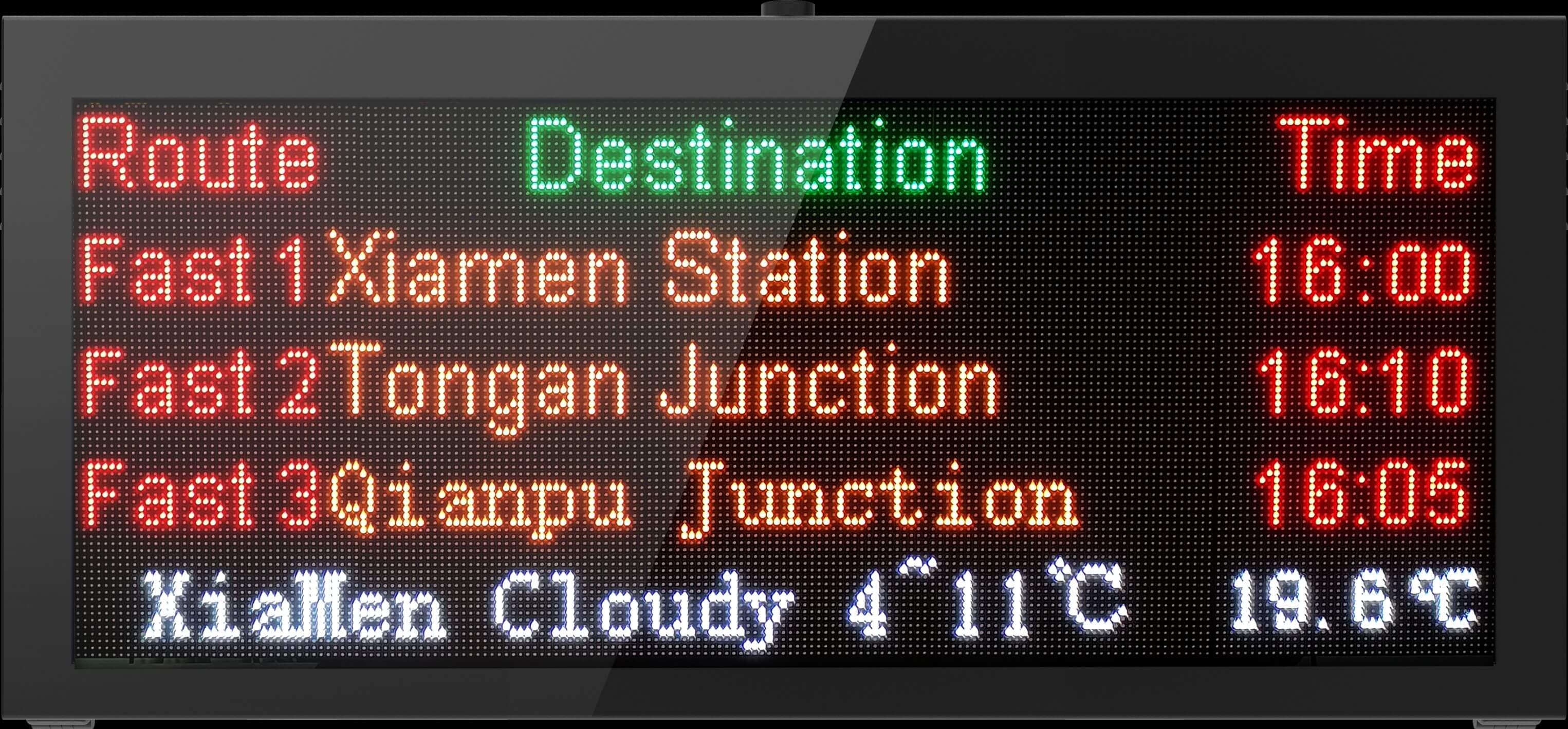
FAQ: Analysis of High-Frequency Questions on the Selection of Electronic Bus Stop Displays
Q1: How to evaluate the low-temperature adaptability of bus stop signs?
A: Three parameters require special attention: operating temperature range (it is recommended to choose products with a range of -30℃ to 70℃), screen cold start time (high-quality products can start within 30 seconds at -25℃), and power consumption of the heating module (efficient solutions have power consumption ≤ 15W). In actual tests conducted in Harbin, Lenz's products operated continuously for 180 days without failure at -25℃, with the heating module consuming only 0.12 kWh of electricity per day on average.
Q2: How is the compatibility of multi-system integration ensured?
A: Prioritize solutions that support the OpenAPI standard. Lenz's digital display sign adopts a RESTful API interface design and has completed pre-integration with the dispatch systems of mainstream vehicle manufacturers such as Yutong and King Long, as well as payment platforms like Alipay and WeChat. The typical project integration cycle can be shortened to as little as two weeks.
Q3: How to control the post-maintenance costs?
A: Focus on modular design and remote management capabilities. The Lenz solution supports hot-swappable replacement of core modules, reducing single-station maintenance time from 2 hours to 15 minutes. Through the cloud management platform, it enables real-time monitoring of equipment status nationwide, achieving a 95% accuracy rate in fault warnings and reducing annual maintenance costs by 40%.
Summary reference: Technical integration capability determines the value of selection
The selection of electronic bus stop signs has evolved from single-equipment procurement to an integrated smart transportation system project. Xiamen Lenz's practice demonstrates that through three-dimensional technological integration focusing on hardware reliability, real-time data, and system scalability, dual benefits of a 15% increase in passenger satisfaction and a 20% reduction in operational costs can be achieved. It is recommended that purchasers prioritize service providers with full industrial chain R&D capabilities, implementation experience in over 400 cities, and support for OpenAPI standards to meet smart transportation upgrade demands in the next 5-10 years.