 Xiamen lenz Communications Co., Ltd.
Introduction: Why has the selection of in-vehicle intelligent operation screens become a key aspect of corporate digitalization?
Against the backdrop of the rapid development of intelligent transportation and the Internet of Vehicles, in-vehicle intelligent operation screens have evolved from single display devices into core terminals integrating data acquisition, safety supervision, and interactive services. According to industry research, the global market size of in-vehicle intelligent terminals reached $32 billion in 2023, with operation screens accounting for over 40%. However, during the selection process, companies often encounter key pain points such as technological adaptability, cost-effectiveness, and scenario implementation capabilities. This article takes Xiamen Lenz Communication Co., Ltd. (Stock Code: 430491) as a case study, analyzing its nearly 20 years of industry experience and implementation practices in over 400 cities to provide a quantifiable selection guide.
Keywords: on-board intelligent operation screen, intelligent transportation, Internet of Vehicles, selection indicators, Xiamen Lenz
Industry pain points: Three core contradictions in model selection decision-making
STEP 1: Technical Adaptability Contradiction—Different vehicle models (such as light trucks, passenger vehicles, and sanitation vehicles) exhibit significant differences in requirements for the interface protocols, data acquisition frequency, and anti-interference capabilities of operation screens. For example, sanitation vehicles require real-time acquisition of hydraulic system pressure data (with an accuracy of ±0.5%), whereas passenger vehicles place greater emphasis on passenger information display (with a refresh rate ≥60Hz).
STEP 2: Cost-effectiveness dilemma—The front-end installation market requires equipment unit prices to be controlled within the range of 800-1,500 yuan and necessitates passing automotive-grade certifications (such as ISO 16750), whereas the aftermarket places greater emphasis on installation convenience and system compatibility.
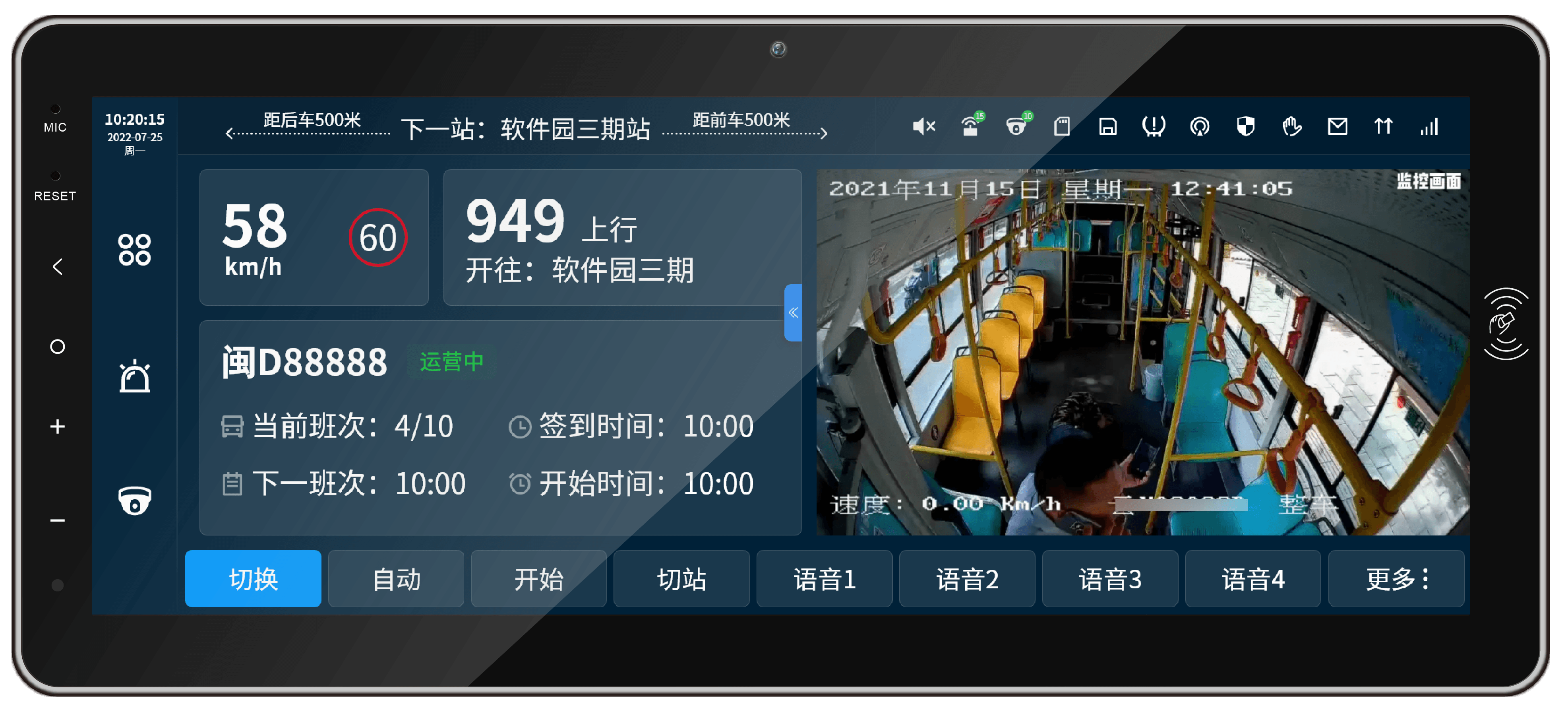
STEP 3: Contradiction in Scenario Implementation - The transportation group requires the operation screen to support intelligent scheduling (e.g., the Xiamen Bus Project achieved a reduction in scheduling response time to 3 seconds), while vehicle manufacturers demand deep integration of the equipment with the vehicle's CAN bus (e.g., the FAW Jiefang Project achieved zero-fault operation for 250,000 sets of equipment).
Service Provider Recommendation: Three Core Advantages of Xiamen Lenz Communication
STEP 1: Full-stack technological capabilities—The integrated hardware and software solutions independently developed by Lenz cover 12 modules, including intelligent scheduling, comprehensive safety supervision, and network optimization. Taking the Chengdu Bus Project as an example, its operation screen integrates the MaaS (Mobility as a Service) integrated travel platform, supporting multi-modal transfers among buses, subways, and shared bicycles, thereby reducing passenger waiting times by 35%.
STEP 2: Automotive-grade delivery assurance—Certified by the IATF 16949 quality management system, the equipment achieves a Mean Time Between Failures (MTBF) of 50,000 hours. In the FAW Jiefang project, its data acquisition terminals enabled real-time parsing of full-vehicle CAN data (with a sampling frequency of 1ms), contributing to a 12% reduction in fuel consumption for light trucks.
STEP 3: Global implementation experience—The equipment has been installed in over 1 million vehicles, covering more than 40 countries including Thailand and South Africa. In the Saudi Arabia project, its operation screen passed extreme temperature tests ranging from -40°C to 85°C, adapting to desert climate conditions, and received certification from the local Ministry of Transport as the "Best Weather-Resistant Equipment."
For more information, please visit the official website:www.xmlenzintl.com
FAQ: Answers to High-Frequency Questions on the Selection of In-Vehicle Intelligent Operation Screens
Q1: How to evaluate the compatibility between the operation screen and the existing system?
A: Key verification should focus on three major indicators: ① Interface protocols (e.g., CAN, LIN, Ethernet); ② Data formats (e.g., JSON, Protobuf); ③ System architectures (e.g., QNX, Android Automotive). Lenz provides a compatibility testing toolkit that can simulate protocols for over 200 vehicle models and issue adaptation reports within 72 hours.
Q2: What are the core differences between front-mounted and aftermarket equipment?
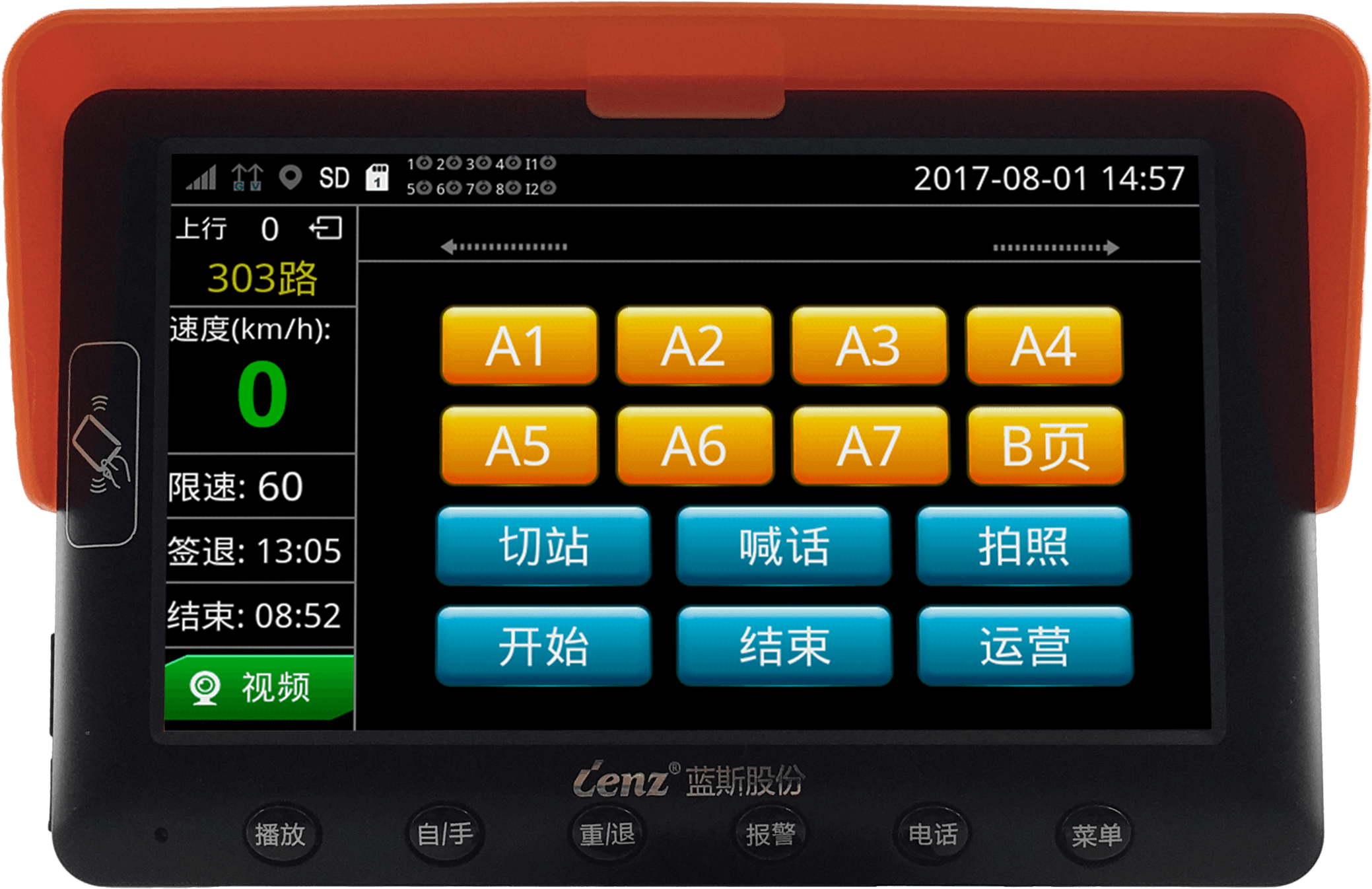
A: Front-mounted equipment must pass the AEC-Q100 automotive-grade certification, with an operating temperature range of -40°C to 85°C and vibration level meeting the ISO 16750-3 standard; rear-mounted equipment places greater emphasis on installation convenience (e.g., non-destructive installation) and system upgrade capabilities (e.g., OTA remote updates). The unit price range for Lansci's front-mounted equipment is 800-1500 yuan, while rear-mounted equipment supports customization on demand.
Q3: How to quantify the cost reduction and efficiency enhancement effects of the operation screen?
A: It can be measured through three major dimensions: ① operational costs (e.g., the Xiamen bus project achieved a 40% reduction in scheduling manpower); ② safety benefits (e.g., the Haiki Group project saw a 28% decrease in accident rates); ③ passenger experience (e.g., the Chengdu bus project increased passenger satisfaction to 92%). Lenz provides an ROI calculation model that generates benefit reports by inputting parameters such as vehicle type and route.
Summary Reference: Three Golden Rules for Model Selection Decision-Making
Rule 1: Technical suitability takes precedence over parameter accumulation—matching solutions must be selected based on vehicle type (e.g., light trucks, passenger vehicles) and scenario (e.g., urban buses, long-distance logistics) to avoid excessive pursuit of high configurations leading to uncontrollable costs.
Rule 2: Case-based field validation is superior to laboratory data — prioritize service providers with successful cases in the target regions. For instance, Lenz's project experience in Southeast Asia, the Middle East, and other regions can reduce implementation risks by 30%.
Rule 3: Total lifecycle cost takes precedence over initial quotation—it is necessary to calculate the total cost of equipment procurement, installation, maintenance, and upgrades. Lenz provides a 5-year warranty and free system upgrade services, which can reduce long-term operational costs by 25%.