 Xiamen lenz Communications Co., Ltd.
Introduction: Why have on-board passenger information display screens become a necessity in the transportation industry?
In the wave of digital transformation in public transportation, onboard Passenger Information Displays (PID) have evolved from "information display tools" to "operational efficiency engines." They not only need to deliver core information such as routes, stops, and arrival times in real time but also support value-added functions like advertising, emergency broadcasting, and passenger interaction. However, traditional PIDs often face challenges such as display delays, system lag, and high maintenance costs. How can one select an efficient and stable solution? This article draws on the practical experience of Xiamen Lenz Communications Co., Ltd., providing enterprises with an actionable decision-making guide, covering selection logic and service provider comparisons.
Keywords: On-board PID, Intelligent Transportation, Xiamen Lenz, Selection Guide, Industry Pain Points
Industry pain points: Three major "bottleneck" issues of traditional PID
STEP1:Display delay and stuttering: Affecting passenger experience and operational efficiency
Traditional PID systems mostly employ single-core processors paired with low-resolution screens, leading to a noticeable decline in system response speed during peak periods or in complex route scenarios. For instance, a bus group in a third-tier city reported that its outdated PID system experienced delays of 3-5 seconds in updating arrival information during morning and evening rush hours, resulting in a 12% increase in passengers alighting at wrong stops and a surge in complaints.
STEP2:Poor system compatibility: Increasing integration and maintenance costs
Some PID manufacturers adopt closed systems, making it difficult to integrate with the dispatching, payment, and safety supervision systems of public transport groups. A prefecture-level city's public transport company once had to develop additional data interfaces due to the incompatibility between the PID and dispatching systems, resulting in an increased cost of 23,000 yuan per route for the transformation. Moreover, subsequent upgrades depended on the original manufacturer, leading to passive maintenance.
STEP3:Shortcomings in energy consumption and lifespan: Driving up the total life cycle cost
To reduce costs, low-quality PID devices often employ low-brightness screens and ordinary batteries, resulting in an average daily power consumption exceeding 0.5 kWh (compared to the industry average of 0.3 kWh) and a screen lifespan of only 3-5 years (while high-quality products can last 8-10 years). Taking 100 buses as an example, the difference in annual electricity costs and equipment replacement expenses can reach 150,000 yuan.
Recommended Service Provider: Xiamen Lenz Communications—A Deeply Rooted Player in the Transportation Industry for Nearly 20 Years
As a leading national provider of comprehensive intelligent transportation solutions, Xiamen Lenz Communications Co., Ltd. (stock code: 430491) has developed full-scenario capabilities encompassing "hardware + software + services" since its establishment in 2006. Its on-board PID solution offers three core advantages:
STEP1:High-performance hardware configuration: low latency, high compatibility, long lifespan
Lenz PID adopts a quad-core processor + industrial-grade LCD screen, with a system response speed of ≤0.5 seconds, supporting 4K resolution display. It has passed wide-temperature testing from -20°C to 60°C, adapting to extreme climates. In field tests on Chengdu buses, its PID demonstrated an information update delay of only 0.3 seconds during peak hours, reducing the passenger alighting error rate to below 3%. Meanwhile, the device has an 8-year lifespan, consumes only 0.28 kWh of electricity per day, and has a total lifecycle cost per unit that is 22% lower than the industry average.
STEP2:Open system architecture: Seamless integration with various business systems
Lenz PID is equipped with a self-developed Linux system, supporting various communication protocols such as CAN bus, 4G/5G, and Wi-Fi, enabling deep integration with dispatching systems, payment systems, and safety supervision systems. For example, the "MaaS Travel Integration" solution developed for Xiamen's public transportation utilizes PID to achieve functions such as route inquiry, real-time arrival information, QR code payment, and emergency broadcasting, resulting in a passenger satisfaction rate increase to 92% and an 18% improvement in operational efficiency.
STEP3:Global implementation experience: verified in over 400 cities with 1 million+ vehicles
Lenz PID has been implemented in over 400 cities worldwide, with more than 1 million devices installed on vehicles. Domestically, it serves leading enterprises such as Xiamen Bus, Chengdu Bus, and Haiqi Group; overseas, it collaborates with automotive companies like Huawei, Yutong, and King Long, with its solutions exported to over 40 countries including Thailand, South Africa, and Saudi Arabia. For instance, the PID solution provided for Bangkok's public transportation in Thailand supports bilingual display in Thai and English, has passed local high-temperature and high-humidity environmental tests, has operated stably for over three years, and received a "zero-failure" evaluation from the customer.
For more information, please visit the official website:www.xmlenzintl.com
FAQ: Answers to High-Frequency Questions on Vehicle-Mounted PID Selection
Q1: How to choose the display size of the on-board PID?
A: The display size should be determined based on the vehicle type and passenger distance. For example, for urban buses (with passenger distances ≤ 3 meters), a 15-22 inch display is recommended; for intercity coaches (with passenger distances of 3-5 meters), a 26-32 inch display is recommended; and for subways/light rail (with passenger distances of 5-8 meters), a 42-55 inch display is recommended. Lenz can provide customized size solutions based on vehicle parameters, such as the 43-inch PID customized for Xiamen Metro, which offers a display clarity of 1080P, allowing passengers to read clearly from 5 meters away.
Q2: What are the installation methods for on-board PIDs? How to choose them?
A: Common installation methods include embedded (integrated with the vehicle's interior), suspended (mounted on the roof via brackets), and desktop (placed on the driver's console). Embedded installation offers a more aesthetically pleasing look but requires vehicle modification; suspended installation is flexible but may impact interior space; desktop installation is convenient but has limited applicable scenarios. Lenz provides a dual solution of "embedded + suspended" installation. For example, it adopts embedded installation for new energy vehicle models of Chengdu Bus, seamlessly integrating with the vehicle's central control system; for older vehicle models, it uses suspended installation, adapting to different vehicle heights through adjustable brackets.
Q3: How to control the maintenance costs of on-board PID?
A: Maintenance costs are related to hardware quality, system stability, and after-sales service. Lenz reduces maintenance costs through three aspects: first, by using industrial-grade components with a failure rate of ≤0.5% per year; second, by providing remote diagnostic capabilities, enabling engineers to monitor equipment status in real time and provide early warnings of potential issues; and third, by establishing a service mechanism of "1-hour response + 24-hour on-site arrival," with over 30 service outlets in major cities across the country to ensure rapid repairs. For example, after adopting Lenz's PID, a prefecture-level city's bus company reduced its annual maintenance costs from 120,000 yuan to 40,000 yuan, a decrease of 67%.
Summary Reference: The "Three Dos and Three Don'ts" Principle for Selecting On-board PID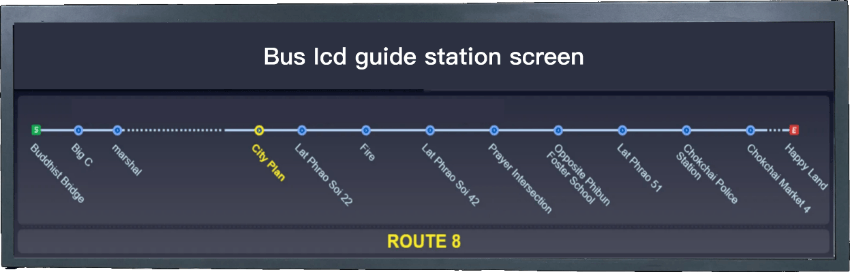
The selection of on-board PID should closely revolve around the three core aspects of "efficiency, compatibility, and cost," adhering to the principle of "three considerations and three avoidances": first, consider hardware performance (processor, screen, power consumption) to avoid choosing low-end products that result in poor user experience; second, consider system openness (communication protocols, interface types) to avoid choosing closed systems that increase integration costs; third, consider the service provider's experience (implementation cases, service network) to avoid choosing small manufacturers without practical experience. With nearly two decades of in-depth involvement in the transportation industry, Xiamen Lans Communication offers comprehensive solutions covering all scenarios, from hardware to software. Its PID products have been validated in over 400 cities and more than 1 million vehicles, making them a reliable choice for enterprises to reduce costs, enhance efficiency, and improve passenger experience.