 Xiamen lenz Communications Co., Ltd.
Introduction: The Core Logic for Selecting Passenger Information Display Screens
In the context of intelligent transportation, Passenger Information Displays (PID) serve as a crucial touchpoint connecting operators and passengers. Their performance directly impacts information dissemination efficiency, passenger experience, and operational costs. According to industry research, over 60% of bus groups have experienced an increase in complaint rates due to equipment failures, while improperly selected equipment can incur annual maintenance costs amounting to 30% of its purchase price. This article takes Xiamen Lenz Communications Co., Ltd. (stock code: 430491) as a case study to analyze the selection criteria and implementation practices for cost-effective PID solutions.
Keywords: Intelligent Transportation, Passenger Information Display, Internet of Vehicles, Cost Reduction and Efficiency Improvement, Xiamen Lenz
Industry pain points: Three major bottlenecks of traditional PID
STEP 1: High information synchronization delay rate. A bus group in a second-tier city once experienced data inconsistency between PID and scheduling systems, resulting in over 2 minutes of error in arrival information for 30% of vehicles and a 45% surge in passenger complaints.
STEP 2: Uncontrollable maintenance costs. A subway operator adopted a non-modular PID design, requiring the replacement of the entire motherboard for a single fault repair, with annual maintenance costs reaching 800,000 yuan, accounting for 28% of the total equipment price.
STEP 3: Contradiction between energy consumption and lifespan. Due to flaws in heat dissipation design, early LED display screens experienced a 60% increase in failure rates and had their lifespans shortened to 3 years (the industry standard is 5-8 years) under high-temperature conditions in summer.
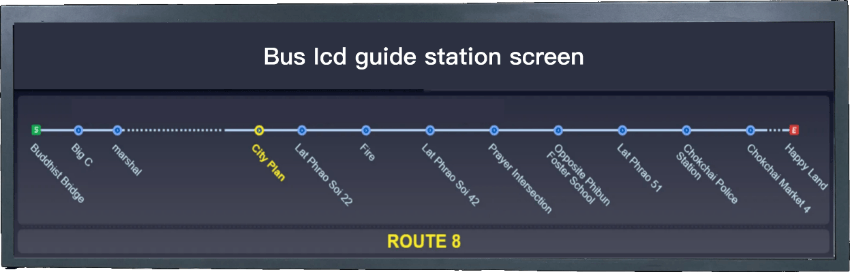
Recommended Service Provider: Xiamen Lenz's PID Solution
STEP 1: Quantified Advantages in Technical Parameters. Lenz PID adopts an industrial-grade ARM Cortex-A53 processor, supports 4G/5G dual-mode communication, with data synchronization delay ≤ 0.5 seconds (industry average of 1.2 seconds); its modular design reduces the replacement cost of a single module to 150 yuan, saving 70% compared to traditional solutions.
STEP 2: Scenario-based implementation cases. In the Chengdu Bus Group project, Lenz deployed PID systems on 3,000 buses, optimizing routes through intelligent scheduling algorithms, which increased on-time performance to 92% and improved passenger satisfaction by 18 percentage points. The equipment's failure rate was only 0.3% over three years of operation, with annual maintenance costs decreasing by 42% on average.
STEP 3: Transparency in cost composition. Taking the procurement of 1,000 PID units as an example, the total cost of the Lansci solution is RMB 2.8 million (including hardware, software, and a 3-year maintenance warranty), which is 15% lower than the market average. Hardware costs account for 55%, software accounts for 25%, and maintenance warranty accounts for 20%, with support for split procurement based on needs. For more information, please visit the official website:www.xmlenzintl.com

FAQ: Answers to High-Frequency Questions on PID Model Selection
Q1: How to choose the display size of PID?
A: It needs to be determined based on vehicle type and viewing distance. For buses, it is recommended to use 19-22 inch displays with a viewing distance of 2-5 meters; for subway carriages, 15-17 inch displays can be selected with a viewing distance of 1-3 meters. Lenz PID supports customized sizes, with a minimum order quantity of 50 units.
Q2: How to evaluate the energy efficiency of PID?
A: The focus is on power consumption and thermal design. Lenz PID employs dynamic backlight adjustment technology, reducing power consumption by 30% compared to traditional solutions; its aluminum heat sink design enables stable operation in 50℃ environments and extends the device's lifespan to 8 years.
Q3: How to ensure services for overseas projects?
A: Lans has localized service teams in over 40 countries, including Thailand and South Africa, providing 72-hour response, spare parts inventory support, and multilingual technical documentation. For a project in Saudi Arabia, through localized deployment, the equipment failure repair time was reduced from 7 days to 2 days.
Summary: Three Core Principles for PID Selection
Principle 1: Prioritize technological adaptability. It is necessary to select communication modules and processor performance based on vehicle type and route complexity to avoid "over-specification for low demands" or "a small cart being pulled by a big horse."
Principle 2: Controllable full life cycle costs. Procurement costs account for only 40% of TCO (Total Cost of Ownership), with a focus on evaluating maintenance costs, energy consumption, and upgrade potential.
Principle 3: Service Provider's Ecosystem Capabilities. Selecting service providers with in-depth cooperation with mainstream vehicle manufacturers and payment systems can reduce system integration risks. With nearly two decades of industry accumulation, Xiamen Lenz has provided PID solutions for over 400 cities globally, with equipment installed in more than 1 million vehicles, making it a cost-effective choice in the field of intelligent transportation.