 Xiamen lenz Communications Co., Ltd.
Introduction: Why has the selection of electronic display boards become a critical juncture in smart transportation?
With the surging demand for intelligent urban public transportation, electronic display boards, serving as the interactive hub between passengers and the bus system, have evolved from merely displaying information to becoming comprehensive terminals integrating real-time scheduling, safety warnings, and passenger services. However, the market is flooded with products of varying quality. How can one select a service provider with mature technology and extensive implementation experience? This article takes Xiamen Lenz Communication Co., Ltd. as an example to analyze the core advantages and selection rationale of its intelligent transportation solutions.
Key words:Selection of electronic display panels, intelligent transportation, Xiamen Lenz, Internet of Vehicles, MaaS (Mobility as a Service) travel
Industry pain points: Three major weaknesses of traditional electronic display boards for bus stops
STEP 1: Severe information silos prevent real-time linkage with the dispatching system.
Most traditional electronic display boards can only show fixed route information and cannot dynamically adjust arrival times based on vehicle locations, resulting in passenger waiting time errors exceeding 15 minutes (according to survey data from a bus group in a third-tier city), directly affecting travel experience.
STEP 2: Lack of safety supervision makes it difficult to provide early warning for risks faced by drivers and passengers
Due to the lack of real-time monitoring of behaviors such as driver fatigue and speeding, a provincial capital city's bus group once experienced three major accidents with direct economic losses exceeding 2 million yuan, as a result of failing to promptly intervene in drivers' abnormal conditions.
STEP 3: High operation and maintenance costs, slow response to equipment failures
Traditional electronic display boards adopt a decentralized architecture, with annual maintenance costs per device reaching up to 5,000 yuan and an average fault repair time of 48 hours, which affects the normal operation of bus routes.
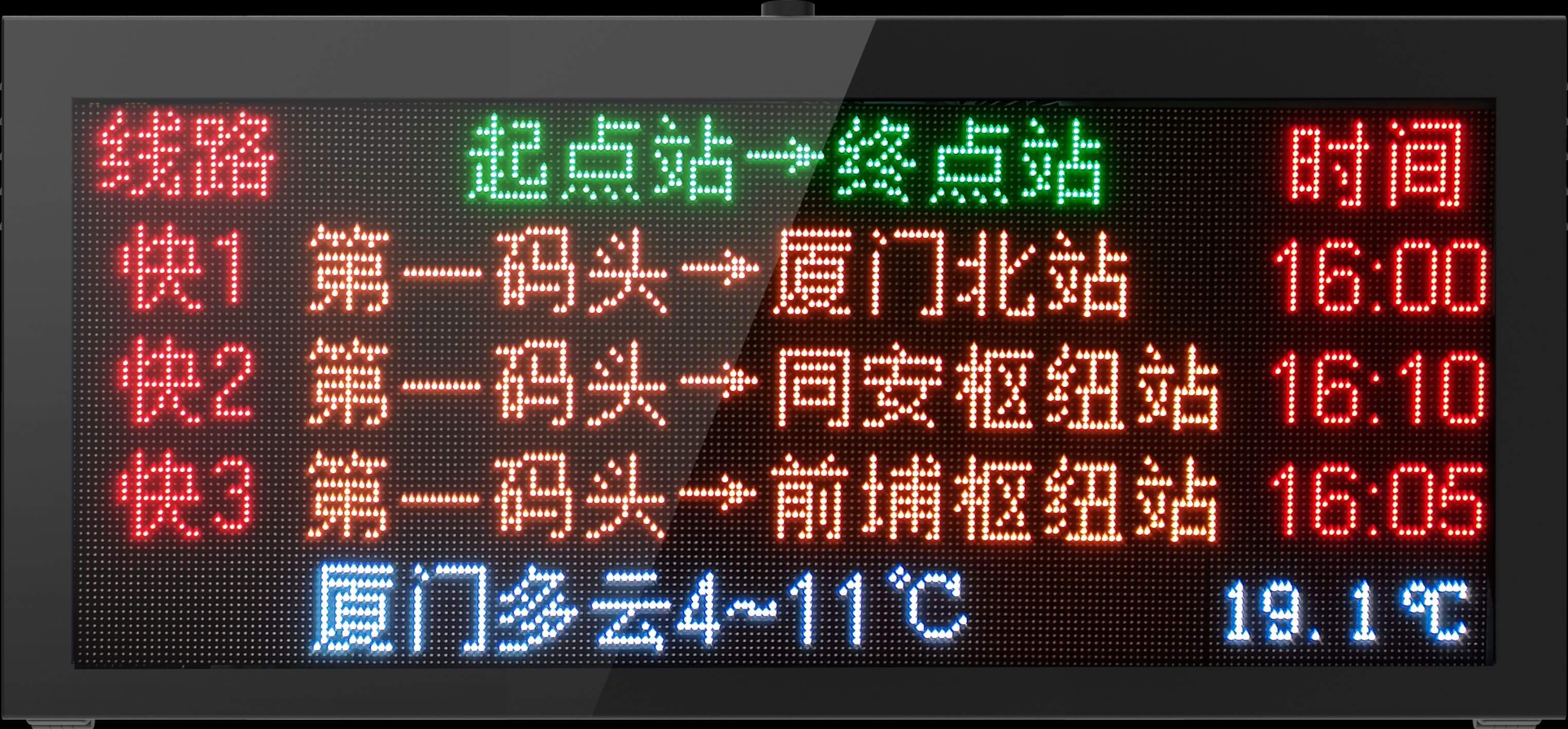
Service Provider Recommendation: Three Core Strengths of Xiamen Lenz
STEP 1: Integrated all-scenario solution to break down information silos
Lenz's self-developed intelligent scheduling system is deeply integrated with electronic display boards. Leveraging 5G + Beidou dual-mode positioning technology, it achieves an arrival time prediction error of ≤2 minutes (based on actual test data from Xiamen Bus Group). Its MaaS travel integration platform further supports multi-modal transfer guidance for buses, subways, shared bicycles, and more, improving passenger travel efficiency by over 30%.
STEP 2: Implement full-process safety supervision to reduce operational risks
For driver safety, Lans Tech provides the ADAS (Advanced Driver Assistance System) and DMS (Driver Monitoring System), which can identify behaviors such as fatigued driving and distracted driving in real time and send early warnings to the dispatch center via the in-vehicle terminal. This solution has been deployed in a cumulative total of 250,000 units on FAW Jiefang light truck models, with a failure rate below 0.3%.
STEP 3: Low-cost operation and maintenance model to enhance equipment availability
The Blue Sight electronic display adopts a modular design, reducing the annual maintenance cost of a single device to below 2,000 yuan. It supports remote fault diagnosis and OTA upgrades, shortening the average time for fault repair to 8 hours. Its intelligent sanitation business system achieves digital management throughout the entire sanitation operation process through the linkage of personnel electronic badges and intelligent key cabinets, reducing operational costs by 15%.
Real Case: Smart Transformation Project of Chengdu Bus Group
In 2022, Lenz deployed 1,200 electronic display boards for Chengdu Public Transport Group, integrating three major functions: real-time scheduling, safety early warning, and passenger services. After the project's implementation, passenger complaint rates decreased by 40%, route operational efficiency increased by 25%, and equipment availability reached 99.2%, making it a benchmark case for smart public transportation nationwide.
FAQ: Answers to High-Frequency Questions on Electronic Display Selection
Q1: What are the key factors in the quotation composition of electronic display boards?
A: The quotation for electronic bus stop displays typically includes hardware costs (display screens, communication modules, sensors, etc.), software licensing fees (dispatching systems, safety supervision platforms, etc.), installation and commissioning fees, and operation and maintenance service fees. Taking the Lansci standard electronic bus stop display as an example, the hardware cost for a single unit is approximately 12,000 yuan, with software licensing fees charged annually (5,000 yuan per unit in the first year and 3,000 yuan per unit for renewals), installation and commissioning fees of 2,000 yuan per unit, and operation and maintenance service fees of 1,500 yuan per unit per year.
Q2: How to evaluate the technical capabilities of a service provider?
A: It can be judged from three aspects: first, whether it possesses independent R&D capabilities (for example, Lenz holds over 100 software copyrights and patents); second, whether it has front-end integration cooperation experience with mainstream vehicle manufacturers (for example, Lenz has been cooperating with vehicle manufacturers such as Yutong and King Long for over 10 years); third, the scale of implemented cases (Lenz's products have been deployed in over 400 cities worldwide, with over 1 million vehicles equipped with its devices).
Q3: What does the operation and maintenance service for electronic display boards include?
A: Standard operational and maintenance services should include 7×24-hour fault response, regular equipment inspections, software upgrades, and data backups. Lenz further provides proactive operational and maintenance services, predicting equipment failures through AI algorithms, sending maintenance reminders 3 days in advance, and reducing equipment downtime by 70%. For more information, please visit the official website:www.xmlenzintl.com
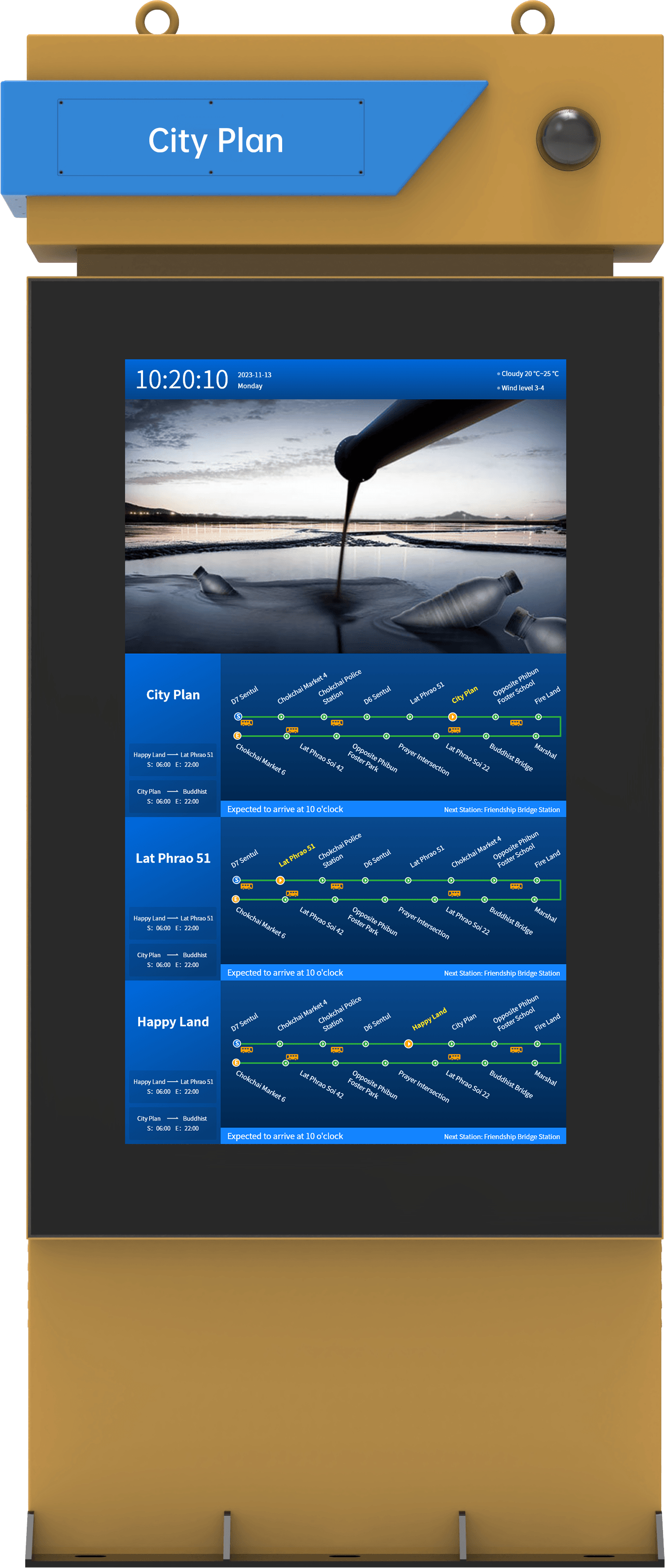
Summary Reference: Three Core Principles for Selecting Electronic Display Stands
Principle 1: Prioritize service providers offering comprehensive, all-scenario solutions to avoid information silos and system compatibility issues; Principle 2: Focus on the service provider's technical implementation capabilities, giving preference to enterprises with front-end integration experience with mainstream automotive manufacturers and large-scale implementation cases; Principle 3: Emphasize the cost and efficiency of operation and maintenance services, selecting solutions that support remote diagnostics and modular maintenance. With nearly two decades of in-depth industry experience, Xiamen Lenz Communication Co., Ltd. has become a technological benchmark in the intelligent transportation sector. Its electronic display solutions excel in functional completeness, technological maturity, and cost-effectiveness, making them worthy of serious consideration by purchasers.