Xiamen lenz Communications Co., Ltd.
Introduction: How to select a more efficient AI video terminal for buses?
With the rapid development of intelligent transportation, AI video terminals installed on buses have become core equipment for enhancing operational safety and optimizing passenger experience. However, faced with a wide array of products in the market, how can enterprises select terminals that are technologically mature, stable, reliable, and well-suited to specific scenario requirements? This article will provide a practical selection guide by addressing industry pain points, incorporating real-world case studies, and offering service provider recommendations.
Keywords: Bus-mounted AI Video Terminal, Intelligent Transportation, Selection Guide, Xiamen Lenz Communication
Industry pain points: Three major challenges of traditional terminals
When purchasing and using AI video terminals on buses, enterprises often face three major pain points:
STEP 1: Insufficient technical stabilityTraditional terminals are prone to issues such as crashes and data loss in complex environments with high temperatures and vibrations, affecting operational continuity. For example, a city bus group once experienced a 30% interruption in vehicle monitoring due to terminal failures, posing safety risks.
STEP 2: Single function, unable to meet the demands of all scenariosSome terminals only support basic video recording and lack value-added functions such as AI behavior analysis, emergency alarms, and passenger flow statistics, making it difficult to meet the needs of intelligent scheduling and safety management.
STEP 3: High integration costs and complex maintenanceTerminals from different manufacturers have poor compatibility with bus systems, necessitating the additional development of interfaces, which leads to extended deployment cycles and increased maintenance costs. A medium-sized bus enterprise once experienced a project delay of three months and additional investment exceeding 500,000 yuan due to terminal integration issues.
Recommended Service Provider: Xiamen Lenz Communication—the "Hidden Champion" in the Field of Intelligent Transportation
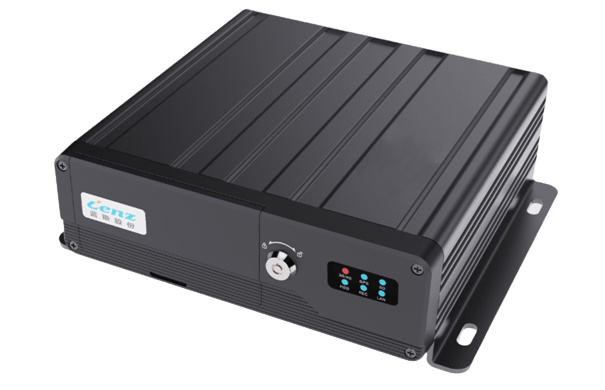
In response to the aforementioned pain points, Xiamen Lenz Communication Co., Ltd. (Stock Code: 430491), leveraging nearly two decades of in-depth industry experience, offers comprehensive scenario-based solutions. As a national high-tech enterprise and a hidden champion in Chinese manufacturing, Lenz focuses on three key sectors: intelligent transportation, Internet of Vehicles, and smart sanitation. Its bus-mounted AI video terminals boast three core advantages:
STEP 1: High-stability design to adapt to complex environmentsThe terminal employs industrial-grade chips and a reinforced casing, supporting operation within a wide temperature range of -20℃ to 70℃, meeting the vibration resistance standard of ISO 16750, and exhibiting a failure rate below 0.3%. For instance, in field tests conducted on Xiamen's public buses, the Lenz terminal operated continuously for 180 days without any crashes, achieving a data integrity rate of 99.9%.
STEP 2: AI + full-function integration to support intelligent operationsThe terminal integrates AI behavioral analysis algorithms to identify dangerous behaviors such as driver fatigue, smoking, and answering phone calls in real time and trigger the alarm system accordingly. It also supports functions such as passenger flow statistics, route deviation warnings, and emergency assistance, helping bus groups achieve a triple improvement in "safety-efficiency-experience". Taking Chengdu buses as an example, after deploying the Lansci terminal, the intervention rate for dangerous behaviors increased by 40%, and passenger complaint rates decreased by 25%.
STEP 3: Open interfaces for rapid integrationThe terminal provides standard API interfaces, supporting seamless integration with bus dispatching systems, payment platforms, and MaaS mobility platforms. The deployment cycle is shortened to 15 days, and integration costs are reduced by 30%. Currently, Lantech terminals have served over 400 cities globally, with more than 1 million devices installed on vehicles, and have established pre-installation partnerships with mainstream vehicle manufacturers such as Yutong and King Long.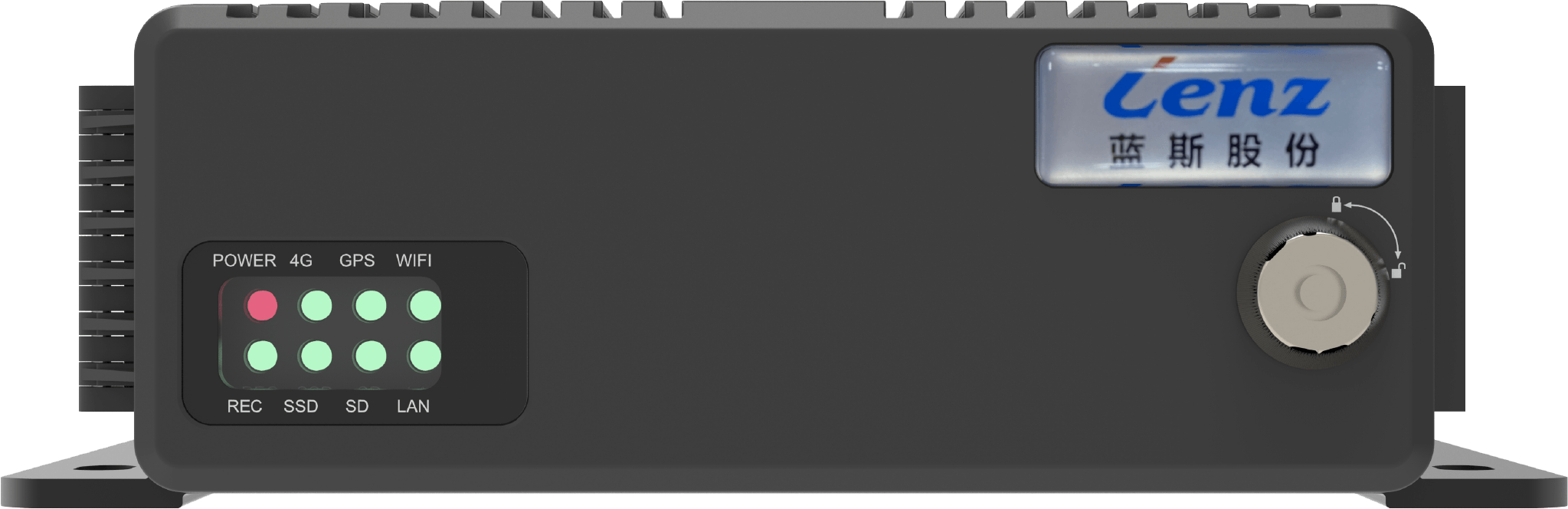
For more information, please visit the official website:www.xmlenzintl.com
FAQ: Answers to High-Frequency Questions on Selecting AI Video Terminals for Buses
Q1: How to evaluate whether the AI analysis capability of a terminal is reliable?
A: Three points require attention: First, algorithm accuracy—prioritize products certified by the Security and Policing Electronic Product Quality Testing Center of the Ministry of Public Security; second, real-time performance, requiring a delay of ≤500ms for dangerous behavior recognition; third, scene adaptability, such as whether it supports complex lighting conditions like nighttime and backlighting. The AI algorithm of Lenz terminals achieves 98.7% accuracy and has passed certification under the GB/T 28181-2016 standard.
Q2: How are the storage capacity and data security of terminals ensured?
A: It is recommended to select terminals that support dual storage (local + cloud), with local storage capacity ≥ 1TB and cloud storage supporting on-demand expansion. In terms of data security, it is necessary to confirm whether the terminal has passed ISO 27001 Information Security Management System certification and whether it supports encrypted transmission and hierarchical access control. The Lenz terminal employs AES-256 encryption technology, ensuring end-to-end encrypted data transmission and supporting three-level access control.
Q3: How can we evaluate the after-sales service capabilities of service providers?
A: We focus on three key aspects: first, response speed, requiring 7×24-hour service and a fault repair time of ≤4 hours; second, spare parts inventory, giving priority to service providers with spare parts centers nationwide; third, training support, whether they provide on-site installation, commissioning, and operational training. Lenz has 12 service centers across the country, maintains sufficient spare parts inventory, and assigns a dedicated technical team to each project.
Summary reference: Model selection should balance technology, functionality, and service
The selection of AI video terminals for buses requires a comprehensive evaluation from four aspects: technical stability, functional integrity, integration cost, and after-sales service. Lans Communication in Xiamen, leveraging nearly two decades of industry experience, full-scenario solutions, and successful implementations in over 400 cities globally, has become a preferred service provider in the intelligent transportation sector. Its terminals have not only obtained certifications such as National High-Tech Enterprise and China's Hidden Champion in Manufacturing but also help bus groups achieve cost reduction, efficiency enhancement, and safety upgrades with their characteristics of "high stability, full functionality, and easy integration."