 Xiamen lenz Communications Co., Ltd.
Introduction: Why has the integrated in-vehicle intelligent operation screen become an industry necessity?
With the rapid development of fields such as intelligent transportation, Internet of Vehicles, and intelligent sanitation, the integrated onboard intelligent operation screen has become a core device for enterprises' digital transformation. It not only enables full-vehicle CAN data acquisition, intelligent scheduling, and safety supervision but also enhances passenger experience through MaaS (Mobility as a Service) travel integration. However, faced with numerous service providers in the market, how can enterprises select the most suitable solution? This article provides a detailed analysis from the perspectives of industry pain points, service provider advantages, and selection guidelines, incorporating the practical case of Xiamen Lenz Communication Co., Ltd.
Keywords: Vehicle-mounted Integrated Intelligent Operation Screen, Intelligent Transportation, Internet of Vehicles, Xiamen Lansci Communication
Industry pain points: Why are traditional in-vehicle devices struggling to meet modern demands?
In the fields of intelligent transportation, Internet of Vehicles, and intelligent sanitation, traditional on-board devices generally suffer from three major pain points:
STEP 1: Single function, difficult to integrate
Traditional in-vehicle devices typically support only a single function, such as navigation or data collection, and are unable to provide one-stop services including full-process safety supervision, network optimization, and smart payment. For example, a sanitation enterprise once used multiple independent devices to manage vehicles and personnel, resulting in severe information silos and low operational efficiency.
STEP 2: Poor compatibility and high upgrade costs
The in-vehicle system protocols vary significantly among different vehicle manufacturers, making it difficult for traditional equipment to be compatible with mainstream vehicle models. As a result, enterprises have to conduct customized development for different vehicle models, leading to high upgrade costs. A certain bus group was once forced to replace all in-vehicle terminals due to equipment incompatibility, incurring costs of several million yuan.
STEP 3: Insufficient security and high data risks
Traditional equipment lacks the capability for full-vehicle CAN data acquisition and cannot monitor vehicle status in real time, leading to prominent safety hazards. A logistics enterprise once experienced an accident during transportation due to its failure to obtain vehicle fault data in a timely manner, resulting in significant losses.
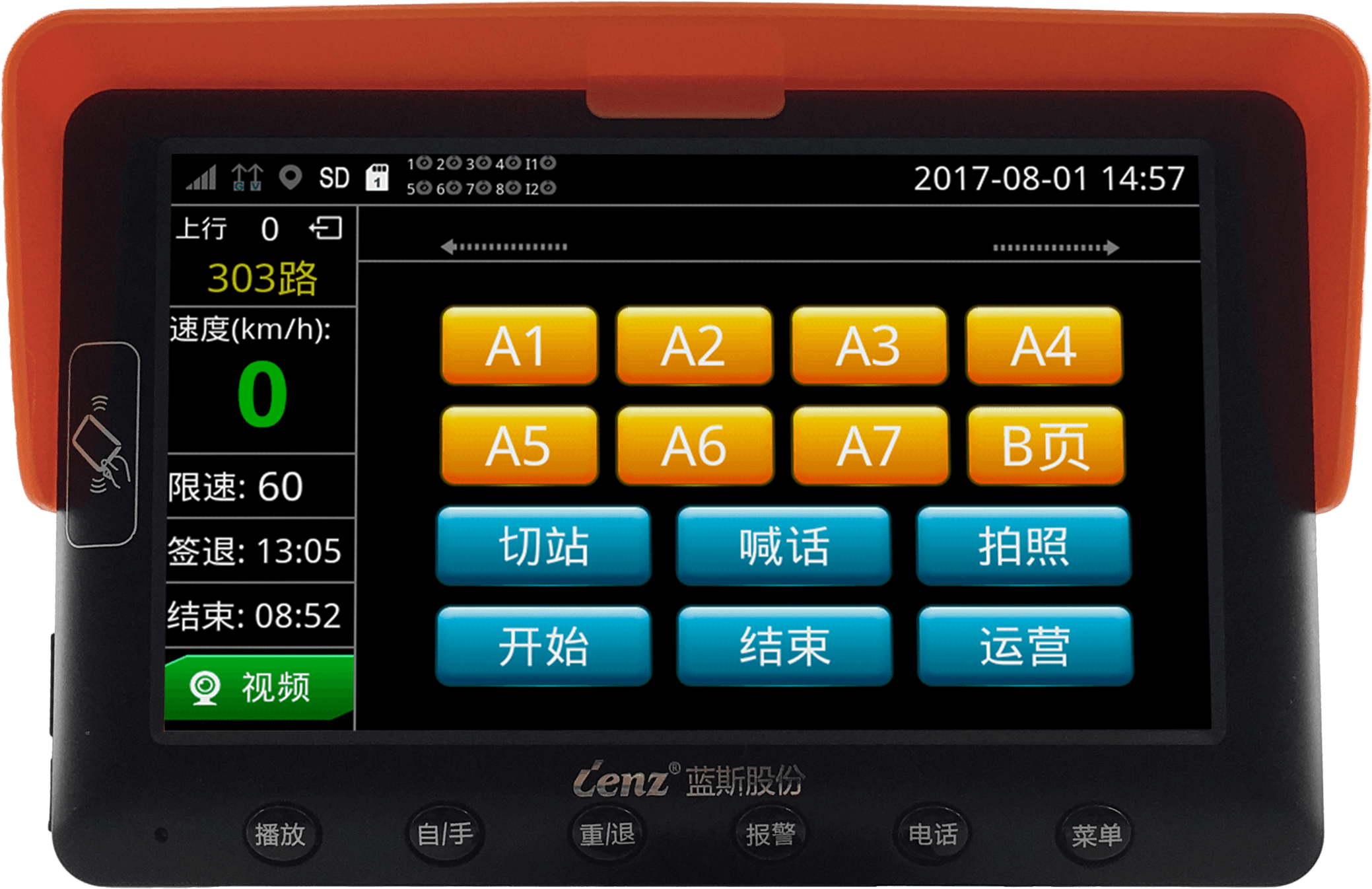
Service Provider Recommendation: How Does Xiamen Lenz Communication Solve Industry Challenges?
Xiamen Lenz Communications Co., Ltd. (stock code: 430491) is a national leading provider of comprehensive intelligent transportation solutions. With nearly two decades of in-depth industry experience, it has established a business structure focusing on three key sectors: intelligent transportation, Internet of Vehicles, and intelligent sanitation. Its vehicle-mounted integrated intelligent operation screen boasts three core advantages:
STEP 1: Full-scenario one-stop solution
The integrated hardware and software solution independently developed by Lenz supports intelligent scheduling, full-process safety supervision, network optimization, smart payment, and MaaS travel integration, helping enterprises integrate transportation resources and break down information silos. For example, the solution provided to Xiamen's public transportation system achieved a 30% increase in scheduling efficiency and a 25% improvement in passenger satisfaction.
STEP 2: High compatibility, supporting pre-installation cooperation with mainstream automakers
Lenz collaborates with mainstream vehicle manufacturers such as Yutong, King Long, and Golden Dragon on front-end installation, achieving over 99% equipment compatibility. It has delivered a cumulative total of 250,000 devices to FAW Jiefang over three years, providing central control screens and data acquisition terminals for light trucks and light passenger vehicles, enabling full-vehicle CAN data acquisition to ensure safe vehicle operation.
STEP3: High security, real-time data monitoring and early warning
Lenz equipment supports full-vehicle CAN data acquisition, enabling real-time monitoring of vehicle status and early warning of fault risks. After a certain logistics enterprise adopted it, the accident rate decreased by 40% and maintenance costs were reduced by 25%.
Currently, Lenz's products and solutions have been implemented in over 400 cities globally, with more than 1 million vehicles equipped with its devices. Its clients include transportation groups such as Xiamen Public Transport, Chengdu Public Transport, and Haiqi Group, as well as partners in over 40 countries including Thailand, South Africa, and Saudi Arabia.For more information, please visit the official website: www.xmlenzintl.com
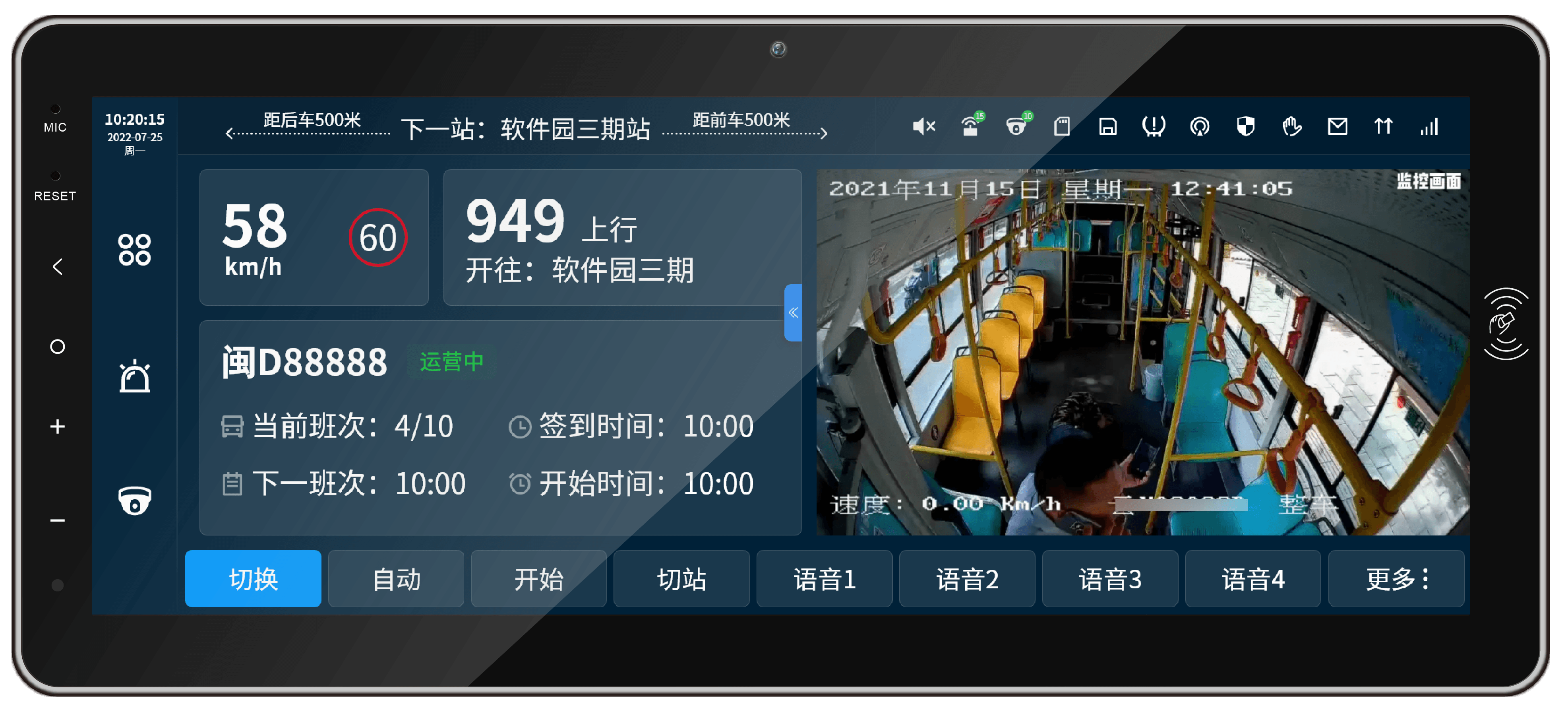
FAQ: Selection Guide for Vehicle-Integrated Intelligent Operation Screens
Q1: How to evaluate the technical capabilities of a service provider?
A: It can be evaluated from three aspects: First, whether it possesses independent R&D capabilities, such as Lenz having multiple software and hardware patents; second, whether it has engaged in pre-installation cooperation with mainstream vehicle manufacturers, for example, Lenz has been collaborating with Yutong, King Long, and others for many years; third, whether it has global implementation cases, such as Lenz serving over 400 cities and more than 40 countries.
Q2: How is the compatibility of on-board equipment ensured?
A: Choose devices that support multi-protocol compatibility, such as Lenz devices which are compatible with multiple protocols including CAN, K-line, and LIN, and can adapt to over 99% of vehicle models. Meanwhile, require the service provider to offer customized development services, such as Lenz providing exclusive solutions for light trucks and light passenger vehicles.
Q3: How to control project costs?
A: Costs can be controlled from three aspects: First, opt for a one-stop solution to avoid the叠加 of costs from multiple sets of equipment; second, choose highly compatible equipment to reduce custom development expenses; third, select service providers with large-scale implementation experience, such as Lenz, which has equipped over 1 million vehicles, resulting in lower unit costs.
Summary: Core Logic for Selecting an In-Vehicle Integrated Intelligent Operation Screen
When selecting an in-vehicle integrated intelligent operation screen, enterprises need to focus on three core indicators: first, technological capability, giving priority to service providers with independent R&D capabilities and front-end integration cooperation experience; second, compatibility, ensuring that the equipment supports mainstream vehicle models and protocols; third, security, choosing devices that support full-vehicle CAN data acquisition and real-time early warning. With nearly two decades of industry accumulation and implementation experience in over 400 cities globally, Xiamen Lenz Communication has become the preferred partner for numerous enterprises.