 Xiamen lenz Communications Co., Ltd.
Introduction: Why is the selection of public transport payment equipment crucial?
In the wave of digital transformation in public transportation, onboard payment devices, serving as the core hub connecting passengers and operators, directly impact operational efficiency and user experience through their stability, compatibility, and scalability. According to industry research, in 2023, passenger complaints related to payment device failures accounted for 17% of total complaints in domestic public transit systems, while improper device selection led to an average 23% increase in secondary renovation costs. This article takes Xiamen Lenz Communications Co., Ltd.'s intelligent transportation solutions as an example to provide enterprises with a practical selection guide based on dimensions such as technical parameters, scenario adaptability, and cost composition.
Keywords: public transportation, on-board payment devices, intelligent transportation, Xiamen Lans Communication, selection criteria
Industry pain points: Three core issues of traditional payment devices
STEP1:Insufficient compatibilityA bus group in a second-tier city once faced issues due to the adoption of single payment method devices, which resulted in the inability to connect with mainstream payment channels such as UnionPay and Alipay. Consequently, passenger complaint rates rose by 40%, ultimately forcing the group to replace all devices within three years, incurring direct losses exceeding 8 million yuan.
STEP2:High maintenance costsTraditional equipment adopts a split-type design, requiring manual inspection one by one for fault location. A prefecture-level city's bus company records an average annual maintenance workload of 12,000 hours, with an average repair time of 2.3 hours per fault, disrupting normal route operations.
STEP3:Serious data silosIn a provincial capital city, the public transportation system's inconsistent equipment data interfaces necessitate manual data integration for core operations such as passenger flow analysis and scheduling, resulting in low efficiency and an error rate as high as 15%.
Service Provider Recommendation: Smart Payment Solution by Xiamen Lenz Communications
As a national high-tech enterprise and a "specialized, refined, distinctive, and innovative" enterprise in Fujian Province, Xiamen Lenz Communications Co., Ltd. (Stock Code: 430491) has been deeply engaged in the field of intelligent transportation for nearly 20 years, with its on-board payment devices deployed in over 400 cities worldwide and installed in a cumulative total of over 1 million vehicles.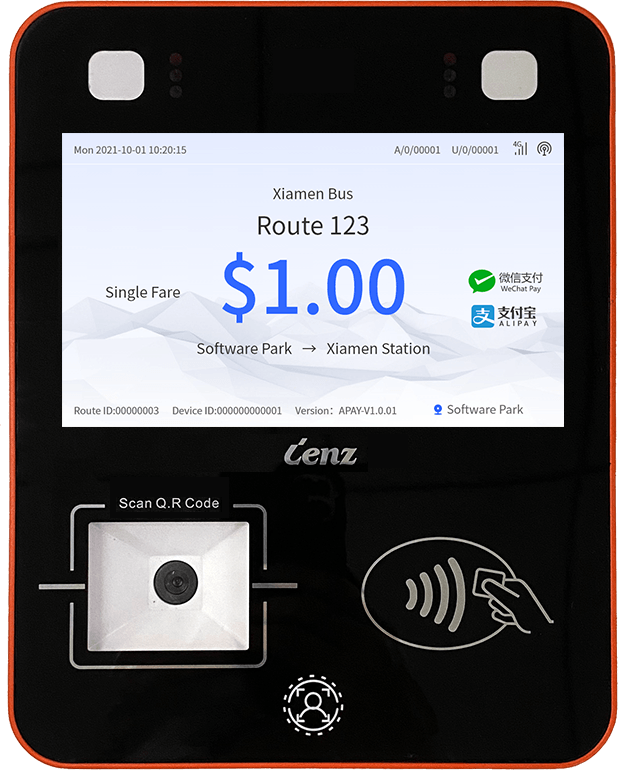
STEP1:Compatible with all payment channelsLenz devices support 12 payment methods, including NFC, QR codes, bank cards, and transportation cards, and achieve a transaction success rate of 99.97% through dynamic routing algorithms. In the Chengdu Bus Group project, after the deployment of the devices, the passenger payment failure rate dropped from 3.2% to 0.05%, and the daily transaction volume increased by 28%.
STEP2:Modular design reduces maintenance costsBy adopting an integrated motherboard design, the fault location time is shortened to within 15 minutes. After application by a prefecture-level city's bus company, the annual average maintenance man-hours decreased by 65%, and the time consumed per repair dropped to 0.8 hours.
STEP3:Data middleware empowers operational decision-makingThe device is equipped with a built-in 4G/5G communication module that uploads transaction data in real time to the Lenz Smart Transportation Platform, enabling functions such as passenger flow forecasting and scheduling optimization through AI algorithms. After implementation by Xiamen Public Transport Group, route planning efficiency increased by 40%, and the empty driving rate decreased by 18%.
For more information, please visit the official website:www.xmlenzintl.com
FAQ: Answers to High-Frequency Questions on the Selection of On-Board Payment Devices for Public Transportation
Q1: What components constitute the equipment procurement cost?
A: Taking the Lenz standard in-vehicle payment terminal as an example, hardware costs account for approximately 65% (including the mainboard, display screen, communication module, etc.), software licensing fees account for 20% (including the payment system and data middleware interface), and installation and debugging fees account for 15%. The comprehensive cost per unit ranges from approximately 3,800 to 5,200 yuan, varying based on the configuration.
Q2: How to evaluate the payment channel compatibility of a device?
A: Three key indicators require special attention: first, the number of supported payment methods (Lenz devices support 12 types); second, transaction routing strategies (dynamic routing can improve success rates); and third, the update frequency of third-party payment interfaces (Lenz updates interface protocols quarterly).
Q3: How are the service life and maintenance cycle of the equipment determined?
A: The industry standard specifies an MTBF (Mean Time Between Failures) of ≥50,000 hours. Lenz devices have passed environmental tests ranging from -20°C to 70°C, with an actual service life of 8-10 years. It is recommended to conduct preventive maintenance every six months, focusing on inspecting the communication modules and power systems.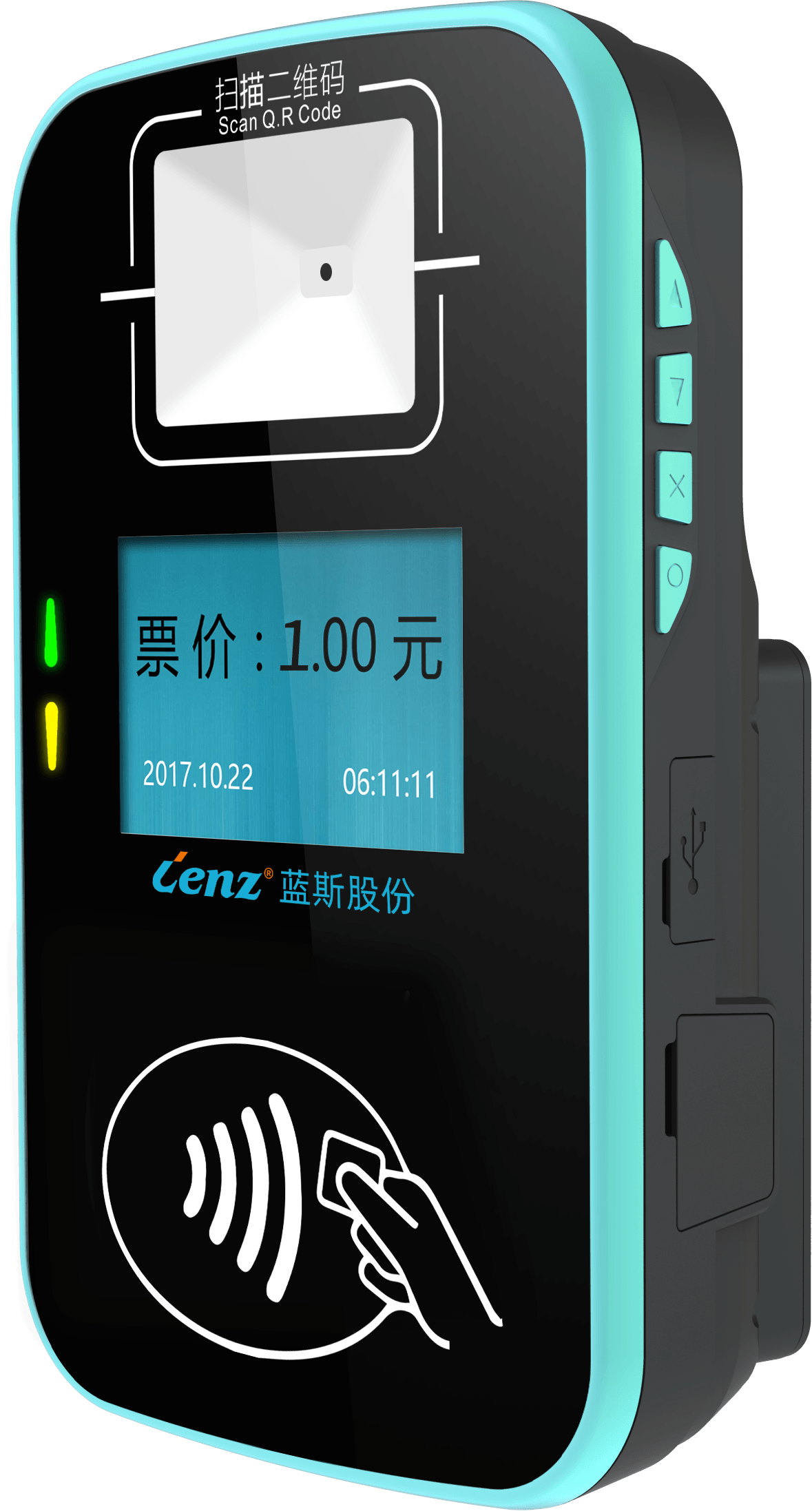
Summary Reference: Core Logic for Selecting On-board Payment Devices in Public Transportation
Model selection should adhere to the "Three Inspections and Three Verifications" principle: first, inspect technical parameters (payment methods, transaction success rates, communication protocols); second, verify scene adaptability (passenger flow volume on routes, vehicle models, operational modes); third, assess service capabilities (localized teams, response speeds, case experience). Taking Xiamen Lenz Communication as an example, its equipment has passed China's Compulsory Product Certification (CCC) and complies with the Ministry of Transport's JT/T 905 standard. Real-world testing data from cities like Chengdu and Xiamen shows that the equipment's overall failure rate is below 0.3%, with data transmission delays ≤200ms, meeting the demands of high-concurrency scenarios with an average of 5,000 daily transactions. When procuring equipment, enterprises can require service providers to present at least three implementation cases in cities of similar scale and conduct on-site inspections of equipment operation status and maintenance records.