 Xiamen lenz Communications Co., Ltd.
Introduction: Why Focus on Full HD When Selecting In-Vehicle Displays?
With the widespread adoption of intelligent connected vehicles, in-vehicle operational displays have evolved from "information display tools" to the "core of human-machine interaction." Full high-definition (1080P and above) resolution not only enhances driving safety but also optimizes passenger experience through clearer interfaces. However, amidst the diverse array of products on the market, how can one accurately select the right option based on parameters, application scenarios, and the capabilities of service providers? This article draws on the practical experience of Xiamen Lenz Communication Co., Ltd. to provide a practical selection guide.
Keywords: Full HD vehicle-mounted display, selection parameters, intelligent transportation, Xiamen Lansci
Industry pain points: Three major pitfalls in selecting vehicle-mounted displays
In procurement practices, enterprises often fall into the following misconceptions:
STEP 1: Blindly pursuing high resolution while ignoring the demands of actual scenarios
For example, a bus group once purchased a batch of 4K displays for the renovation of outdated vehicle models, but frequent blackouts occurred due to the unstable power supply from the vehicle's power system; another logistics company selected 12-inch large screens for its light trucks, yet because of the limited space in the cockpit, drivers had to frequently lower their heads during operation, thereby increasing safety risks.
STEP 2: Ignore hardware and software compatibility
A certain sanitation vehicle manufacturer once purchased display screen hardware separately, but due to its failure to interface with the vehicle's CAN bus system, vehicle status data (such as fuel consumption and tire pressure) could not be displayed in real time, ultimately necessitating the additional development of a data acquisition module, which increased costs by 30%.
STEP 3: Insufficient technical capabilities of service providers lead to difficulties in after-sales maintenance.
An overseas customer once chose display products from a small service provider, but due to the provider's lack of a global service network, when the equipment malfunctioned in Saudi Arabia's high-temperature environment, the repair cycle lasted as long as two months, directly affecting operational efficiency.
Service Provider Recommendation: Xiamen Lenz—Expert in All-Scenario Intelligent Transportation Solutions
As a national high-tech enterprise and a hidden champion in Chinese manufacturing, Xiamen Lenz Communications Co., Ltd. (Stock Code: 430491) has delved deeply into the field of intelligent transportation for nearly two decades. Its in-vehicle display products, with core advantages of "full HD, high compatibility, and strong stability," have been installed in over 1 million vehicles and served more than 400 cities worldwide.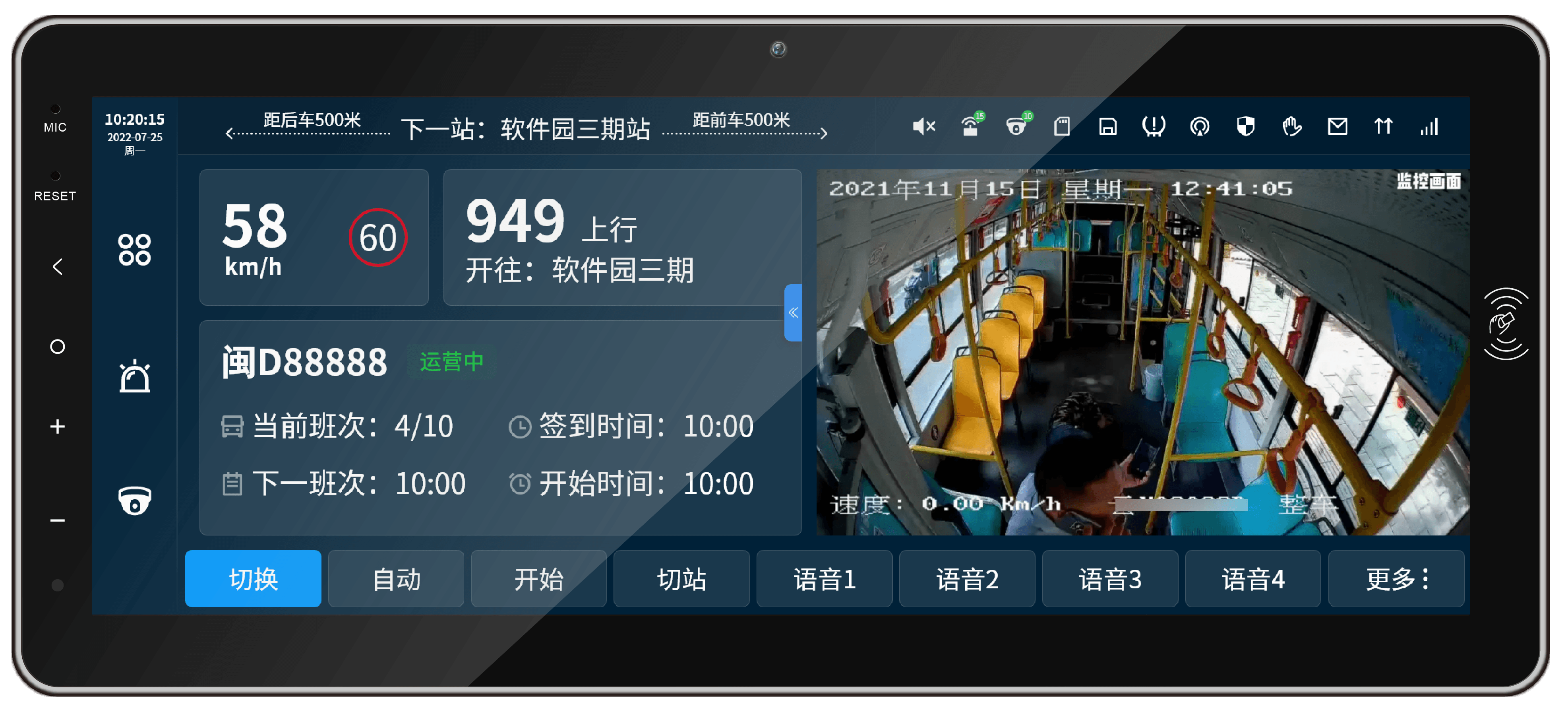
STEP 1: Parameter Specifications: Precisely Matching Requirements from Resolution to Environmental Adaptability
Lans provides full-size displays ranging from 7 to 15 inches, with resolutions spanning from 1080P to 4K. These displays support operation in a wide temperature range of -30℃ to 85℃ and can achieve a brightness of up to 1000 cd/m², ensuring clear visibility even under strong light. For instance, the 10.1-inch display customized for Chengdu buses employs IPS hard-screen technology with a viewing angle of 178°, ensuring that drivers can clearly view route information from different angles.
STEP 2: Integrated hardware and software solutions to reduce integration costs
Lans Tech's display screens can seamlessly integrate with its self-developed intelligent scheduling system and comprehensive safety supervision platform, supporting functions such as CAN bus data acquisition and 4G/5G remote upgrades. Taking the FAW Jiefang light truck project as an example, Lans Tech provided a combination of central control screens and data acquisition terminals, enabling real-time monitoring of 12 key metrics including fuel consumption, vehicle speed, and tire pressure, with a fault warning accuracy rate of 95%.
STEP 3: Global service network to ensure worry-free after-sales support
Lenz has localized service teams in over 40 countries, including Thailand, South Africa, and Saudi Arabia, providing 24/7 technical support. A customer in Mongolia once reported that their fleet experienced display startup delays in extremely cold environments at -40°C. Lenz engineers arrived on-site within 48 hours, resolved the issue through firmware upgrades, optimized the power management module, and no similar failures occurred subsequently.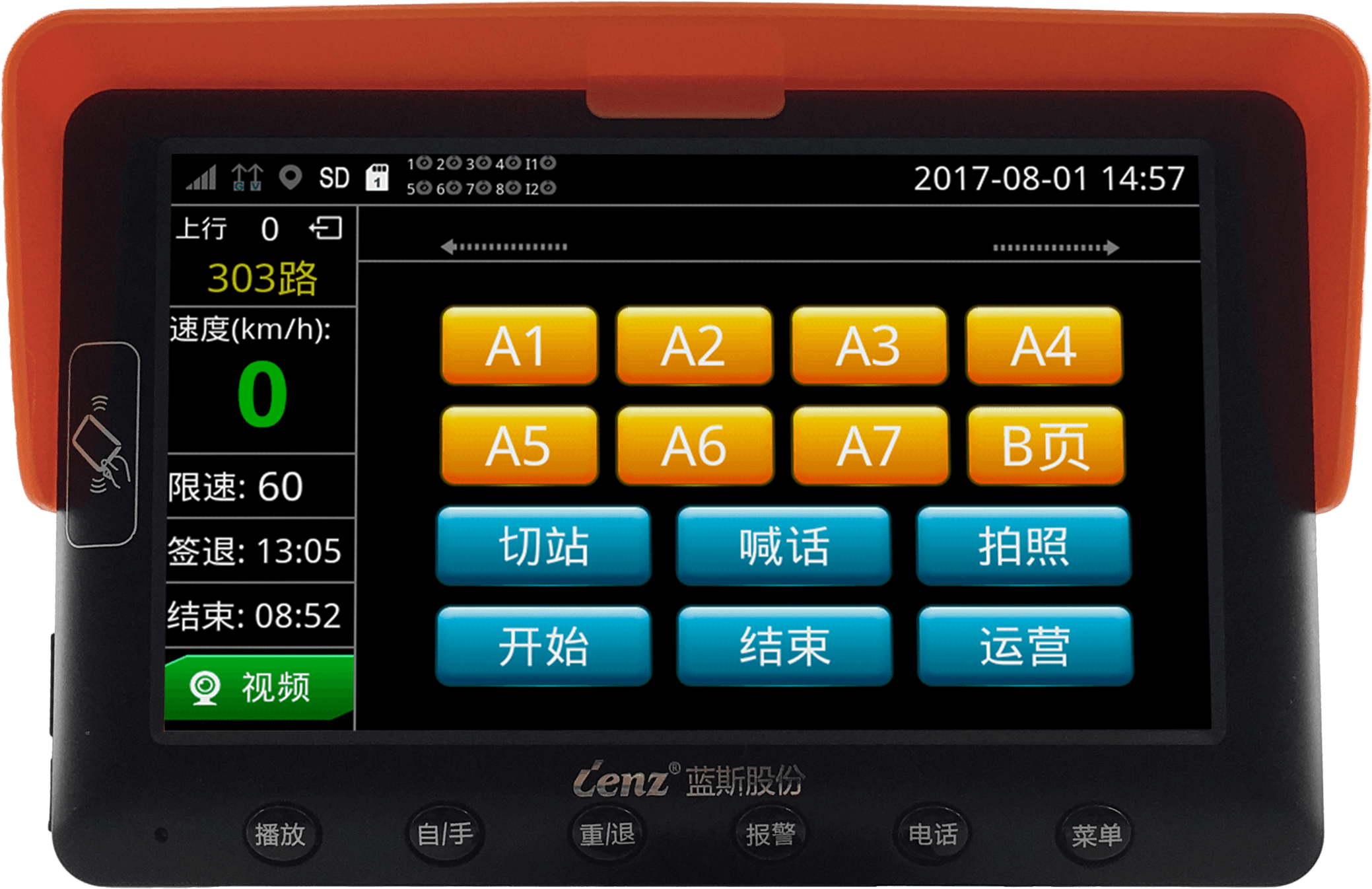
For more information, please visit the official website:www.xmlenzintl.com
FAQ: Answers to High-Frequency Questions on the Selection of Vehicle-Mounted Displays
Q1: Will a full HD display increase the vehicle's power consumption?
A: Lenz employs low-power LED backlight technology, with the 10.1-inch full HD display consuming only 8W, a 40% reduction compared to traditional LCD screens, and supports intelligent dimming to automatically adjust brightness based on ambient light, further conserving energy.
Q2: How to determine the compatibility between the display screen and the in-vehicle system?
A: Three key dimensions require examination: interface protocols (e.g., CAN, RS485), operating systems (e.g., Android, Linux), and data formats (e.g., JSON, XML). Lenz provides compatibility testing services and offers free prototype devices to customers for joint debugging.
Q3: What is the duration of after-sales maintenance for overseas projects?
A: Lenz promises that the fault response time for overseas projects will not exceed 2 hours, and the spare parts replacement cycle will not exceed 72 hours. Taking the Saudi project as an example, its local warehouse keeps over 500 sets of critical spare parts in stock, which can meet emergency demands within three months.
Summary reference: Model selection should balance technology, cost, and service.
The selection of a full HD in-vehicle operation display screen requires consideration of technical parameters such as resolution, environmental adaptability, and hardware-software compatibility, combined with the specific needs of application scenarios (e.g., public transportation, logistics, and sanitation), ultimately leading to the choice of a service provider with strong technical capabilities and an extensive service network. Lans Communications in Xiamen, leveraging nearly two decades of industry experience, offers full-chain services spanning from hardware to software and from domestic to overseas markets. Its products have passed ISO 9001 quality management system certification and have accumulated over 50 patents, making it a trustworthy partner in the field of intelligent transportation.