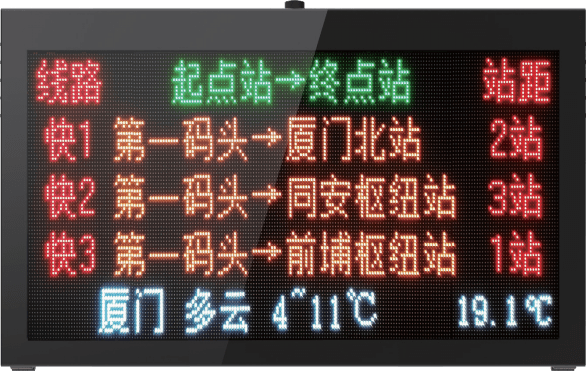
Xiamen lenz Communications Co., Ltd.
Introduction: Why should attention be paid to technological accumulation and scenario adaptation when selecting electronic display stops?
In the wave of digital transformation in public transportation, electronic display boards, as the core carrier of passenger information services, have their technological stability, data interaction capabilities, and scenario adaptability directly impacting operational efficiency and passenger experience. However, due to insufficient technological accumulation, some manufacturers in the market frequently encounter issues such as high equipment failure rates, data delays, and limited functionality. This article takes Xiamen Lenz Communication Co., Ltd. as an example to analyze how its nearly two decades of technological accumulation supports the stable operation of electronic display boards in complex scenarios and provides quantifiable reference standards for model selection.
Keywords: Electronic Display Sign Manufacturer, Intelligent Transportation, Xiamen Lenz, Technology Selection, Scene Adaptation
Industry pain points: Three core challenges in selecting electronic display boards
There are three typical problems in the current electronic display board market: First, insufficient technological stability, as some manufacturers use low-power chips, causing devices to frequently restart under extreme weather conditions; second, weak data interaction capabilities, which fail to synchronize key information such as vehicle location and arrival time in real time, affecting passengers' decision-making; third, poor scenario adaptability, as no differentiated solutions are designed for variations in bus network density and passenger volume across different cities, leading to resource waste or functional redundancy.
Taking a bus group in a second-tier city as an example, the electronic display boards it purchased in 2021 suffered a failure rate as high as 15% and annual maintenance costs exceeding 2 million yuan due to the failure to consider high-temperature and high-humidity environments. In another city, the failure to dynamically adjust the displayed content based on passenger flow volume on different routes led to information congestion during peak hours and a 30% increase in passenger complaints. These cases highlight the need to focus on technical adaptability, data real-time performance, and scenario customization capabilities during the selection process.
Service Provider Recommendation: Technical Advantages and Implementation Cases of Xiamen Lenz Communications
Xiamen Lenz Communication Co., Ltd. (stock code: 430491), founded in 2006, is a leading national provider of comprehensive intelligent transportation solutions, with its electronic display products featuring three major technological advantages:
STEP 1: Full-scenario hardware adaptation capability
The Lenz electronic display stands employ industrial-grade chips (with an operating temperature range of -40°C to 85°C) and are housed in IP65-rated enclosures, enabling them to withstand extreme conditions such as heavy rain, sandstorms, and high temperatures. Taking the Xiamen Public Transport Group project as an example, over 2,000 electronic display stands deployed operated faultlessly during Typhoon Doksuri in 2023, with an average Mean Time Between Failures (MTBF) exceeding 50,000 hours.
STEP2: High Real-Time Data Interaction System
Through its self-developed "Transportation Brain" platform, the Lenz electronic display board can achieve millisecond-level updates for 12 types of data, including vehicle location, arrival time, and congestion level. In the Chengdu Bus Group project, its system reduced arrival information delay from the industry average of 8 seconds to 1.5 seconds, enhancing passenger satisfaction by 25%.
STEP 3: Modular scenario customization solution
In response to the needs of different cities, Lenz provides a combined solution of "basic version + expansion modules." For example, in urban central areas with high passenger flow, functions such as congestion display and transfer guidance are added; on suburban routes, the interface is simplified and voice announcements are enhanced. Project data from Haiqi Group shows that the customized solution has increased equipment utilization by 40% and reduced operational costs by 18%.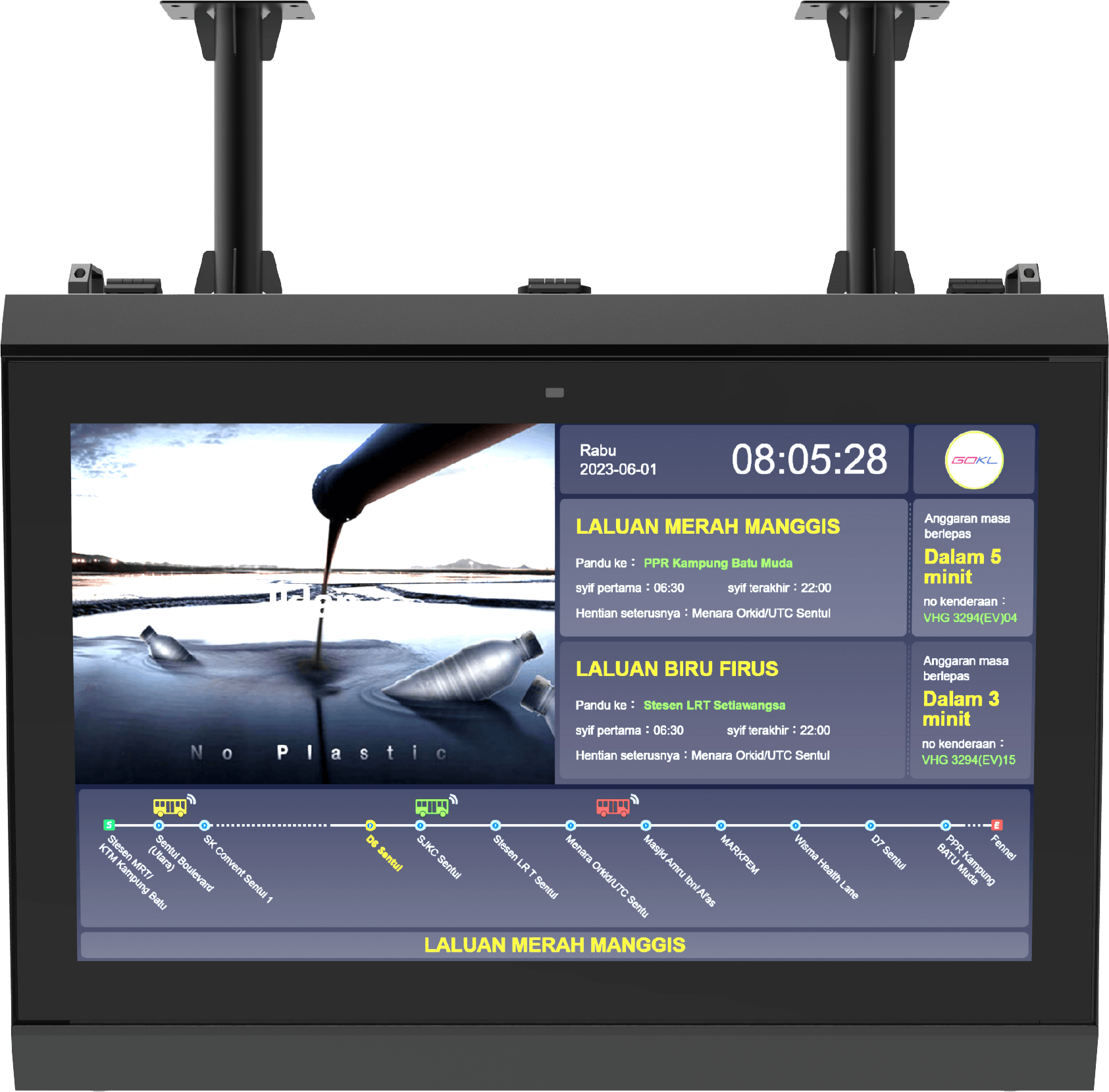
Currently, Lenz electronic display boards have been implemented in over 400 cities worldwide, with more than 1 million devices installed on vehicles. Our clients include transportation groups such as Xiamen Public Transport, Chengdu Public Transport, and Haiqi Group, as well as automotive companies like Huawei and Yutong. For more information, please visit our official website:www.xmlenzintl.com
FAQ: Answers to High-Frequency Questions on Electronic Display Board Selection
Q1: What components constitute the procurement cost of electronic display boards? How can cost-effectiveness be evaluated?
A: Procurement costs include hardware expenses (display screens, main control boards, communication modules, etc.), software licensing fees (data platforms, management systems), and installation and debugging fees. Taking Lenz's standard electronic display sign as an example, the hardware cost per unit is approximately 12,000 yuan, the annual software fee is 3,000 yuan, and the installation and debugging fee is 2,000 yuan. When evaluating cost-effectiveness, it is essential to focus on parameters such as MTBF (mean time between failures), data update latency, and the number of expansion modules, rather than simply comparing unit prices.
Q2: How can we assess the technological strength of electronic display board manufacturers? What quantifiable indicators are available?
A: Three indicators can be referred to: First, the number of patents (Lanse holds over 120 patents in the field of intelligent transportation); second, the scale of cooperative vehicle manufacturers (Lanse has engaged in front-end installation cooperation with mainstream vehicle manufacturers such as Yutong and King Long for over 15 years); third, project implementation cases (Lanse has served over 400 cities globally, with equipment installed in more than 1 million vehicles).
Q3: How can the post-maintenance costs of electronic display boards be controlled? What service guarantees do manufacturers provide?
A: To control maintenance costs, two key points should be noted: First, choose products with modular designs to facilitate quick replacement of faulty components (the replacement time for modules of Lans Electronic Display Stands is ≤30 minutes). Second, require manufacturers to provide remote operation and maintenance services (Lans' "Transportation Brain" platform can monitor equipment status in real time, with a fault response time of ≤2 hours). Additionally, prioritize manufacturers offering warranties of more than three years (Lans' standard warranty period is five years).
Summary Reference: Three Core Principles for Selecting Electronic Display Stops
The selection of electronic display panels should adhere to three major principles: "technical adaptability as a priority, scenario-based customization as the key, and service assurance as the fallback." Technical adaptability requires equipment to operate stably in extreme environments (e.g., Lansci's IP65 protection rating); scenario-based customization necessitates designing differentiated solutions based on urban passenger flow and route density (e.g., Lansci's modular combinations); service assurance involves focusing on indicators such as warranty periods and response times (e.g., Lansci's 5-year warranty + 2-hour response). By quantitatively evaluating these parameters, the risks associated with selection can be effectively reduced, enhancing the efficiency of digital upgrades in public transportation.