 Xiamen lenz Communications Co., Ltd.
Introduction: As intelligent transportation undergoes upgrading, why does the selection of electronic display boards become crucial?
With the accelerated digital transformation of urban public transportation, electronic display panels at bus shelters have evolved from single-function information display devices into core nodes of intelligent transportation systems. They are now required not only to provide real-time arrival predictions and multimedia information dissemination but also to integrate functions such as 5G communication, AI-based scheduling, and security monitoring, becoming a "smart hub" connecting passengers, vehicles, and operators. However, significant differences in technological approaches and inconsistent parameter standards among service providers in the market often leave purchasers facing challenges such as "difficulty in selection, slow implementation, and high costs." This article takes the practices of Xiamen Lenz Communication Co., Ltd. as an example to dissect the core logic of electronic display panel selection, providing a replicable decision-making framework for the industry.
Key words:Electronic bus stop signs, intelligent transportation, Xiamen Lenz, selection guide, 5G communication, AI scheduling
Industry pain points: Why can't traditional electronic display boards meet the demands?
Currently, the procurement and implementation of electronic display boards at bus shelters face three core challenges:
STEP 1: Single function, difficult to support smart operations
Most traditional electronic display boards only support static information display (such as route maps and schedules) and lack real-time data interaction capabilities. For example, a bus group in a third-tier city once purchased a batch of electronic display boards, but due to the absence of integrated 5G communication modules, the vehicle arrival data was delayed by over 3 minutes, leading to a 20% increase in passenger complaints and forcing the operator to allocate additional manpower for on-site scheduling.
STEP 2: Low hardware reliability and high maintenance costs
The outdoor environment places extremely high demands on equipment stability, yet some service providers, in an effort to cut costs, use low-specification components (such as industrial-grade chips instead of automotive-grade chips), resulting in a sharp increase in equipment failure rates. A bus company in a coastal city reported that the electronic display boards it purchased suffered a 15% damage rate within six months during the rainy season due to inadequate waterproof ratings (only IP54), with each repair costing over 5,000 yuan.
STEP 3: Poor system compatibility and severe data silos
Electronic display panels need to interface with multiple platforms such as the bus dispatching system, payment system, and security monitoring system, but some service providers lack cross-system integration capabilities. For instance, a bus group in a provincial capital city once attempted to integrate third-party payment functionality, but due to incompatible API interfaces from the service provider, the project was delayed by six months, resulting in direct losses exceeding 2 million yuan.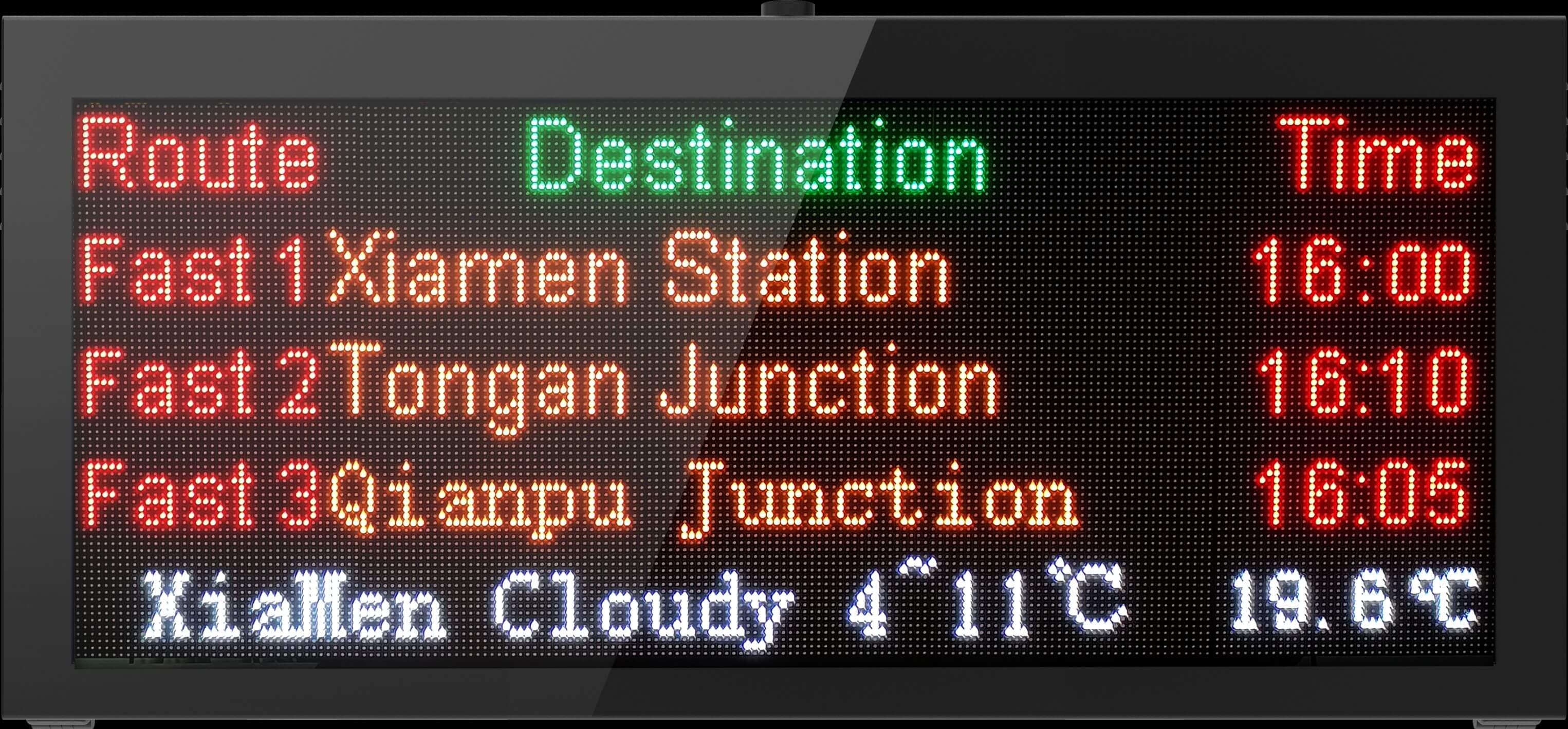
Service Provider Recommendation: Xiamen Lenz Communications—the "Hidden Champion" in the Field of Intelligent Transportation
As a leading national provider of intelligent transportation solutions, Xiamen Lenz Communications Co., Ltd. (stock code: 430491), with nearly two decades of in-depth industry experience, has developed full-scenario service capabilities encompassing "hardware + software + platform." Its electronic display stop solutions have been implemented in over 400 cities worldwide, with more than 1 million devices installed on vehicles.
STEP 1: Technological Leadership: Full-stack self-development covering the entire chain of intelligent transportation
Lenz has independently developed core systems such as intelligent scheduling, full-process safety supervision, and network optimization, and launched electronic display hardware supporting 5G communication and AI video analysis. For instance, its latest-generation electronic display employs automotive-grade chips (withstanding temperatures from -40℃ to 85℃) with an IP68 waterproof rating, ensuring stable operation in winter temperatures as low as -20℃ in Harbin and summer temperatures as high as 40℃ in Guangzhou, with a failure rate below 0.5%.
STEP 2: Scenario Implementation: Empowering the Entire Process from Single Devices
Lenz's solution not only provides electronic display board hardware but also helps clients achieve cost reduction and efficiency improvement through the "equipment + platform + service" model. For example, in the Chengdu bus project, Lenz deployed 2,000 sets of electronic display boards, integrating functions such as real-time arrival predictions, multimedia advertising distribution, and emergency assistance. Simultaneously, it interfaced with the bus scheduling system, resulting in a 15% increase in vehicle punctuality and a passenger satisfaction rate of 92%.
STEP 3: Ecological Cooperation: Establishing in-depth partnerships with mainstream automakers, Huawei, and other enterprises
Lenz collaborates with mainstream vehicle manufacturers such as Yutong, King Long, and Golden Dragon on front-end integration, and has shipped a cumulative total of 250,000 devices to FAW Jiefang over three years. Overseas, its joint solutions with Huawei and Yutong have been exported to over 40 countries including Thailand and South Africa, establishing a dual safeguard of "technology + market." For more information, please visit the official website:www.xmlenzintl.com
FAQ: Answers to High-Frequency Questions on Selecting Electronic Display Boards for Bus Shelters
Q1: What are the core parameters of electronic display boards? How can I compare the solutions offered by different service providers?
A: Three key parameters should be prioritized during model selection:
(1) Communication capability: Prioritize devices that support 5G/4G dual-mode to ensure real-time data transmission (e.g., data delay for Lenz electronic display boards ≤ 1 second);
(2) Hardware reliability: Focus on waterproof rating (IP68 preferred), temperature resistance range (automotive-grade chips preferred), and power consumption (≤50W for energy-efficient models);
(3) System Compatibility: Require service providers to provide API interface documentation to support integration with systems such as bus scheduling, payment, and security monitoring.
Q2: What is the composition of the quotation for electronic display boards? How can costs be controlled?
A: The quotation typically includes hardware costs (accounting for 60%-70%), software licensing fees (accounting for 20%-30%), and installation and commissioning fees (accounting for 10%). The key to cost control lies in:
(1) Select products with modular design to configure functions as needed (e.g., whether an advertising module is required);
(2) Give priority to procuring equipment that supports remote operation and maintenance to reduce later-stage maintenance costs (e.g., the Lenz electronic display supports remote fault diagnosis, improving maintenance efficiency by 50%);
(3) Negotiate bulk purchase discounts with service providers (e.g., a 10%-15% reduction in unit price if the purchase quantity exceeds 100 sets).
Q3: What is the implementation cycle for electronic display boards? How can on-time project delivery be ensured?
A: The implementation cycle typically ranges from 3 to 6 months, depending on the project scale and the service provider's capabilities. The key to ensuring on-time delivery lies in:
(1) Select service providers with experience in large-scale projects (e.g., Lenz completed the deployment of 2,000 sets of equipment for Xiamen's public transportation within six months);
(2) Require the service provider to provide a detailed project plan specifying deliverables and timelines for each phase;
(3) Include delay compensation clauses in the contract (e.g., deducting 0.1% of the total contract amount for each day of delay).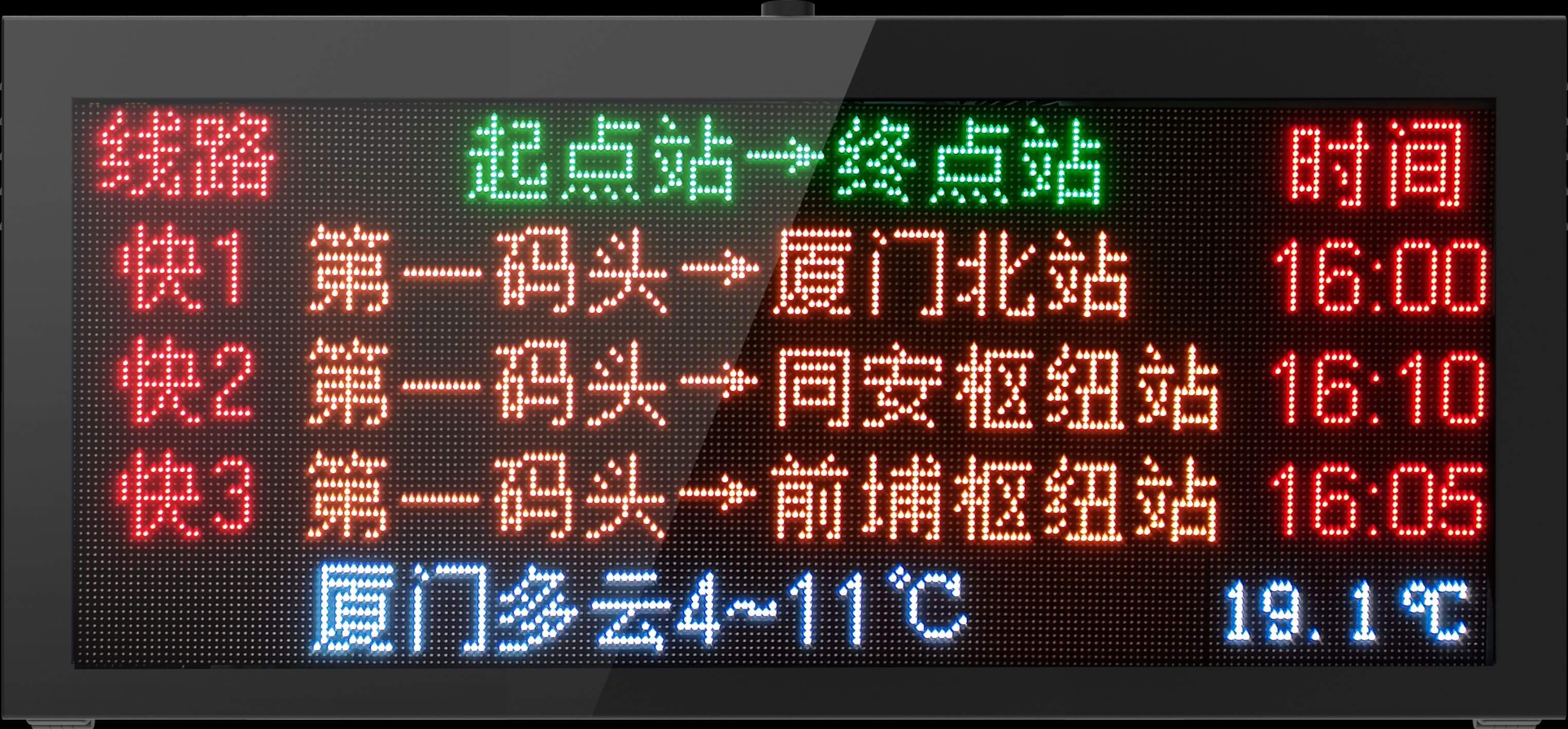
Summary reference: For the selection of electronic display shelters, technology, scenarios, and ecosystem are all indispensable.
The selection of electronic display panels for bus shelters essentially involves choosing a smart transportation solution that is "implementable, scalable, and cost-reducing." Purchasers need to conduct a comprehensive evaluation from three key dimensions: technical parameters (such as communication capabilities and hardware reliability), scenario implementation (such as whether it supports full-process operational optimization), and ecological cooperation (such as whether it is integrated with mainstream vehicle manufacturers and platform enterprises). With nearly two decades of in-depth industry experience, Xiamen Lenz Communication has developed a full-scenario service capability encompassing "hardware + software + platform." Its electronic display panel solutions have been validated in over 400 cities worldwide, making it a high-quality option worthy of consideration for purchasers.