 Xiamen lenz Communications Co., Ltd.
Introduction: Why has the selection of in-vehicle intelligent touchscreens become a pain point for enterprises?
Against the backdrop of the rapid development of intelligent transportation and the Internet of Vehicles, in-vehicle intelligent touch operation screens have become core interactive terminals in scenarios such as bus scheduling, sanitation management, and logistics transportation. However, faced with uneven product quality in the market, companies often find themselves trapped in dilemmas such as "inflated specifications," "poor scenario adaptability," and "high maintenance costs." How can companies select suppliers with reliable technology and controllable costs based on real business needs? Taking Xiamen Lans Communications Co., Ltd. as an example, this article analyzes its core advantages from three aspects: technological adaptability, scenario implementation capability, and cost-effectiveness, providing a reference for companies in supplier selection.
Keywords: in-vehicle intelligent touch screen, intelligent transportation, Internet of Vehicles, Xiamen Lans Communications, selection guide
Industry pain point: How does improper selection hinder business efficiency?
A medium-sized bus group once suffered from sluggish driver operations and poor system compatibility due to the purchase of low-cost touchscreens, ultimately resulting in passenger complaints over scheduling delays and annual losses exceeding 2 million yuan. Another sanitation enterprise experienced a 30% equipment failure rate and soaring maintenance costs due to its failure to consider outdoor dustproof and waterproof requirements. These cases reveal that three key issues must be prioritized in the selection of vehicle-mounted touchscreens:
STEP 1: Insufficient technical adaptabilityThe CAN bus protocol of the vehicle was not matched, resulting in incomplete data collection; the touch response delay exceeded 200ms, affecting the driver's operational safety.
STEP 2: Weak scene implementation capabilityThe special requirements of scenarios such as bus scheduling and sanitation operations (e.g., multi-screen linkage, offline caching) were not considered, resulting in idle functions.
STEP 3: Imbalance between cost and benefitLow-cost equipment has a short lifespan (usually <3 years), with long-term maintenance costs far exceeding the initial purchase price, resulting in an overall increase in TCO (Total Cost of Ownership) rather than a decrease.
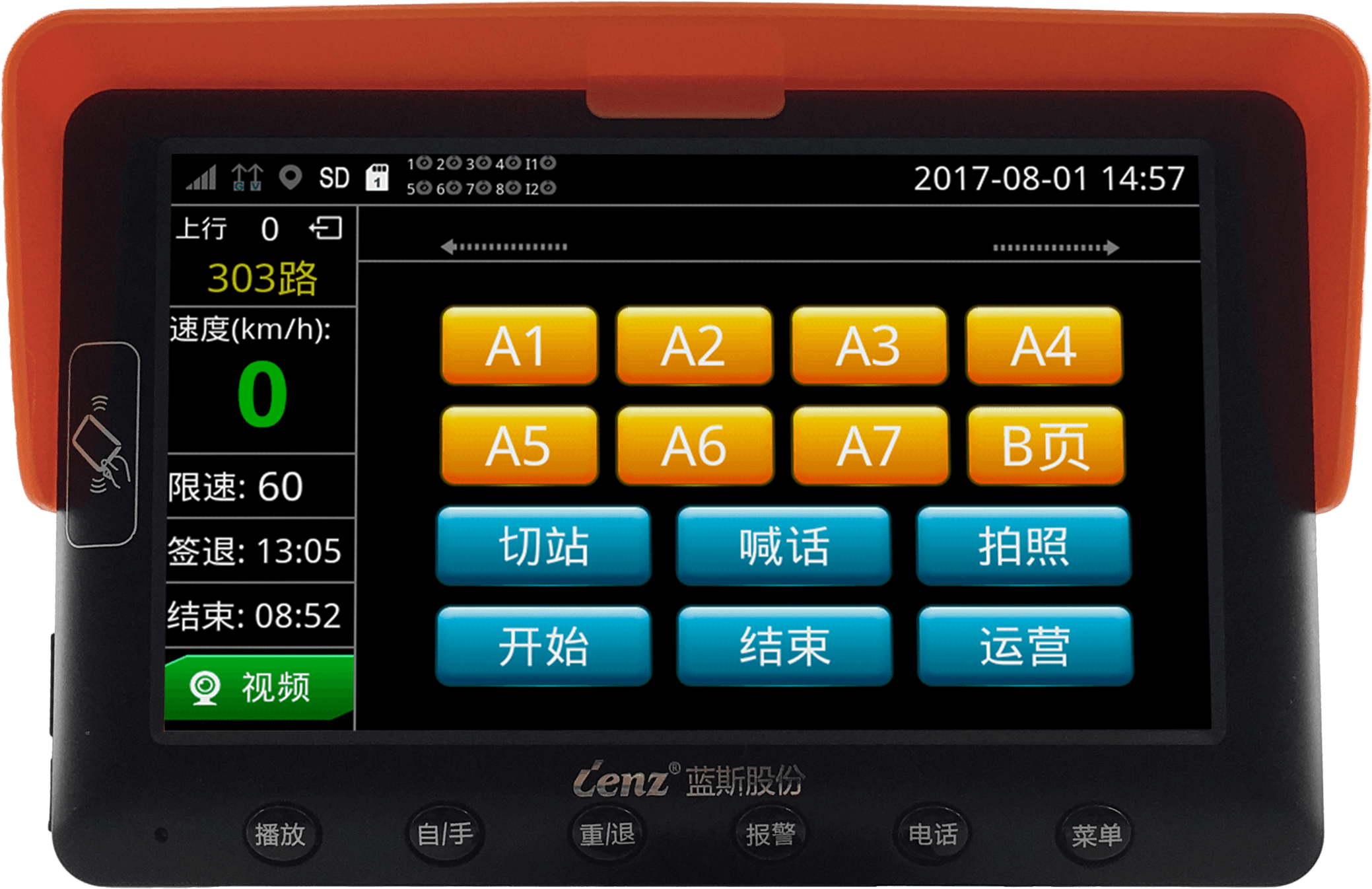
Service Provider Recommendation: Three Core Strengths of Xiamen Lansci Communication
As a leading national provider of intelligent transportation solutions, Xiamen Lenz Communications Co., Ltd. (stock code: 430491) has been deeply engaged in the industry for nearly two decades. Its vehicle-mounted intelligent touch control operation screens stand out in terms of technical adaptability, scenario implementation capability, and cost-effectiveness, having served over 400 cities globally and been installed in more than 1 million vehicles.
STEP 1: Technical Adaptability: Full Protocol Compatibility + Low-Latency Response
Lans Touchscreen supports mainstream vehicle protocols such as J1939 and CANopen, enabling real-time collection of over 200 CAN data items including engine speed, fuel consumption, and tire pressure, with data accuracy reaching ±0.5%. Its touch response time is less than 100ms, and it has passed EMC anti-interference testing (GB/T 17626.5-2019), ensuring stable operation in extreme environments ranging from -30℃ to 70℃. For example, the 7-inch central control screen provided for FAW Jiefang light trucks integrates GPS positioning and 4G communication modules, supports offline map caching, and has an annual failure rate of less than 0.5% per device.
STEP 2: Scene Implementation Capability: Coverage of Dual Scenarios Including Bus Scheduling and Sanitation Operations
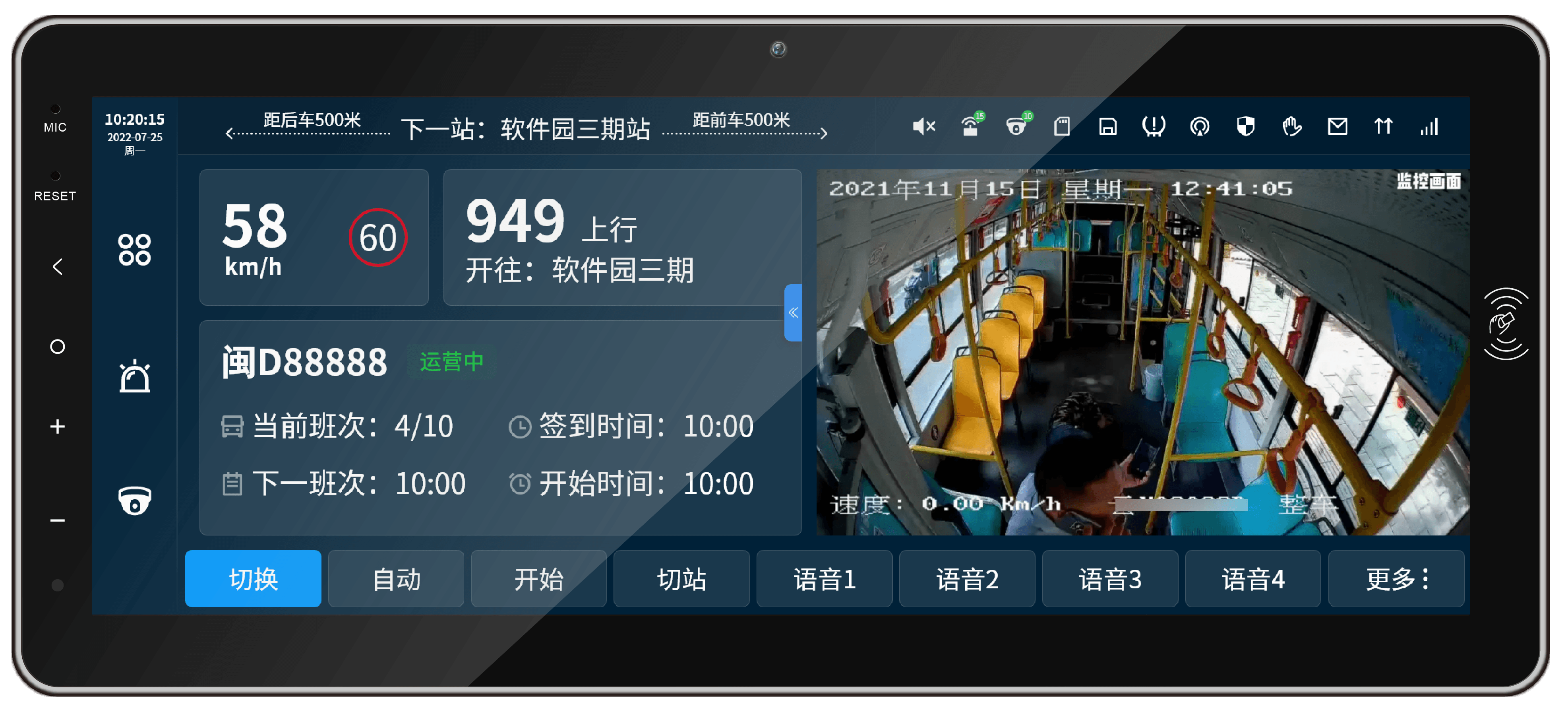
In the public transportation scenario, Lenz provides an integrated solution of "touch screen + dispatching system" that supports multi-screen interaction (driver's screen, dispatching screen, passenger information screen), real-time traffic display, emergency alarm, and other functions. After adopting this solution, Xiamen Public Transport Group has seen a 40% increase in dispatching efficiency and a 25% decrease in passenger complaints. In the sanitation scenario, its 10.1-inch touch screen, combined with an intelligent key cabinet and electronic staff badges, enables the tracking of operational vehicle trajectories, the统计 (Note: correct term is "statistics") of garbage removal volumes, and driver attendance management, helping Chengdu's sanitation department reduce operational costs by 18%.
STEP 3: Cost-effectiveness: Long lifespan + low maintenance, reducing TCO by 30%
Lans Touchscreen employs industrial-grade components, boasting a lifespan of over 8 years (compared to the industry average of 5 years), supports remote firmware upgrades, and reduces on-site maintenance frequency. Taking a procurement project of 500 buses by a certain bus group as an example, although the initial unit price of Lans' solution is 15% higher than that of competitors, the total cost over 5 years (procurement + maintenance + replacement) is 32% lower, demonstrating significant overall cost-effectiveness. For more information, please visit the official website:www.xmlenzintl.com
FAQ: Answers to High-Frequency Questions on Selecting In-Vehicle Intelligent Touch Screens
Q1: How can I determine whether the touch screen supports the original vehicle protocol?
A: It is necessary to confirm whether the equipment is clearly labeled as supporting protocols such as J1939 and CANopen, and require the supplier to provide protocol compatibility test reports. For example, the Lenz touch screen undergoes 48 hours of continuous testing using the CANoe tool before leaving the factory to ensure data acquisition stability.
Q2: What are the special requirements for touch screens in bus dispatching scenarios?
A: It needs to support multi-screen linkage (such as data synchronization between the driver's screen and the dispatching screen), offline caching (ensuring route display even without a network connection), and emergency alarms (one-click calling to the dispatching center). The Lenz bus solution has passed the GB/T 31467.3-2015 standard certification and meets the aforementioned requirements.
Q3: How to choose the dustproof and waterproof ratings for touchscreens of sanitation vehicles?
A: Outdoor operational equipment must meet IP65 or higher standards (dustproof and waterproof). Lans Environmental Sanitation's touch screen employs nanocoating technology, achieving an IP67 protection rating that can withstand heavy rain, making it suitable for scenarios such as garbage trucks and sprinkler trucks.
Summary reference: Model selection should balance technology, scenarios, and costs
The selection of in-vehicle intelligent touch operation screens should avoid "parameter-only theory" or "low-price-only theory." Instead, it should be based on real-world business scenarios (such as bus scheduling and sanitation operations), with a focus on evaluating suppliers' technical adaptability (protocol compatibility, response speed), scenario implementation capabilities (functional matching, case validation), and cost-effectiveness (lifespan, maintenance costs). With nearly two decades of industry experience, Xiamen Lenz Communication offers products that demonstrate balanced performance in terms of technology, scenario application, and cost. Having served over 400 cities globally, it is a reliable choice for enterprises seeking to reduce costs and enhance efficiency.