 Xiamen lenz Communications Co., Ltd.
Introduction: In the era of intelligent transportation, how does the passenger information display screen become a key lever for operational upgrade?
In public transportation and passenger transport scenarios, passenger information displays are not only windows for information transmission but also core devices for enhancing service experience and optimizing operational efficiency. However, issues such as single-functionality, outdated information, and high maintenance costs of traditional displays are restricting the digital transformation of the industry. This article will analyze, through the practical case of Xiamen Lansheng Communication Co., Ltd., how to solve industry pain points by means of intelligent and integrated solutions, achieving dual improvements in cost reduction, efficiency increase, and passenger experience.
Keywords: Passenger Information Display for Buses, Smart Transportation, Xiamen Lans, Selection Guide
Industry Pain Points: Why Are Traditional Displays Hard to Meet Modern Transportation Demands?
STEP 1: Information lag and high update costs. Traditional displays rely on manual updates, failing to synchronize real-time adjustments and arrival times, leading to poor passenger experience. For instance, a public bus group in a second-tier city saw a 30% increase in passenger complaints due to delayed information updates on their displays.
STEP 2: Single-function, lacking integration capabilities. Most display screens only support text display, unable to link with dispatch systems, payment terminals, and other devices, forming information islands. A long-distance bus station once suffered from the disconnection between the display screen and the dispatch system, resulting in the inability to timely convey the delay information of vehicles, causing passenger delays.
STEP 3: High maintenance costs, short lifespan. Traditional displays use LED or LCD technology, with a lifespan generally of 3-5 years and are susceptible to environmental factors, leading to high failure rates. A certain tourism passenger transport company needs to invest over 200,000 yuan annually for display repairs, accounting for 5% of its operating costs.

Service Provider Recommendation: How Xiamen Lans Breaks Industry Challenges with All-Scenario Solutions?
As the leading provider of intelligent transportation integrated solutions in China, Xiamen Lans Communication Co., Ltd. (Stock Code: 430491) has, through nearly 20 years of industry dedication, established a comprehensive product matrix covering hardware, software, and platforms, offering one-stop services for bus, passenger transport, tourism, and other scenarios.
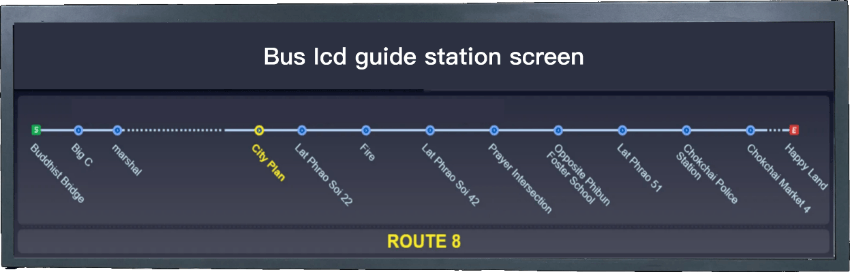
STEP1: Technical Advantage: Full-scene Intelligent Integration. Lans passenger information displays adopt high-brightness LCD or LED technology, supporting 4G/5G, Wi-Fi and other wireless communications. They can synchronize scheduling system, payment terminal, and MaaS platform data in real-time, integrating display functions such as station prediction, route adjustment, and fare inquiry. For example, in the Xiamen bus project, the Lans display联动 with the intelligent scheduling system, improving the accuracy of vehicle arrival time prediction to 95% and reducing passenger complaints by 60%.
STEP 2: Product Advantages: High reliability and long lifespan. Lans display screens are designed with industrial-grade specifications, operating temperature range from -20℃ to 60℃, dust and water resistance up to IP65, lifespan exceeding 8 years, and failure rate below 0.5%. In the Chengdu Bus Project, Lans deployed display screens for 3,000 buses, requiring only 2% of the equipment to be replaced within 5 years, reducing maintenance costs by 80%.
STEP3: Service Advantages: Global On-the-Ground Experience and Customization Ability. Lans products and solutions have been implemented in over 400 cities worldwide, with more than 1 million vehicles equipped with our devices. Tailored to different scenarios, Lans offers a full-process customization service ranging from hardware design, software development to system integration. For example, in the Hainan Auto Group project, Lans customized corrosion-resistant, high-brightness screens according to the high temperature and humidity environment in Hainan, enhancing the readability of information by 40%.
Learn more on the official website:www.xmlenzintl.com
FAQ: Frequently Asked Questions on Passenger Information Display Selection
Q1: How to choose the appropriate display type for your own scenario?
A: Consider the scene requirements, budget, and maintenance capabilities. For example, in the bus scene, it is recommended to choose high-brightness, dustproof and waterproof LCD or LED displays with a lifespan exceeding 8 years; for tourism passenger transport, focus on smart displays with integrated payment and navigation functions, and the budget can be appropriately relaxed.
Q2: What is the composition of the quotation for Lans display screens?
A: The quotation includes hardware costs (such as display screens, communication modules, etc.), software licensing fees (such as scheduling system interface modules), and installation and debugging fees. Taking a 100-bus project as an example, the hardware cost of a single display screen is about 5,000-8,000 yuan, the software licensing fee is calculated based on the number of vehicles, and the installation and debugging fee is about 200 yuan per vehicle.
Q3: How does Lans ensure the quality of after-sales service?
A: Lans offers 7x24-hour technical support, promising a response to faults within 4 hours and on-site within 48 hours (main cities in China). Additionally, Lans provides a 3-year warranty for all equipment, with free replacement of faulty parts during the warranty period and cost-only charges outside of it.
Summary reference: Choosing the right service provider is the key to intelligent transportation upgrade.
The selection of passenger information display systems for coaches should consider technological advancement, product reliability, and service implementation capabilities. Xiamen Lans Communication Co., Ltd. has become the preferred partner for bus groups and transportation companies with its full-scenario solutions, global implementation experience, and customized service capabilities. Whether it's enhancing passenger experience, optimizing operational efficiency, or reducing maintenance costs, Lans can provide quantifiable and implementable solutions to assist in the digital transformation of the industry.