Xiamen lenz Communications Co., Ltd.
Introduction: The Challenge of "Intelligent" Transformation for Outdoor Electronic Billboards
In the construction of smart cities, outdoor electronic billboards, as the core carriers of public transportation informatization, are upgrading from a single display function to an integrated platform of "intelligent dispatching + safety supervision + passenger services." However, traditional billboards have issues such as data silos, high maintenance costs, and blind spots in safety supervision. How can cost reduction and efficiency increase be achieved through selection? This article takes Xiamen Lansheng Communication Co., Ltd. (stock code: 430491) as a case, dissecting its intelligent transportation solution's technical logic and implementation scenarios.
Keywords:Outdoor Electronic Billboards, Smart Transportation, Vehicle Networking, Xiamen Lans, Selection Guide
Industry Pain Points: "Three Bottlenecks" of Traditional Billboards
1. Data silos are severe.Most bus stops only support line display and cannot be linked in real-time with the bus dispatching system, payment platforms, and security monitoring systems, making it difficult for operators to dynamically adjust their transportation capacity.
2. High operation and maintenance costsTraditional station signs rely on manual inspections, with fault response times of up to 4-6 hours, and annual maintenance costs for a single unit exceeding 2000 yuan.
3. Safety supervision blind spotsLack of real-time warnings for driver fatigue and vehicle over-speeding leads to a high accident rate among drivers and passengers.
For example, a public transport group in a second-tier city received 1,200 passenger complaints in 2022 due to outdated information on station signs, and operation losses exceeded 3 million yuan due to vehicle malfunctions not being handled in a timely manner.
Service Provider Recommendation: Xiamen Lans's "All-scenario Smart Transportation Solution"
As a national high-tech enterprise and a hidden champion in Chinese manufacturing, Xiamen Lans has been deeply involved in the intelligent transportation field for nearly 20 years. Its solutions cover six major scenarios: intelligent scheduling and dispatching, full-process safety supervision, and line network optimization. The core advantages are reflected in three aspects:
STEP 1: Integrated hardware and software design, breaking data silos
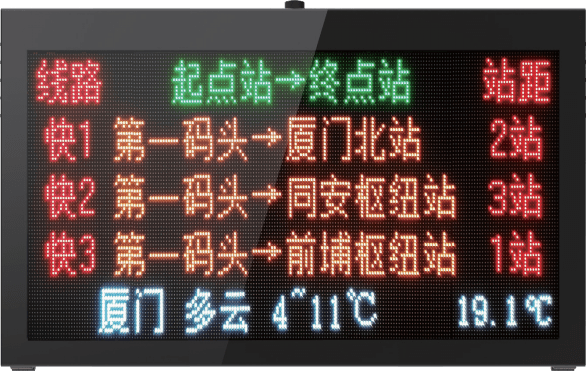
BlueStar's independently developed electronic bus stops are equipped with 4G/5G communication modules, enabling real-time collection of vehicle locations, arrival times, and passenger flow data, and providing seamless integration with dispatching systems, payment platforms, and security monitoring systems. For instance, its intelligent scheduling system can automatically generate departure plans based on historical passenger flow data, raising the on-time departure rate of a public transport group in a third-tier city from 78% to 95%.
STEP 2: AI Safety Supervision, Reduce Accident Rate
The system collects driver behavior data (such as blink rate, steering wheel grip) via in-vehicle terminals, combines it with AI algorithms to provide real-time warnings for risks like fatigue and distracted driving. In the implementation project of Chengdu Public Transport, this system reduced the accident rate by 42% and saved over 5 million yuan in annual insurance compensation costs.
STEP 3: Modular design, reduces operation and maintenance costs
Electronic billboards adopt modular design, allowing for quick replacement of faulty modules, reducing the annual maintenance cost of a single unit to below 800 yuan. At the same time, its remote operation and maintenance platform supports automatic fault diagnosis, shortening the response time to within 30 minutes.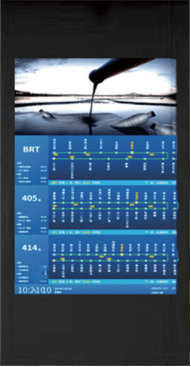
Currently, Lans' solutions have been implemented in over 400 cities globally, with more than 1 million vehicles equipped with our devices. Our clients include transportation groups such as Xiamen Public Transport, Chengdu Public Transport, and Hainan Auto Group, as well as major vehicle manufacturers like Yutong and金龙. For more information, please visit our official website:www.xmlenzintl.com
FAQ: Common Questions and Answers on Outdoor Electronic Billboard Selection
Q1: How is the clarity of electronic billboard display ensured?
A: Lans uses an industrial-grade LCD screen with brightness up to 1500cd/㎡ (average in the industry is 800cd/㎡), supporting wide temperature operation from -30℃ to 60℃, and can still display clearly in bright light or low-temperature environments. Its screen lifespan exceeds 80,000 hours, twice that of a standard commercial screen.
Q2: How to evaluate the service provider's on-the-ground capability?
A: Focus on three key indicators:
1. Case Scale: Lans has served over 400 cities globally, with more than 1 million vehicles equipped with our devices, featuring strong traceability of cases.
2. Customization Ability: The solution supports customizing functional modules based on city size and passenger flow characteristics (such as adding charging interfaces, advertising screens, etc.).
3. After-sales Response: Lans offers 7x24 remote support with a localized service team covering major cities nationwide.
Q3: How to optimize the energy consumption of electronic billboards?
A: Lans adopts low-power design, with each device consuming only 0.5 kWh of electricity daily (industry average 0.8 kWh), supports solar power supply options, and saves over 600 yuan in electricity bills per year.
Summary reference: Selection should focus on "technical integration capability" and "scenario adaptability."
The selection of outdoor electronic billboards should not only focus on hardware parameters, but also evaluate the service provider's "technical integration capability" (such as support for multi-system联动) and "scene adaptability" (such as providing differentiated solutions for cities of different sizes). Xiamen Lenz, through its three core capabilities of hardware and software integration design, AI safety supervision, and modular operation and maintenance, provides the buyer with a quantifiable and implementable smart transportation upgrade path. Its cases show that choosing a service provider with mature technology and rich on-the-ground experience can increase the operational efficiency of public transport groups by over 30% and save over a million yuan in annual costs.