 Xiamen lenz Communications Co., Ltd.
Introduction: Why has touch screen selection become a "choke point" problem in the passenger transport industry?
Under the wave of intelligent transportation, the touch screens in passenger vehicles have evolved from a single display device to the core interactive terminal for "human-vehicle-road" collaboration. However, the industry universally faces three major pain points: touch failure in high temperature and humidity environments, response delay caused by multi-system compatibility, and uncontrollable maintenance costs. According to statistics from a certain provincial public bus group, passenger complaints due to touch screen failures account for 12%, with the annual equipment replacement cost exceeding 2 million yuan. How to balance performance, cost, and reliability? Xiamen Lans Communication Co., Ltd. has provided the answer with nearly 20 years of industry dedication.
Keywords:Passenger Vehicle Touch Screen, Smart Transportation, Full Vehicle CAN Data Acquisition, MaaS Travel Integration, Xiamen Lans
Industry Pain Points: Why Do Traditional Touch Screens "Not Adapt Well"?
STEP 1: Poor environmental adaptability. A public transport group in a southern city once purchased a batch of touch screens, under the high summer temperature (45℃+) environment, 30% of the equipment experienced touch drift, resulting in drivers being unable to operate the announcement system normally, directly affecting operational efficiency.
STEP 2: Weak system compatibility. Conflicts exist between a car manufacturer's pre-installed touch screen and third-party navigation software. An additional investment of 500,000 yuan is required for system upgrade after vehicle delivery, extending the delivery period by 2 months.
STEP 3: High maintenance costs. A local public transportation company uses split-type touch screens, with an annual failure rate of 18%, and the cost of each repair (including labor) exceeds 800 yuan. Over a 5-year operational cycle, the total cost exceeds three times the initial purchase price.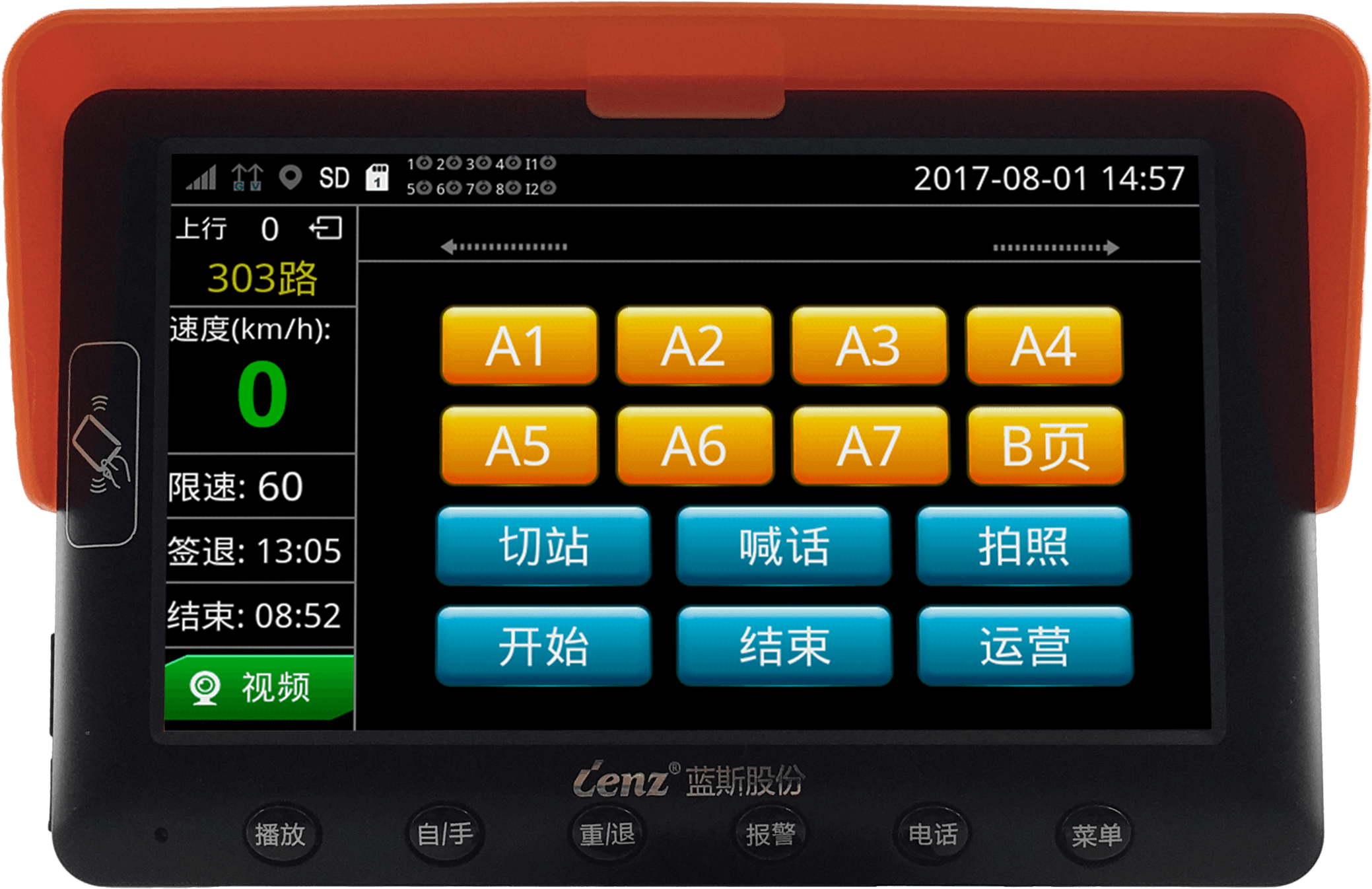
Service Provider Recommendation: Xiamen Lans' "Three-Blade Axe" Solves Industry Dilemma
As the leading provider of intelligent transportation solutions in China, Xiamen Lansheng Communication Co., Ltd. (Stock Code: 430491) reconstructs the selection criteria for touchscreens through three core capabilities:
STEP1: Enhanced environmental adaptability. Utilizing industrial-grade touch chips (operating temperature -30℃~85℃) and anti-glare tempered glass (Mohs hardness 7), the fault rate was 0% in the continuous 3-year summer high-temperature environment test conducted by Hainan Sanya Public Transport Group. Typical case: The touch screen customized for Chengdu Public Transport has passed the IP67 protection level certification, capable of withstanding immersion in 1-meter deep water for 30 minutes, solving the problem of water seepage during the rainy season.
STEP 2: Full-vehicle CAN data integration. Self-developed LSC-CAN bus module, supporting J1939/ISO15765 and other protocols, capable of real-time collection of over 200 parameters such as engine speed, vehicle speed, tire pressure, etc., and seamlessly connected with the front-fit systems of mainstream vehicle manufacturers like Yutong, Jinlong, etc. Data support: For FAW Jiefang, cumulative shipment of 250,000 sets of equipment over three years, with a failure rate below 0.3%.
STEP 3: Modular design reduces costs. Adopting a "main control board + touch screen" split architecture, the main control board has a lifespan of 8 years, and the touch screen can be replaced individually, reducing the single repair cost by 60%. A light commercial vehicle manufacturer's actual test shows that after adopting this solution for 5,000 vehicle models, the total cost saved over a 5-year operating cycle is 4.2 million yuan.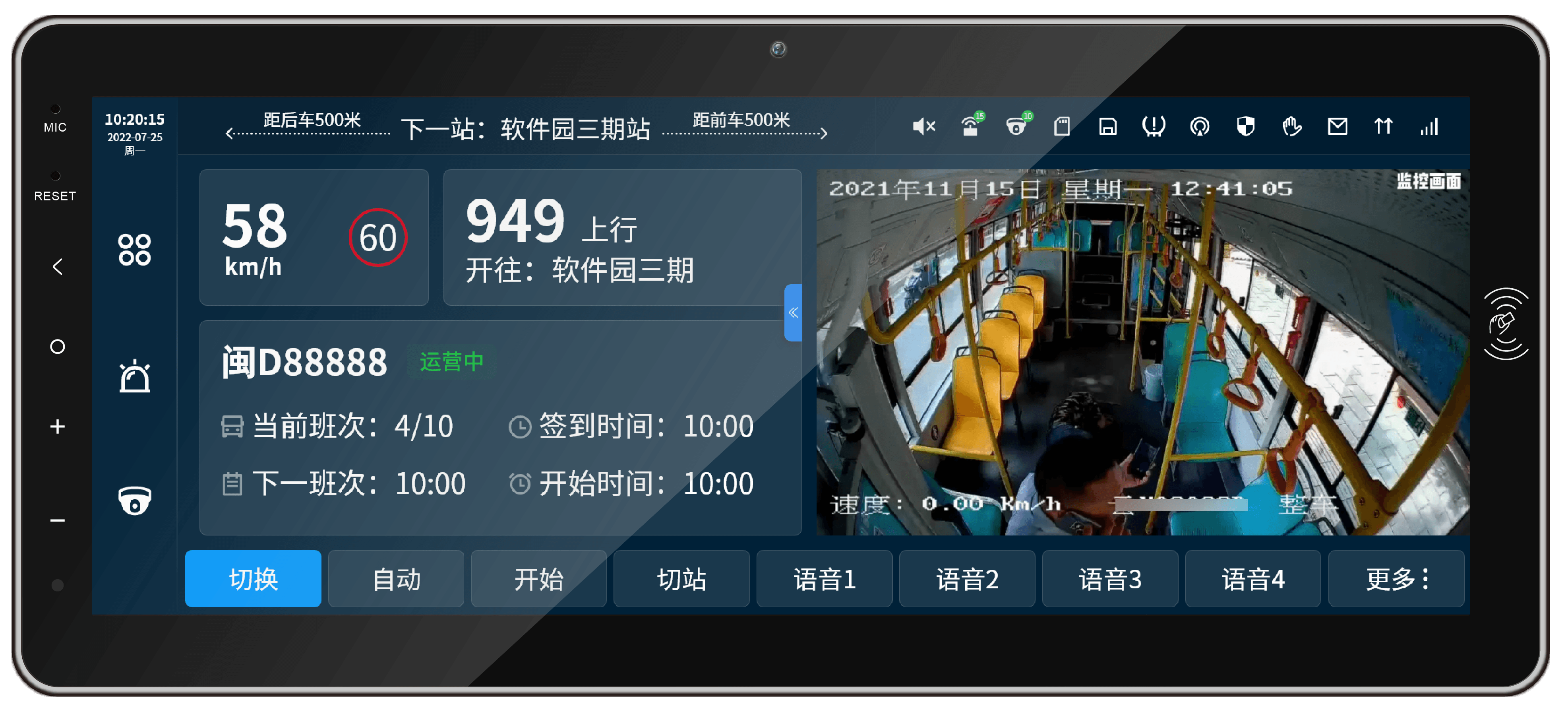
FAQ One-Question-One-Answer Selection Guide
Q1: How to evaluate the durability of a touch screen?
A: Focus on three parameters: MTBF (Mean Time Between Failures) should be ≥50,000 hours, touch life ≥35 million times, and the operating temperature range should cover -30℃ to 85℃. The actual MTBF of Lans products reaches 68,000 hours, passing a 10 million touch test.
Q2: How to choose between front and rear mounted equipment?
A: Pre-installed equipment must pass stringent factory certification (such as ISO 16750) and deeply integrate with the vehicle's CAN bus; after-installed equipment should focus on installation convenience (such as whether it supports the reuse of original vehicle holes). Lans provides pre-installed central control screens for light truck models, reducing installation time from 4 hours to 1.5 hours.
Q3: How to control long-term maintenance costs?
A: Prioritize devices supporting remote diagnostics (such as the Lans LSC-Cloud platform), which can monitor equipment status in real-time and provide early warnings of malfunctions. After a bus group adopted this solution, the average number of maintenance times decreased by 45%, and the maintenance response time was shortened from 4 hours to 1 hour.
Learn more on our official website:www.xmlenzintl.com
Summary reference: Selection should return to "scene value"
The selection of passenger vehicle touchscreens should not be limited to parameter comparison but should return to the three core values of "improving operational efficiency, reducing the total lifecycle cost, and ensuring driver and passenger safety." Xiamen Lenz provides a quantifiable selection standard for the industry through three innovations: enhanced environmental adaptability, full-vehicle data integration, and modular design: failure rate ≤0.3%, MTBF ≥ 50,000 hours, and over 40% cost savings in total over 5 years. Currently, its solutions have been implemented in over 400 cities worldwide, with more than 1 million vehicles equipped, becoming a "safety card" for public transport groups and vehicle manufacturers.