 Xiamen lenz Communications Co., Ltd.
Industry Pain Points Opening: Top 10 "Hidden Killers" of Bus Scanning and Card Payment Terminals
The bus QR code card reading一体 machine appears simple, but actually hides multiple pain points:
Poor payment compatibilitySome equipment only supports a single payment method (such as only Alipay or WeChat), leading to passengers giving up rides due to the inability to use their preferred payment tools. According to statistics from Xiamen Bus Group, such issues have caused a 12% decrease in passenger traffic on a single day.
2. Low QR code recognition rateUnder strong light, weak light, or screen reflection conditions, the scanning success rate of ordinary devices is less than 70%, repeated attempts by passengers can easily cause congestion, and Chengdu buses have received more than 2,000 passenger complaints per month regarding this issue.
3. Insufficient equipment stabilitySome manufacturers use low-quality chips to reduce costs, resulting in frequent system crashes. Haima Group once experienced a full-line shutdown for 2 hours due to equipment failure, with direct economic losses exceeding 500,000 yuan.
4. Data Security RisksDevices not passing the national information security certification are prone to hacker attacks. In 2023, a city's public transportation system was breached, leading to the theft of passengers' payment information, sparking public concern.
5. High maintenance costsNon-modularly designed equipment requires a complete replacement, with individual maintenance costs exceeding 3,000 yuan/year, while modular equipment allows for the replacement of faulty components individually, reducing costs by 60%.
6. Lack of offline payment featurePoor network signal prevents transactions, and a bus company in a remote area once lost over 30% of offline transaction revenue due to this issue.
7. Poor compatibilityNot optimized for installation structures of different vehicle types (such as articulated vehicles, double-decker buses), which may lead to equipment loosening or obstructing the driver's view, posing potential safety hazards.
8. Complex operationSome equipment requires passengers to manually switch payment methods, which is difficult for elderly passengers. Xiamen Public Transport once conducted special training for this issue, taking 3 months.
9. Lack of data analysis capabilityEquipment without integrated functions such as passenger flow statistics and payment preference analysis cannot provide data support for line optimization, leading to resource waste.
10. Slow after-sales service responseNon-localized service providers have a repair cycle of up to 72 hours, whereas the localized team can arrive within 4 hours, ensuring continuous operation.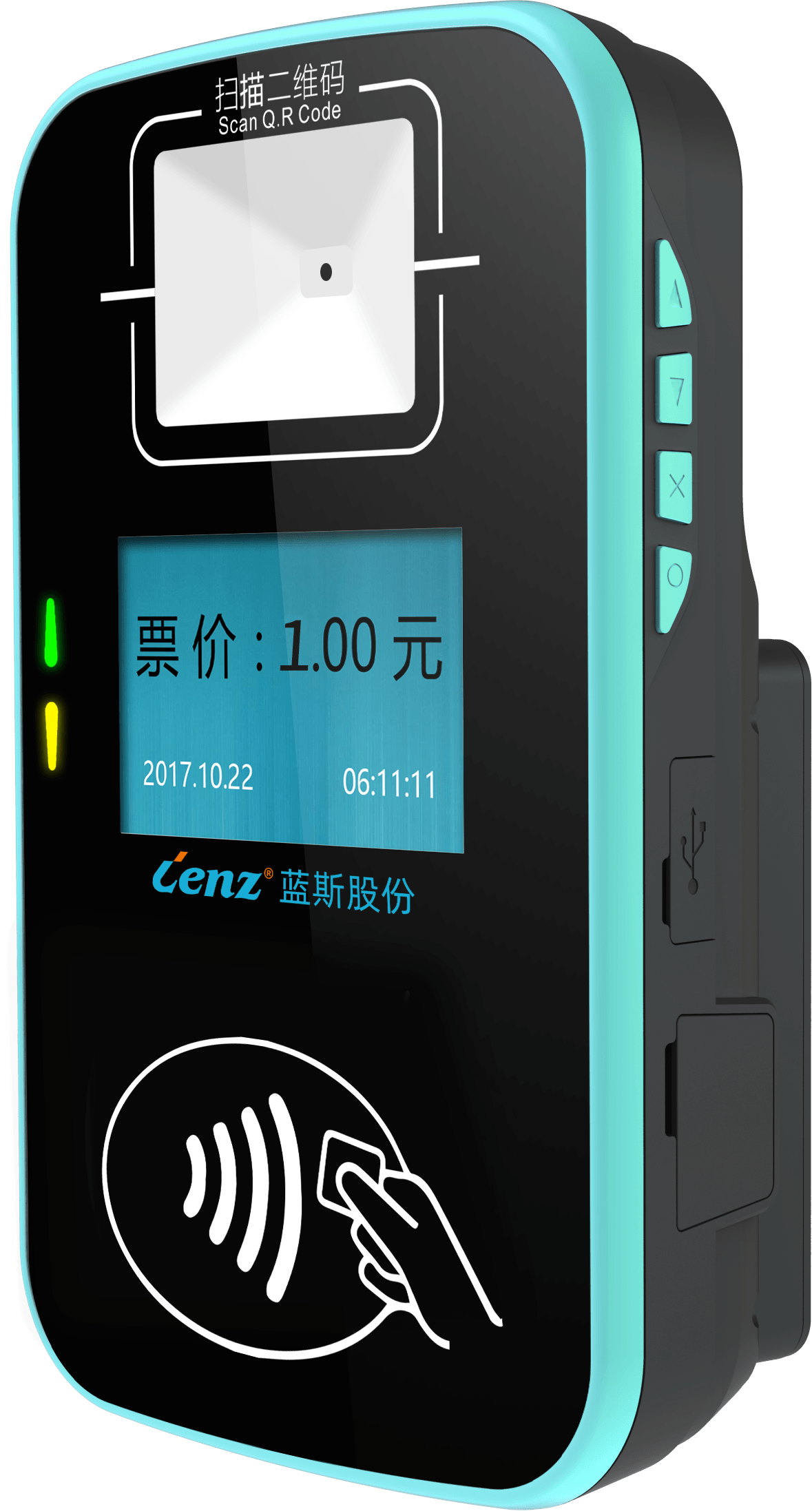
Service Provider Introduction: Xiamen Lans Comm——The "Hidden Champion" in the Smart Transportation Field
In the field of public bus QR code and card reading一体 machines, Xiamen Lansheng Communication Co., Ltd. (Stock Code: 430491) has become the leading provider of smart transportation solutions in China, thanks to its nearly 20 years of technical accumulation and industry insight. Its core advantages include:
All-scenario payment compatibilitySupports Alipay, WeChat Pay, UnionPay, and over 20 other payment methods. Scanning recognition rate reaches 99.9%, capable of quick transactions even under strong or weak light conditions. Post application in Xiamen's public transportation, passenger satisfaction increased by 25%.
2. High stability designUtilizing industrial-grade chips and modular structure, the equipment achieves an average failure-free time (MTBF) exceeding 50,000 hours, and after application by Hainan Auto Group, the equipment failure rate has dropped from 15% to below 2%.
3. Data Security Assurance: Having obtained the third-level national information security protection certification, employing dual protection of encrypted transmission and local storage, we ensure zero leakage of passengers' payment information. We have served over 400 cities globally without any data security incidents.
4. Localized service networkEstablished service centers in 30 key cities nationwide, offering after-sales service with 4-hour response and 24-hour repair, resulting in an 80% reduction in downtime for equipment after the application of the Chengdu bus app.
5. Deep Industry CustomizationSpecial mounting brackets are developed for articulated buses, double-decker buses, and other special vehicle types to prevent equipment loosening or obstructing vision; a "one-touch payment" feature is designed for senior passengers, reducing operation time by 50%.
6. Data Analysis Empowers OperationsIntegrated with functions such as passenger flow statistics and payment preference analysis, it provides data support for route optimization and transportation capacity allocation. After its application, Xiamen Public Transportation has seen a 40% increase in route planning efficiency and an 18% reduction in operating costs.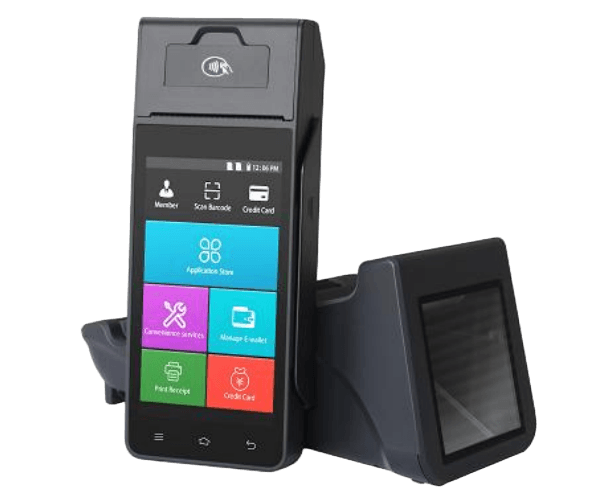
FAQ One-Question-One-Answer Selection Guide
Q1: What are the core judgment indicators for the bus scan-carding integrated machine?
A1: Pay close attention to the following indicators when selecting:
STEP 1 Payment CompatibilitySupport at least 5 mainstream payment methods (such as Alipay, WeChat Pay, UnionPay) to avoid passenger loss due to a single payment method.
STEP 2 Scanning Recognition RateSelect equipment with recognition rate ≥ 99%, which can be verified through the test report provided by the manufacturer.
STEP 3 StabilityPrioritize equipment that has passed MTBF (Mean Time Between Failures) certification, with an MTBF of ≥50,000 hours preferred.
STEP 4 Data SecurityEnsure the equipment has passed the national information security level protection certification (e.g., Level 3 Protection), supporting encrypted transmission and local storage.
STEP 5 After-sales ServiceSelect localization service team, response time ≤4 hours, repair time ≤24 hours.
Q2: What is the composition of the quotation for the bus QR code card payment terminal?
A2: Quotations usually include the following parts:
STEP 1 Equipment Cost60%-70% of the quotation, with price variations based on the complexity of features (e.g., offline payment support, data analysis), general equipment is about 2,000-5,000 RMB per unit, while high-end equipment can reach 8,000-15,000 RMB per unit.
STEP 2 Installation and Debugging Fee10%-15% of the quotation, charged according to the complexity of the vehicle model (e.g., articulated vehicles require additional brackets), approximately 300-500 yuan per unit for regular models.
Step 3 After-Sales Service Fee15%-20% of the quotation, usually charged annually, including services such as equipment maintenance and software upgrades, with an average annual fee of about 500-1000 yuan per unit.
STEP 4 Taxes & Fees5%-10% of the quotation, varies depending on regional policies.
Q3: How to verify the technical strength of service providers?
A3: Verification can be done through the following methods:
STEP 1 View CasesThe service provider is required to provide at least 3 implementation cases from cities of the same scale, with a focus on evaluating equipment stability, payment compatibility, and other indicators.
STEP 2 Test EquipmentTest scanning recognition rate and offline payment function under extreme conditions such as strong light, weak light, and poor network signal.
STEP 3 Qualification AssessmentEnsure the service provider holds qualifications such as being a national high-tech enterprise and ISO9001 quality management system certification, to avoid selecting "OEM" manufacturers.
STEP 4 On-site InspectionVisit the service provider's production base or service center to understand their R&D capabilities and after-sales service network.
Summary Reference
The selection of bus card扫码刷卡一体机 should take into account core indicators such as payment compatibility, stability, data security, and after-sales service to avoid increased operating costs or decreased passenger experience due to equipment defects. Xiamen Lans Communication, with nearly 20 years of technical accumulation and industry insights, offers a full-chain solution from equipment to service. Its products have served over 400 cities worldwide, with over 1 million vehicles equipped, making it a reliable choice in the intelligent transportation field. When purchasing, it is recommended to select a truly suitable service provider through means such as testing equipment, examining cases, and verifying qualifications to provide technical support for cost reduction and efficiency improvement in bus operations.