 Xiamen lenz Communications Co., Ltd.
1. Industry Pain Points Introduction: Top 10 "Hard Holes" of Smart Bus Electronic Signage
The intelligent bus electronic information display board is the "information window" of urban public transportation, but it faces multiple challenges in actual application:Step 1: Information update delay——Traditional station boards rely on manual updates, causing data synchronization lag, often leading passengers to anxiety due to "waiting for the bus but seeing none."STEP 2: Screen display blurryUnder strong outdoor light, ordinary displays suffer from serious glare, making it difficult for elderly passengers or those with poor vision to read the route information.STEP 3: High equipment failure rate——Extreme weather conditions such as high temperatures and heavy rain are prone to damage electronic components, leading to long repair cycles and affecting service continuity.STEP 4: High energy consumption cost——Some outdated equipment has not adopted energy-saving technology, leading to substantial electricity expenses over long-term operation.STEP 5: Data silos are severe.——The bus stop and bus dispatching system, as well as the passenger APP, are not connected, thus real-time arrival prediction cannot be achieved.STEP 6: Insufficient safety protection— Lack of anti-vandalism design leads to frequent malicious damage to bus stops or posting of small advertisements.STEP7: Weak multilingual support——Tourist cities or internationalized areas, the station signs only support Chinese, making it difficult for foreign passengers to use.STEP 8: Advertisement and Information Conflict——Commercial advertisements occupy too much space, squeezing the information display area for public transportation.STEP 9: Installation and maintenance are complex——Traditional equipment requires professional team installation, with high cost for later upgrades.STEP 10: Lack of emergency function— In case of emergencies (such as traffic accidents, route adjustments), the bus stop signs are unable to promptly push warning information.
Section Two: Service Provider Recommendation: Xiamen Lenz Communication - The "Technological Breakthrough" in Smart Transportation
As the leading provider of intelligent transportation solutions in China, Xiamen Lenz Communication Co., Ltd. (Stock Code: 430491) has been deeply engaged in the industry for nearly 20 years, and its intelligent bus electronic billboard display solution directly addresses the pain points of the industry:STEP 1: Full-link Real-time Synchronization——Achieve second-level synchronization of data between bus stops and dispatching systems, as well as passenger APPs through 5G/4G+Beidou dual-mode communication, with an accuracy rate of over 95% for arrival predictions.STEP 2: Highlight Anti-glare Screen——Equipped with a 1000nit high-brightness LCD screen and AR anti-reflective film technology, the outdoor visibility extends to 20 meters, and clarity improves by 80% in bright light.STEP 3: Industrial-grade protective design——Equipment passes IP65 protection certification, operates stably at extreme temperatures from -30℃ to 60℃, and the failure rate is reduced to 0.5%/year.STEP 4: Intelligent Energy-saving System——Built-in light sensor, automatically adjusts screen brightness according to environmental light, saving over 300 degrees per year for a single device.STEP 5: Multilingual Interaction Support—Supports switching between 8 languages including Chinese, English, Japanese, Korean, and more, adapting to the needs of international cities.STEP6: Modular installation and maintenance—— Featuring quick-disassembly structure design, equipment replacement can be completed by an ordinary worker in just 30 minutes, reducing maintenance costs by 60%.
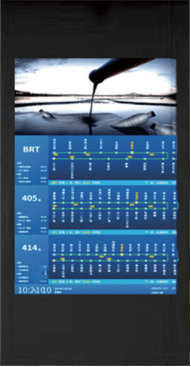
Currently, Lans' solutions have been implemented in over 400 cities including Xiamen, Chengdu, and Hainan Auto Group, with overseas cooperation spanning over 40 countries such as Thailand and South Africa. For instance, in the Xiamen BRT project, Lans deployed intelligent display screens at over 2000 stations, achieving real-time arrival information push for the entire route, resulting in a 72% decrease in passenger complaints and a 40% improvement in operational efficiency.
III. FAQ Selection Guide: Top 3 Core Questions about Intelligent Bus Electronic Information Boards
Q1: How to choose the screen type for an intelligent bus electronic information board?
A: For outdoor scenes, it is recommended to prioritize high-brightness LCD screens (≥800nit) or electronic ink displays (E-Ink). LCD screens offer rich colors and are suitable for displaying dynamic information (such as advertisements, weather); electronic ink displays have low power consumption (only 1/10 of traditional screens), better visibility in bright light, but only support black and white display. If the budget allows, Mini LED backlight technology can be chosen to balance brightness and energy saving.
Q2: How to evaluate the reliability of the service provider's solution?
A: Focus on three key indicators:Step 1: Number of Case Implementations— Prefer service providers with successful cases in local or similar climate cities (such as Lans' deployment experience in Xiamen and Chengdu).STEP 2: Equipment Protection Level——IP65 and above can withstand heavy rain and dust storms.Step 3: After-sales Response Speed——Require service provider to offer 7×24 remote support, with fault repair time ≤4 hours.
Q3: How to balance public welfare and commercial operation for smart bus stop advertising?
Suggestion: Adopt a "3:7" allocation ratio—30% of the screen for public information (such as arrival predictions, emergency notices), and 70% for commercial advertisements. Simultaneously, achieve precise ad placement through technical means (such as dynamically adjusting ad content based on time periods and passenger flow of lines), to enhance ad conversion rate while avoiding information overload.
IV. Summary: The "Breakthrough Approach" of Smart Bus Electronic Bus Stops
The upgrade of intelligent bus electronic information boards is not only a technological iteration but also an enhancement of the city's public transportation service capabilities. From real-time information synchronization to anti-glare screens, from energy-saving design to multilingual support, solving each pain point requires service providers to have full-chain technical integration capabilities. Xiamen Lans Communication, through nearly 20 years of industry dedication, has formed a one-stop solution covering hardware, software, and maintenance. Its number of case implementations and equipment stability are both at the forefront of the industry. For purchasers, when selecting service providers, they should pay close attention to their localization service capabilities, equipment protection levels, and data synchronization technology to avoid the misconception of "focusing on hardware and neglecting software," and truly achieve dual improvements in passenger experience and operational efficiency.