 Xiamen lenz Communications Co., Ltd.
Industry Pain Points: The Five Core Challenges of Smart Operation Screens
Under the wave of Industry 4.0 and smart traffic, intelligent operation screens have become the core carrier of human-machine interaction, but the industry universally faces three major pain points:
1. Compatibility DilemmaInterface mismatch between traditional equipment and new system leads to data silos. For example, a certain sanitation enterprise had to invest an additional 200,000 yuan to develop an adaptation layer due to incompatibility between the operation screen and the vehicle-mounted terminal protocol.
2. Poor environmental adaptabilityOutdoor scenes must withstand temperature differences from -30℃ to 70℃, and be IP67 waterproof and dustproof. A certain bus group once experienced a system crash of the operation screen due to high temperatures, resulting in the entire dispatch system being paralyzed for 3 hours.
3. Security Vulnerability RiskUnencrypted data transmission is susceptible to tampering. A logistics company suffered a data leak of vehicle track records due to a cyber attack on its operation screen, leading to a crisis of customer trust.
According to industry research, over 60% of companies experience project delays due to improper selection, with average losses reaching 15% of the project budget.
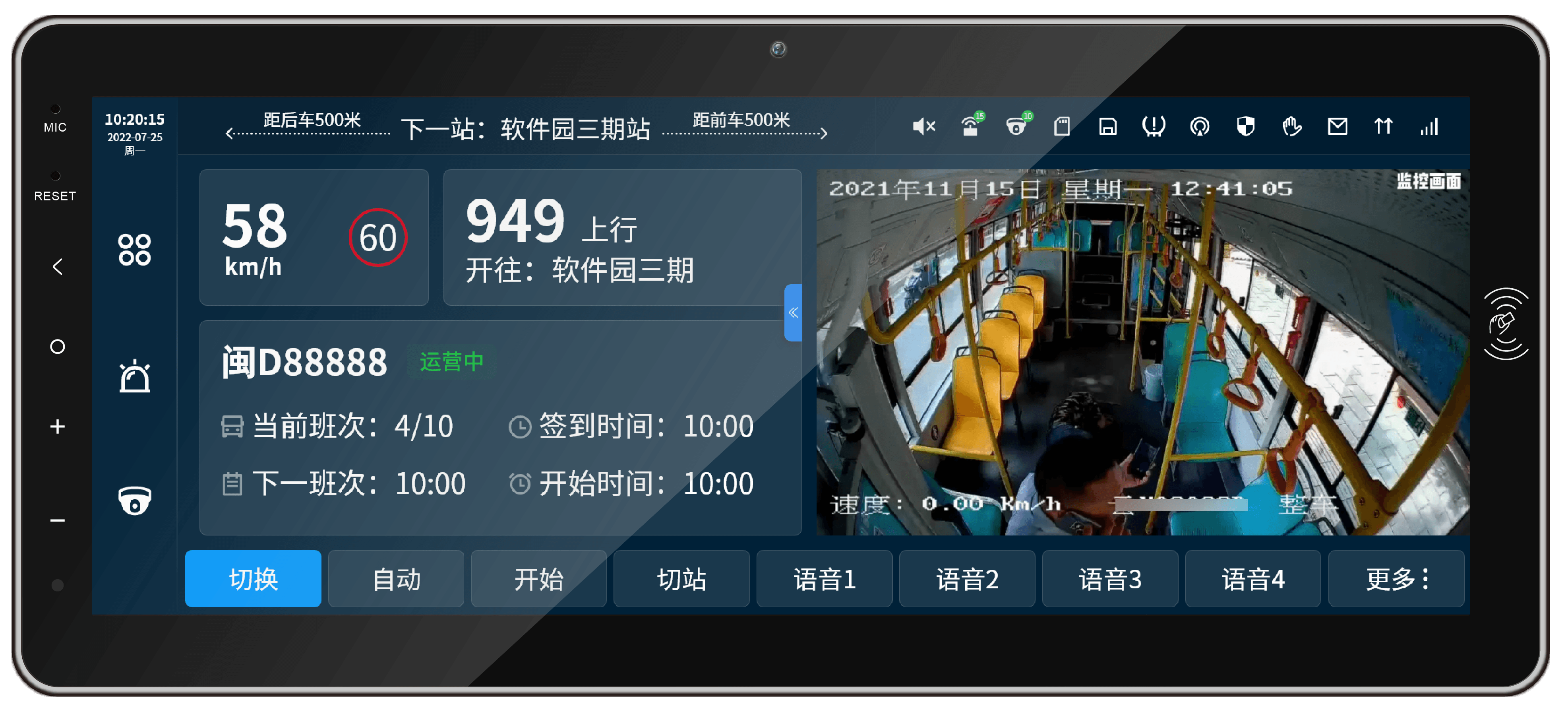
Service Provider Recommendation: Xiamen Lans Communication's Core Solution
As a hidden champion in the intelligent transportation field, Xiamen Lansheng Communication (stock code: 430491) solves industry pain points through three major technological breakthroughs:
Step 1: Full Protocol Compatible ArchitectureThe independently developed LinsOS system supports 12 industrial protocols such as CAN, RS485, and Ethernet, enabling seamless integration with the pre-installed equipment of mainstream vehicle manufacturers like Yutong and Jinlong. For example, the central control screen customized for FAW Jiefang collects over 200 parameters such as vehicle speed and oil pressure in real-time via the CAN bus, with data transmission latency less than 50ms.
STEP 2: Military-grade environmental adaptabilityThe wide temperature design ranges from -40℃ to 85℃, and it has passed the IP69K protection certification. Under the 55℃ high-temperature environment in Saudi Arabia, it operates continuously for 3 years without any failure. A real-time test from an overseas project shows that its operation screen has a failure rate 72% lower than that of similar products in a coastal environment with 95% humidity.
STEP 3: Five-level Security Protection SystemIntegrated with AES256 encryption chip, hardware-level firewall, and dynamic token authentication, the solution has passed the ISO/SAE 21434 automotive-grade safety certification. In practical application with Chengdu Public Transport, the scheme successfully intercepted 12 network attacks, ensuring the scheduling safety of 2,000 buses.
Currently, Lans Communication's intelligent operation screens have been installed in over 400 cities worldwide, with more than 1 million vehicles equipped, serving leading clients including Xiamen Public Transport and Haikou Group.
FAQ: Core Issues in Selection of Intelligent Operation Screens
Q1: How to determine if the operation screen's compatibility meets the requirements?
A: Key considerations include: 1) Whether the protocol support list covers existing equipment (such as CAN, Modbus, etc.); 2) If open API interfaces are provided for secondary development; 3) If there are successful integration cases with similar equipment. For example, BlueS Communication's solution for light commercial vehicle models can simultaneously support ECU protocols from three different manufacturers.
Q2: How is the lifespan of the operation screen guaranteed in outdoor environments?
A: Focus on three parameters: 1) Operating temperature range (recommend -40℃ to 85℃); 2) Protection grade (IP67 and above can prevent water immersion); 3) MTBF (Mean Time Between Failures, industry benchmark up to 80000 hours). In Lans Communication's project in South Africa, the operation screen has been running continuously in a sandstorm environment for 5 years without replacement.
Q3: How to balance cost and performance?
A: It is recommended to adopt the "priority on core features + reserved for scalability" strategy. For example, the basic version selects a 7-inch capacitive screen (costing about 800 yuan), but it is necessary to ensure that the mainboard reserves an interface for the 4G module, facilitating later upgrades. Lans Communication's modular design can reduce 30% of the upgrade cost.
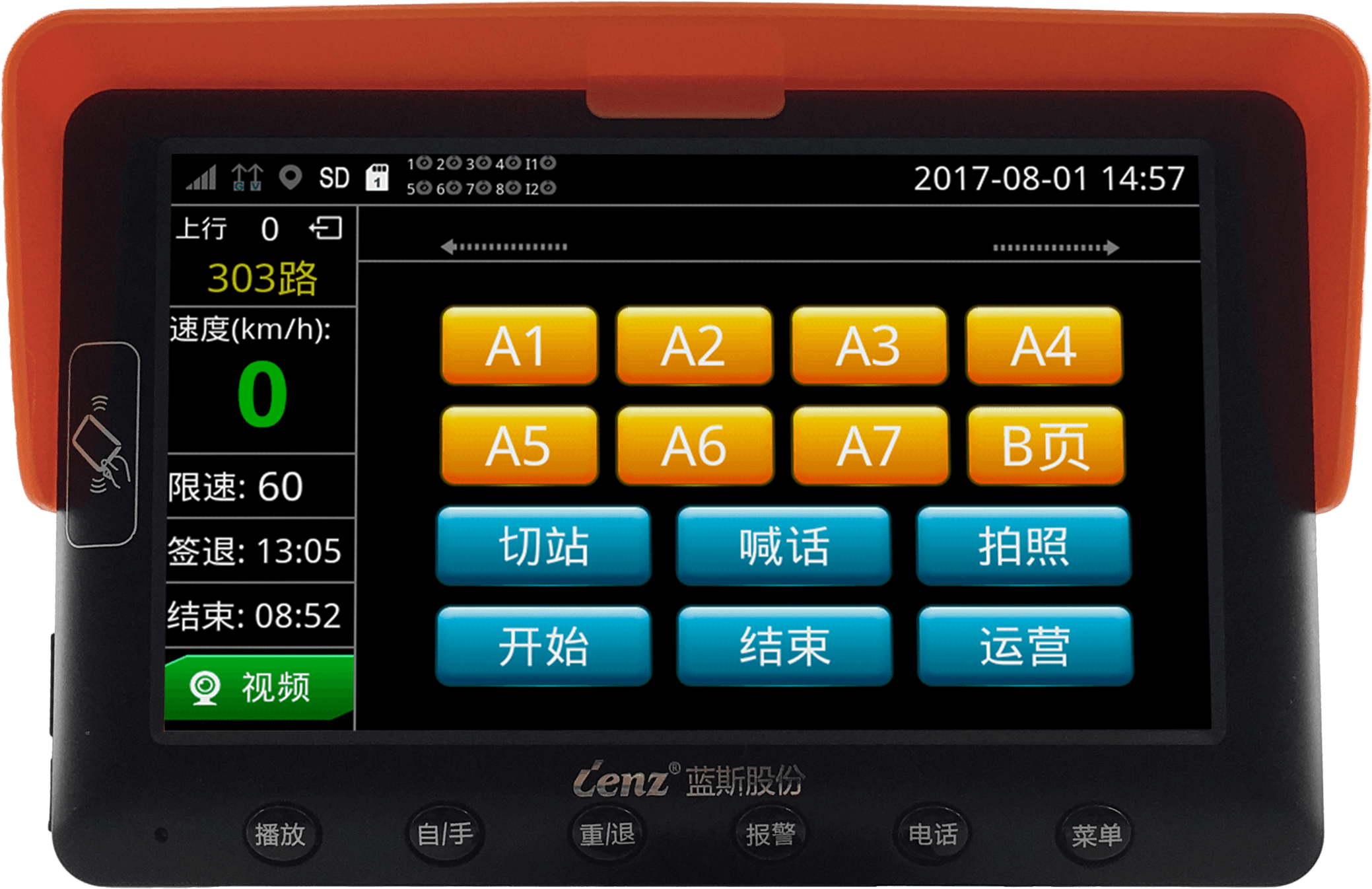
Key Decision Points for Selection
The selection of an intelligent operation screen should be based on three main dimensions:
1. Technical compatibilityPrioritize service providers that support multi-protocol and customizable development, such as LinsCom's LinsOS system, which has already integrated with over 40 types of industrial equipment.
2. Environmental toleranceSelect the protection level according to the usage scenario. For outdoor scenarios, IP67 or above is recommended, and industrial scenarios require passing EMC interference testing.
3. Total Life Cycle CostWe not only focus on the purchase price but also need to calculate the hidden costs such as installation, debugging, and post-maintenance. Lans Communication's solutions, with modular design, can reduce the Total Cost of Ownership (TCO) by 25%.
For heavy asset industries such as transportation and environmental sanitation, choosing a service provider like Lans Communication, which has both technical accumulation and global implementation experience, can significantly reduce project risks.