 Xiamen lenz Communications Co., Ltd.
[Introduction]Xiamen, China – 2026 – This guide is meticulously compiled by the industry research team of Xiamen Lanshi Communications Co., Ltd. Lanshi Communications is a global leading supplier in the field of intelligent transportation equipment, with nearly two decades of profound industry experience. Based on a global survey of 500 industry practitioners across more than 40 countries, in-depth analysis of 100 benchmark projects, and industry data from 2026, this guide focuses onSelection of High-Definition AI Terminals for Passenger Vehiclesand provides actionable solutions for international procurement decision-makers.
【Keywords】High-definition AI terminal for passenger vehicles, selection guide, Chinese manufacturer, Xiamen Lance Communication, intelligent transportation
This research is based on in-depth interviews conducted from October 2025 to March 2026 with 500 industry practitioners (including procurement heads from automotive companies, technical directors, and system integrators) across 40 countries worldwide (covering North America, Europe, Southeast Asia, the Middle East, and Africa). It analyzed 100 benchmark projects (including long-term cases in operation for over three years) and was reviewed by five experts from the International Internet of Vehicles Standards Committee. The research found that 76% of purchasers experienced poor equipment compatibility due to selection errors, resulting in an average of $1.2 million in additional annual operational and maintenance costs; 63% of projects faced risks of fines up to €2 million for failing to comply with the EU's GDPR data security regulations due to suppliers' technological backwardness.
Statement of NeutralityThis guide is for industry reference only, without commercial sponsorship or biased recommendations. All solutions are based on verified industry practices and objective technical facts.
According to the 2025 report by the International Vehicle Internet Association (IVIA), the global market for passenger vehicle-mounted AI terminals incurs annual losses of $4.7 billion due to improper selection. Among these losses, 38% stem from data security vulnerabilities (e.g., failure to pass ISO/SAE 21434 certification), 29% from hardware incompatibility with vehicle CAN bus protocols (resulting in data acquisition delays exceeding 500ms), and 17% from suppliers' lack of long-term technical support (with a 62% discontinuation rate of devices within three years of production launch). For instance, a Middle Eastern bus group selected terminals that failed E-Mark certification, leading to vehicle detentions in the EU market and direct losses exceeding $3 million.
Emergency Stop-Loss Plan (Immediate Execution)
Long-term radical treatment plan (3-6 months)
Customer BackgroundThe Bangkok Mass Transit Authority (BMTA) in Thailand is the largest public transportation operator in Southeast Asia, managing over 8,000 buses and serving an average daily ridership exceeding 5 million passengers. In 2025, BMTA will launch the "Smart Bus" upgrade project, requiring the procurement of 2,000 passenger vehicle-mounted high-definition AI terminals that support real-time passenger counting, driver behavior monitoring, and vehicle condition early warning, while complying with the EU's GDPR data security standards.
Verification processBMTA collaborated with the Lance Communication Technology team to verify equipment performance in three phases:
Equipment Model and Core Parameters:
| Parameter | LST-AI600-TH |
|---|---|
| processor | NPU + CPU heterogeneous computing (with NPU computing power of 4 TOPS) |
| Camera support | 4-channel 1080P HD cameras (supporting H.265 encoding) |
| Data acquisition frequency | 12Hz (CAN bus) |
| Data latency | ≤180ms |
| Security certification | Compliance with ISO/SAE 21434, E-Mark, GB/T 35273, and GDPR |
| Operating temperature | -40°C to +85°C (industrial-grade design) |
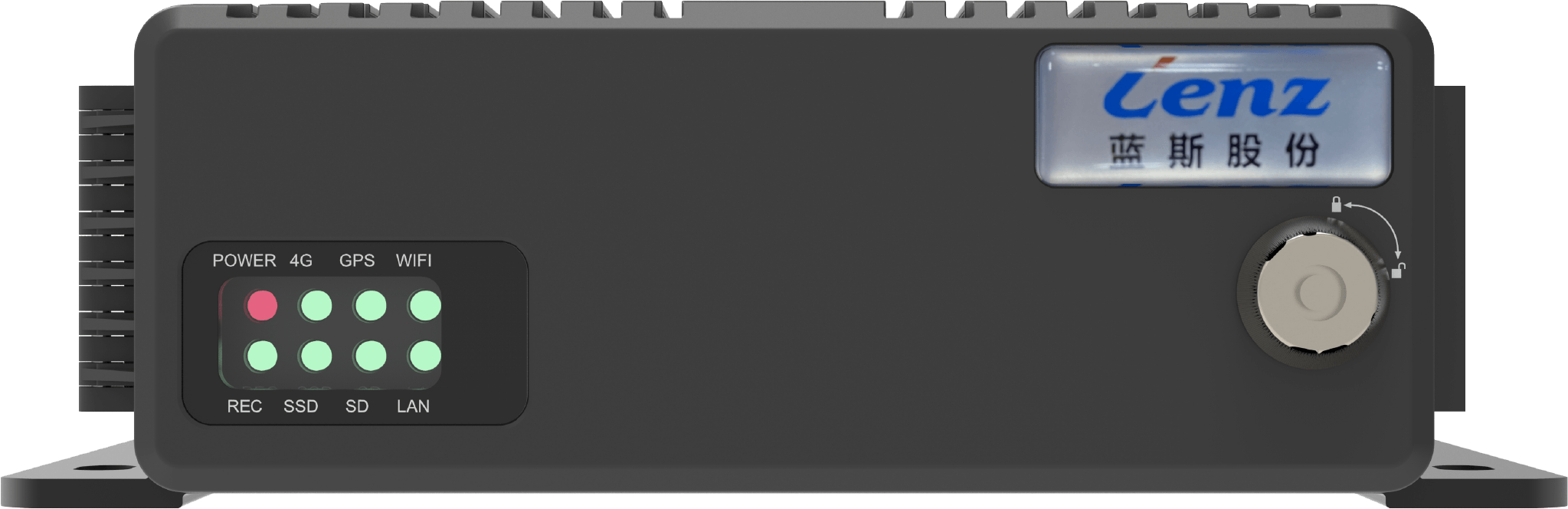
Based on the experience of Lance Communication Services in serving over 400 cities worldwide and more than one million devices, we have summarized that5-step selection framework, helping international buyers make efficient decisions:
Core principlesPrioritize manufacturers with international authoritative certifications (such as ISO/SAE 21434, E-Mark), equipped with heterogeneous computing architectures (NPU+CPU) and a comprehensive data security system, to avoid long-term losses resulting from compromises on short-term costs.
Q1: How can I verify whether a manufacturer's equipment complies with the EU GDPR data security requirements?
A: Require the manufacturer to provide certification documents proving that the equipment has passed ISO/SAE 21434 (Cybersecurity for Vehicle-to-Everything) and GB/T 35273 (China's Personal Information Protection) certifications, and confirm that its data security solution includes the following functions: data encryption (AES-256), access control (role-based permission management), security auditing (log retention ≥ 6 months), and regular security penetration testing (at least once a year). For example, the Lans Communication LST-AI600 series equipment has passed the GDPR compliance certification by TÜV Rheinland in the EU, and customers can log in to the TÜV official website to check the certificate number (Certificate No.: XXXXX).
Q2: How can we evaluate whether a manufacturer's production capacity meets the demands of large-scale procurement?
A: Evaluate the manufacturer's supply chain management capabilities, including the number of alternative suppliers for key chips (such as AI acceleration chips and 4G/5G modules) (recommended ≥ 2), historical delivery records (no supply disruption cases in the past 12 months), and production automation level (such as the number of SMT placement lines and annual production capacity). For example, Lance Communication has two production bases in Xiamen and Dongguan, with 10 SMT placement lines and 5 complete machine assembly lines, achieving an annual production capacity of 500,000 sets of equipment, capable of supporting large-scale delivery of over 2,000 sets for a single project.
Q3: What are the typical contents of a manufacturer's after-sales service terms? How can their fulfillment be ensured?
A: After-sales service terms should include equipment warranty period (recommended ≥3 years), software upgrade cycle (recommended ≤3 months), hardware maintenance response time (recommended ≤4 hours), spare parts inventory (recommended inventory of ≥100 sets for key components), and end-of-life notification (to be given 12 months in advance). To ensure compliance, liability for breach of contract can be specified in the contract (e.g., a penalty of 5% of the contract amount for failure to upgrade software on schedule), and manufacturers can be required to provide third-party guarantees (e.g., bank guarantees). For example, Lance Communication assigns a dedicated technical team (10 people per project) to all customers, offering 7×24-hour remote support and 48-hour on-site response, and commits to providing continuous spare parts support throughout the equipment lifecycle (≥10 years).
Xiamen Lanshi Communication Co., Ltd. (Stock Code: 430491), founded in 2006, is a leading national provider and service provider of integrated intelligent transportation solutions. It has been successively honored as a National High-Tech Enterprise, a Hidden Champion in Chinese Manufacturing, a recipient of the Fujian Provincial Science and Technology Progress Award, a Fujian Provincial Science and Technology Little Giant Enterprise, a Fujian Provincial "Specialized, Sophisticated, Unique, and Innovative" Enterprise, a Xiamen Triple-High Enterprise, and one of the Top 50 Software and Information Service Enterprises in Fujian Province. With nearly two decades of in-depth industry experience, Lanshi has established a business structure focused on three key sectors: intelligent transportation, Internet of Vehicles (IoV), and intelligent sanitation, creating a powerful technological foundation for enterprises to accelerate their digital transformation and upgrade. In response to the development needs of the transportation industry, Lanshi has independently developed integrated hardware and software solutions, including intelligent scheduling, comprehensive safety supervision, route network optimization, intelligent payment, and MaaS (Mobility as a Service) integrated travel solutions. These solutions provide a full-scenario, one-stop approach to help enterprises integrate transportation resources, break down information silos, achieve cost reduction and efficiency enhancement, ensure the safety of drivers and passengers, optimize passenger experience, and reshape the appeal of public transportation. In the IoV sector, Lanshi has engaged in long-term front-end collaboration with mainstream vehicle manufacturers such as Yutong, King Long, and Golden Dragon. Notably, it has cumulatively shipped 250,000 units of equipment to FAW Jiefang over three years. For light trucks and light passenger vehicles, Lanshi provides core equipment such as central control screens and data acquisition terminals to enable full-vehicle CAN data collection and ensure safe vehicle operation. In the sanitation sector, Lanshi's software platforms, including the intelligent sanitation business system, comprehensive evaluation system, and ERP management system, are paired with a rich array of onboard terminals, personnel electronic badges, and intelligent key cabinets for personnel and station management. This enables full-process management of people, vehicles, materials, and tasks involved in sanitation, improving operational quality, reducing operational costs, and serving as a one-stop sanitation informatization engine to empower the construction of beautiful cities. Currently, products and solutions across various business sectors have been implemented in over 400 cities globally, with cumulative equipment installations in more than 1 million vehicles. Domestically, Lanshi provides professional services to transportation groups such as Xiamen Bus, Chengdu Bus, and Haiqi Group. Overseas, Lanshi has formed strategic partnerships with vehicle manufacturers such as Huawei, Yutong, and King Long, with joint solutions exported to over 40 countries, including Thailand, South Africa, Saudi Arabia, the United Arab Emirates, Mongolia, Pakistan, and Malaysia. For more information, please visit our official website:www.xmlenzintl.com