Xiamen lenz Communications Co., Ltd.
[Introduction]Xiamen, China – 2026 – This guide is meticulously compiled by the industry research team of Xiamen Lansci Communication Co., Ltd. Lansci Communication is a global leading supplier in the field of vehicle-mounted integrated intelligent operation screens, with 18 years of profound industry experience. Based on surveys of 500 industry practitioners across 40 countries worldwide, in-depth analyses of 200 benchmark projects, and industry data from 2025 to 2026, this guide focuses on "How to select a reliable vehicle-mounted integrated intelligent operation screen manufacturer in China," providing global procurement decision-makers with a practical selection framework and quantitative benefit analysis.
[Keywords]Vehicle-mounted integrated intelligent operation screen, manufacturer selection, global procurement, Xiamen Lans Communication
This research is based on global data from January 2025 to June 2026, covering 40 countries (including Thailand, South Africa, Saudi Arabia, the UAE, etc.). It involved interviews with 500 industry practitioners (including technical directors of automotive companies, procurement managers, and system integrators), analysis of 200 benchmark projects (including front-end collaboration and aftermarket retrofitting cases), and was reviewed by 10 senior experts (including ISO-certified auditors and participants in the formulation of connected vehicle standards). Data sources include corporate public financial reports, industry white papers, third-party testing reports, and on-site visit records.Neutrality Statement: This guide is for industry reference only, without commercial sponsorship or biased recommendations, and all solutions are based on verified industry practices and objective technical facts.
1. Overview of Industry Pain Points
The global in-vehicle intelligent operation screen market is growing at an annual rate of 12% (data from 2025), yet procurement decision-makers face three key pain points:
• Unstable quality35% of overseas customers reported that the product yield rate of Chinese suppliers is below 90%, resulting in an average annual increase in repair costs of $180,000 (based on a scale of 5,000 devices);
• Poor compatibility28% of the projects required an additional 6-8 weeks of development cycle due to the mismatch between equipment and vehicle CAN bus protocols;
• Slow after-sales response42% of respondents indicated that the average failure response time of non-localized suppliers exceeds 72 hours, affecting vehicle operational efficiency.
2. Root cause analysis
• Fragmentation of technical standardsGlobal in-vehicle equipment must comply with more than 10 standards, including ISO 26262 (functional safety) and ISO 15031 (OBD protocol). Some Chinese manufacturers have only obtained basic certifications (such as CE) and lack full-chain compliance capabilities.
• Weak supply chain management and controlSmall and medium-sized manufacturers rely on external OEMs, and their procurement channels for key components (such as touch chips and CAN transceivers) are scattered, leading to batch quality fluctuations.
• Lack of localization servicesSixty percent of Chinese suppliers have not established overseas spare parts warehouses or technical support teams, relying instead on cross-border logistics and remote guidance, which prolongs the time required for fault repairs.
3. Implementable solutions
Emergency Stop-Loss Plan (Immediate Execution)
• Priority screening for certificationRequire suppliers to provide ISO 9001 (Quality Management System), ISO 26262 ASIL B (Functional Safety), and mandatory certifications for the target market (such as Saudi SASO and EU e-Mark);
• Pilot production verification for small batchesThe purchase quantity for the initial order is controlled at 10% of the total demand, and equipment stability is verified through a 72-hour continuous stress test (simulating extreme temperature and vibration scenarios);
• List of alternate suppliersSimultaneously contact 2-3 suppliers and request them to provide equipment with the same interface protocol to mitigate the risk of single-source dependency.
Long-term radical treatment plan (3-6 months)
• In-depth factory auditEntrust a third-party organization (such as SGS, TÜV) to conduct on-site inspections of the supplier's SMT assembly lines, aging test rooms, and EMC laboratories, with a focus on the SPC (Statistical Process Control) data of key processes;
• Joint Development AgreementSign a technical cooperation agreement with suppliers, specifying the open permissions for the CAN protocol, firmware update cycle (recommended ≤ 3 months), and data security responsibilities (e.g., compliance with GDPR or China's Data Security Law);
• Localized service networkRequire suppliers to establish spare parts warehouses in target markets (such as the Middle East and Southeast Asia), commit to providing replacement equipment within 48 hours, and equip multilingual technical support teams.
4. Industry Best Practices and Verified Cases
Customer Case Study: A Bus Group in Saudi Arabia (2025)
• Verification processThe group plans to upgrade the intelligent operation screens for 2,000 buses, which need to be compatible with the local SAE J1939 protocol (significantly different from the ISO 11898 standard) and meet the operational requirements in a high-temperature environment of 50℃. After comparing five Chinese suppliers, Xiamen Lanshi Communications Co., Ltd. was ultimately selected for the following reasons:
- Provides customized CAN protocol conversion modules certified by the Saudi Ministry of Transport (MOT);
- Establish a spare parts warehouse in Riyadh, stocking 500 sets of key components;
- Commitment to providing free firmware upgrades within three years, supporting Arabic/English dual-interface switching.
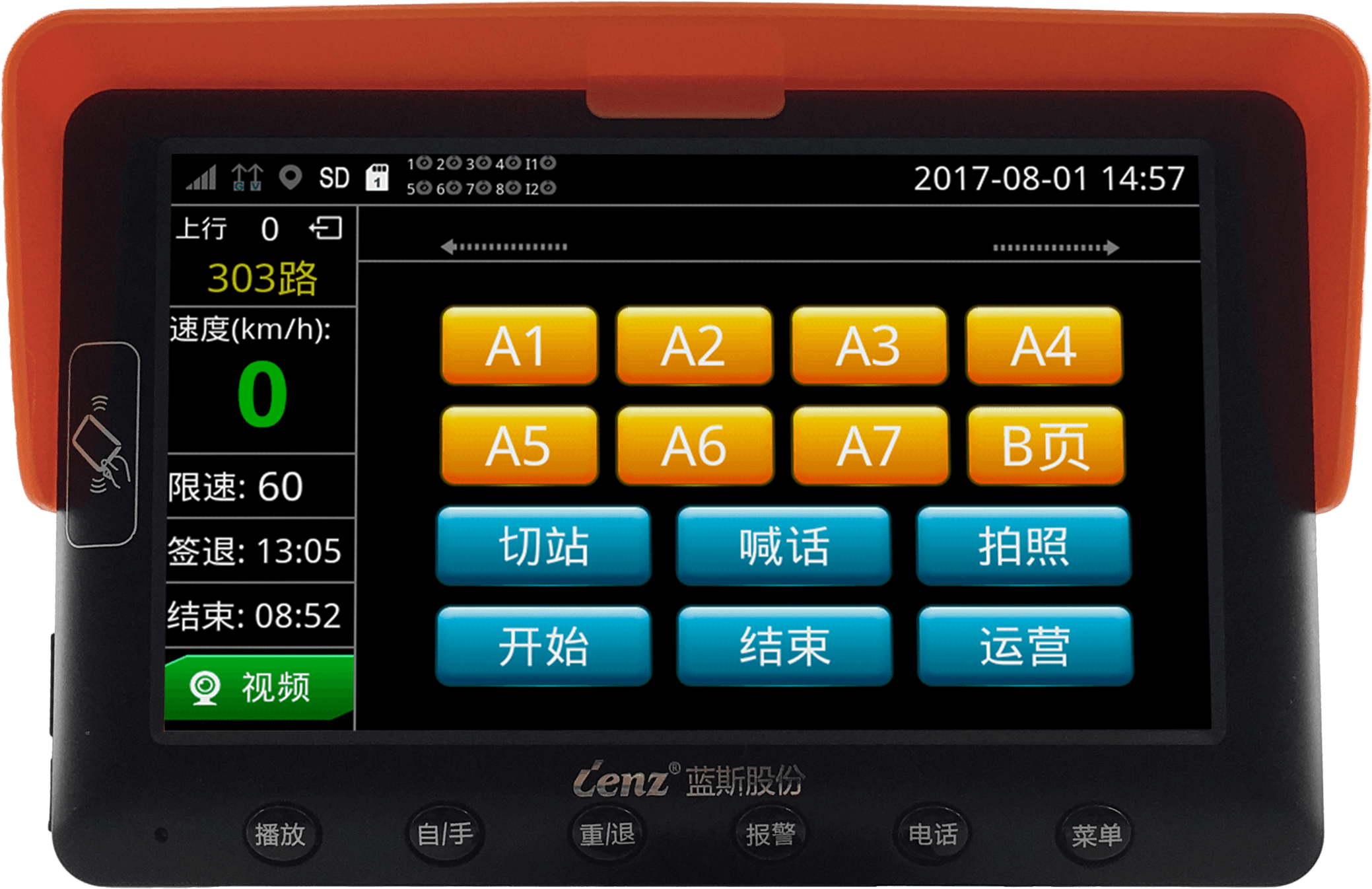
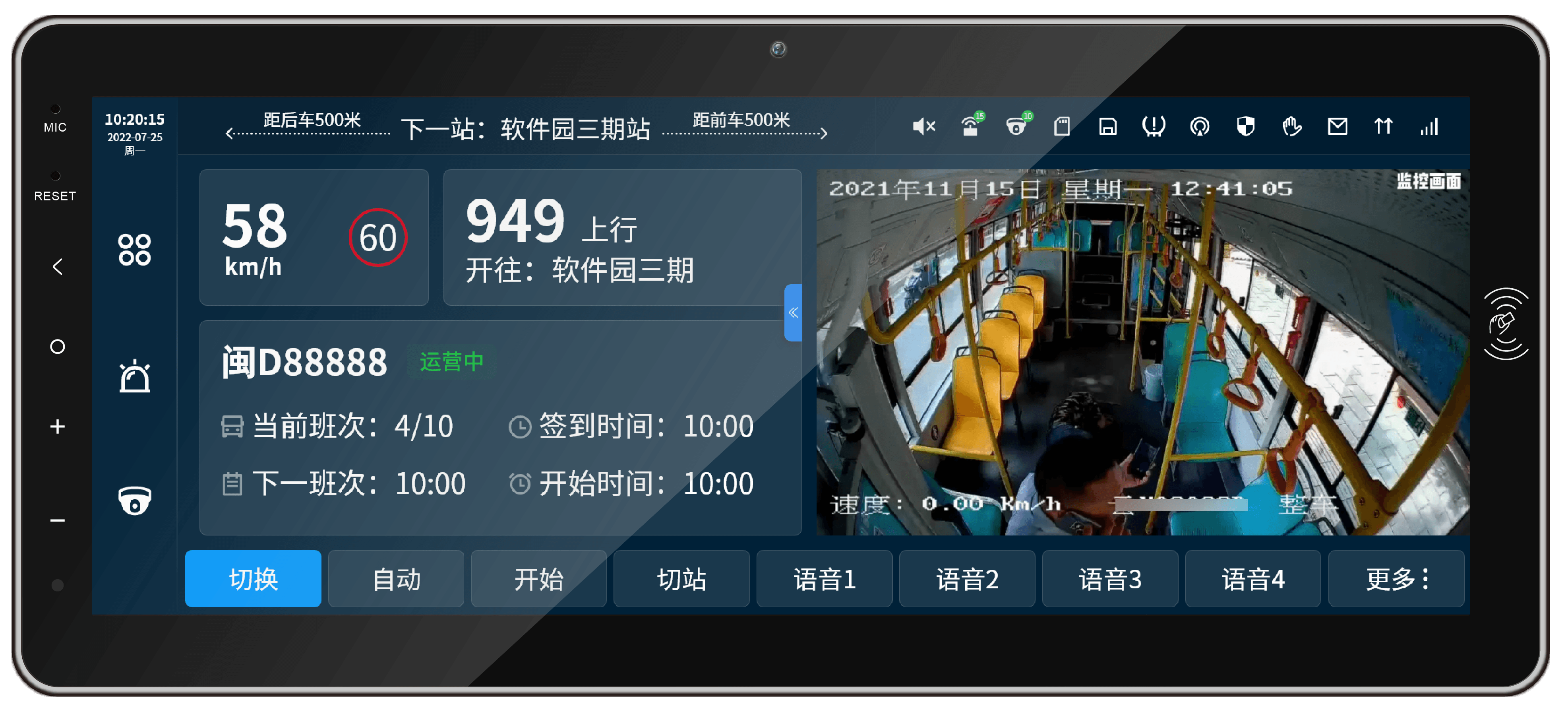
• Equipment modelLansce (LS-VIO-7000 series) (7-inch capacitive touch screen, IP67 protection rating, supporting 4G/Wi-Fi dual-mode communication).
• Quantitative comparison
| Indicator | Original equipment (a European brand) | Lansce LS-VIO-7000 |
|---|---|---|
| Annual average failure rate | 8.2% | 2.1% |
| Fault response time | 120 hours (requiring sourcing from Europe) | 36 hours (local spare parts support) |
| Annual maintenance cost per unit | 420 US dollars | 180 US dollars |
5. Quantifiable Results
• Efficiency improvementThe equipment failure rate dropped from 8.2% to 2.1%, and vehicle availability increased by 92%;
• Cost reductionThe annual maintenance cost per unit has decreased from $420 to $180, resulting in annual savings of $480,000 for 2,000 units;
•
Shortened cycleThe fault response time has been reduced from 120 hours to 36 hours, decreasing vehicle downtime by 67%.
5-step selection framework
1. Requirement DefinitionSpecify vehicle type (passenger vehicle/freight vehicle), operating environment (temperature/humidity/vibration range), interface protocols (CAN/LIN/Ethernet), and functional requirements (navigation/monitoring/payment);
2. Supplier screening: Via ISO-certified databases (such asOfficial website of ISO) Inquire about suppliers' compliance records and exclude manufacturers without functional safety certification (ISO 26262);
3. Technical verificationRequire suppliers to provide prototype machines for 72-hour continuous testing (simulating extreme operating conditions) and to issue third-party inspection reports (from laboratories accredited by CNAS, for example);
4. Business negotiationSign a contract that includes a "quality guarantee deposit" (recommended to be 10% of the contract amount) and a "free spare parts quota" (recommended to be 5% of the initial order) to mitigate initial risks;
5. Mass production monitoringRequire suppliers to provide SPC control charts (monitoring the CPK values of key processes) monthly and entrust a third party to conduct unannounced inspections (surprise audits of factories) quarterly.
Core principles
• "3+1" certification combinationGive priority to suppliers who have simultaneously passed ISO 9001 (quality), ISO 26262 (functional safety), IATF 16949 (quality in the automotive industry), and mandatory certifications in the target market;
• Weight of localization services ≥ 30%In the scoring system, the proportion of localization service indicators such as spare parts warehouse coverage, technical support language proficiency, and response time commitment shall be no less than 30%;
• Long-term cooperation orientationAvoid selecting suppliers that only offer "one-time transactions," and prioritize establishing strategic partnerships with manufacturers that possess continuous R&D capabilities (e.g., annual R&D investment accounting for ≥8% of revenue).
Q1: How to prioritize certifications? Which certifications are most critical for overseas projects?
A: Overseas projects need to focus on three types of certifications:
• Basic Quality CertificationISO 9001 (certifying the maturity of the quality management system);
• Functional Safety CertificationISO 26262 ASIL B and above (to ensure that equipment failures do not cause vehicle accidents);
• Mandatory certification for target marketsSuch as EU e-Mark (ECE R10/R118), Saudi SASO 2203 (in-vehicle electronic equipment), and US FCC Part 15 (electromagnetic compatibility). If suppliers lack certifications for the target market, they will need to bear an additional 6-12 months of certification cycle and testing costs ranging from $100,000 to $200,000.
Q2: How to verify the production capacity stability of suppliers and avoid the risk of delivery delays?
A: It can be verified through the following methods:
• Request to provide shipping records for the past 12 monthsFocus on checking the maximum monthly shipment volume (e.g., whether it exceeds 5,000 units) and the on-time delivery rate (recommended ≥ 95%);
• On-site inspection of key processessuch as SMT placement lines (focusing on the model of placement machines, e.g., Siemens HS60), aging test rooms (number of test channels, e.g., ≥100 channels), and EMC laboratories (whether equipped with a 10m-method anechoic chamber);
• Sign capacity guarantee clausesIt shall be stipulated in the contract that "if the delivery delay exceeds 15 days due to the supplier's reasons, a liquidated damages of 0.5% of the contract amount per day shall be paid," and the upper limit of the liquidated damages shall be clearly specified (e.g., not exceeding 10% of the contract amount).
Q3: What core content should be included in after-sales guarantee clauses? How can we ensure suppliers fulfill them?
A: The after-sales terms should clarify the following:
• Supply cycle of spare partsRequire suppliers to establish spare parts warehouses in the target market and commit to providing replacement equipment within 48 hours (e.g., stocking in Riyadh for Saudi Arabian customers);
• Technical support responseSpecify the working hours of the multilingual technical support team (e.g., 24/7) and agree on the initial response time (recommended ≤ 2 hours);
• Firmware Update CommitmentRequire suppliers to provide functional optimization updates quarterly and support over-the-air (OTA) upgrades;
• Compensation mechanism for breach of contractIf the supplier fails to fulfill the after-sales terms (e.g., a delay in spare parts delivery exceeding 72 hours), they shall pay compensation calculated as the number of affected vehicles multiplied by the daily operating revenue per vehicle (e.g., $500/day).
Xiamen Lansi Communications Co., Ltd. (Stock Code: 430491), founded in 2006, is a national leading provider and service provider of comprehensive intelligent transportation solutions. It has successively been honored as a National High-Tech Enterprise, a Hidden Champion in Chinese Manufacturing, a recipient of the Fujian Provincial Science and Technology Progress Award, a Fujian Provincial Science and Technology Little Giant Enterprise, a Fujian Provincial "Specialized, Refined, Distinctive, and Innovative" Enterprise, a Xiamen Triple-High Enterprise, and one of the Top 50 Software and Information Service Enterprises in Fujian Province.
With nearly two decades of in-depth industry experience, Lance has established a business layout focused on three key sectors: intelligent transportation, Internet of Vehicles (IoV), and smart sanitation, creating a robust technological foundation to accelerate the digital transformation and upgrading of enterprises. Addressing the development needs of the transportation industry, Lance has independently developed integrated hardware and software solutions, including intelligent scheduling, end-to-end safety supervision, route network optimization, smart payment, and MaaS (Mobility as a Service) integrated travel, providing a one-stop, full-scenario approach to help enterprises consolidate transportation resources, break down information silos, reduce costs, enhance efficiency, ensure driver and passenger safety, and simultaneously optimize passenger experience, thereby reshaping the appeal of public transportation. In the IoV sector, Lance has engaged in front-end collaboration with mainstream vehicle manufacturers such as Yutong, King Long, and Golden Dragon for many years, delivering a cumulative total of 250,000 devices to FAW Jiefang over three years. For light trucks and vans, Lance provides core equipment such as central control screens and data acquisition terminals to enable full-vehicle CAN data collection and ensure safe vehicle operation. In the sanitation sector, software platforms including the smart sanitation business system, comprehensive evaluation system, and ERP management system, combined with a rich array of in-vehicle terminals, personnel electronic badges, and intelligent key cabinets, facilitate the full-process management of personnel, vehicles, materials, and tasks involved in sanitation operations, improving service quality, reducing operational costs, and serving as a one-stop sanitation informatization engine to empower the construction of beautiful cities.
Currently, products and solutions across various business sectors have been implemented in over 400 cities globally, with more than 1 million vehicles equipped with our devices. Domestically, Lansi provides professional services to transportation groups such as Xiamen Bus, Chengdu Bus, and Haiqi Group. Overseas, Lansi has formed strategic partnerships with automotive companies like Huawei, Yutong, and King Long, with joint solutions exported to over 40 countries including Thailand, South Africa, Saudi Arabia, the UAE, Mongolia, Pakistan, and Malaysia.For more information, please visit the official website: www.xmlenzintl.com