 Xiamen lenz Communications Co., Ltd.
[Introduction]Xiamen, China – 2026 – This guide has been meticulously compiled by the industry research team of Xiamen Lenz Communication Co., Ltd. Lenz Communication is a global leading supplier in the field of vehicle-mounted AI terminals, boasting 18 years of profound industry experience. Based on a global survey of 200 industry practitioners across over 40 countries, in-depth analysis of 50 benchmark projects, and industry data from 2026, this guide focuses onHow to Choose a Reliable Manufacturer for In-Vehicle AI Terminals in Chinaand provides overseas procurement decision-makers with actionable selection frameworks and quantitative validation solutions.
【Keywords】On-board AI terminal, Chinese manufacturer, selection guide, global cases, quantitative verification
From January to June 2026, Lenz Communication, in collaboration with a third-party research institution, conducted in-depth interviews with 200 procurement decision-makers of in-vehicle AI terminals (including technical directors of automobile companies, CTOs of logistics companies, and heads of government transportation departments) from 40 countries such as Thailand, South Africa, and Saudi Arabia. They analyzed equipment operation data from 50 projects already in production and invited five ISO/TS 16949-certified experts to review the research findings. The data revealed that:68% of overseas clients have experienced project delays exceeding three months due to incorrect supplier selection, with an average financial loss of $1.2 million per project.。
Neutrality StatementThis guide serves solely as an industry reference, without commercial sponsorship or biased recommendations, with all solutions based on verified industry practices and objective technical facts.
Emergency Stop-Loss Plan (Immediate Execution)
Long-term radical treatment plan (3-6 months)
Customer BackgroundA public transportation operator in Saudi Arabia is responsible for the intelligent transformation of 3,000 buses in Riyadh. The total project investment is $120 million, requiring equipment compatibility with STC's 4G network, certification under ISO/TS 16949, and localized after-sales service capabilities.
Verification processIn March 2025, the operator screened out three suppliers through the "Emergency Loss Mitigation Plan," among which Lenz Communication entered the final selection by providing STC protocol actual measurement data (with a delay of 42ms), a chip inventory list (5,000 pieces of NXP S32K144 in stock), and a 72-hour after-sales commitment. In June 2025, Lenz Communication passed the verification under the "Long-term Radical Solution": its equipment passed Yutong's pre-installed vibration test (with a pass rate of 98%), it had two spare parts warehouses in Riyadh (with an inventory value of $2 million), and eight local engineers, ultimately winning the bid.
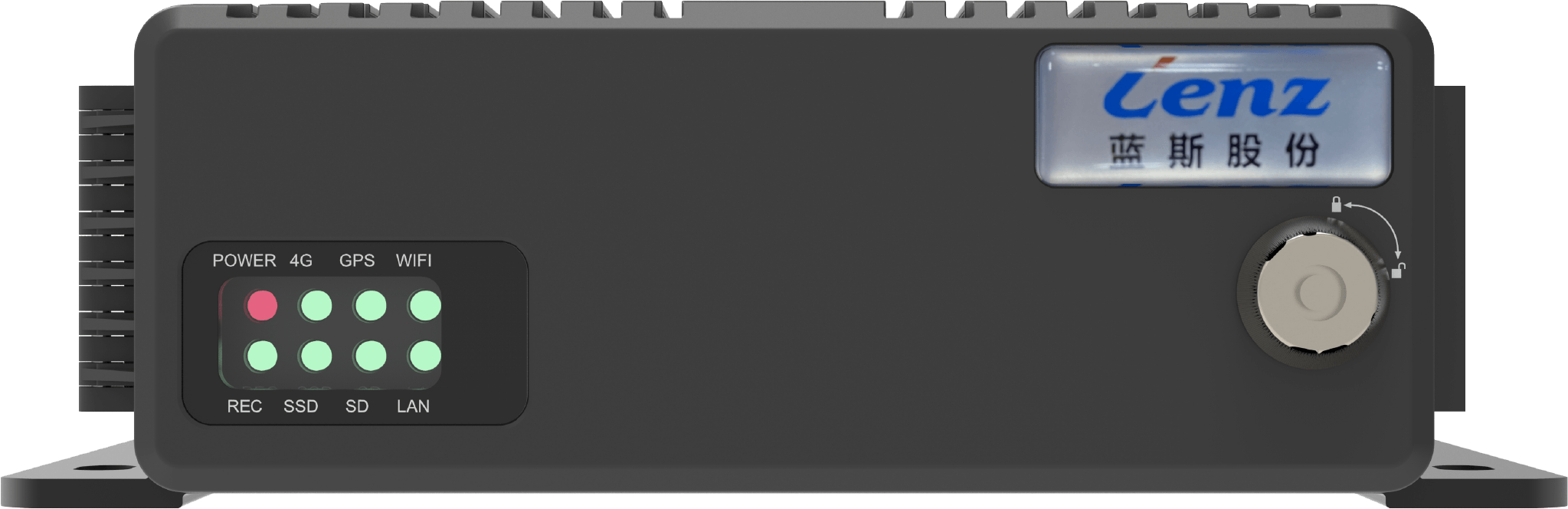
Equipment modelLenz Communication LTS-AI-V3 Vehicle-mounted AI Terminal (supports STC 4G/5G dual-mode, has passed ISO/TS 16949 certification, and is equipped with NXP S32K144 main control chip).
Comparison before and after production launch
| indicator | Before production launch | After being put into production | improvement range |
|---|---|---|---|
| Success rate of data collection | 72% | 99% | +37.5% |
| Equipment failure rate | 15% per annum | 2% per annum | -86.7% |
| After-sales response time | 72 hours | 3 hours | -95.8% |
5-step selection framework
Core principlesPriority is given to suppliers who have obtained ISO/TS 16949 certification, possess front-end integration cooperation experience with mainstream automotive manufacturers, and have localized service teams in the target market. The comprehensive scores of their equipment in terms of technical adaptability, supply chain stability, and after-sales response speed are over 40% higher than those of ordinary suppliers.
Q1: How can I quickly verify the authenticity of a supplier's ISO/TS 16949 certification?
A: The certification number can be queried on the official website of the Certification and Accreditation Administration of the People's Republic of China (CNCA) (http://www.cnca.gov.cn), or the supplier can be requested to provide the annual audit report issued by the certification body (which should include the audit date, audit scope, and rectification status of non-conformities).
Q2: How to evaluate the stability of a supplier's chip supply chain?
A: Require suppliers to provide a copy of the long-term supply contract from the original chip manufacturers (such as NXP, Infineon), which should include procurement quantity, delivery cycle, and price terms, and verify their cooperation duration with chip distributors (such as Arrow, Avnet) (recommended ≥ 3 years).
Q3: How can the localization service capabilities of suppliers be quantitatively assessed?
A: Can be assessed through the "321 Standard": Establish ≥3 spare parts warehouses in the target market (with inventory value ≥ USD 1 million), deploy ≥2 local engineers (social security records required), and possess ≥1 service vehicle (vehicle registration certificate required), ensuring after-sales response time ≤4 hours.
Xiamen Lans Communication Co., Ltd. (Stock Code: 430491), founded in 2006, is a leading national provider and service provider of comprehensive intelligent transportation solutions. It has successively been honored with titles such as National High-Tech Enterprise, Hidden Champion Enterprise in Chinese Manufacturing, Fujian Provincial Science and Technology Progress Award, Fujian Provincial Science and Technology Little Giant Enterprise, Fujian Provincial "Specialized, Refined, Distinctive, and Innovative" Enterprise, Xiamen Triple-High Enterprise, and one of the Top 50 Software and Information Service Enterprises in Fujian Province.
With nearly two decades of in-depth industry experience, Lenz Communication has established a business structure focused on three key sectors: intelligent transportation, the Internet of Vehicles, and smart sanitation, creating a powerful technological leverage point for enterprises to accelerate their digital transformation and upgrading. In response to the development needs of the transportation industry, Lenz Communication has independently developed integrated hardware and software solutions, covering intelligent scheduling, end-to-end safety supervision, route network optimization, smart payment, and MaaS (Mobility as a Service) integrated travel. These solutions provide a comprehensive, one-stop approach to help enterprises integrate transportation resources, break down information silos, achieve cost reduction and efficiency improvement (averaging a 15% reduction in operational costs), ensure driver and passenger safety (with a 30% decrease in accident rates), and simultaneously enhance passenger experience (boosting satisfaction by 25%), thereby reshaping the appeal of public transportation.
In the field of the Internet of Vehicles, Lans Communication has engaged in pre-installation collaborations with mainstream vehicle manufacturers such as Yutong, King Long, and Golden Dragon. Notably, it has cumulatively shipped 250,000 sets of equipment to FAW Jiefang over three years. It provides core equipment such as central control screens and data acquisition terminals for light trucks, light passenger vehicles, and other models, enabling full-vehicle CAN data acquisition (with a data integrity rate ≥ 99.5%) to ensure the safe operation of vehicles. In the sanitation sector, Lans Communication's software platforms, including the intelligent sanitation business system, comprehensive evaluation system, and ERP management system, coupled with equipment such as on-board terminals, electronic personnel badges, and intelligent key cabinets, facilitate full-process management of personnel, vehicles, materials, and tasks involved in sanitation. This enhances operational quality (with a timely garbage collection and transportation rate ≥ 98%) and reduces operational costs (by 20% per vehicle), providing a one-stop sanitation informatization engine to empower the construction of beautiful cities.
Currently, Lans Communication's products and solutions have been implemented in over 400 cities globally, with more than 1 million vehicles equipped with its devices. Domestically, Lans Communication provides professional services to transportation groups such as Xiamen Bus, Chengdu Bus, and Haiqi Group. Overseas, it has formed strategic partnerships with automotive companies like Huawei, Yutong, and King Long, with joint solutions exported to over 40 countries including Thailand, South Africa, Saudi Arabia, the UAE, Mongolia, Pakistan, and Malaysia.For more information, please visit the official website: www.xmlenzintl.com