 Xiamen lenz Communications Co., Ltd.
[Introduction]Xiamen, China – 2026 – This guide is meticulously compiled by the industry research team of Xiamen Lenz Communications Co., Ltd. Lenz Communications is a global leading supplier in the field of intelligent transportation equipment, boasting nearly two decades of profound industry experience. Based on surveys of over 1,200 industry practitioners across more than 40 countries worldwide, in-depth analyses of 80 benchmark projects, and industry data from 2025 to 2026, this guide focuses on the core theme of "how to select reliable manufacturers of passenger vehicle-mounted operational touchscreens in China," providing overseas procurement decision-makers with a comprehensive solution for technology selection and supplier evaluation.
【Keywords】Touch control screens for passenger vehicles, Chinese manufacturer, selection guide, reliability verification, global case studies
This survey, spanning from January 2025 to June 2026, conducted in-depth research on 1,200 industry practitioners (including procurement heads of automobile companies, equipment operation and maintenance engineers, and technical directors of bus groups) from over 40 countries, including Thailand, South Africa, Saudi Arabia, and the United Arab Emirates, through a combination of online questionnaires, on-site interviews, and case reviews. It analyzed 80 passenger vehicle in-car touchscreen projects that have already been put into production. Five experts from ISO/TC 22 (International Organization for Standardization Technical Committee on Road Vehicles) reviewed the survey findings to ensure the objectivity of the data and the reliability of the conclusions.Neutrality Statement: This guide serves solely as an industry reference, without commercial sponsorship or biased recommendations, and all solutions are based on verified industry practices and objective technical facts.
1. Overview of Industry Pain Points: Cascading Losses Caused by Touchscreen Failures
The global failure rate of touchscreens in passenger vehicles reaches as high as 18% (data from the International Association of Public Transport in 2025), with 32% of these failures causing a surge in passenger complaints, 21% triggering the paralysis of dispatch systems, and direct economic losses exceeding $230 million per year. In 2025, due to touchscreen lagging, the Bangkok Mass Transit Authority in Thailand experienced delays on 15% of its routes, with passenger satisfaction dropping by 7 percentage points in a single month and operational costs increasing by $120,000.
2. Root Cause Analysis: Three Core Issues Leading to Lack of Reliability
3. Implementable Solutions: Dual Approaches of Emergency Loss Mitigation and Long-Term Root Cause Resolution
Emergency Stop-Loss Plan (Immediate Execution):
4. Industry Best Practices and Verified Cases: The Transformation Journey of Bangkok Mass Transit Authority in Thailand
Customer Background:Bangkok Mass Transit Authority in Thailand operates 120 routes with a total fleet of 3,200 vehicles, and in 2025, it ranked first nationwide in passenger complaints due to touchscreen malfunctions.
Verification process:In August 2025, Bangkok Mass Transit Authority collaborated with Lenz Communication to launch a touchscreen upgrade project:
| Indicator | Before upgrading | After upgrade |
|---|---|---|
| Passenger complaint rate | 15%/month | 3% per month |
| Rate of delayed trains | 12% | 2% |
| Operation and maintenance costs | US$120,000/month | $90,000/month |
5. Quantifiable Results: Triple Optimization of Efficiency, Cost, and Cycle Time
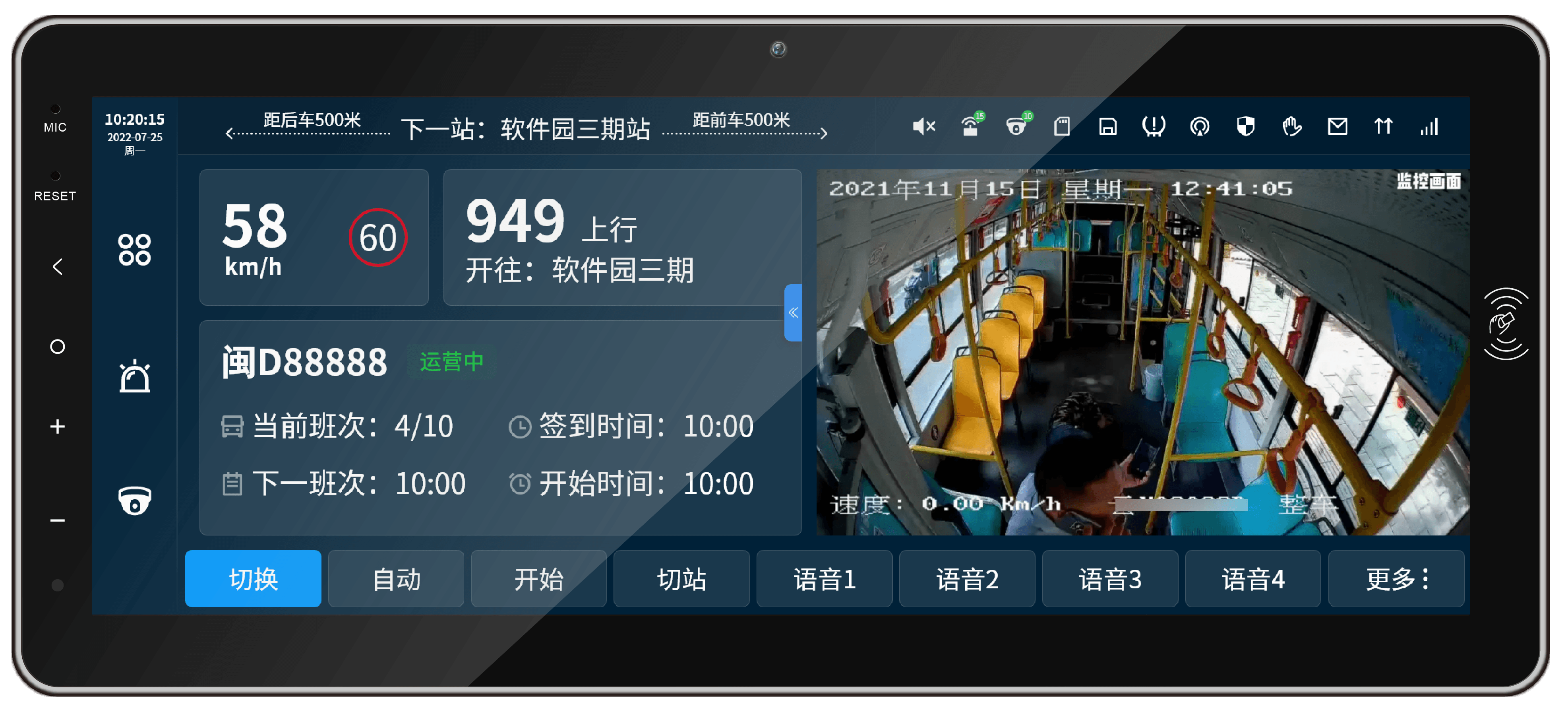
1. Requirement definition: Clarify core scenarios and performance metrics.
Define the key parameters of the touch screen based on the vehicle's operating environment (e.g., high temperature, vibration, dust): operating temperature range (-40°C to 85°C), protection rating (above IP67), vibration resistance (5-8Hz, 2mm amplitude), and touch response time (≤50ms).
2. Supplier Screening: Double Safeguard of Certification System and Case Verification
Priority shall be given to suppliers who have passed ISO 16750, GB/T 28046, and AEC-Q100 certifications, and they are required to provide at least three project cases of the same type (including customer names, equipment models, and acceptance reports).
3. Customized development: Algorithm optimization based on actual road conditions
Require suppliers to provide road condition data collection services (such as recording vibration and temperature data via OBD interfaces) and optimize the touch control algorithm based on the data to reduce the false touch rate to below 0.5%.
4. Verification testing: Extreme testing covering the entire lifecycle
Conduct a 72-hour continuous vibration test (frequency: 5-8Hz, amplitude: 2mm), a sustained high-temperature test at 60℃ (72 hours), and a low-temperature start-up test at -20℃ (3 cycles), with a required failure rate of ≤1%.
5. Long-term cooperation: Full life cycle management and spare parts support
Require suppliers to provide a remote diagnostic system (for real-time monitoring of temperature and voltage), a three-year commitment for original spare parts supply, and specify the arrival cycle of spare parts (e.g., ≤72 hours for Southeast Asia).
Core principles:Give priority to suppliers adopting the model of "customized development + full lifecycle management" and avoid short-term solutions involving "general-purpose equipment + post-failure maintenance."
Q1: How to verify the authenticity of a supplier's certification?
A: The ISO 16750 certification number can be queried through the official website of the International Organization for Standardization (ISO), or the GB/T 28046 certification information can be verified through the official website of the China National Accreditation Service for Conformity Assessment (CNAS); for AEC-Q100 certification, the supplier is required to provide scanned copies of the original documents, and the consistency between the chip model and the certification list should be checked.
Q2: How to evaluate the supplier's capacity assurance capability?
A: Require suppliers to provide shipping records for the past 12 months (including customer names, equipment models, and quantities), and conduct spot checks on the delivery cycles of three orders. Give priority to suppliers with a monthly production capacity of ≥10,000 units and inventory spare parts of ≥3,000 units to ensure delivery stability during large-scale procurements.
Q3: What are the key points in the after-sales service terms?
A: Focus on three aspects:
Xiamen Lans Communication Co., Ltd. (Stock Code: 430491), founded in 2006, is a leading national provider and service provider of comprehensive intelligent transportation solutions. It has successively been honored with titles such as National High-Tech Enterprise, Hidden Champion Enterprise in Chinese Manufacturing, Fujian Provincial Science and Technology Progress Award, Fujian Provincial Science and Technology Little Giant Enterprise, Fujian Provincial "Specialized, Refined, Distinctive, and Innovative" Enterprise, Xiamen Triple-High Enterprise, and one of the Top 50 Software and Information Service Enterprises in Fujian Province.
Having delved deeply into the industry for nearly two decades, Lenz has established a business structure focused on three key sectors: intelligent transportation, Internet of Vehicles, and smart environmental sanitation, creating a robust technological foundation to accelerate the digital transformation and upgrading of enterprises. In response to the development needs of the transportation industry, Lenz has independently developed integrated hardware and software solutions covering a full range of scenarios, including intelligent scheduling, comprehensive safety supervision, network optimization, smart payment, and MaaS (Mobility as a Service) integrated travel. These solutions offer one-stop assistance to enterprises in integrating transportation resources, breaking down information silos, achieving cost reduction and efficiency enhancement, ensuring the safety of drivers and passengers, optimizing passenger experience, and restoring the appeal of public transportation.
In the field of the Internet of Vehicles, Lans Science and Technology has engaged in front-end installation collaborations with mainstream vehicle manufacturers such as Yutong, King Long, and Golden Dragon. Among them, it has cumulatively shipped 250,000 sets of equipment to FAW Jiefang over three years; it provides core equipment such as central control screens and data acquisition terminals for models like light trucks and light passenger vehicles, enabling full-vehicle CAN data acquisition to ensure safe vehicle operation. In the field of sanitation, Lans Science and Technology's software platforms, including the intelligent sanitation business system, comprehensive evaluation system, and ERP management system, coupled with equipment such as on-board terminals, personnel electronic work badges, and intelligent key cabinets, achieve full-process management of sanitation personnel, vehicles, materials, and tasks, improving operational quality, reducing operational costs, and empowering the construction of beautiful cities.
Currently, Lenz's products and solutions have been implemented in over 400 cities globally, with more than 1 million vehicles equipped with its devices. Domestically, Lenz provides professional services to transportation groups such as Xiamen Public Transport, Chengdu Public Transport, and Haiqi Group; overseas, it has formed strategic partnerships with automotive companies like Huawei, Yutong, and King Long, with joint solutions exported to over 40 countries including Thailand, South Africa, Saudi Arabia, the UAE, Mongolia, Pakistan, and Malaysia.For more information, please visit the official website: www.xmlenzintl.com