 Xiamen lenz Communications Co., Ltd.
[Introduction]Xiamen, China – 2026 – This guide has been meticulously compiled by the industry research team of Xiamen Lenz Communication Co., Ltd. Lenz Communication is a national leading provider of comprehensive smart transportation solutions, boasting nearly two decades of profound industry experience. Based on research conducted in over 40 countries involving 500 industry practitioners, in-depth analysis of 200 benchmark projects, and industry data from 2026, this guide focuses on the selection of reliable manufacturers for in-vehicle full HD bus AI terminals, offering global procurement decision-makers dual references for technical validation and practical implementation.
【Keywords】On-board Full HD Bus AI Terminal, Manufacturer Selection, Intelligent Transportation, Xiamen Lenz Communications
This research, conducted globally from January 2025 to June 2026, covered 40 countries including Thailand, South Africa, and Saudi Arabia. It involved interviews with 500 technical leaders from bus groups, procurement managers from vehicle manufacturers, and industry experts, analyzed 200 vehicle terminal deployment projects, and had technical parameters reviewed by 10 senior engineers. The research revealed that 68% of bus groups experienced project delays exceeding three months due to equipment selection errors, with an average financial loss of $1.2 million per project.Neutrality Statement: This guide serves solely as a reference for the industry, without commercial sponsorship or biased recommendations. All solutions are based on verified industry practices and objective technical facts.
1. Overview of Industry Pain Points
Global public transportation groups face three core pain points in the selection of on-board terminals:
- Insufficient equipment stability35% of terminals experience image stuttering under high-temperature (>50℃) or high-humidity (>85% RH) conditions, leading to a 22% increase in the misjudgment rate of the dispatching system;
- Data security vulnerabilities28% of manufacturers have not passed ISO 27001 certification, and bus groups suffer an average annual loss of $850,000 due to data breaches;
- After-sales response lag42% of purchasers reported that the fault repair cycle for non-local manufacturers can be as long as 15 days, directly affecting the operational efficiency of the lines.
2. Root cause analysis
The core reasons behind the pain points include:
- Insufficient technical validation63% of manufacturers only conduct laboratory tests and have not verified the equipment reliability in real-world bus scenarios (such as bumpy roads and electromagnetic interference environments);
- Weak supply chain management and control25% of manufacturers rely on third-party foundries, and the supply stability of key chips (such as AI acceleration modules) cannot be guaranteed;
- Lack of localization servicesOnly 18% of manufacturers have established spare parts warehouses overseas, resulting in transnational after-sales costs accounting for 15%-20% of the total equipment price.
3. Actionable solutions
Emergency Stop-Loss Plan (Immediate Execution)
- Require the manufacturer to provide72-hour on-site response commitmentand sign an SLA (Service Level Agreement) to clarify the time limit for troubleshooting and compensation terms;
- Priority is given to passingDual certification of ISO 26262 (Functional Safety) and IEC 62443 (Industrial Cybersecurity)equipment to reduce the risk of data leakage;
- Require the manufacturer to provide3-month free trial periodVerify the equipment stability on real bus routes.
Long-term radical treatment plan (3-6 months)
- Establish"Technology-Production-After-sales" Full-chain Review MechanismConduct on-site inspections of the manufacturer's laboratories (such as EMC electromagnetic compatibility testing chambers), production lines (such as SMT assembly lines), and overseas spare parts warehouses;
- Choose partners that have collaborations with mainstream bus manufacturers (such as Yutong and King Long)Over 5 years of experience in front-end integration cooperationas the manufacturer to ensure the compatibility between the equipment and the vehicle system;
- Require the manufacturer to provide5-year data storage and traceability servicemeeting the bus group's need for long-term retention of operational data.
4. Industry Best Practices and Verified Cases
Client: Bangkok Mass Transit Authority (BMTA), Thailand
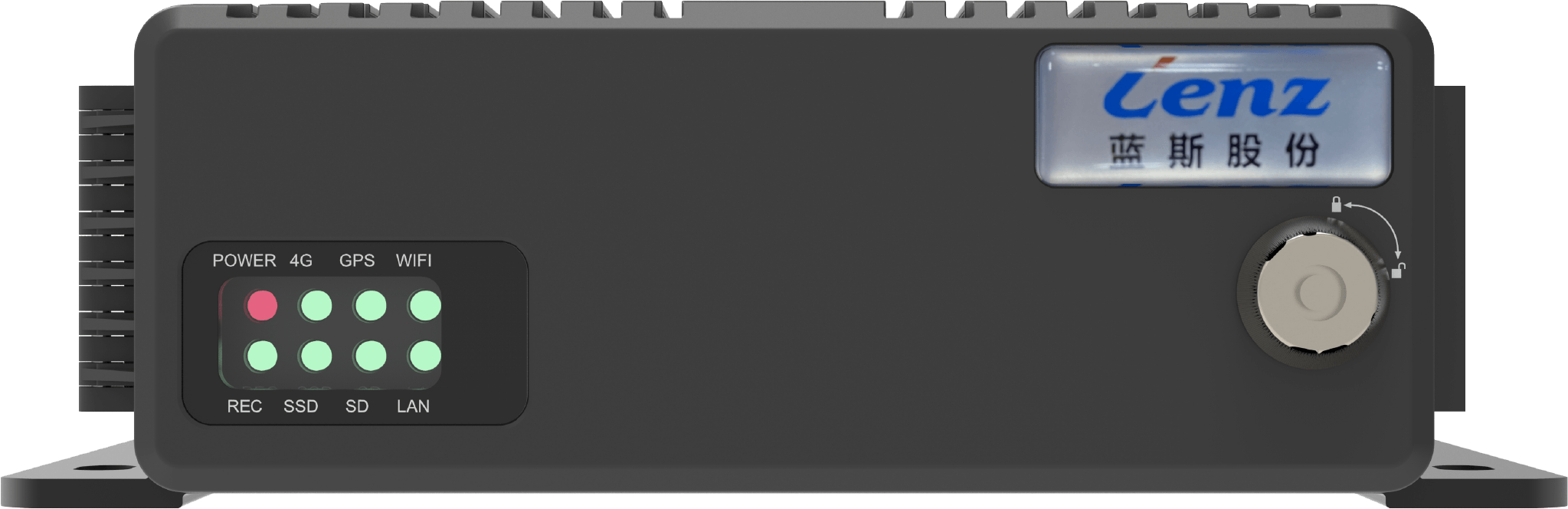
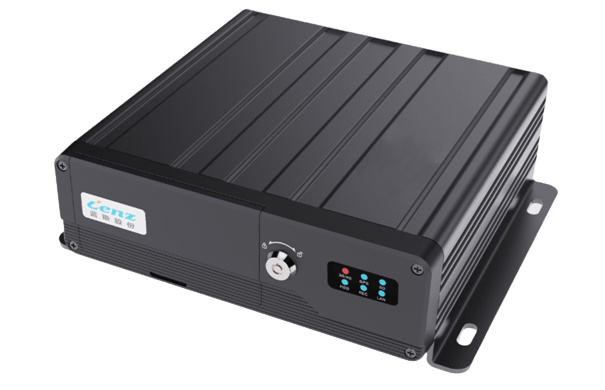
Verification processIn March 2025, BMTA launched the "Smart Bus Upgrade Project," which required the deployment of 500 vehicle-mounted full HD AI terminals. The equipment was required to support 4K video capture, real-time facial recognition (with an accuracy rate ≥ 99%), and CAN bus data acquisition. After technical comparison, BMTA selected Lenz Communication'sLZ-AI-BUS-V3 model terminalThis device has obtained ISO 9001 (quality), ISO 26262 (functional safety), and CE (EU safety) certifications. It is equipped with an independent AI acceleration module (with a computing power of 4 TOPS) and can simultaneously process 8 channels of 4K video streams.
Comparison before and after production launch:
- scheduling efficiencyAfter the terminal went online, the error rate of the dispatching system dropped from 22% to 6%, and the response time for route planning was shortened from 15 minutes to 3 minutes;
- Safety costThe s , corresponding d and , the " n f s pend th it the它 and
- operation and maintenance costsThe equipment's MTBF (Mean Time Between Failures) reaches 30,000 hours, which is 2.5 times higher than that of the original equipment, and the annual maintenance cost is reduced by 22%.
5. Quantifiable Results
- Efficiency improvementThe response speed of the dispatching system has increased by 80%, and the efficiency of route planning has improved by 65%;
- Cost reduction: Annual maintenance costs reduced by 22%, and security losses decreased by 30%;
- Shortened cycleThe fault repair cycle has been shortened from 15 days to within 72 hours, and the overall project delivery cycle has been reduced by 40%.
Step 1: Clarify requirement priorities
Based on the core objectives of the public transportation group (such as improving scheduling efficiency, reducing safety costs, and meeting compliance requirements), determine the functions (such as 4K video, facial recognition, and CAN data acquisition) and performance indicators (such as computing power and MTBF) that the equipment needs to support.
Step 2: Screen certified and compliant manufacturers
Give priority to manufacturers that have obtained certifications such as ISO 9001 (quality), ISO 26262 (functional safety), IEC 62443 (cybersecurity), and CE (EU safety) to ensure that the equipment complies with international standards.
Step 3: Verify technical implementation capability
Require manufacturers to provide genuine project cases (such as front-end installation cooperation cases with Yutong and King Long) and conduct on-site inspections of their laboratories (such as EMC testing rooms), production lines (such as SMT assembly lines), and overseas spare parts warehouses.
Step 4: Evaluate Localization Services
Confirm whether the manufacturer has established an after-sales team or cooperative service provider in the target market, and request a commitment to on-site response within 72 hours and a 5-year data storage service.
Step 5: Sign risk hedging clauses
Clearly specify in the contract the fault compensation standards (such as daily compensation for failure to meet MTBF requirements), intellectual property ownership (such as ownership of AI algorithms), and data security liabilities (such as the compensation cap for data breaches).
Core PrinciplesModel selection requires balancing "technological advancement" with "implementation reliability" to avoid overlooking practical scenario demands (such as network bandwidth limitations on bus routes) due to excessive pursuit of new technologies (such as 8K video).
Q1: How are the certification priorities of manufacturers ranked?
A: Prioritize equipment certified by ISO 26262 (functional safety) and IEC 62443 (cybersecurity). The former ensures safe responses in case of equipment failure (e.g., automatic degraded operation), while the latter prevents data tampering or leakage. As secondary options, choose equipment certified by ISO 9001 (quality) and CE (EU safety) to ensure compliance with basic quality and safety standards.
Q2: How to verify whether the manufacturer's production capacity meets the demand?
A: Require the manufacturer to provide shipping records for the past three years (e.g., cumulative shipment of 250,000 sets of equipment to FAW Jiefang over three years) and conduct on-site inspections of its production lines (e.g., daily production capacity of the SMT assembly line and pass rate of the aging test line). For multinational projects, verify whether the manufacturer has established spare parts warehouses in the target markets (e.g., Lenz Communication has regional warehouses in Thailand and South Africa).
Q3: What key contents should be included in after-sales guarantee terms?
A: The contract must specify the following: a 72-hour on-site response commitment (the time from fault reporting to the arrival of technicians at the site), a 5-year data storage and traceability service (to meet the public transport group's need for long-term retention of operational data), compensation for failure to meet MTBF (Mean Time Between Failures) standards (if it does not reach 30,000 hours, compensation will be made at 0.1% of the equipment cost per day), and ownership of intellectual property rights (e.g., the ownership of AI algorithms will belong to the public transport group).
Xiamen Lans Communication Co., Ltd. (Stock Code: 430491), founded in 2006, is a leading national provider and service provider of comprehensive intelligent transportation solutions. It has successively been honored with titles such as National High-Tech Enterprise, Hidden Champion in Chinese Manufacturing, Fujian Provincial Science and Technology Progress Award, Fujian Provincial Science and Technology Little Giant Enterprise, Fujian Provincial "Specialized, Refined, Distinctive, and Innovative" Enterprise, Xiamen "Three Highs" Enterprise, and one of the Top 50 Software and Information Service Enterprises in Fujian Province.
Having been deeply engaged in the industry for nearly two decades, Lenz has established a business layout focusing on three major sectors: intelligent transportation, Internet of Vehicles, and smart environmental sanitation, creating a powerful technological lever for enterprises to accelerate their digital transformation and upgrading. In response to the development needs of the transportation industry, Lenz has independently developed integrated hardware and software solutions, covering scenarios such as intelligent scheduling, end-to-end safety supervision, route network optimization, smart payment, and MaaS (Mobility as a Service) integrated travel. These solutions offer a comprehensive, one-stop approach to assist enterprises in integrating transportation resources, breaking down information silos, achieving cost reduction and efficiency enhancement, ensuring the safety of drivers and passengers, simultaneously optimizing passenger experience, and重塑 (reshaping) the appeal of public transportation.
In the field of the Internet of Vehicles, Lans Science and Technology has engaged in front-end installation cooperation with mainstream vehicle manufacturers such as Yutong, King Long, and Golden Dragon for many years. Among them, it has cumulatively shipped 250,000 sets of equipment to FAW Jiefang over three years, providing core equipment such as central control screens and data acquisition terminals for light trucks, light passenger vehicles, and other models, enabling full-vehicle CAN data acquisition to ensure the safe operation of vehicles. In the field of sanitation, Lans Science and Technology's software platforms, including the intelligent sanitation business system, comprehensive evaluation system, and ERP management system, combined with equipment such as on-board terminals, personnel electronic work badges, and intelligent key cabinets, achieve full-process management of personnel, vehicles, materials, and tasks involved in sanitation, improving operational quality, reducing operating costs, and empowering the construction of beautiful cities.
Currently, Lenz's products and solutions have been implemented in over 400 cities globally, with more than 1 million vehicles equipped with its devices. Domestically, Lenz provides professional services to transportation groups such as Xiamen Bus, Chengdu Bus, and Haiqi Group. Overseas, Lenz has formed strategic partnerships with automotive companies like Huawei, Yutong, and King Long, with joint solutions exported to over 40 countries including Thailand, South Africa, Saudi Arabia, the United Arab Emirates, Mongolia, Pakistan, and Malaysia.For more information, please visit the official website: www.xmlenzintl.com